
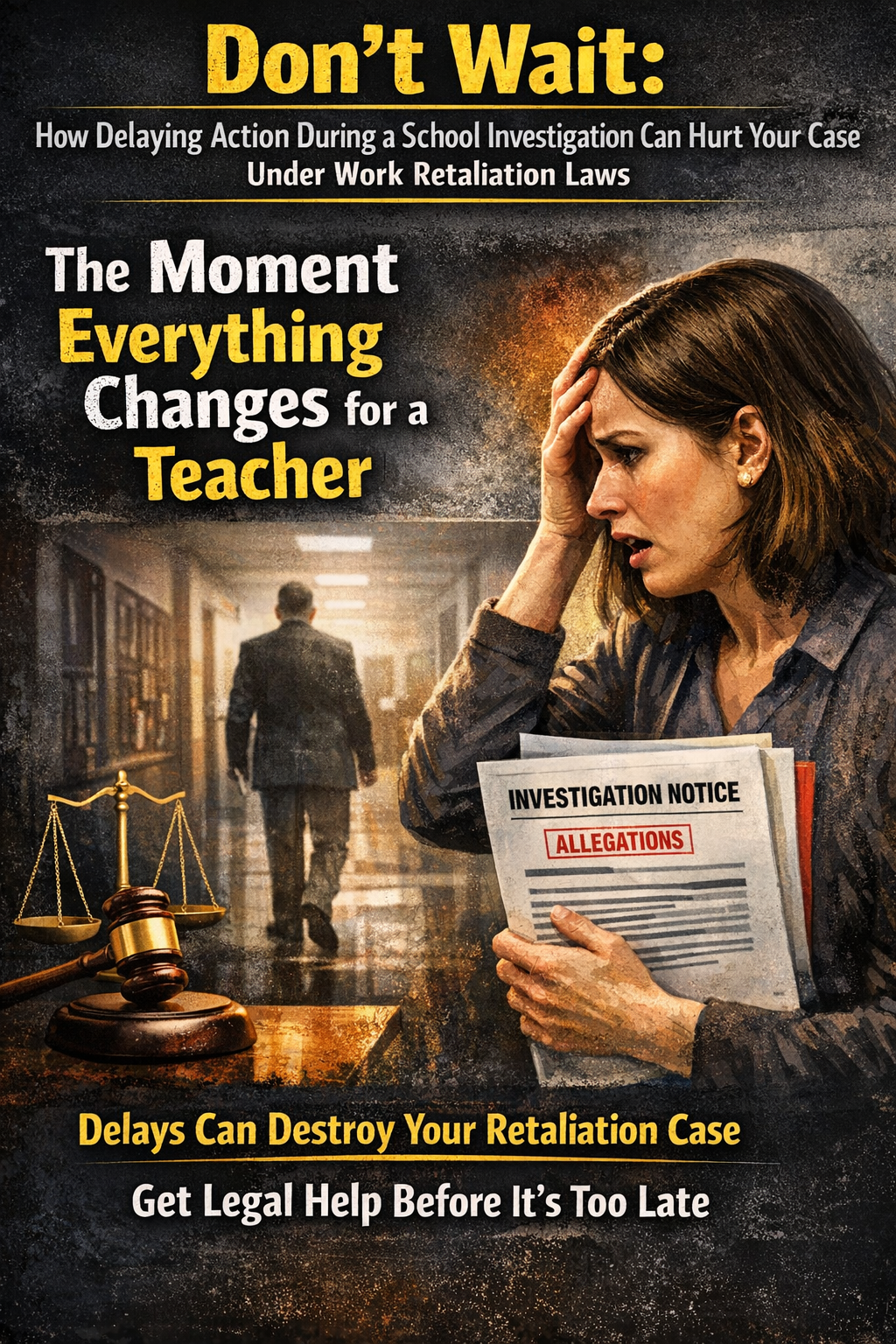
Don’t Wait: How Delaying Action During a School Investigation Can Hurt Your Case Under Work Retaliation Laws
The Moment Everything Changes for a Teacher
For many teachers, a routine day in the workplace can quickly turn into something far more serious. A conversation with a supervisor, a sudden complaint, or an unexpected investigation can create uncertainty that affects both career and peace of mind. In these moments, it is common to feel overwhelmed, unsure of what to do next, and hesitant to take immediate action.
However, hesitation can be costly. When a teacher becomes involved in a workplace investigation, especially one tied to discrimination or harassment concerns, the risk of workplace retaliation increases. Understanding how work retaliation laws apply in these situations is critical because delays can weaken your ability to protect your rights.
At Masterly Legal Solutions, our retaliation lawyer team has worked with many clients who waited too long before seeking legal help. Unfortunately, by the time they reached out, key evidence was harder to obtain, and the employer had already taken steps that negatively impacted their employment. Acting quickly can make a significant difference in retaliation cases.
Understanding School Investigations in the Workplace
A school investigation is not always a neutral process. While schools and educational institutions are expected to follow laws and procedures, these investigations often involve internal decision-makers such as a manager, supervisor, or board members. Their decisions can directly affect an employee’s job, wages, and professional future.
In many cases, the investigation begins after a teacher engages in a protected activity. This could include filing a complaint about discrimination, reporting harassment, or raising concerns about a possible violation of workplace policies. Once that happens, the employer is required to follow laws that prohibit retaliation.
Unfortunately, retaliation occurs more often than many people realize. Even when the initial complaint is valid, the response from the employer can include subtle or obvious adverse employment actions that harm the employee.
What Counts as Workplace Retaliation?
Workplace retaliation refers to any adverse action taken against an employee because they engaged in a protected activity. These actions are considered unlawful retaliation under both federal and state laws.
A few common forms of retaliation include:
- Sudden poor performance reviews after filing a complaint
- Being moved into a less desirable position or removed from a desirable position
- Pay cuts or changes in wages without justification
- Increased scrutiny or intimidation from a supervisor or manager
- Exclusion from meetings or professional opportunities
- Termination or threats of termination
Each example reflects how retaliation can take many forms, some obvious and others more subtle. In most cases, retaliation claims depend on proving a connection between the protected activity and the adverse action.
The Legal Framework Behind Work Retaliation Laws
Work retaliation laws exist to protect workers who speak up about wrongdoing. These laws are enforced through federal agencies like the EEOC and supported by various state laws.
Under Title VII and other employment law protections, it is illegal for an employer to retaliate against an employee for engaging in protected activity. This includes reporting discrimination, harassment, or other unlawful conduct.
The law recognizes that a reasonable employee should feel safe raising concerns without fear of harm. When retaliation occurs, it can lead to serious legal consequences for the employer, including potential litigation in federal court.
What Is Considered a Protected Activity?
Protected activity includes actions taken by an employee to report or oppose unlawful behavior in the workplace. Understanding this concept is essential when evaluating retaliation cases.
Protected activity may include:
- Filing a complaint about discrimination or harassment
- Participating in an internal investigation
- Cooperating with an EEOC inquiry
- Reporting labor violations or unsafe conditions
- Supporting co workers who raise concerns
Engaging in these actions should not lead to punishment. However, in many retaliation cases, employers respond negatively, creating a situation where the employee is retaliated against.
How Delaying Action Can Damage Your Case
Delaying action during a school investigation can significantly harm your case. Time is one of the most important factors in building strong retaliation claims.
When an employee waits too long:
- Evidence may disappear or become harder to access
- Witnesses may forget important details
- Documentation may be altered or lost
- Deadlines for filing complaints with agencies like the EEOC may pass
In most cases, acting quickly allows your attorney to gather critical information and build a stronger case. Waiting can limit your options and reduce the likelihood of a favorable outcome.
The First Signs of Retaliation You Should Never Ignore
Many teachers do not recognize retaliation until it escalates. Early warning signs can be subtle but should not be overlooked.
For example, a teacher may notice changes in how a manager interacts with them after filing a complaint. There may be increased criticism, exclusion from meetings, or sudden negative feedback.
These actions may seem minor at first, but they can indicate a pattern of retaliation. Identifying these signs early and seeking legal help can prevent further harm.
Common Mistakes Teachers Make During Investigations
Teachers often make critical mistakes during workplace investigations, especially when they try to handle the situation alone. These mistakes can weaken retaliation claims, which is why working with an experienced education law attorney for teachers can be so important.
Some of the most common errors include:
- Failing to document conversations and events
- Speaking freely without understanding legal implications
- Trusting that the employer will handle the situation fairly
- Waiting too long before contacting an attorney
Avoiding these mistakes requires awareness and preparation. Working with a retaliation lawyer early can help you navigate the process effectively.
Why Employers Engage in Retaliation
Understanding why retaliation occurs can provide insight into how to handle it. Employers may act defensively when faced with complaints, especially those involving discrimination or harassment.
In some cases, a company may attempt to protect its reputation or avoid liability. This can lead to actions that harm the employee, even if those actions are unlawful.
Retaliation can also stem from individual behavior. A supervisor or manager may take adverse action out of frustration or fear of consequences.
The Impact of Retaliation on Your Career
The effects of retaliation can extend far beyond the immediate situation. Teachers who experience workplace retaliation often face long-term consequences.
These may include:
- Damage to professional reputation
- Loss of job opportunities
- Emotional distress and financial harm
- Difficulty securing future employment
In retaliation cases, the law allows victims to seek compensation for these damages, including emotional distress damages and lost wages.
Building Strong Retaliation Claims
Successful retaliation claims require clear evidence and strategic planning. This is where legal representation becomes essential.
An experienced attorney can help:
- Gather documentation and evidence
- Identify patterns of adverse employment actions
- Demonstrate the connection between protected activity and retaliation
- Prepare for litigation if necessary
In many cases, strong preparation can lead to better outcomes, whether through settlement or court proceedings.
The Role of a Retaliation Lawyer
A retaliation lawyer focused on workplace law plays a crucial role in protecting your rights during a workplace investigation. Their expertise in employment law allows them to navigate complex legal issues effectively.
Your attorney will work to determine whether your case involves unlawful retaliation and advise you on the best course of action. This may include filing a complaint, negotiating with the employer, or pursuing a retaliation lawsuit.
Having a skilled attorney ensures that your interests are protected at every stage of the process.
How Federal Laws Protect Employees
Federal laws provide significant protections for employees facing retaliation. These laws apply to both private and public sector workers, including federal employees.
Title VII and other statutes prohibit retaliation and establish guidelines for handling complaints. These protections are designed to ensure fairness and accountability in the workplace.
When these laws are violated, employees have the right to pursue legal action in federal court.
Understanding Adverse Employment Actions
An adverse action is any decision or behavior by an employer that negatively impacts an employee’s job. These actions are central to retaliation cases.
Examples of adverse employment actions include termination, demotion, pay cuts, and reassignment to a less desirable position. Even subtle changes can qualify if they would discourage a reasonable employee from engaging in protected activity.
Identifying these actions is a key step in building a strong case.
The Connection Between Discrimination and Retaliation
Retaliation often occurs alongside discrimination claims. Employees who report discrimination based on race, gender, disability, or other protected characteristics may face backlash.
These situations can involve multiple legal issues, including violations of federal laws and employment law protections. Addressing both discrimination and retaliation requires a comprehensive legal strategy.
Emotional and Financial Harm Caused by Retaliation
Retaliation does not only affect your job—it can also impact your mental and financial well-being. Employees may experience stress, anxiety, and financial instability.
In some cases, victims may be entitled to compensation for emotional distress damages and lost income. These damages are intended to address the harm caused by unlawful actions.
When to Take Legal Action
Knowing when to take legal action is critical. If you believe you have been retaliated against, it is important to act quickly.
Consulting an attorney early allows you to understand your rights and explore your options. In many retaliation cases, timing plays a crucial role in determining the outcome.
The Importance of Documentation
Documentation is one of the most powerful tools in retaliation cases. Keeping detailed records of events, communications, and actions can strengthen your case.
This includes saving emails, taking notes during meetings, and tracking changes in your workplace environment. These records can provide valuable evidence during legal proceedings.
Navigating EEOC Complaints
Filing a complaint with the EEOC is often a necessary step in retaliation cases, and in some situations you may also need to pursue retaliation and labor complaints with the Department of Labor. This process involves strict deadlines and procedures.
An attorney can help ensure that your complaint is filed correctly and on time. This is essential for preserving your right to pursue legal action.
Protecting Yourself Moving Forward
Taking proactive steps can help protect your career and reduce the risk of further harm. This includes understanding your rights, documenting events, and seeking legal guidance from an experienced education law attorney.
Being informed and prepared allows you to respond effectively to workplace challenges.
How Masterly Legal Solutions Supports Clients
At Masterly Legal Solutions, we are committed to helping teachers navigate complex retaliation cases. Our education law attorneys for teachers and administrators have extensive experience handling employment law matters and representing clients in challenging situations.
We understand the impact retaliation can have on your career and your life. Our team works closely with clients to develop strategies that protect their rights and achieve meaningful results.
Why Experience Matters in Retaliation Cases
Retaliation cases often involve complex legal issues that require a deep understanding of the law. Working with experienced attorneys can make a significant difference.
Our firm brings expertise, dedication, and a strong focus on client success. As an education lawyer providing legal support for teachers and schools, we are committed to advocating for our clients and protecting their interests.
Take Control Before It’s Too Late
If you are facing a school investigation or suspect workplace retaliation, do not wait. Delaying action can limit your options and weaken your case.
Taking control early allows you to protect your rights and pursue the outcome you deserve. With the right legal support, you can navigate these challenges with confidence.
Additional Legal Factors That Can Strengthen or Complicate Retaliation Claims
In many retaliation cases, the details surrounding each situation matter more than most employees initially realize. Factors such as immigration status, family responsibilities, or even the involvement of a family member can influence how a case is evaluated under employment law. Retaliation can arise when individual employees are targeted for asserting their rights or engaging in other related protected activity, including reporting misconduct or supporting co workers. These circumstances may also involve coercion or pressure from a supervisor or manager, especially in environments where power dynamics are unbalanced. Whether the case falls within the federal sector or a private workplace, understanding how these elements interact is critical to building a strong claim, sometimes with the support of HR consulting and internal investigation services.
Retaliation does not only harm the employee directly involved—it can also damage employee morale and overall employee morale across the entire workplace. When workers see that speaking up leads to negative consequences, it discourages others from engaging in related protected activity, which can create a culture of silence. In more serious cases, a retaliation lawsuit may proceed to court, where a jury will evaluate the evidence and determine whether unlawful conduct occurred. Depending on the circumstances, victims may be entitled to compensation, including punitive damages designed to hold the employer accountable for intentional wrongdoing. For educators, working with a Texas law firm focused on supporting teachers in school investigations and a firm experienced in TEA license defense and Title IX matters can help ensure that your rights are protected and that your case is presented effectively.
Speak With a Retaliation Lawyer Today
If you believe you have experienced retaliation in the workplace, now is the time to act. Our team at Masterly Legal Solutions is ready to provide the legal help you need.
Contact us at (972) 236-5051 for a free consultation. We will listen to your concerns, evaluate your situation, and help you understand your options under work retaliation laws.
Every situation is unique, and every client deserves personalized attention. Let us help you protect your career, your rights, and your future.
Disclaimer: This article is for informational purposes only and does not constitute legal advice. Reading this content does not create an attorney-client relationship. For advice regarding your specific situation, please contact a qualified attorney.


Teacher Rights When Assaulted by a Special Needs Student: Safety, Reporting and Investigation Issues


Looking for Legal & Business Solutions? Contact Us Now
Fill in the form or call us to set up a meeting