Medical Peer Review Hearings: Preparing the Record, Witnesses, and Professional Response
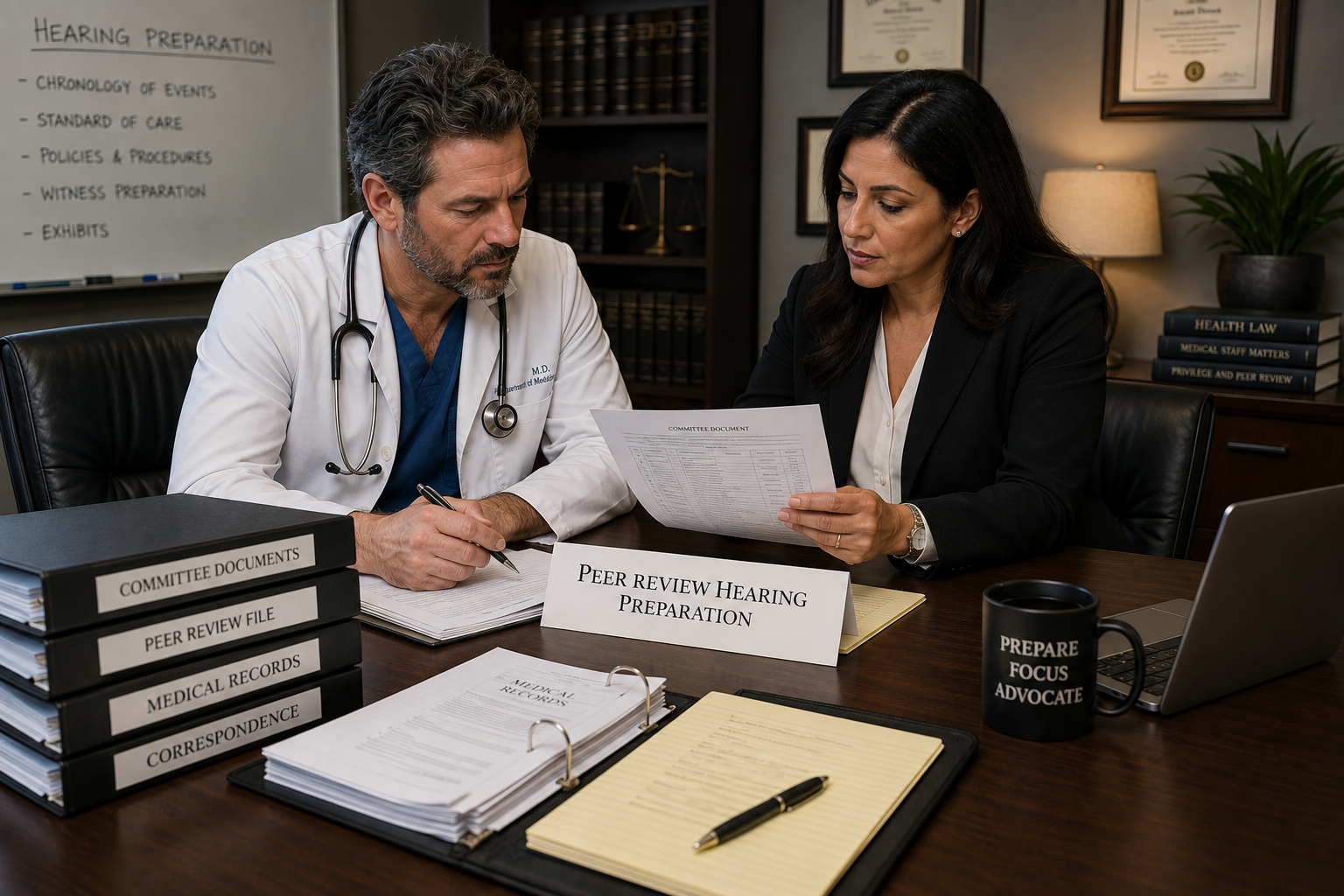
Receiving notice that you must appear before a hospital committee can be stressful. Whether the issue involves clinical concerns, documentation, communication, or questions about professional conduct, a peer review proceeding may affect your reputation, hospital privileges, and future career opportunities.
Many physicians feel pressure to respond immediately. However, what you say, the documents you provide, and how you prepare for the hearing may have lasting consequences.
Working with a medical peer review hearing attorney before appearing before a hospital committee allows you to understand the process, organize important information, and prepare a thoughtful response. At Masterly Legal Solutions, we represent Texas physicians facing peer review proceedings, credentialing concerns, and other professional licensing matters.
A Hospital Committee Hearing Can Affect More Than Your Current Position
Peer review proceedings are intended to evaluate specific concerns regarding patient care, professional conduct, or compliance with hospital policies, and the hearing can affect more than a current job because findings may impact a physician's privileges and clinical privileges beyond the immediate hospital.
Even when no disciplinary action has been taken, the process itself may affect future credentialing opportunities, especially if adverse actions or a report become accessible to credentialing entities:
- Professional reputation
- Hospital privileges
- Future credentialing opportunities
- Employment opportunities
- Relationships with healthcare organizations
- Career advancement
Negative peer review findings can also lead to privilege revocation or suspension. Taking the matter seriously from the beginning helps physicians make informed decisions throughout the process, and gives them reason to assess early whether the matter could progress to a fair hearing.
Why Early Preparation Matters
Many physicians wait until just before the hearing to seek legal guidance, even though the medical peer review process often requires an early review of hospital bylaws and medical staff bylaws.
By then, opportunities to organize documents, review evidence, and prepare responses may be more limited.
A medical peer review hearing attorney can help evaluate the issues before the hearing takes place so that your presentation is clear, accurate, and supported by the available information. An experienced peer review attorney should understand these rules, ensure compliance with legal requirements, and protect due process by addressing hearing procedures under hospital rules and applicable state laws.
Understanding the Hospital Committee Hearing Process
Every hospital has its own bylaws, policies, and medical peer review process.
A hospital committee hearing may involve structured hearing procedures that often resemble an administrative proceeding:
- Review of patient records
- Questions regarding clinical decisions
- Evaluation of documentation
- Witness testimony
- Committee interviews
- Review of hospital policies
Understanding the process before the hearing helps reduce uncertainty and allows physicians to prepare appropriately, especially because hospital and medical staff peer review exists in part to meet The Joint Commission accreditation expectations and support patient safety.
Your Credentialing Record and the National Practitioner Data Bank May Receive Careful Review
One important part of many proceedings involves the physician's credentialing record.
Committee members may review information such as:
Professional Qualifications
Education, training, certifications, and professional experience.
Prior Credentialing Information
Applications, renewals, and previous credentialing materials.
Clinical History
Information relevant to the issues being reviewed by the committee, including clinical history, concerns about a physician's care, and questions about a physician's performance.
Because credentialing records often become part of the discussion, accuracy and organization are important. Experience with credentialing and privileges is vital when those records can affect clinical privileges decisions in medical peer review proceedings.
Witness Preparation Can Make a Meaningful Difference
Many peer review proceedings include statements from individuals who have direct knowledge of the events under review.
Proper witness preparation helps ensure that testimony remains accurate, organized, and focused on the relevant facts.
Potential witnesses may include:
- Physicians
- Nurses
- Administrators
- Medical staff
- Healthcare professionals
- Other individuals with direct knowledge
Careful preparation allows witnesses to communicate factual information clearly without unnecessary confusion.
Developing a Professional Response Strategy
One of the most important aspects of any peer review proceeding is presenting information professionally.
A thoughtful professional response strategy should account for the possibility of a written response, an investigation, and later fair hearing rights if recommendations become adverse.
A thoughtful professional response strategy includes:
- Reviewing available records
- Understanding the concerns raised
- Organizing supporting documentation
- Preparing responses to anticipated questions
- Preparing a fact-based response that is consistent with the evidence
- Maintaining professionalism throughout the process
Every response should be based on the facts and tailored to the specific circumstances. Preserving due process rights and due process early can matter if the matter proceeds beyond committee review, including when physicians have the right to request a Fair Hearing after adverse peer review recommendations.
Medical Staff Discipline May Begin With a Peer Review Proceeding
Not every peer review hearing results in medical staff discipline.
However, these proceedings can become an important part of later employment, credentialing, or licensing matters.
Understanding the potential implications before appearing before the committee allows physicians to prepare more effectively.
Why a Physician Peer Review Lawyer Can Help
Working with a physician peer review lawyer allows physicians to approach the process with greater confidence.
Legal representation may include:
Reviewing the Committee Notice
Evaluating the issues identified by the hospital.
Organizing the Credentialing Record
Reviewing the physician's credentialing record and supporting documentation.
Preparing Witnesses
Assisting with appropriate witness preparation before the hearing.
Developing a Professional Response Strategy
Helping physicians prepare a clear and organized professional response strategy before appearing before the committee, including whether proposed adverse actions could trigger a report to the National Practitioner Data Bank.
Preparing for the Hearing
Providing guidance throughout the hospital committee hearing process while protecting the physician's professional interests, including preparing for the hearing by assessing whether the peer review committee followed hospital bylaws, hearing procedures, and due process requirements; because the Health Care Quality Improvement Act grants immunity to peer reviewers, and good faith peer review may receive limited immunity under the HCQIA, experienced legal review matters.
Protecting Your Professional Reputation
Physicians spend years building the trust of patients, colleagues, and healthcare organizations.
A peer review proceeding can create uncertainty long before any conclusions are reached.
Careful preparation helps ensure that your experience, qualifications, and professional judgment are presented fairly and accurately throughout the process.
Why Timing Matters
Many physicians believe they should wait until after the hearing to contact legal counsel.
In reality, preparation is often most valuable before the committee meets, because some peer review actions and restrictions on clinical privileges can escalate quickly.
Early legal guidance provides additional time to organize records, review evidence, prepare witnesses, and understand the hospital's procedures.
Timing also matters because certain adverse actions lasting more than 30 days may need to be reported to the National Practitioner Data Bank.
Speaking with a medical peer review hearing attorney before your hearing helps you approach the process with greater clarity and confidence.
Peer Review Investigations Require a Thoughtful and Professional Response
Many peer review investigations begin with concerns about clinical decision-making, communication, or alleged physician misconduct. Depending on the circumstances, the matter may first be discussed through informal resolution, referred to an ad hoc committee, or become a formal investigation before peer review bodies or a hospital's governing board. Throughout this process, physicians benefit from understanding the issues from the physician's perspective while ensuring that the facts are reviewed fairly, and some organizations may also rely on outside counsel for internal investigations to help maintain impartiality and compliance.
Concerns involving a disruptive physician or allegations of disruptive behavior should be addressed early whenever possible, as early intervention may allow opportunities for voluntary remediation or a performance improvement plan rather than more significant consequences. Hospitals have a responsibility to protect patients, maintain high standards of care, and promote ethical practices among medical professionals, qualified physicians, healthcare providers, and other healthcare providers. In some situations, the outcome of a peer review proceeding may have implications for reporting obligations involving the National Practitioner Data Bank, also referred to as the Practitioner Data Bank (NPDB), depending on the specific facts and applicable legal requirements.
Because these matters may affect hospital privileges, credentialing, and future career opportunities, many doctors choose to work with an experienced law firm with multiple Texas office locations and contact options before appearing before a committee or the hospital's governing board. While positive reviews from colleagues and other physicians may help provide additional context, every matter should be evaluated individually, and any recent case developments or applicable laws should be considered carefully. Physicians may also have certain due process rights under applicable bylaws or governing procedures, making experienced legal representation valuable throughout the peer review process.
Frequently Asked Questions
When should I contact a medical peer review hearing attorney?
You should consider speaking with a medical peer review hearing attorney as soon as you receive notice of a peer review proceeding or hospital committee hearing.
What does a physician peer review lawyer do?
A physician peer review lawyer helps physicians prepare for peer review proceedings by reviewing documents, evaluating the issues, and providing legal guidance throughout the process. A physician peer review attorney should understand hospital peer review, credentialing, clinical privileges, and healthcare law rather than general litigation alone, because a lack of experience with these proceedings can create serious consequences for the physician and Collins requiring knowledgeable legal counsel can result in serious consequences.
What happens during a hospital committee hearing?
A hospital committee hearing may include document review, committee questions, witness testimony, and discussion regarding the issues identified by the hospital.
What is medical staff discipline?
Medical staff discipline refers to disciplinary actions that may arise through hospital peer review or related professional proceedings, depending on the circumstances, including suspensions, restrictions, or revocation of a physician's privileges and clinical privileges. Some outcomes may be subject to a report and can affect future credentialing, including reports accessible to credentialing entities.
Why is witness preparation important?
Proper witness preparation helps ensure that testimony is accurate, organized, and focused on the relevant facts.
What is a credentialing record?
A credentialing record generally includes documents related to a physician's qualifications, professional background, training, and hospital credentialing history.
What is a professional response strategy?
A professional response strategy is a carefully prepared approach for responding to committee questions and presenting information accurately during the peer review process. It may also need to address whether the peer review action is a good faith peer review focused on patient safety or an unfair peer review that departs from its intended purpose, and in some situations a flawed process can also interfere with legitimate concerns the physician previously raised.
Request Peer-Review Preparation Assistance
If you have been notified of a hospital peer review proceeding, do not wait until the hearing date to begin preparing. Speaking with a medical peer review hearing attorney early can help determine whether the matter appears routine or raises concerns about sham peer review, while also helping you organize your credentialing record, prepare witnesses, evaluate committee concerns, and develop a thoughtful professional response strategy.
Peer review can sometimes be misused for personal or economic motives, and these proceedings may be politically motivated, retaliatory, or aimed at eliminating competition; resulting adverse actions can affect hospital privileges and make understanding NPDB reporting implications critical.
Masterly Legal Solutions offers an experienced legal team focused on representing Texas physicians in peer review proceedings, physician license defense matters, Texas Medical Board investigations, and related healthcare licensing issues, and also provides a broad range of legal and business services for individuals, families, and organizations. We are committed to helping physicians protect their professional reputation, hospital privileges, and medical careers through experienced legal representation.
Masterly Legal Solutions
Website: https://www.masterlylegal.com/
Phone: (972) 236-5051







Looking for Legal & Business Solutions? Contact Us Now
Fill in the form or call us to set up a meeting