
Teacher Certificate Suspension in Texas What Educators Should Prepare Before a State Credential Hearing
Facing a Teacher Certificate Suspension Can Put Your Career at Risk
A teacher certificate suspension is a disciplinary action that can temporarily limit or suspend an educator’s certification privileges, usually after state authorities investigate allegations and move the matter into a process such as a Texas educator certificate hearing. For Texas educators, teachers, and other education professionals, these cases often arise from alleged professional conduct violations, other misconduct in the course of employment, or criminal charges, and they can affect much more than your current job.
They can interrupt your career, damage your professional reputation, and create uncertainty about your future in education. If you have received a state credential notice or learned that a Texas educator certificate hearing may be scheduled, the decisions you make now matter.
Many educators feel overwhelmed when they receive official paperwork from the Texas Education Agency or another licensing authority. The language can be confusing, the deadlines may be short, and the process may involve questions about your conduct, your credentials, and the evidence the state is using to support possible discipline. This page explains what a teacher certificate suspension can mean, why an early response matters, how the Texas hearing process works, how to read state notices, build a clear evidence timeline, and develop a response strategy.
You do not have to face this process alone. Masterly Legal Solutions represents Texas educators in certification matters and helps clients prepare a thoughtful, organized response aimed at protecting their rights, their credentials, and their professional future, including when navigating Texas Education Agency investigations and disciplinary actions.
Why Teacher Certificate Suspension and Disciplinary Actions Deserve Immediate Attention
Teaching is more than a job. It is a profession built on trust, experience, and years of hard work. A proposed teaching license sanction can affect future employment opportunities, professional relationships, and your standing within the education community.
Even if you believe the allegations are inaccurate or incomplete, waiting too long to respond can make the situation more difficult. In many discipline matters, the process begins with a complaint, moves into an investigation, and then leads to notice to the educator. Early preparation gives your attorney more opportunities to review the facts, identify important evidence, and develop a strong certification response strategy.
Every case is different. The best approach depends on the specific allegations, available documentation, and procedural deadlines involved, including response and appeal deadlines set by law.
Understanding a Texas Educator Certificate Hearing
A Texas educator certificate hearing is part of the process used to address certain certification matters involving educators. Depending on the circumstances, the hearing may involve reviewing evidence, witness testimony, documentation, and arguments regarding the proposed action, including disciplinary issues tied to certificate status, and penalty decisions may be made by the Education Practices Commission.
The purpose of the hearing is not simply to tell your side of the story. It is an opportunity to present information in an organized and legally effective manner.
Preparation often includes reviewing:
- The allegations contained in the state credential notice
- Supporting documentation
- Employment records
- Relevant policies
- Communications related to the matter
- Available witnesses
This review can help clarify the current status of the case and the subject of the allegations.
Having experienced legal guidance can help ensure important issues are properly presented throughout the process.
What a State Credential Notice Usually Means for Charter School Educators
Receiving a state credential notice does not automatically mean your certificate will be suspended. It generally means that the state has opened a process that requires your attention, and that formal letter may lead to possible disciplinary actions such as a warning, probation, suspension, or a certificate being revoked.
The notice often includes:
- Alleged violations
- Important response deadlines
- Hearing information
- Instructions regarding future proceedings
Many educators make the mistake of assuming they can explain everything later. In reality, each stage of the process may influence the final outcome.
Reviewing the notice carefully with an attorney can help you understand what the agency is requesting and how to respond appropriately.
Building an Educator Evidence Timeline
One of the most valuable parts of preparing for a certification matter is creating a complete educator evidence timeline.
Rather than relying on memory months later, an organized timeline helps document what happened and when events occurred.
Important materials may include:
Employment Records
Performance evaluations, contracts, schedules, and official personnel documents may provide important context, including whether allegations relate to school duties, what the employer reported, or actions attributed to the employee. Where relevant to the educator’s work history, those records may come from a public school, charter school, or private school.
Written Communications
Emails, text messages, meeting notes, and written correspondence can help establish timelines and clarify misunderstandings, including formal notice emails or a letter from a principal, superintendent, administrator, or school administrator when relevant, and may show when concerns were raised and to whom they were referred.
School Administrator and Witness Information
Coworkers, administrators, parents, or other members with firsthand knowledge may become important sources of information depending on the circumstances, and in some cases that can include families when they directly observed relevant events. Witness information may also include statements from a person who can assist with context, professional reputation, or references and proof of rehabilitation that may support future reinstatement.
Supporting Documents
Note: keep detailed supporting records. Policies, reports, classroom documentation, and other records may help explain the events involved in the investigation, especially when allegations involve inappropriate contact with a child, fraud, falsifying continuing education documentation, possession of illegal substances, or other professional misconduct, and records may be critical in serious claims involving physical or sexual abuse.
An attorney can review these materials to determine which documents may be useful during your representation, including in matters alleging physical misconduct or sexual abuse, and reinstatement often requires proof of completed coursework or ethics training. For official transcripts in Texas, refer to the agency's instructions because they must be submitted electronically.
Developing a Certification Response Strategy
Every certification matter presents different legal and factual issues. Because of that, there is no single response that works for every educator, and the right approach depends in part on the allegation, such as contract abandonment or criminal offenses involving drugs or violence.
A strong certification response strategy usually focuses on presenting accurate information supported by documentation rather than reacting emotionally to the allegations, and completed records with organized credentials can strengthen that response, especially when you work with education law attorneys who protect teacher rights.
Effective preparation may include:
- Reviewing the complete case file
- Identifying factual inaccuracies
- Organizing supporting evidence
- Preparing for interviews or testimony
- Anticipating questions that may arise during the process
The goal is to present your position clearly while protecting your professional interests throughout the proceeding.
How Legal Representation Can Help During a Teacher Certificate Suspension Matter
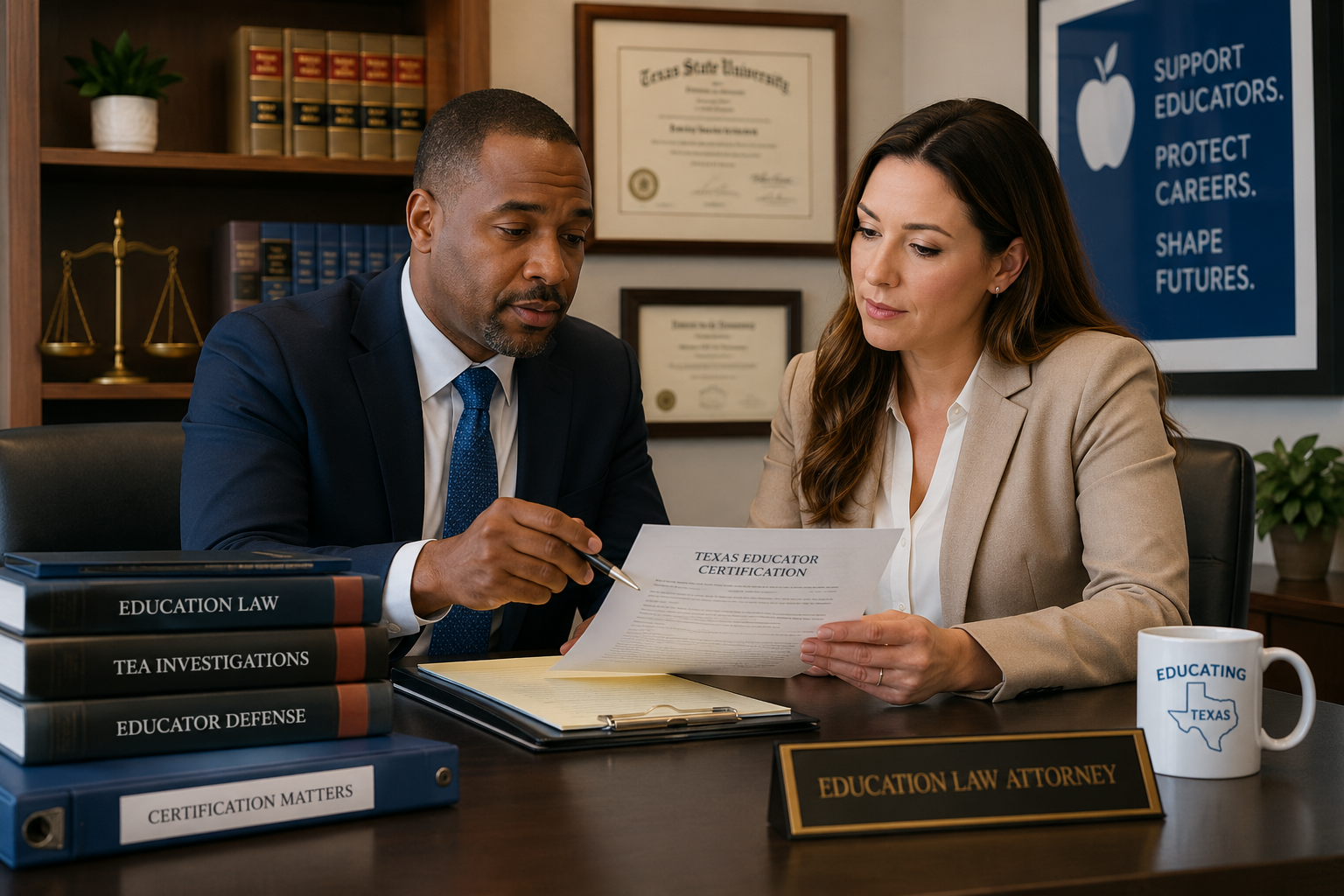
Educators spend their careers helping students succeed. Most never expect to become involved in a certification proceeding or to respond to allegations investigated by the Office of Professional Practices Services, the unit that handles these services and investigates allegations of misconduct by certified educators.
Legal representation allows you to focus on your career while your attorney helps manage the legal process. Certification defense is separate from ordinary employment disputes, and the Office does not review employment-related matters or complaints involving support staff, which is why many educators rely on an education lawyer for teachers and schools when certification or misconduct issues arise.
Depending on your situation, representation may include:
Reviewing the Allegations
Understanding exactly what the state is alleging is the first step toward developing an appropriate response.
Evaluating Evidence
Your attorney can review available documentation to determine what information supports your position.
Preparing for Hearings
Preparation often includes reviewing procedures, discussing potential questions, organizing documents, and preparing hearing materials before the hearing. Filing a request on time can preserve appeal options where available, and the hearing date and related deadlines can affect the defense strategy.
Communicating Throughout the Process
Having legal counsel can help ensure communications are handled carefully and consistently, including helping you submit responses, track the matter’s status, and use the appropriate agency contact channel; where available, an online account or portal can also serve as a general document-tracking tool.
Protecting Your Professional Conduct and Reputation
A certification matter can affect more than your current position. It may influence future employment opportunities and your reputation within the education community, and a suspended educator cannot legally teach in positions that require that certificate or remain eligible for those roles while the suspension is in effect.
Taking the matter seriously from the beginning demonstrates professionalism and a commitment to addressing the issues appropriately.
Even when the allegations involve misunderstandings or disputed facts, careful preparation can make a meaningful difference in how your case is presented.
Why Educators Choose Masterly Legal Solutions
Masterly Legal Solutions understands that educators have invested years building their careers. Our team works closely with teachers, administrators, and education professionals facing certification issues throughout Texas, including when a superintendent or other state authority is involved and the Superintendent investigates allegations of educator misconduct, and our education law attorneys for teachers and administrators understand how these proceedings affect your career.
When you contact our office for a teacher legal consultation, we take time to understand your situation, review available documentation, and discuss the legal process ahead, with further information about your next steps.
Our goal is to provide experienced legal guidance while helping you make informed decisions during every stage of your case, and our education law attorneys offer guidance for teachers from the first notice through potential hearings and appeals.
Understanding Public Instruction Regulations and Your Certification Responsibilities
The Texas system of public instruction includes regulations that govern educator certification, professional conduct, and disciplinary proceedings, and recent changes described in the broader Texas teacher certification crisis continue to influence how those rules are applied. If you receive a notice involving your certificate, it is important to understand which rules are applicable to your situation and how they may affect your professional responsibilities.
Whether you are an applicant seeking certification or an experienced educator, maintaining a valid certificate requires meeting renewal requirements and responding promptly to official notices, and working with an experienced education law attorney and lawyer can help you understand how licensing rules apply to your situation. If your certification has expired, you may need to renew it before returning to certain positions, although some educators may qualify for limited exceptions or be exempt under specific circumstances established by law, and firms like Masterly Legal Solutions with broad education and compliance experience can explain which options may apply.
Every case has unique aspects, so obtaining legal assistance can help you understand your options, preserve your access to available procedural benefits, and develop an appropriate response, and many educators choose ongoing support from education law attorneys for legal protection when their careers are at stake. When reviewing official information online, use trusted agency link resources and available search filters to locate the documents that apply to your individual certification status.
Frequently Asked Questions
What is a teacher certificate suspension?
A teacher certificate suspension is a disciplinary action that may temporarily affect an educator's certification privileges, depending on the outcome of the state process. Suspension is one form of discipline, and in some states the state board may also revoke an educator license; for example, North Carolina's State Board can revoke educator licenses.
What should I do after receiving a state credential notice?
Read the notice carefully, pay attention to deadlines, preserve all related documents, and consider seeking a teacher legal consultation as soon as possible. You should also search official state resources to verify your certificate status and any posted disciplinary information, since Florida educators can check certification status online on the relevant agency page, and some suspensions may be reported across states and affect future credentials.
What happens during a Texas educator certificate hearing?
A Texas educator certificate hearing may involve reviewing evidence, testimony, documentation, and legal arguments related to the certification matter.
Should I organize my documents before meeting an attorney?
Yes. Creating an educator evidence timeline with emails, records, notes, and other relevant documents can help your attorney evaluate your case more efficiently.
Can an attorney help with a teaching license sanction?
Yes. An attorney can review the allegations, evaluate available evidence, help develop a certification response strategy, and represent your interests throughout the process.
Request an Educator Certification Consultation
If you are facing a teacher certificate suspension, do not wait until important deadlines have passed. Early legal guidance may help you understand your options and prepare for your certification matter with confidence.
Masterly Legal Solutions represents educators throughout Texas in certification-related legal matters, including state credential proceedings and Texas educator certificate hearings.
Contact Masterly Legal Solutions today to schedule your teacher legal consultation with a firm that focuses on legal support for educators and TEA license defense.
Website: https://www.masterlylegal.com/
Phone: (972) 236-5051






Looking for Legal & Business Solutions? Contact Us Now
Fill in the form or call us to set up a meeting