

Mistakes Parents Make Before Speaking With a CPS Attorney
When parents first learn that CPS is involved, the fear and confusion can be overwhelming. A phone call, a knock at the door, or a notice from child protective services can instantly disrupt family life and create panic. Many parents act quickly, trying to explain or fix the situation on their own, without realizing that early missteps can shape the entire CPS investigation. At Masterly Legal Solutions, our law firm regularly helps parents correct mistakes made before speaking with a CPS defense attorney, and we see firsthand how early decisions can affect parental rights, custody, and long-term outcomes.
Why Early Decisions Matter in CPS Matters
The early stage of a CPS investigation is often the most critical. During this time, CPS workers begin investigating reports, collecting evidence, and forming impressions that can influence court proceedings. Parents may believe cooperation alone will resolve concerns, but without legal guidance, cooperation can unintentionally harm their case. Understanding common mistakes can help parents protect themselves and their child from unnecessary escalation.
Assuming CPS Is “Just There to Help”
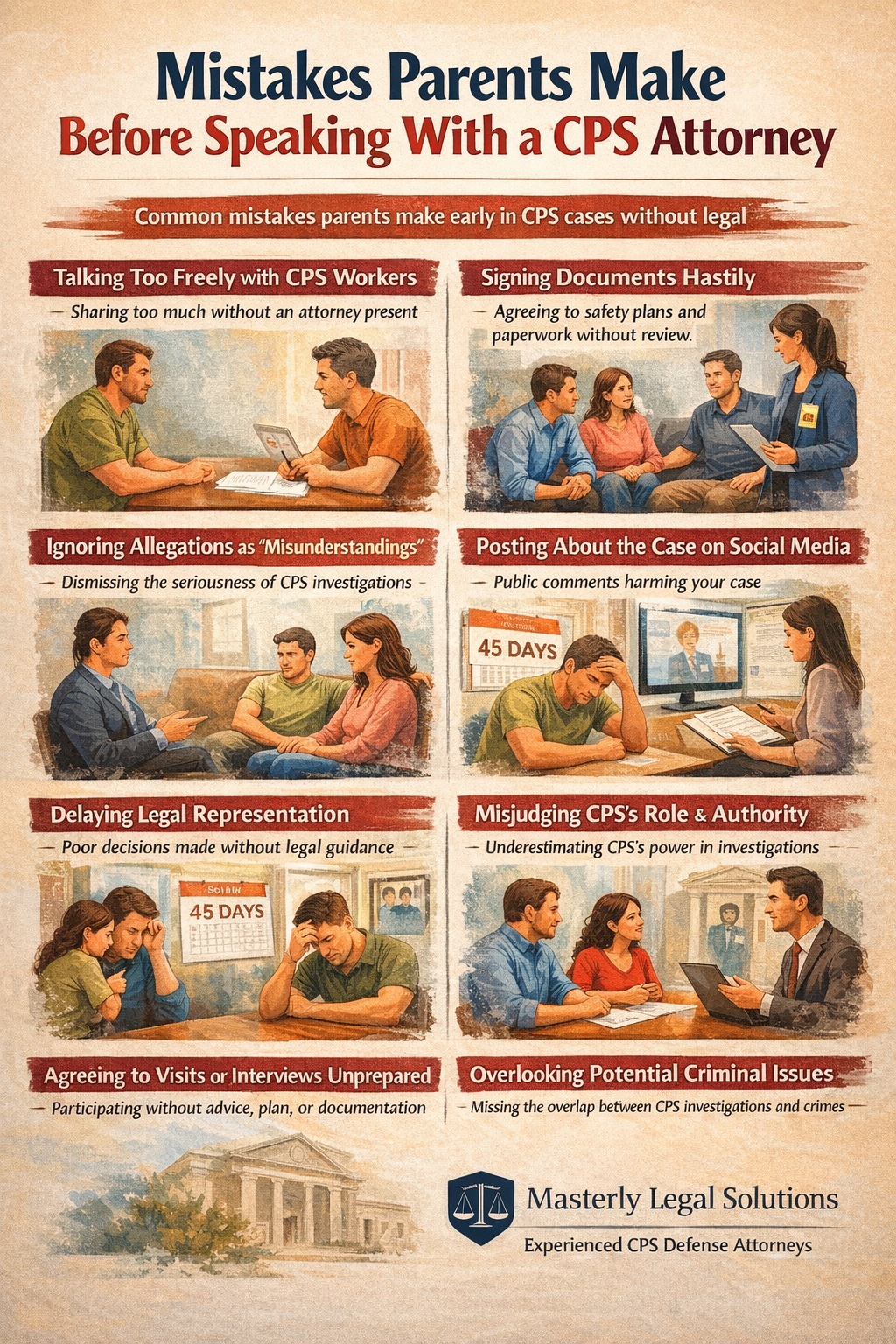
One of the most common mistakes parents make is assuming CPS exists solely to provide support. While protective services are designed to ensure child safety, CPS is still a government agency with legal authority. Their role includes investigating allegations of child abuse or neglect, not defending parents. Statements made with good intentions may later be used as evidence.
Speaking Too Freely Without Legal Advice
Parents often feel compelled to explain themselves immediately. During a CPS investigation process, anything said to a CPS caseworker may be documented and referenced later. Without an attorney present, parents may share information that is incomplete, emotional, or misunderstood. Speaking with an experienced attorney first helps ensure communication is careful and strategic.
Believing Silence Equals Guilt
Some parents swing to the opposite extreme and refuse all communication. While parents have rights, complete refusal without guidance can raise safety concerns. CPS may interpret silence as uncooperative behavior, which can increase court intervention risks. A defense attorney helps strike the right balance between protecting rights and responding appropriately.
Waiting Too Long to Contact a Lawyer
Delaying legal representation is one of the most damaging mistakes parents make. CPS cases move quickly, and early filings, interviews, and reports shape the direction of the investigation. By the time parents seek help, decisions about custody or services may already be in motion. An initial consultation early in the process allows families to respond from a position of strength.
Underestimating the Seriousness of Allegations
Parents may believe allegations are exaggerated or false and will simply disappear. Unfortunately, CPS must investigate all claims involving child abuse or neglect. Even minor or mistaken reports can lead to formal proceedings. Taking allegations seriously from the start is essential to protecting parental rights.
Misunderstanding CPS Authority
CPS has broad authority to investigate, but that authority has limits. Many parents mistakenly believe CPS can act without restriction. Certain actions, such as removing a child or imposing supervised visitation, typically require a court order. A knowledgeable lawyer helps parents understand where CPS authority begins and ends.
Agreeing to Safety Plans Without Legal Review
Safety plans are often presented as temporary and informal solutions. However, these plans can significantly impact custody and daily family routines. Parents may agree without understanding the long-term implications. Reviewing safety plans with a CPS defense attorney ensures that agreements do not unintentionally weaken a defense.
Not Understanding the CPS Investigation Process
The CPS investigation process involves interviews, evidence gathering, and evaluations that may extend into juvenile dependency matters. Parents who do not understand the process may react emotionally rather than strategically. Education and preparation help families navigate each stage with confidence.
Failing to Document Interactions
Parents often overlook the importance of documentation. Keeping records of visits, calls, emails, and requests from CPS workers can be crucial. Without documentation, it becomes harder to challenge inconsistencies or demonstrate compliance. Organized records strengthen defense strategies and support compelling arguments.
Posting About the Case on Social Media
Social media activity is frequently reviewed during CPS investigations. Parents may vent frustrations or seek support online, not realizing posts can be used as evidence. Even private messages may surface. Limiting online discussion protects the family from unnecessary scrutiny.
Assuming CPS Cases Are Separate From Criminal Risk
Some CPS cases involve parallel investigations related to criminal charges. Statements made during CPS interviews can be shared with law enforcement. Parents often do not realize the overlap until it is too late. Legal representation ensures coordination between defense strategies.
Ignoring School and Medical Concerns
CPS often reviews school records, attendance, and medical history. Parents may fail to address issues proactively, believing they are unrelated. These records can influence allegations of neglect or abuse. Addressing concerns early demonstrates responsibility and child-focused decision-making.
Misjudging the Role of CPS Caseworkers
CPS caseworkers are tasked with investigating reports, not advocating for parents. While interactions should remain respectful, parents should remember that caseworkers document observations for child protective services cases. Professional boundaries matter during every interaction.
Overlooking the Impact on Family Court Proceedings
CPS cases often move into family court proceedings. Judges rely heavily on CPS reports and evidence when making custody decisions. Mistakes made early can echo throughout court hearings. Strong legal representation helps present a clearer picture of family life.
Not Preparing for Court Appearances
When court intervention occurs, parents may feel unprepared. Courtrooms operate under strict rules and procedures. Failing to prepare can result in unfavorable rulings. A defense attorney ensures parents understand what to expect and how to present themselves effectively.
Assuming Foster Care Means Permanent Loss
If a child is temporarily placed in foster care, parents may feel hopeless. However, foster care placement does not terminate parental rights. Many cases focus on reunification. Legal guidance helps parents work toward reunification goals while protecting their rights.
Misunderstanding Supervised Visitation
Supervised visitation is often misunderstood as punishment. In reality, it is a protective measure during investigations. How parents behave during visits can significantly affect outcomes. Preparation and guidance help parents demonstrate commitment to their child’s well being.
Failing to Address Counseling or Services Properly
CPS may recommend counseling or services through social services. Parents sometimes resist, believing participation implies guilt. In reality, appropriate participation can demonstrate cooperation. An attorney helps determine which services align with defense strategies.
Assuming Divorce or Custody Disputes Don’t Matter
CPS cases frequently intersect with divorce and custody disputes. Allegations may arise during contentious separations. Ignoring the connection can weaken a defense. Coordinated legal strategies protect parental rights across proceedings.
Confusing CPS With Other Agencies
Parents sometimes misunderstand the role of child protection services versus other agencies. CPS operates under the Texas Department and works alongside protective services and social services. Knowing who does what helps parents respond accurately and avoid missteps.
Believing CPS Only Targets “Bad Parents”
CPS investigates families from all backgrounds. Investigations do not mean parents are abusive or neglectful. Many cases involve misunderstandings or isolated incidents. Understanding this helps parents remain focused and proactive rather than defensive.
Not Understanding Juvenile Dependency Proceedings
Juvenile dependency proceedings involve court oversight of family matters. Parents unfamiliar with this process may feel powerless. Legal guidance clarifies expectations and helps families navigate requirements effectively.
Ignoring County-Specific Practices
CPS practices can vary by county. Larger counties may have different procedures or timelines. Comparing experiences from Orange County or southern California can be misleading. Texas-specific legal expertise matters most.
Failing to Build a Defense Early
Effective CPS defense begins immediately. Waiting to gather evidence or identify witnesses weakens a case. Early preparation supports stronger outcomes and protects custody rights.
Overlooking the Importance of Proper Filing
Court filings play a central role in CPS cases. Missed deadlines or incomplete filing can harm a parent’s position. Attorneys ensure filings are accurate, timely, and aligned with defense goals.
Expecting CPS to Prove Everything Immediately
Parents sometimes assume CPS must immediately show sufficient evidence. Investigations take time, and early assumptions can be misleading. A lawyer helps parents understand what CPS must prove and when.
Not Choosing the Right Legal Representation
Not all attorneys have CPS-specific expertise. CPS defense requires knowledge of child abuse and neglect law, court procedures, and agency practices. Choosing the right law firm matters.
How Masterly Legal Solutions Helps Families
At Masterly Legal Solutions, our law firm focuses on CPS defense with care and precision. We understand the emotional toll these cases take on parents and families. Our team combines legal expertise with practical guidance to protect children and parental rights.
Taking Control of the Situation
Parents who understand common mistakes are better prepared to protect their family. Knowledge, preparation, and legal representation help transform fear into informed action. Early decisions shape outcomes more than most parents realize.
Understanding the Role of Child Protective Services CPS
Child protective services CPS is responsible for responding when reports suggest a child may be at risk of harm. This agency has the authority to investigate families, interview parents and children, and recommend services or court involvement when concerns arise. While its mission centers on child safety, its actions can deeply affect families and parental rights. Knowing how CPS operates helps parents respond calmly and protect their family during an investigation.
How Child Neglect Allegations Are Evaluated
Child neglect allegations often involve claims that a child’s basic needs are not being met, even when there is no intentional harm. These cases may focus on supervision, housing conditions, medical care, or school attendance. Because neglect is often subjective, misunderstandings are common. Legal guidance helps parents explain context and challenge assumptions that do not reflect the full situation.
The Importance of a Proven Track Record in CPS Defense
When facing CPS involvement, choosing legal counsel with a proven track record matters. Attorneys experienced in CPS defense understand how investigations unfold and how to protect parental rights effectively. Past results demonstrate the ability to handle complex cases and advocate for families under pressure. This experience provides confidence and strategic direction during a stressful process.
Addressing Allegations Involving Sexual Abuse
Allegations of sexual abuse are among the most serious CPS investigates and often trigger immediate protective actions. These cases require careful handling due to the emotional and legal complexities involved. Parents must avoid discussing details without legal representation, as statements can be misinterpreted. An attorney helps ensure that investigations remain fair and evidence-based. For those facing false accusations, having experienced legal support is particularly crucial.
What CPS Means by Child Maltreatment
Child maltreatment is a broad term used by CPS to describe various forms of harm, including abuse and neglect. The definition can be interpreted differently depending on the circumstances and evidence. Not every allegation fits the legal standard required for court action. Understanding how CPS defines maltreatment helps parents respond more effectively.
Navigating a Neglect Case With Legal Support
A neglect case can develop quickly and affect custody, visitation, and family routines. CPS may rely on observations and third-party reports that do not tell the full story. Legal representation helps parents present documentation, witnesses, and explanations that clarify the situation. Early advocacy can prevent unnecessary escalation.
How Courts Determine the Child’s Best Interest
In CPS-related court matters, judges focus on what they believe serves the child’s best interest. This standard considers safety, stability, and emotional well being, but it can be subjective. Parents must demonstrate their ability to provide a safe and supportive environment. A strong legal strategy helps ensure the court hears the complete picture.
When Parents Must Fight to Protect Their Family
Facing CPS allegations often requires parents to fight for their rights and their family’s future. This fight is not about confrontation, but about advocacy, preparation, and persistence. With knowledgeable legal support, parents can challenge unfair allegations and protect their relationship with their child. Having guidance makes this fight focused and effective rather than overwhelming.
Speak With a CPS Defense Attorney Today
If you are facing allegations or a CPS investigation, you do not have to navigate the process alone. At Masterly Legal Solutions, we offer a free consultation to help parents understand their rights and options. Our CPS defense attorneys are committed to protecting families, custody, and parental rights with clarity and care.
Contact us at (972) 236-5051 to speak with our team and begin building your defense. Educators seeking legal representation for North Carolina educator misconduct defense can also rely on our expertise.
Disclaimer: This article is for informational purposes only and does not constitute legal guidance. Reading this content does not create an attorney-client relationship. For advice regarding your specific situation, consult with a qualified attorney specializing in higher education law.

Teacher Rights When Assaulted by a Special Needs Student: Safety, Reporting and Investigation Issues

Looking for Legal & Business Solutions? Contact Us Now
Fill in the form or call us to set up a meeting