

What Happens After CPS Opens an Investigation in Texas
When a CPS investigation begins, it often feels sudden, confusing, and overwhelming. Parents may receive a phone call or an unexpected visit, and in that moment, everyday family life can feel like it is turned upside down. At Masterly Legal Solutions, our law firm works with families who are facing allegations involving CPS and child protective services across Texas. This article is designed to walk you through what typically happens after CPS opens an investigation, what your rights are as a parent, and how experienced legal guidance can make a meaningful difference during this challenging time.
Understanding the Role of CPS in Texas
Child protective services is a government agency within the Texas Department that investigates reports involving child abuse or neglect. CPS exists to protect children and address safety concerns, not to punish families. Still, the actions taken during an investigation can have serious consequences for parents and children.
CPS cases often begin with a report made by a teacher, medical provider, school staff, or another mandatory reporter. Once a report is received, CPS evaluates whether there is enough information to move forward with investigating reports of abuse or neglect. If the report meets legal standards, a formal investigation begins.
Why CPS Investigations Feel So Stressful for Families
A CPS investigation can disrupt family life almost immediately. Parents may feel judged, frightened, or unsure about what to say or do next. Even when allegations are unfounded, the process itself can be emotionally draining and confusing.
Many parents worry about losing custody, supervised visitation, or even criminal charges. Understanding the CPS investigation process and knowing when to seek legal representation can help families regain a sense of control.
The Initial Contact From CPS
How CPS Makes First Contact
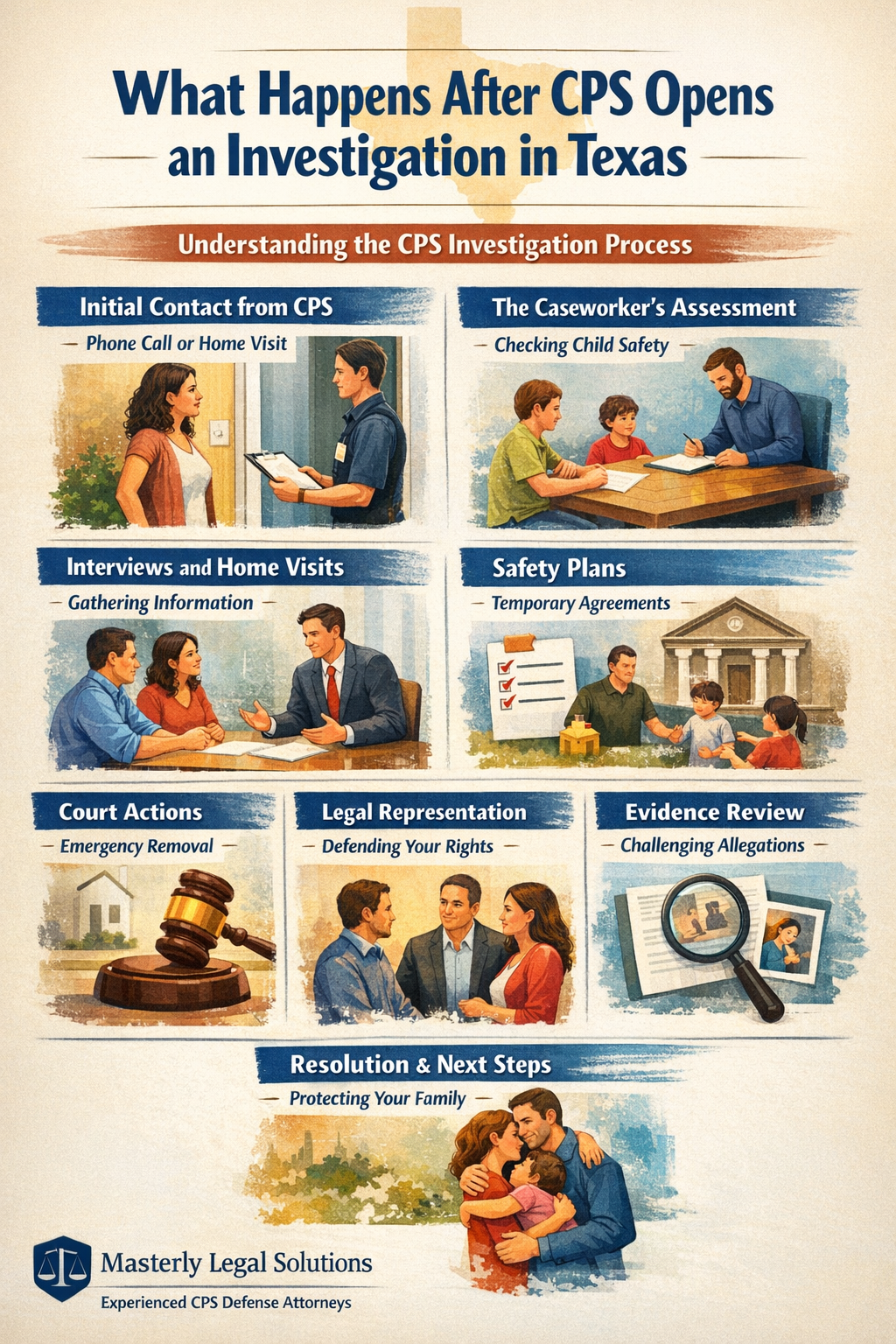
Once CPS opens an investigation, a CPS caseworker or CPS workers may contact the parents by phone or appear at the home. This initial contact is meant to gather basic information and assess immediate child safety. The caseworker may ask questions about the child, the parents, and the home environment.
Parents should know that they have rights during this stage. You are not required to answer every question without first speaking to an attorney. An initial consultation with a defense attorney can help you understand how to respond appropriately.
What the Caseworker Is Looking For
During the first visit, CPS focuses on safety concerns. This may include observing the child’s physical condition, the living space, and family interactions. If medical attention is needed, CPS may request evaluations or records.
The caseworker’s goal is ensuring child safety, but their observations and notes can influence the entire investigation. What you say and how you respond matters.
Types of Allegations CPS Investigates
CPS investigations may involve a wide range of allegations, including child abuse, child neglect, sexual abuse, or child maltreatment. Some cases involve accusations of abuse or neglect related to supervision, housing conditions, or educational needs.
Not every allegation is accurate or supported by sufficient evidence. Still, CPS must investigate to determine whether the child is abused or at risk. This is where CPS defense becomes critically important.
The Investigation Timeline in Texas
How Long CPS Has to Investigate
In Texas, a CPS investigation typically lasts up to forty-five days. During this time, CPS gathers evidence, interviews witnesses, and evaluates whether ongoing protective services are needed. Extensions may occur in certain CPS cases depending on complexity.
Throughout the investigation, CPS documents findings that may later be used in court proceedings. Having a defense attorney involved early can help protect parental rights and ensure fairness.
Interviews and Information Gathering
CPS may interview parents, children, relatives, teachers, and school officials. They may review medical records, counseling notes, and other documents related to the child’s well being.
Parents should be cautious and informed during interviews. Statements made without legal guidance can be misunderstood or taken out of context.
Home Visits and Safety Plans
What Happens During Home Visits
Home visits allow CPS to assess the environment where the child lives. They may look at sleeping arrangements, food availability, and general cleanliness. While this can feel invasive, it is a routine part of the investigation process.
CPS may also discuss creating a safety plan. These plans are meant to address immediate risks without removing the child from the home.
Safety Plans and Their Impact
A safety plan might include temporary changes such as another adult supervising the child or restricting contact with certain individuals. While safety plans are not court orders, failing to follow them can escalate the case.
Before agreeing to any plan, it is wise to consult an experienced attorney who understands CPS defense strategies.
When CPS Involves the Court
Emergency Court Intervention
If CPS believes a child faces immediate danger, they may seek court intervention. A judge can issue a court order allowing CPS to remove the child temporarily. This is often one of the most frightening moments for parents.
Removal does not mean parental rights are terminated. It begins a legal process that includes hearings and family court proceedings focused on the best interest of the child.
Temporary Orders and Custody
In court, a judge may decide on temporary custody, placement with relatives, or foster care. Supervised visitation may be ordered while the case continues. These decisions are heavily influenced by evidence and legal arguments presented.
Strong legal representation can help present compelling arguments that protect family relationships and challenge unsupported allegations.
The Importance of Evidence in CPS Cases
Evidence plays a central role in CPS investigations and court proceedings. CPS may rely on photographs, medical reports, school records, and witness statements. However, not all evidence tells the full story.
A defense attorney can review whether CPS has sufficient evidence and identify weaknesses or inconsistencies. Challenging assumptions and incomplete information is a key part of effective CPS defense.
Criminal Charges and CPS Investigations
In some cases, CPS investigations run parallel to criminal investigations. Allegations involving severe abuse may lead to criminal charges. This makes it even more important to speak with an attorney before making statements.
What you say to CPS can potentially be used in criminal court. Coordinated legal strategy helps protect your rights on all fronts.
Parental Rights During a CPS Investigation
Parents retain parental rights throughout the investigation unless a court orders otherwise. You have the right to understand the allegations, review documents, and seek legal counsel.
Protecting parental rights requires proactive involvement. Waiting too long to contact a lawyer can limit available options.
Juvenile Dependency and Ongoing Services
Some CPS cases move into juvenile dependency proceedings. This means the court oversees services and monitors family progress. CPS may recommend counseling, parenting classes, or other services.
These services are often presented as support, but they can also be used to evaluate compliance. Legal guidance helps families understand expectations and avoid missteps.
Foster Care and Placement Decisions
If removal occurs, CPS may place the child with relatives or in foster care. Placement decisions aim to maintain stability and ensure safety. Parents often feel powerless during this stage, but they still have legal rights.
An attorney can advocate for relative placement, increased visitation, and reunification goals.
Supervised Visitation and Family Contact
Supervised visitation allows parents to maintain contact while addressing safety concerns. These visits are monitored and documented. How parents interact during visits can influence future custody decisions.
Preparation and legal advice can help parents navigate supervised visitation successfully.
The Role of CPS Defense Attorneys
CPS defense attorneys focus on protecting families while addressing CPS concerns. At Masterly Legal Solutions, our law firm provides CPS defense rooted in experience, strategy, and compassion.
We understand how CPS workers operate, how evidence is evaluated, and how to present a strong defense. Our proven track record reflects our commitment to protecting families.
How Legal Representation Changes the Process
Having an experienced attorney changes how CPS communicates and proceeds. Legal representation ensures that your rights are respected and that responses are thoughtful and informed.
From the initial consultation through court proceedings, an attorney helps manage risk and reduce uncertainty.
Addressing Allegations of Abuse or Neglect
Allegations of child abuse and neglect are serious and emotionally charged. Not every allegation reflects reality, and misunderstandings happen frequently.
A defense attorney can help demonstrate context, provide documentation, and counter unsupported claims. Effective CPS defense focuses on facts, not assumptions.
Counseling, Services, and Compliance
CPS may recommend counseling or services as part of a case plan. Participation can be beneficial, but it should be approached carefully and strategically.
Legal advice helps families understand how services affect the case outcome and long-term custody decisions.
County Differences in CPS Practices
CPS practices can vary by county. While Texas has statewide standards, local offices may operate differently. Families in large counties often experience more complex proceedings.
Understanding local court expectations and county procedures helps create a stronger defense.
Comparing CPS Practices Beyond Texas
While this article focuses on Texas, families sometimes hear comparisons to practices in southern California or Orange County. Each state and county operates under different laws and standards.
Relying on Texas-specific legal guidance is essential when dealing with CPS here.
Building a Strong Defense Strategy
Effective CPS defense involves preparation, documentation, and communication. This includes gathering records, identifying witnesses, and preparing for hearings.
A defense attorney crafts a strategy that addresses both immediate concerns and long-term family goals.
How Masterly Legal Solutions Supports Families
Our law firm works closely with clients to understand their unique situations. We know this is a challenging time, and we take a personalized approach to every CPS case.
With a focus on protecting children, preserving families, and defending parental rights, we guide clients through every stage of the process.
Taking the Next Step With Confidence
Facing allegations and a CPS investigation can feel isolating, but you do not have to face it alone. The decisions made early in the process often shape the outcome.
Getting informed, seeking legal representation, and acting proactively can help protect your family and your future.
How Child Protection Services Fits Into CPS Investigations
Child protection services operates as part of a broader system designed to respond when concerns arise about a child’s safety and well being. In Texas, this system works closely with CPS to review reports, assess risk, and determine whether formal action is needed. While the goal is protection, involvement by child protection services can feel intimidating for parents, especially when decisions are made quickly. Understanding how this system functions helps families respond calmly and protect their rights throughout the process.
Understanding Child Protective Services CPS and Its Responsibilities
Child protective services CPS is the division responsible for handling reports related to abuse or neglect and deciding whether intervention is necessary. This authority allows CPS to interview families, request records, and recommend services when concerns exist. Although CPS has broad discretion, its actions must still follow Texas law and respect parental rights. Legal guidance can help ensure that CPS exercises its authority appropriately and fairly.
How Child Protective Services Cases Move Forward
Child protective services cases typically progress through several stages, beginning with an investigation and potentially moving into court oversight. Each case is evaluated based on the specific facts, the child’s needs, and whether sufficient evidence supports continued involvement. These cases can evolve quickly, especially if CPS believes immediate action is required. Having legal representation helps families respond effectively as a case develops.
The Role of Social Services in CPS Matters
Social services often work alongside CPS to provide resources such as counseling, parenting classes, or community support programs. While these services are intended to assist families, participation may also be monitored and documented as part of the case. Parents should understand how involvement with social services can impact custody decisions and future court proceedings. An attorney can help families navigate these services without compromising their defense.
What Happens in a Neglect Case
A neglect case may arise when CPS believes a child’s basic needs are not being met, even without intentional harm. These cases often involve subjective judgments about supervision, living conditions, or access to education and medical care. Because neglect allegations can be misunderstood or overstated, evidence and context matter greatly. A strong legal strategy helps clarify the facts and protect parental rights.
Legal Expertise Matters in CPS Defense
CPS cases require specific legal expertise due to the overlap between family law, administrative procedures, and court rules. An attorney with experience in CPS defense understands how investigations unfold and how to challenge unsupported claims. This expertise allows families to respond strategically rather than react emotionally. Knowledge of the system often makes a significant difference in outcomes.
Understanding CPS Authority and Its Limits
CPS has significant authority to investigate and recommend actions, but that authority is not unlimited. Certain steps, such as removing a child or restricting custody, generally require court approval. Parents have the right to question CPS decisions and request judicial review when necessary. Legal counsel ensures that CPS actions stay within legal boundaries.
The Importance of Proper Filing in CPS Proceedings
Filing documents correctly and on time is critical in CPS-related court matters. Missed deadlines or incomplete filings can negatively affect a parent’s position and limit available options. Courts rely heavily on formal filings when making decisions about custody and services. An attorney helps ensure that all filings are accurate, timely, and aligned with the family’s defense strategy.
Contact Masterly Legal Solutions for Support
If CPS has opened an investigation involving your child or family, now is the time to seek trusted legal guidance. At Masterly Legal Solutions, our CPS defense attorneys offer a free consultation to answer your questions and explain your options. We understand how stressful CPS cases can be, and we are committed to helping parents and educators facing misconduct investigations protect their rights and their family.
Contact us today at (972) 236-5051 to speak with our team and learn how we can help you move forward with clarity and confidence.
Disclaimer: This article is for informational purposes only and does not constitute legal guidance or create an attorney-client relationship. Every CPS case is different, and you should consult with a qualified attorney regarding your specific situation.

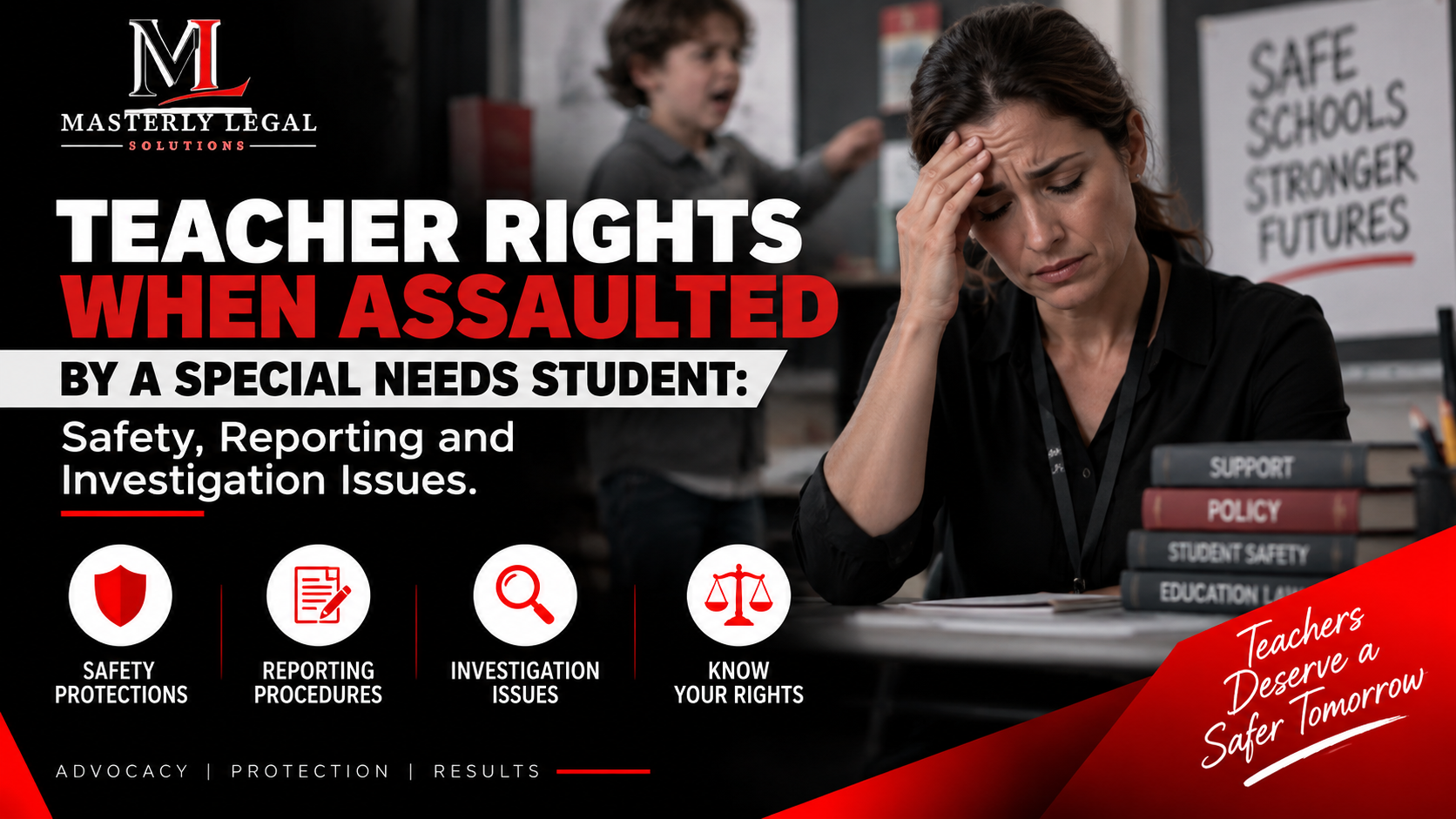
Teacher Rights When Assaulted by a Special Needs Student: Safety, Reporting and Investigation Issues


Looking for Legal & Business Solutions? Contact Us Now
Fill in the form or call us to set up a meeting





