

Mistakes That Strengthen a CPS Case Even When You’re Innocent
When Doing Nothing Wrong Still Leads to Serious Consequences
For many families, involvement with child protective services cps comes as a complete shock. Parents often believe that if they have done nothing wrong, the situation will resolve itself quickly. Unfortunately, that is not always the case. Even when there is no child abuse or abuse or neglect, certain actions—or inactions—can unintentionally strengthen a cps case.
At Masterly Legal Solutions, we have seen how quickly cps investigations can escalate. What begins as a simple report can turn into a complex legal matter involving the juvenile dependency court, protective services, and even a criminal investigation. Understanding the most common mistakes is critical to protecting your parental rights and your child’s future.
Understanding the CPS Investigation Process
The cps investigation process is designed to evaluate child's safety and determine whether there are valid concerns about abuse or neglect. However, many families are unprepared for how detailed and intrusive the process can be.
What Happens During an Investigation
During the investigation stage, cps workers and social workers may:
- Visit the child's home
- Interview the child's parents, teachers, and other family members
- Conduct a risk assessment
- Request documentation related to the child's care
Their goal is to investigate reports thoroughly and determine whether the child faces any immediate risk or potential harm.
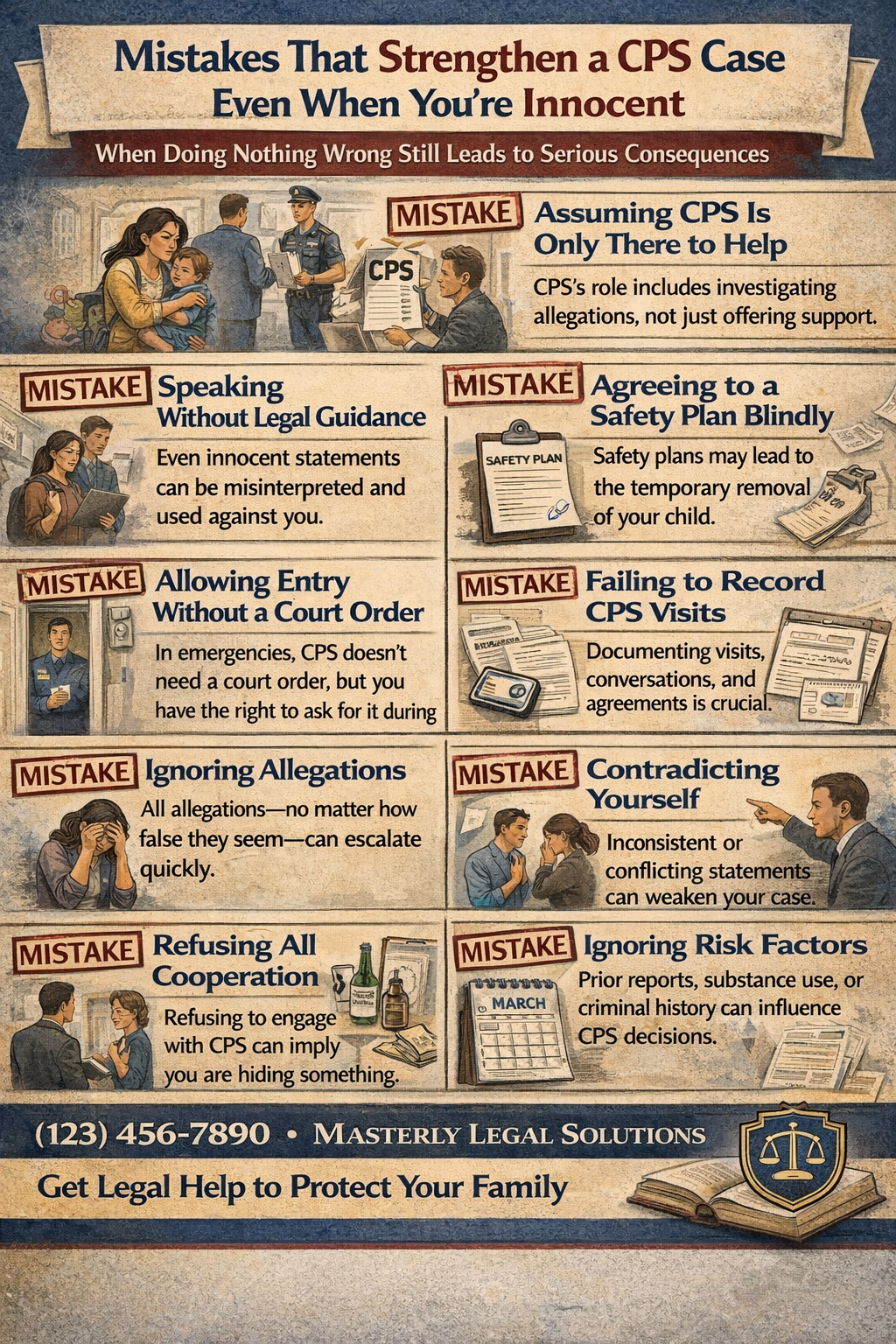
Mistake: Assuming CPS Is Only There to Help
It is true that child protective services exists to protect children, but their role is not limited to offering support. They are also responsible for investigating allegations and making decisions that can affect your family permanently.
Why This Mindset Can Be Risky
Many parents cooperate fully without understanding the implications of what they say or do. While cooperation is important, it must be done carefully. Statements made during a cps investigation process can be misunderstood or used out of context, especially when there is an alleged perpetrator identified.
Mistake: Speaking Without Legal Guidance
One of the most common mistakes is talking to cps workers without first consulting legal counsel. Even innocent explanations can be misinterpreted.
The Importance of Legal Representation
An experienced attorney can:
- Help you understand your rights
- Prepare you for interviews
- Ensure your statements are clear and accurate
Without proper legal representation, you may unintentionally provide information that strengthens a cps case.
Mistake: Agreeing to a Safety Plan Without Understanding It
A safety plan is often presented as a temporary solution, but it can have long-term consequences.
What a Safety Plan Can Include
A safety plan may require:
- Removing a parent from the child's home
- Limiting contact with the child
- Placing the child with a family friend or relative
While it may seem voluntary, agreeing to a safety plan can be seen as an admission that there are legitimate safety concerns.
Mistake: Allowing Entry Without Clarification
Many parents allow cps workers into their home without asking questions or requesting documentation.
When a Court Order Is Required
In some cases, cps investigations require a court order before entering a home or removing a child. Understanding when a court order is necessary can protect your rights and prevent overreach by authorities.
Mistake: Failing to Take Allegations Seriously
Even if the claims seem false, failing to take allegations seriously can harm your case.
Why Every Allegation Matters
Whether the claim involves sexual abuse, neglect, or another concern, cps determines its response based on the information available. Ignoring the situation or assuming it will go away can lead to more aggressive action.
Mistake: Inconsistent Statements
Inconsistent explanations can raise red flags during cps investigations.
How This Affects Your Case
If your statements differ from what cps workers hear from others, it may suggest dishonesty. This can influence the investigation results and lead to further scrutiny.
Mistake: Ignoring Risk Factors
CPS evaluates a variety of risk factors when determining whether a child is safe.
Common Risk Factors Considered
These may include:
- Prior reports of abuse or neglect
- A parent’s criminal history
- Evidence of substance use, including a requested drug test
Even if these factors do not prove wrongdoing, they can influence the outcome of a cps case.
Mistake: Refusing All Cooperation
While blind cooperation can be risky, refusing to cooperate entirely can also be damaging.
Finding the Right Balance
CPS expects families to participate in the investigation process. Refusal to engage may be interpreted as hiding something, which can lead to more aggressive actions by protective services.
Mistake: Overlooking Documentation
Failing to document interactions with cps workers can leave you vulnerable.
What You Should Keep Track Of
- Dates and times of visits
- Names of cps workers and social workers
- Copies of any forms or agreements
Accurate records can be critical if your case moves to a court hearing.
Mistake: Not Understanding Voluntary Agreements
Many parents agree to a voluntary agreement without fully understanding its impact.
What This Can Lead To
A voluntary placement agreement may result in your child being placed in foster care temporarily. While presented as optional, these agreements can affect your parental rights if not handled carefully.
Mistake: Assuming the Case Will Close Quickly
Some families expect administrative closure within days or weeks.
The Reality of CPS Timelines
In many cases, cps investigations take longer, especially when additional information is needed. Delays can occur when cps workers gather input from medical providers, schools, and other sources.
Mistake: Not Utilizing Available Resources
There are many family and community resources and legal support services available to help families during a cps case.
Support Systems That Can Help
- Community resources for parenting support
- Access to family services
- Assistance from organizations like the Texas Legal Services Center
These resources are designed to support families and improve outcomes.
Mistake: Minimizing Safety Concerns
Even if you believe the concerns are exaggerated, minimizing safety issues can hurt your case.
Why CPS Takes This Seriously
If cps believes there is any chance of serious harm or immediate danger, they will act quickly to protect the child. Acknowledging and addressing concerns shows responsibility.
Mistake: Not Preparing for Court Involvement
Many cases eventually involve the juvenile dependency court, and having counsel from a firm with broad experience in education law, business consulting, and related legal services can be especially valuable.
What Court Involvement Means
The court may decide issues related to:
- Temporary custody
- Parental visitation
- Long-term placement decisions
Understanding the role of the juvenile dependency court is essential when preparing your case.
Mistake: Forgetting About the Bigger Picture
A cps case does not just affect the present—it can impact your child’s future, making it important to think about essential legal documents for your family’s long-term protection.
Long-Term Consequences
Outcomes may affect:
- Your child’s placement in foster care
- Your relationship with your child
- Your standing in future family law matters
Protecting your child’s well being should always remain the priority.
When CPS and Law Enforcement Work Together
In more serious situations, a cps and law enforcement investigation may occur simultaneously.
How This Changes the Case
When law enforcement becomes involved, the situation may escalate into a criminal case. This increases the stakes significantly and requires immediate legal attention.
The Importance of a Thorough Investigation
A proper thorough investigation should consider all sides of the story.
What You Should Expect
CPS should:
- Review all available evidence
- Interview relevant individuals
- Consider the context of the allegations
However, mistakes can happen, which is why having legal support is so important.
Protecting Your Parental Rights
Your parental rights are fundamental and must be protected throughout the process.
Why Legal Guidance Matters
An experienced attorney can help ensure that your rights are respected and that decisions are not made unfairly. This is especially important in complex cases involving multiple allegations.
Moving Forward With Confidence
Facing a cps case can feel overwhelming, especially when you know you are innocent. The process can be confusing, emotional, and stressful for both parents and children.
Taking the right steps early can make a significant difference. Understanding the process, avoiding common mistakes, and seeking help when needed can protect your family and your future.
How Child Protective Investigations Begin and What They Involve
Child protective investigations are typically initiated after a report is made to child protective services cps regarding concerns about a child’s safety. These investigations are designed to determine whether child abuse or neglect may be present and whether intervention is necessary. During this process, a cps investigator gathers information from multiple sources, including the child's family, schools, and medical providers. The goal is to complete investigations thoroughly and fairly, but misunderstandings can still occur if families are not properly prepared.
The Role of Child and Family Services During a Case
In many situations, child and family services work alongside protective services to provide support while an investigation is ongoing, much like how legal support for educators facing school investigations helps protect professional futures during parallel inquiries. These agencies may offer support services aimed at helping families maintain stability and address concerns without removing the child from the home. While these programs can be beneficial, participation should be carefully considered, especially when a cps case is still being evaluated. Understanding your options is essential to making informed decisions.
Understanding Allegations of Child Abuse or Neglect
When allegations of child abuse or neglect are made, CPS must take them seriously, regardless of whether they are ultimately proven. The investigation will focus on whether neglect occurred or if there is evidence of alleged abuse. In some cases, the child may be identified as the alleged victim, and their statements can carry significant weight. Even when there is no serious abuse, the perception of risk can influence how the case proceeds.
Voluntary Services Can Still Impact Your Case
CPS may offer voluntary services as a way to address concerns without court involvement. These services are often presented as helpful and cooperative options, but agreeing to voluntary services can sometimes be interpreted as acknowledging a problem. Families should understand that participation is not always required and may have legal implications. Consulting with an attorney before agreeing to these services can help protect your rights.
The Importance of a Family Assessment
A family assessment is often conducted early in the process to evaluate the home environment and identify any potential risks. This assessment may include interviews, home visits, and a review of the child’s living conditions. The findings can influence whether CPS believes that neglect occurred or if further action is necessary. Being prepared for this step can make a significant difference in the outcome of a cps case.
Accessing Legal Aid During a CPS Case
Many families are not aware that legal aid and local office contact options for Masterly Legal Solutions may be available during a CPS investigation. These services can provide guidance and help you understand your rights, especially if you cannot afford private representation. While legal aid can be a valuable resource, it is important to ensure that you receive advice tailored to your specific situation, especially when your concerns overlap with employment, education, or internal investigation issues. Early legal support can help prevent costly mistakes, particularly when independent internal investigations and compliance concerns intersect with your family’s situation.
The Role of the CPS Investigator
A cps investigator plays a central role in gathering facts and making recommendations. They are responsible for interviewing witnesses, reviewing evidence, and assessing whether the child is safe. Their findings often influence the direction of the case, including whether it moves forward to court. Understanding how a cps investigator operates can help families respond more effectively during the process.
How Investigations Affect the Child’s Family
A CPS case does not just impact one individual—it affects the entire child's family. Stress, uncertainty, and fear can take a toll on relationships and daily life. Families may feel pressure to comply with requests while trying to maintain stability for the child. Navigating these challenges requires careful planning and support.
Reasonable Accommodations and Special Circumstances
In some cases, families may require reasonable accommodations, particularly when disabilities or special needs are involved. CPS is expected to consider these factors when evaluating a situation and making decisions. Failing to request or document necessary accommodations can negatively impact the case. Being proactive in this area is important for protecting your rights.
The Role of the Texas Department in CPS Cases
In the state of Texas, the Texas Department of Family and Protective Services oversees CPS activities. This agency sets policies and guidelines for how investigations are conducted. Understanding the role of the family and protective services system can help families better navigate the process, just as colleges and universities benefit from specialized higher education law services and compliance guidance. It also highlights the importance of compliance with state-specific procedures.
Comparing Practices Across Different Regions
While this article focuses on Texas, it is worth noting that CPS practices can vary by location. For example, procedures in Southern California may differ from those in Texas, even though the core mission remains the same. These differences can affect timelines, policies, and available resources. Being aware of these variations can provide helpful context.
Background Checks and Their Impact on a Case
As part of the investigation, CPS may conduct a criminal background check on parents or caregivers. This step helps identify any prior concerns that could influence the case. A criminal background check does not automatically determine the outcome, but it can be considered alongside other evidence. Transparency and preparation are key when addressing this issue.
Protecting the Child’s Life and Future
Every CPS case ultimately focuses on the child’s well-being and the stability of their environment. Decisions made during the investigation can have lasting effects on the child's life, including where they live and who they live with. This is why it is critical to approach every step carefully and thoughtfully. Protecting your child’s future should always remain the top priority.
Addressing Serious Abuse Allegations
When CPS suspects serious abuse, the response becomes more urgent and aggressive. These cases may involve additional oversight and quicker decisions regarding placement or custody. Even if the allegations are not accurate, the presence of such claims can significantly impact the investigation. Immediate legal guidance is essential in these situations.
Talk to Masterly Legal Solutions About Your CPS Case
If you are dealing with a cps case, you do not have to face it alone. At Masterly Legal Solutions, we understand how overwhelming cps investigations can be, especially when they involve your family and your child’s future.
Our team is here to guide you through every step of the process. We can help you understand your rights, avoid critical mistakes, and build a strong defense. Whether you are dealing with child protective services, a juvenile dependency court matter, or a situation involving law enforcement, we are ready to stand by your side.
Call us today at (972) 236-5051 for a free consultation. We will take the time to listen to your concerns, answer your questions, and help you make informed decisions during this difficult time.
Disclaimer: This article is for educational purposes only and does not constitute legal advice. Every case is different, and you should consult with a qualified attorney regarding your specific situation.




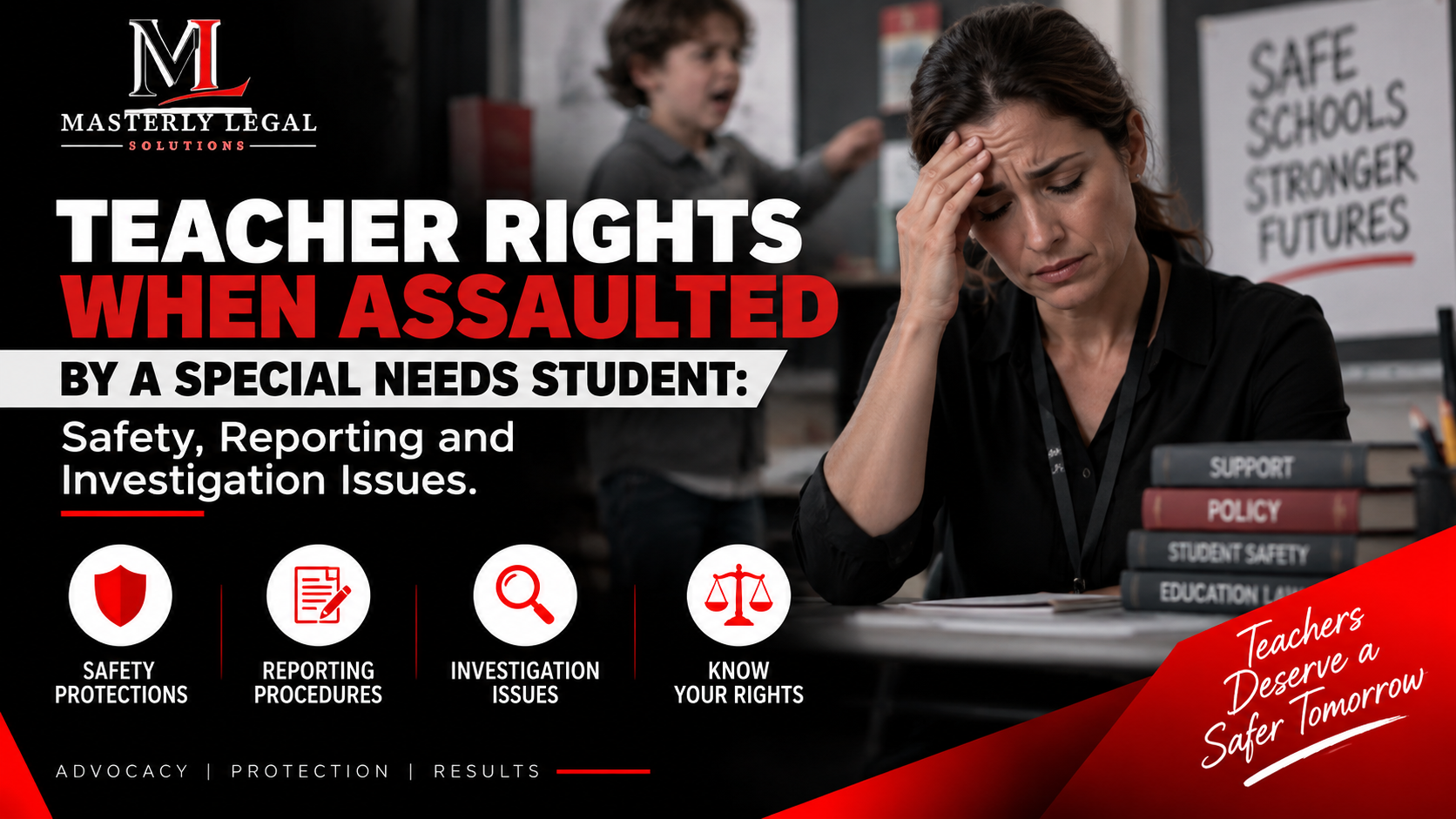
Teacher Rights When Assaulted by a Special Needs Student: Safety, Reporting and Investigation Issues


Looking for Legal & Business Solutions? Contact Us Now
Fill in the form or call us to set up a meeting





