NIL Collectives: How They Work and What Athletes Should Review
By Andrew Rhoden | Masterly Legal Solutions
An NIL collective is an organization that connects college athletes with opportunities to earn compensation from their name, image, and likeness. Collectives may raise money from supporters, businesses, or donors and arrange promotional agreements with athletes. Before signing, athletes should understand payment terms, contract obligations, eligibility requirements, and possible legal risks.
College athletics has changed significantly with the growth of Name, Image, and Likeness (NIL) compensation. Student-athletes can now enter commercial agreements that may affect their finances, public image, and future opportunities.
However, an attractive payment offer does not automatically mean the agreement is appropriate or compliant with current rules.
For athletes and families, understanding the legal details before accepting an offer can prevent confusion about compensation, promotional obligations, and contractual restrictions.
Masterly Legal Solutions assists athletes, families, and sports organizations with legal concerns involving NIL agreements, contract terms, and the changing rules governing college athletics.
What Is an NIL Collective?
An NIL collective is a group or organization that helps arrange paid opportunities for college athletes to use their name, image, and likeness. Some collectives are supported by alumni, businesses, or university supporters. Although many have close connections to a school's athletic community, collectives generally operate as separate organizations rather than university departments.
What Is NIL in College Athletics?
NIL stands for Name, Image, and Likeness.
The NCAA approved its likeness policy, and the nil start became effective July 1, 2021, allowing student-athletes to begin earning compensation from certain commercial uses of their identity under an ncaa approved framework.
An athlete might participate in a local business promotion, endorse a product, or license their image for a marketing campaign.
NIL compensation is different from an athletic scholarship, although athletes may receive both.
NIL arrangements also differ from direct payments that eligible colleges may provide under the framework established by the House settlement.
For athletes, the most important question is not simply how much money an agreement offers. It is what the athlete must provide in return, whether the arrangement complies with applicable requirements, and whether the contract has been properly reviewed.
How NIL Collectives Raise Money and Pay Athletes
NIL collectives often obtain financial support through contributions from alumni, athletic supporters, businesses, and other interested parties.
Some operate through membership programs, partnerships with commercial sponsors, or digital fundraising campaigns that support opportunities for athletes. Funding can also be tied to brand deals with private sponsors, including apparel companies. In some cases, a candy brand or another consumer product company may pay for the use of an athlete’s name or image.
The collective may then arrange opportunities for athletes to appear in promotional campaigns, attend events, create sponsored content, or license their NIL rights, which is one way athletes may receive NIL money.
However, the source of funding and the actual business purpose of the payment matter under current college athletics rules. That structure also matters because collective funding often flows more heavily to revenue sports such as football and men’s basketball.
How Collectives Differ From Universities
A collective is generally a separate organization, even when it supports athletes associated with a particular university.
Universities have their own athletic departments, compliance responsibilities, and institutional policies.
Under the House settlement framework and recent NIL changes, certain participating Division I schools can pay athletes directly starting July 1, 2025, within applicable settlement limits.
Those school payments are distinct from third-party NIL agreements involving businesses, sponsors, or collectives.
A collective's connection with a university may also affect how an NIL agreement is reviewed.
An organization does not avoid applicable compliance requirements simply because it operates independently on paper, and university athletic departments may still help athletes navigate the school side of these arrangements.
Can Collectives Pay Athletes for Playing?
Under the current House settlement framework, associated NIL entities cannot engage in pay for play or compensation that is payment tied to performance or playing time, including payments to attend, remain at, or compete for a particular institution while presenting the compensation as an ordinary NIL transaction.
Compensation involving associated entities must satisfy applicable valid-business-purpose requirements.
For example, a genuine promotional arrangement involving an athlete endorsing products or services offered to the public through social media posts may be treated differently from a payment made solely to influence an athlete's enrollment or athletic participation.
The specific agreement, source of compensation, promotional activities, and relationship between the parties determine which rules apply.
Current NCAA and Texas NIL Rules
Rules reviewed: November 20, 2026
NIL regulations have changed significantly following the federal court's approval of the House v. NCAA settlement on June 6, 2025.
The settlement introduced a new Division I framework involving institutional financial benefits, third-party NIL reporting, and oversight by the College Sports Commission (CSC).
NCAA Division I Reporting Requirements
Under the current rules, NCAA Division I athletes must report third party NIL deals with an aggregate value of $600 or more through NIL Go, the reporting platform used by the CSC.
Generally, reportable agreements must be submitted within five business days, although particular situations involving prospective or transferring athletes may have different requirements.
Associated-entity agreements are subject to review for a valid business purpose and applicable compensation standards, and NIL Go evaluates key factors including fair market value and whether compensation reflects a valid business purpose.
Under a policy effective July 1, 2026, associated deals valued between $600 and $15,000 generally are not subjected to range-of-compensation review unless the athlete's total associated-deal compensation exceeds $50,000 during the academic year.
This policy does not remove the reporting requirement or the valid-business-purpose standard.
The CSC evaluates whether the arrangement reflects legitimate NIL activity and whether applicable compensation rules are satisfied. School approval or other institutional review may still matter depending on the athlete's school and applicable policies.
A payment from a collective is not automatically permissible merely because the athlete signs an agreement.
Texas NIL Law and Athlete Eligibility
Texas Education Code Section 51.9246 addresses compensation and professional representation involving student-athletes at covered institutions.
Texas House Bill 126, enacted in 2025, updated parts of the state's NIL framework.
However, high school athletes and prospective college athletes face additional restrictions, and NIL laws governing NIL activities rules vary by state, school, conference, and governing body.
Current University Interscholastic League (UIL) guidance permits prospective collegiate athletes aged 17 or older to sign certain NIL agreements with postsecondary institutions, subject to applicable requirements.
The UIL does not permit agreements with other entities, including collectives, to be executed before the athlete has exhausted UIL eligibility in the applicable sport.
These distinctions are important because a contract appropriate for a college athlete may create eligibility concerns for a high school athlete, so athletes should check their athletic program’s requirements before signing.
Because NCAA, CSC, and Texas requirements may change, athletes and families should obtain current legal guidance before entering agreements, especially since schools may have their own NIL rules that differ from state law.
What Athletes and Families Should Review in a Collective Agreement
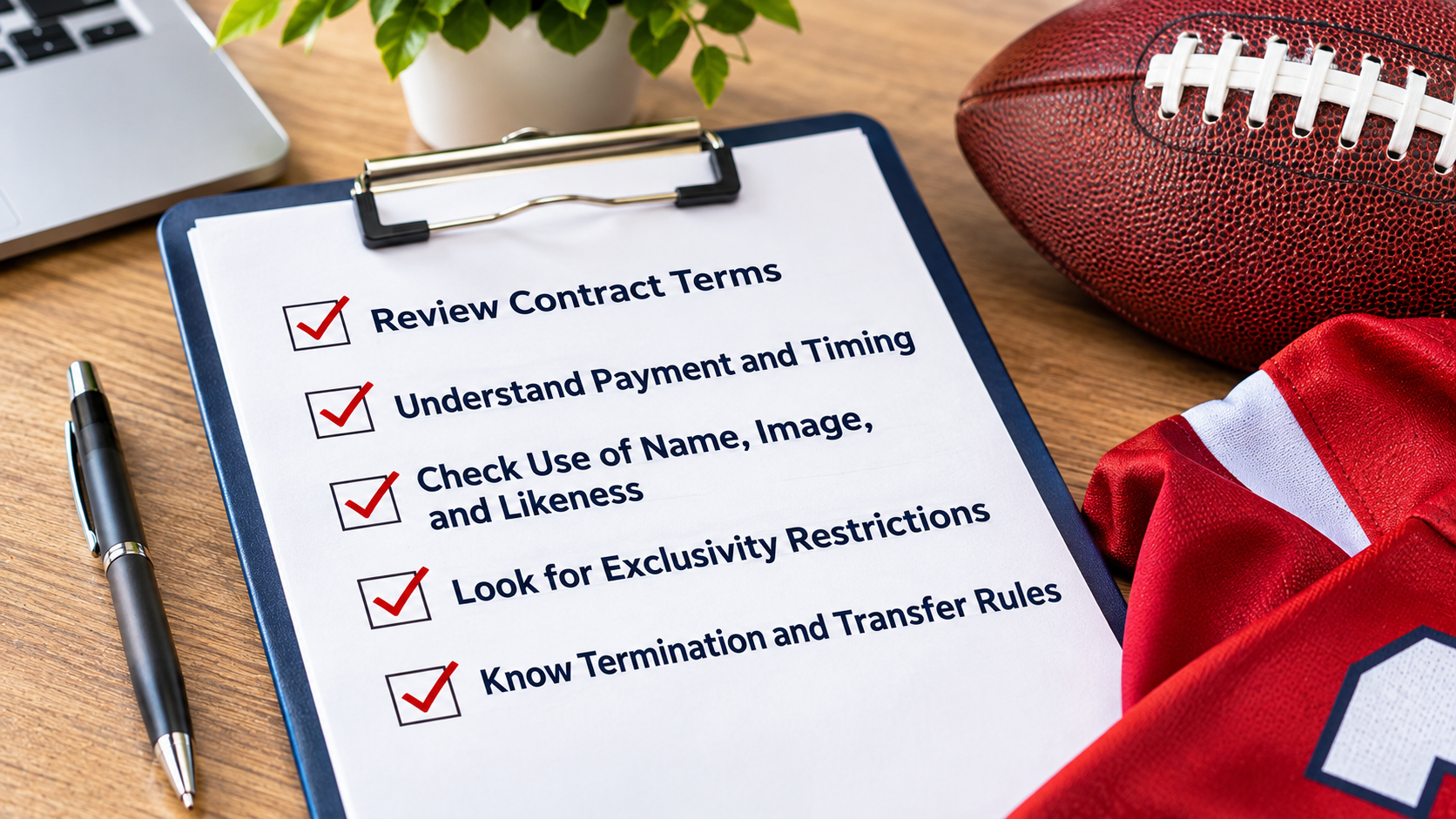
An NIL agreement is a legal contract that may establish financial obligations, commercial rights, and restrictions on an athlete's future activities.
Before accepting compensation, athletes should understand what the contract permits and requires.
Payment Terms and Compensation
The agreement should clearly identify the amount of compensation, payment schedule, and conditions that must be satisfied.
Some contracts provide fixed payments, while others involve installments, bonuses, or compensation tied to specific promotional activities.
Athletes should understand whether payments depend on completing appearances, producing content, or meeting other contractual requirements. nil income may be taxable, so athletes should track income and related expenses. many athletes work with a qualified tax or financial advisor to understand reporting and deductible-expense issues.
An attorney can evaluate whether the payment provisions are clear and identify terms that may create financial disputes.
Use of Name, Image, and Likeness
A collective agreement may grant another party permission to use an athlete's name, photograph, voice, signature, or other identifying features.
The scope of those rights matters.
An agreement may permit use in advertisements, merchandise, websites, social media campaigns, content creation, or future marketing materials, and broad language may also reach licensed uses tied to selling merchandise.
Some provisions may extend beyond the initial contract period.
Legal counsel can review the licensing language and explain how it may affect the athlete's control over future commercial opportunities.
Exclusivity and Conflicting Sponsorships
Some NIL contracts restrict athletes from promoting competing products or working with other sponsors.
For example, an agreement with one business might limit future endorsements within the same product category, and conflicts can also arise with brand deals or sponsored relationships tied to an athlete’s personal brand.
Exclusivity provisions can affect an athlete's ability to accept additional opportunities.
Universities and athletic programs may also have sponsorship arrangements that raise separate compliance questions, so athletes should ask whether proposed deals conflict with school or conference restrictions before signing.
Before signing, athletes should understand whether the contract creates restrictions that could affect other business relationships.
Termination, Transfer, and Dispute Provisions
Athletes may transfer schools, change their athletic participation, or receive new endorsement opportunities.
An NIL agreement should be reviewed for provisions addressing these circumstances. It should also state whether obligations continue if the athlete transfers during the recruiting process or changes schools.
Termination clauses may identify when payments stop, whether money must be repaid, and what happens to licensed NIL rights after the agreement ends.
Contracts may also specify how disputes are handled, which state's law applies, and whether prohibited NIL activities include agreements without a valid business purpose or failures to complete required reporting or approval steps.
These provisions can have substantial financial consequences.
An attorney can explain the contract's obligations and evaluate whether proposed changes should be discussed before execution.
What University Staff and Coaches Should Know About Collective Contact
University administrators, athletic department personnel, and coaches may communicate with third-party NIL organizations.
However, the relationship between a school and a collective can create compliance concerns.
The applicable rules depend on the type of activity, the parties involved, and the institution's policies.
Communication and Institutional Involvement
Current NCAA Division I rules permit certain forms of institutional assistance with NIL opportunities, and recent NIL changes allow some athletes to discuss opportunities earlier in the recruiting process, even though schools still cannot use third-party NIL promises improperly.
However, schools cannot treat third-party payments as unrestricted tools for recruiting or retaining athletes.
Associated-entity status and the purpose of an agreement are important considerations under the CSC framework.
For example, communications involving a collective, a prospective athlete, an athletic department, and college coaches may require review to determine whether each party understands the school’s NIL rules and limits and whether an arrangement complies with applicable recruiting and NIL rules.
Staff should also understand the distinction between permissible assistance and commitments that may violate institutional or governing-body requirements.
Compliance Concerns for Athletic Departments
University personnel may encounter questions involving undisclosed agreements, payments through associated entities, and athletes receiving compensation from outside organizations.
Some collectives also offer financial literacy and marketing education, which can create added compliance and oversight questions for athletic departments.
The CSC has also issued guidance concerning financial arrangements between institutions, athlete representatives, and collectives that may raise concerns about circumventing settlement limits.
Legal guidance can help institutions evaluate contractual arrangements, internal procedures, and potential compliance concerns.
Masterly Legal Solutions also provides NIL Training for Colleges and Universities to help institutions understand their responsibilities within the changing NIL environment.
Collectives have reshaped college athletics since the NCAA lifted its ban on NIL in 2021, and this major shift can also raise concerns about competitive balance and locker-room tension within programs.
For school districts and high school athletic programs, the firm offers information about NIL Training and Compliance for School Districts.
When Should an Athlete Have an Attorney Review an NIL Deal?
Athletes and families may benefit from legal advice before signing a collective agreement, particularly when the contract involves significant compensation, broad licensing rights, or long-term obligations.
Legal review may be especially valuable when:
- An agreement includes exclusivity or restrictions on future sponsorships.
- Payment terms are unclear or depend on additional conditions.
- The contract grants extensive rights to use the athlete's identity.
- A transfer or change in school enrollment could affect the agreement.
- The collective has a close relationship with an institution.
- A proposed arrangement raises questions about NCAA reporting or Texas eligibility requirements.
An attorney can examine the agreement, identify legal concerns, and explain the potential consequences of its terms.
How Masterly Legal Solutions Can Help
Masterly Legal Solutions provides sports-law guidance for athletes, families, and organizations dealing with reviewing NIL deals, including collective agreements, and related legal concerns.
Depending on the circumstances, the firm can assist with reviewing collective agreements, evaluating compensation and licensing provisions, examining termination clauses, and identifying compliance questions.
Legal representation may also involve reviewing proposed revisions, assessing the role of NIL agents when evaluating deal structure or compensation arrangements, or advising clients when disputes arise over payment, contractual duties, or the use of NIL rights.
For broader legal support involving athletic organizations and college sports, explore the firm's Sports Law Services.
The firm's article on When Athletes and Organizations Should Contact a Sports Attorney also explains when professional legal representation may be appropriate.
A NIL compliance checklist can also help clients organize questions for legal review.
Every NIL agreement involves different facts, parties, and obligations. Legal review helps clients understand the agreement before accepting its terms.
Frequently Asked Questions About NIL Collectives
Are NIL collectives part of the university?
Usually, NIL collectives operate as separate organizations rather than official university departments. However, even when they are separate from a university, school approval or school review may still matter under applicable policies and associated-entity rules, and a collective may have close relationships with alumni, donors, businesses, or athletic supporters. Under current NCAA Division I rules, a collective's relationship with an institution may affect whether it is considered an associated entity and which compliance requirements apply, and schools and conferences may also have their own NIL rules in addition to NCAA requirements.
Do high school athletes deal with NIL collectives in Texas?
Texas high school athletes may be able to earn NIL money depending on state law and school rules, but in Texas they still face restrictions involving NIL agreements and UIL eligibility. Current UIL guidance does not permit athletes to execute agreements with collectives or other noninstitutional entities before exhausting eligibility in the relevant sport. A limited pathway exists for certain prospective collegiate athletes aged 17 or older to sign agreements with postsecondary institutions. Deals athletes consider in high school can include autograph signings or other promotional opportunities, but those agreements should be reviewed carefully to avoid losing eligibility. Families should obtain legal guidance before signing any proposed agreement.
Should an athlete have a lawyer review a collective agreement?
Yes, legal review can be valuable before signing NIL deals that involve significant compensation, broad licensing rights, exclusivity, or eligibility concerns. Attorneys can also review deliverables such as signing autographs, sponsored appearances, or social media obligations. An attorney can explain the contract's obligations and identify terms that may affect the athlete's finances, commercial opportunities, and future decisions, while also helping identify whether the agreement reflects fair market compensation rather than an improper arrangement.
Request a Confidential Consultation With Masterly Legal Solutions
An NIL collective agreement may create valuable commercial opportunities, but it can also establish obligations affecting an athlete's income, identity rights, and future opportunities during the limited time many athletes have to build NIL opportunities while enrolled.
Before signing an agreement or accepting proposed compensation, understanding the legal terms and applicable rules is important.
Masterly Legal Solutions assists athletes, families, and sports organizations with NIL contract reviews, sports-law concerns, related compliance questions, and review of collective, school, and third-party NIL agreements before they are signed.
Call (972) 236-5051 to discuss your NIL agreement and available legal options.
This article provides general legal information and does not constitute legal advice. NCAA rules, institutional policies, and state laws may change. Contract rights and compliance requirements depend on the individual circumstances and applicable regulations.




Looking for Legal & Business Solutions? Contact Us Now
Fill in the form or call us to set up a meeting