
Holographic Wills in Texas: When a Handwritten Will Is Valid
A handwritten will can be valid in Texas if it is written entirely in the person's own handwriting, signed, and meets other legal requirements. These documents are called holographic wills. Unlike ordinary witnessed wills, they do not require attesting witnesses when executed, but families may face additional challenges proving authenticity and intent during probate.
Finding a handwritten will after a loved one's death can create difficult questions. Is the document legally valid? Does it replace an earlier will? Can family members rely on its instructions when dividing property?
The concern becomes greater when the writing is unclear, important pages are missing, or relatives disagree about what the deceased person intended.
For Texans considering their own estate plans, handwriting a will may seem convenient. However, unclear language and mistakes can leave loved ones facing disputes and unnecessary legal expenses.
Masterly Legal Solutions provides Texas estate planning and probate services for individuals and families dealing with handwritten wills, disputed inheritance documents, and questions about estate administration.
Our firm helps clients evaluate the legal requirements, understand possible probate issues, and determine whether a professionally prepared will or trust better addresses their circumstances.
1. What Is a Holographic Will?
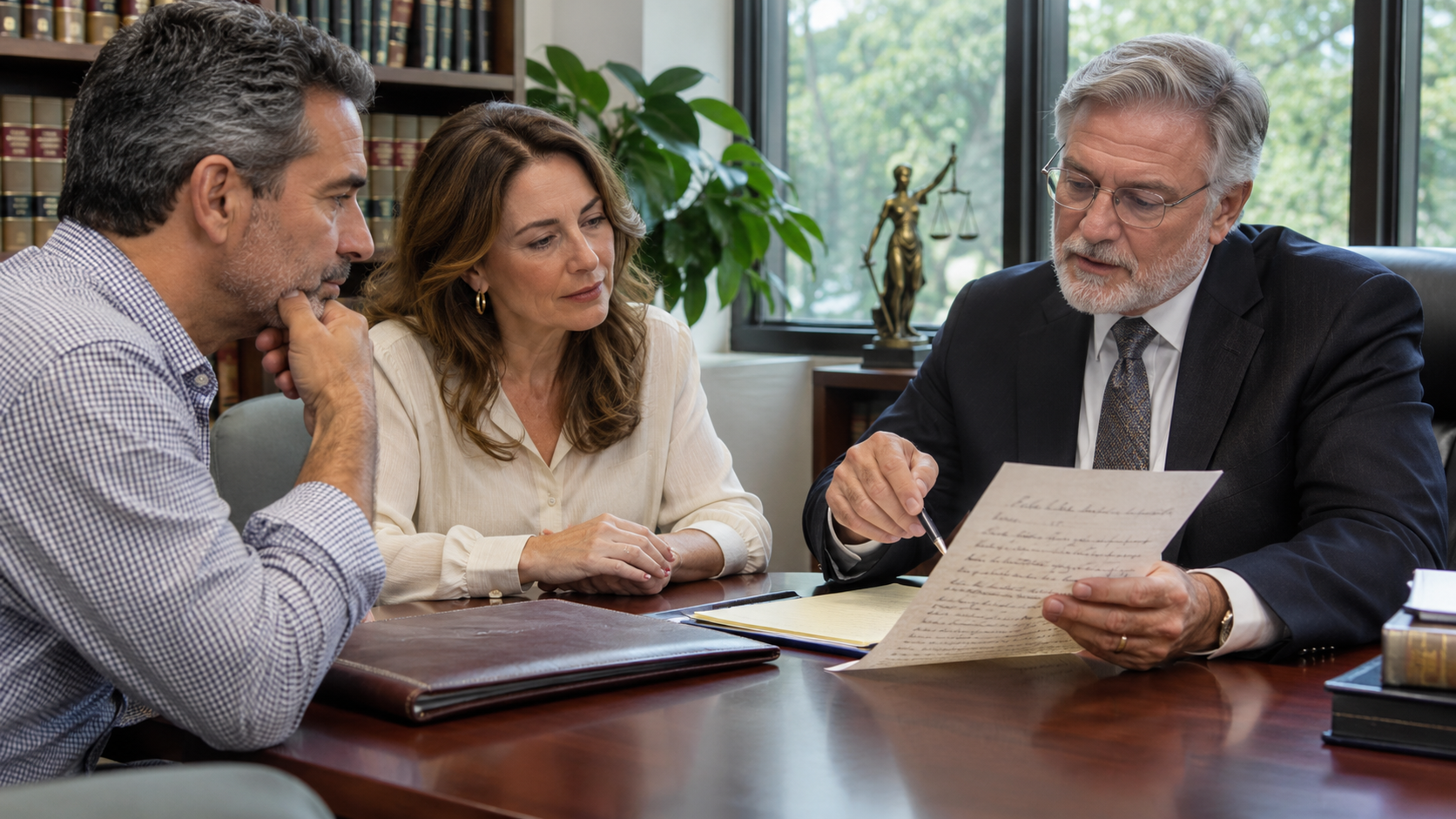
A holographic will is a will written entirely in the handwriting of the person making it, known as the testator. Texas recognizes this type of will without the two subscribing witnesses normally required for an attested will. However, the document must still reflect valid testamentary intent and satisfy applicable legal requirements.
Why Handwritten Wills Create Uncertainty
A handwritten document may appear to express someone's final wishes without clearly establishing whether the person intended it to serve as a legally binding will.
For example, a family may discover a handwritten note listing relatives and property after a parent's death.
One person may believe the note replaces an earlier estate plan. Another may argue that it was only a draft or personal reminder.
These disagreements can become significant when real estate, financial accounts, business interests, or valuable personal belongings are involved.
A document's handwritten appearance alone does not establish its legal validity.
An attorney may need to examine its wording, signature, surrounding circumstances, and relationship to other estate planning documents.
Why Legal Review Matters
People searching for what is a holographic will often want to know whether a simple handwritten document can direct the distribution of an estate.
Texas law permits this type of will, but some states do not recognize holographic wills at all, so whether a handwritten document is accepted depends on state law and does not mean every handwritten statement will be accepted in probate.
Disputes may involve the testator's identity, mental capacity, intent, or whether the writing represents a final decision.
Masterly Legal Solutions can review these concerns and help families understand the options available under Texas probate law.
2. Texas Requirements for a Handwritten Will: Handwriting and Signature
The Document Must Be Entirely in the Testator's Handwriting
Texas Estates Code Section 251.052 provides an exception to the usual witness requirements for a will written wholly in the testator's handwriting.
This is one of the central Texas holographic will requirements.
A document that mixes handwritten directions with typed testamentary provisions may raise questions about whether it qualifies under the holographic exception, because for the Texas exception the entire document should be in the testator's handwriting; while a date is not mandatory, including one is recommended to reduce later disputes.
A printed form containing handwritten additions is not automatically treated the same as an entire will handwritten by its maker.
Whether a particular instrument qualifies depends on the document and applicable law.
Signature, Capacity, and Intent
Texas Estates Code Section 251.051 generally requires wills to be signed. A valid holographic will must still be signed by the testator. Section 251.052 removes the subscribing-witness requirement for qualifying handwritten wills, not every other legal requirement.
The person making the will must also have the required legal capacity and intend the document to direct the disposition of property after death, which are part of the minimal requirements for a valid will in Texas.
Under Texas law, the testator generally must be at least 18, have been or currently be married, or qualify through specified military service.
The person must also have testamentary capacity when making the will.
Family members may dispute whether the individual understood the nature of the document, the property involved, or the people who might inherit.
An attorney can evaluate how these requirements apply to the actual evidence.
Are Witnesses or a Notary Required?
A qualifying holographic will does not require two subscribing witnesses when it is executed.
Texas law also does not make ordinary notarization a general requirement for the underlying handwritten will.
However, notarization may be involved in a separate self-proving affidavit.
This distinction matters because signing a will and making it self-proved are different legal matters.
A handwritten will without a self-proving affidavit may still be valid, but proving it during probate may require additional evidence.
3. Proving a Handwritten Will in Probate: Witness Testimony and Self-Proving Affidavits
A Handwritten Will May Require Evidence of Authenticity
A will does not automatically transfer legal title to estate property merely because relatives discover it after someone dies.
Under Texas Estates Code Section 256.001, a will generally must be admitted to probate before it can establish title or the right to possession of property covered by the will.
When a handwritten will is offered for probate, the court may need evidence establishing that the testator wrote the document and that the testator's signature is genuine.
Texas Estates Code Section 256.154 provides that a holographic will that is not self-proved may be proved through two people familiar with the handwriting, such as relatives or others who can recognize it.
The statute permits specified forms of sworn testimony, affidavits, or depositions, depending on the circumstances. In disputed cases, handwriting experts may also be used, and the process can become time consuming.
What Is a Self-Proving Affidavit?
A self-proving affidavit is a separate sworn statement that can simplify proof of a will's execution during probate.
Texas Estates Code Section 251.107 allows a holographic will to be made self-proved during the testator's lifetime through an attached or annexed affidavit meeting statutory requirements.
A qualifying affidavit addresses matters including the testator's identity, legal eligibility, sound mind, and statement that the will has not been revoked.
A self-proving affidavit does not make every disputed issue disappear.
Family members may still challenge matters such as capacity, undue influence, revocation, or the meaning of the document.
What if Family Members Disagree?
Disagreements may arise when someone questions the handwriting, believes another will exists, or disputes the deceased person's intentions, including whether a handwritten paper reflects the testator's final wishes or was only a draft.
The probate court may need to consider testimony, documents, and other relevant evidence. The probate judge may have to decide whether the document expresses final testamentary intent.
Some matters may involve additional litigation or procedural requirements.
Masterly Legal Solutions can discuss the evidence available, the proposed probate process, and whether legal representation is appropriate.
For related information about presenting a will after death, see Filing a Will in Texas: Do You Need to Record Your Last Will and Testament?.
4. Common Problems: Unclear Gifts, Missing Pages, and No Named Executor
Unclear Property Gifts and Conflicting Instructions
Handwritten wills sometimes identify beneficiaries without describing the intended property distribution clearly.
A person may write that a relative should receive the family home without addressing ownership, other heirs, or circumstances affecting the property.
Other handwritten provisions may conflict with an earlier will or with another part of the same document.
These issues can create disagreements that require legal interpretation.
An attorney may examine the complete document, estate assets, and relevant Texas probate rules to evaluate the possible consequences.
Missing Pages and Questions About the Original
Families may discover a handwritten will with loose pages, unclear dates, crossed-out language, or missing sections, and missing or unclear dates can create authenticity and priority questions when there are existing wills.
In these circumstances, the court may need to decide whether the document is complete and whether it reflects the testator's final wishes compared with other existing wills.
When the original will cannot be produced, Texas Estates Code Section 256.156 imposes additional proof requirements.
The cause of the missing original and the contents of the document may become important issues.
These situations deserve careful legal review before family members rely on an incomplete copy or disputed writing.
When No Executor Is Named
An executor is the person responsible for administering an estate under a will, subject to appointment by the probate court.
Some handwritten wills distribute property without naming an executor.
The absence of an executor does not automatically invalidate a will, but it may create additional administrative questions.
Texas law establishes procedures for determining who may be appointed to manage estate matters.
Disputes may also arise when the person named in a will cannot serve or family members disagree about administration.
Masterly Legal Solutions can help families understand the probate issues connected to missing or disputed executor provisions.
5. When a Formal Will or Trust Is the Better Choice
Why Professional Estate Planning May Reduce Uncertainty
A handwritten will may satisfy Texas law, but that does not necessarily make it the most appropriate option for an individual's estate.
Families with real estate, business interests, minor children, blended family relationships, or complicated inheritance wishes may need more detailed planning.
A professionally prepared will can address important matters such as beneficiaries, executor appointments, property distributions, and other estate instructions, while also including detailed instructions and presenting those wishes in a clearer legal document than an informal handwritten note.
Legal review can also help coordinate the will with beneficiary designations and existing estate planning documents.
Professional preparation cannot eliminate every possible dispute, but it can help identify concerns before they become problems for surviving family members.
When a Trust May Be Worth Considering
A trust may be appropriate when someone wants a different arrangement for managing or distributing assets.
Depending on its structure and funding, a trust may provide ongoing management instructions or allow certain assets to pass outside the probate process.
A trust is not automatically superior to a will, and creating one does not eliminate all legal or administrative responsibilities.
The appropriate choice depends on the person's property, family relationships, and planning goals.
Masterly Legal Solutions provides estate planning services involving wills and trusts. Learn more through the firm's Estate Planning Services.
How Masterly Legal Solutions Helps Texas Families
Masterly Legal Solutions assists clients with will preparation, probate concerns, and estate planning decisions.
For families who have discovered a handwritten will, legal services may include reviewing the document, examining available records, evaluating potential probate requirements, and discussing disputed provisions.
For individuals planning their own estates, the firm can discuss professionally prepared wills, trust arrangements, and related documents that reflect their circumstances.
The appropriate legal services depend on the estate, the documents involved, and the objectives of the client.
Texas Holographic Will Requirements and Legal Validity
A holographic will Texas case requires careful review of the specific requirements established under the Texas Estates Code. Under Texas Estates Code Ann. §§ 251.001, 251.051, and 251.052, a person generally must be at least eighteen years old, have been or currently be lawfully married, or qualify through certain military service to make a will. A person under such age may therefore qualify in limited circumstances. A valid holographic will must be signed and written entirely in the testator's handwriting, showing the intention to distribute his or her property after death. Unlike an ordinary witnessed last will, a qualifying holographic will does not require two witnesses at execution. Although such wills may be considered valid under Texas rules, the writing must still satisfy the applicable legal standards. Documents prepared during emergency situations can raise additional concerns about legal capacity, completeness, and the testator's intentions. Masterly Legal Solutions helps families evaluate handwritten wills and determine whether professional probate representation may be appropriate.
Proving a Handwritten Will Through Witness Testimony and Probate Proceedings
When a holographic will is submitted for probate, questions may arise about the authenticity of the handwriting, missing pages, or disputed material portions of the document. Texas Estates Code § 256.154 provides that a holographic will that is not self-proved may be established through testimony from two people familiar with the testator's handwriting. Depending on the circumstances, this proof may involve sworn testimony or affidavits presented in open court, or depositions governed by the Texas Rules of Civil Procedure. The role of credible witnesses becomes particularly important when the original document is missing or family members dispute its contents. For a missing original, Texas Estates Code § 256.156 provides additional proof requirements, including testimony concerning the will's contents. Masterly Legal Solutions can review the available evidence, assess potential probate concerns, and explain the legal options available to surviving family members.
Why Holographic Wills Are Treated Differently Across Jurisdictions
Handwritten wills are not recognized or interpreted identically in every jurisdiction. For example, British Columbia, South Carolina, North Dakota, and South Dakota have their own laws governing the recognition and probate of testamentary documents. As a result, a handwritten will may be treated differently depending on where it was executed, where the deceased person lived, and which court has authority over the estate. These differences can become important when a family discovers a will created outside Texas or when the estate includes property in multiple jurisdictions. Texas courts may also need to consider applicable rules concerning wills executed elsewhere. Masterly Legal Solutions helps clients evaluate Texas probate requirements and identify when additional legal review may be necessary for estate documents involving another state or country.
Frequently Asked Questions About Holographic Wills in Texas
1. Is a Handwritten Will Legally Valid in Texas?
It can be. Texas recognizes a holographic will written entirely in the testator's handwriting, but not all states accept holographic wills, and holographic wills accepted rules vary by jurisdiction, with 23 U.S. states recognizing a valid holographic will. Other states impose specific circumstances or foreign-will rules, and Maryland and New York recognize such a will only for a member of the armed forces or other active duty military personnel. The document must also meet applicable signing, capacity, and testamentary intent requirements. Whether a particular handwritten document is valid depends on its contents and circumstances.
2. Does a Holographic Will Need Witnesses or Notarization?
A qualifying Texas holographic will does not require subscribing witnesses. Notarization is not generally required for the underlying handwritten will, although a separate affidavit may be used to make it self-proved. A will that is not self-proved may require handwriting testimony during probate.
3. Can a Handwritten Will Be Contested in Texas?
Yes. A handwritten will may be challenged based on issues such as authenticity, testamentary capacity, undue influence, revocation, or conflicting documents. A court evaluates the evidence and applicable legal standards. No particular outcome can be predicted.
Request a Confidential Estate Planning or Probate Consultation
Finding a handwritten will after a loved one's death can leave families uncertain about whether the document is valid, how property should be distributed, and which probate procedures apply.
For individuals planning their own estates, a professionally prepared will or trust may offer a clearer approach to documenting personal wishes and addressing complex family circumstances.
Masterly Legal Solutions provides Texas estate planning and probate guidance for families dealing with handwritten wills, disputed inheritance matters, and estate administration concerns.
Our firm can review your circumstances, discuss the relevant legal requirements, and evaluate whether document preparation or probate representation is appropriate.
Phone: (972) 236-5051
Website: https://www.masterlylegal.com/
This article provides general legal information and does not constitute legal advice for an individual matter. Contacting the firm does not establish an attorney-client relationship. Representation is subject to case review, conflict checks, and an engagement agreement.




Looking for Legal & Business Solutions? Contact Us Now
Fill in the form or call us to set up a meeting