
Retaliation at Work After Reporting a School Issue: When to Call an Attorney
Speaking Up Should Not Cost You Your Career
Raising concerns about misconduct in a school setting often takes courage, especially when an employee fears how an employer may respond. Whether the issue involves workplace safety, employment discrimination, or inappropriate conduct, reporting concerns should never result in punishment. Unfortunately, many individuals experience retaliation at work after doing the right thing.
At Masterly Legal Solutions, we routinely speak with teachers, administrators, and school staff who feel blindsided after reporting serious issues, and we provide education law support that helps protect teacher rights. Instead of being supported, they may be placed on administrative leave, reassigned, or subjected to unfair scrutiny. Understanding your rights is the first step toward protecting your career and your future.
What Retaliation Looks Like in a School Environment
Retaliation can take many forms, and it is not always obvious at first. Some actions may appear routine on the surface but become problematic when they follow a report of misconduct or alleged harassment.
Common Examples of Retaliatory Conduct
An employer may engage in retaliation by:
- Placing an employee on administrative leave without a clear explanation
- Initiating an employer investigation tied to questionable alleged misconduct
- Reassigning an employee's current position to a less desirable position
- Issuing negative feedback during a performance evaluation without justification
- Creating a hostile environment through verbal or physical abuse or physical abuse
In some cases, the retaliation is more subtle, such as excluding an employee from meetings or limiting opportunities for advancement. These actions can still have serious consequences.
Understanding Protected Activity
Not every workplace complaint qualifies for legal protection, but many do. A protected activity includes reporting or opposing conduct that violates the law or internal policies.
When You Are Protected from Retaliation
You may be legally protected from retaliation when you:
- Report employment discrimination or harassment
- Oppose discrimination or refuse sexual advances
- Participate in an investigation involving alleged harassment refusing inappropriate conduct
- Report safety violations affecting workplace safety
- Raise concerns about potentially discriminatory wages or attempts to uncover potentially discriminatory wages
Federal protections under federal law and provisions within the united states code make it clear that an employer cannot punish an employee for engaging in these actions.
Administrative Leave and What It Means
One of the most common responses to workplace complaints is placing an employee on administrative leave. While sometimes justified, it can also be misused, especially when staff do not fully understand administrative leave and pay at work.
Types of Leave You May Encounter
There are several forms of leave that may be imposed:
- Paid administrative leave during an employer investigation
- Investigative leave when allegations involve alleged misconduct
- Safety leave when there are concerns about immediate risks
- Paid leave used as a temporary measure
- Excused absence for brief or short periods
In certain situations, an agency may grant administrative leave for legitimate reasons. However, when an employee is repeatedly placed on administrative leave without explanation, it may signal retaliation, especially for Texas educators who should understand the steps to take on administrative leave.
When Administrative Leave Becomes a Problem
Being placed on administrative leave is not automatically illegal. The issue arises when the leave is used as a tool to punish or silence an employee.
Warning Signs of Improper Leave
You should take a closer look if:
- The leave occurs immediately after reporting a concern
- The agency determines no wrongdoing, yet the employee remains on administrative leave
- The leave extends beyond brief periods without clear justification
- There is no communication from human resources or leadership
In some cases, an agency head may rely on agency judgments that are not supported by evidence. This is where legal guidance becomes essential.
The Role of Human Resources and Internal Processes
Many organizations rely on human resources to manage workplace complaints. While this can be helpful, it is important to remember that human resources works for the employer, not the employee.
How Internal Reviews Are Handled
Internal investigations may involve:
- Reviewing complaints through a formal complaint process
- Conducting internal reviews or ad hoc investigations
- Consulting with agency officials or authorized agency officials
- Following agency policies and internal policies
Although these processes are designed to be fair, they can sometimes fall short. In some cases, other authorized agency officials may influence decisions that impact an employee’s current position.
Retaliation Can Affect More Than Your Job
The impact of retaliation often goes beyond the workplace. It can affect your reputation, finances, and personal life.
Broader Consequences of Retaliation
An employer may:
- Spread false rumors about an employee
- Target a family member negatively
- Question your immigration status or engage in reporting immigration status tactics
- Undermine your credibility with other employees
These actions can create long-term damage and may discourage others from speaking up, increasing the risk of future discrimination.
When Investigations Turn Against You
An employer investigation should focus on facts, but sometimes it shifts unfairly toward the reporting employee.
Red Flags During Investigations
Be cautious if:
- You are accused of unrelated alleged misconduct
- You are placed on repeated investigative leave
- The investigation lacks transparency or documentation
- You are denied the opportunity to respond
In these situations, the process may no longer be about uncovering the truth but about protecting the agency's mission at your expense.
Federal Guidelines and Agency Responsibilities
Federal standards and opm regulations outline how agencies should handle leave and workplace investigations, and experienced education law attorneys can help you interpret how those standards apply in real situations.
What Agencies Are Expected to Do
Under opm guidance, agencies should:
- Use administrative leave appropriately and for brief periods
- Ensure decisions align with non discriminatory reasons
- Follow established agency policies and internal policies consistent with federal standards
- Avoid excessive reliance on administrative leave without justification
These guidelines are often influenced by broader directives, including an executive order, a presidential directive, or even a presidential memorandum.
Placement, Reassignment, and Career Impact
Another common form of retaliation involves changing an employee’s current position, which can raise complex issues under education law and employment protections for teachers.
How Employers May Reassign Employees
An employer may:
- Move an employee to a less desirable position
- Deny access to a previously desirable position
- Justify decisions under personnel management practices
- Claim the move supports the agency's mission
While reassignment can be legitimate, it must not be used to punish an employee for reporting wrongdoing.
Special Considerations in School Settings
School employees face unique challenges due to their responsibilities toward students and the community, which is why legal protection for teachers is so important when disputes arise.
Issues Commonly Reported in Schools
Reports may involve:
- Employment discrimination
- Sexual advances or inappropriate conduct
- Safety concerns affecting students and staff
- Violations of a collective bargaining agreement
In these environments, retaliation can disrupt not only the employee’s career but also the functioning of the institution.
Legal Terminology and What It Means for You
Understanding basic legal terminology can help you better navigate your situation and make informed use of expert legal guidance for teachers.
Key Terms to Know
- Protected activity: Actions legally shielded from retaliation
- Adverse action: Negative steps taken by an employer
- Non discriminatory reasons: Legitimate explanations for decisions
- Investigative leave: Temporary removal during an inquiry
Having a clear understanding of these terms can strengthen your position if you need to pursue legal action.
The Importance of Documentation
If you believe you are experiencing retaliation, documentation is critical.
What You Should Keep Track Of
- Emails, messages, and written communications
- Records of administrative leave and notice leave
- Details of interactions with human resources
- Notes from meetings and internal reviews
Proper documentation can make a significant difference when evaluating whether an employer acts unlawfully or whether you should move forward with retaliation and labor complaints.
When to Call an Attorney
Not every workplace issue requires legal action, but certain situations should not be ignored.
Signs It Is Time to Seek Legal Help
Consider contacting an attorney if:
- You are repeatedly placed on administrative leave
- Your role changes to a less desirable position after reporting concerns
- You are facing termination or threats to terminate workers
- You are being investigated for unrelated alleged misconduct
- Your employer acts in a way that feels retaliatory
An experienced retaliation lawyer can evaluate whether your rights have been violated and guide you through the next steps.
How an Attorney Can Help Protect Your Rights
Legal representation, including support from a dedicated workplace retaliation and employment attorney, can provide clarity and protection during a difficult time.
What Legal Support May Involve
An attorney may:
- Review your situation for violations of federal law
- Analyze whether actions align with opm regulations
- Communicate with the employer on your behalf
- Assist with a lawsuit communicating your claims clearly
Having legal guidance ensures that you are not navigating complex issues alone.
Protecting Yourself Moving Forward
Taking proactive steps can help safeguard your career.
Practical Steps to Consider
- Continue performing your duties professionally
- Avoid confrontations that could be misinterpreted
- Follow official reporting channels
- Seek advice before making major decisions
These actions can strengthen your position and reduce the risk of further retaliation.
Standing Up Without Standing Alone
It is important to remember that reporting misconduct is not wrong. It is often necessary to protect others and uphold standards.
Even when the situation becomes difficult, you have rights as an employee, and those rights matter. No one should face punishment for trying to do what is right.
Discrimination Resisting Sexual Advances in the Workplace
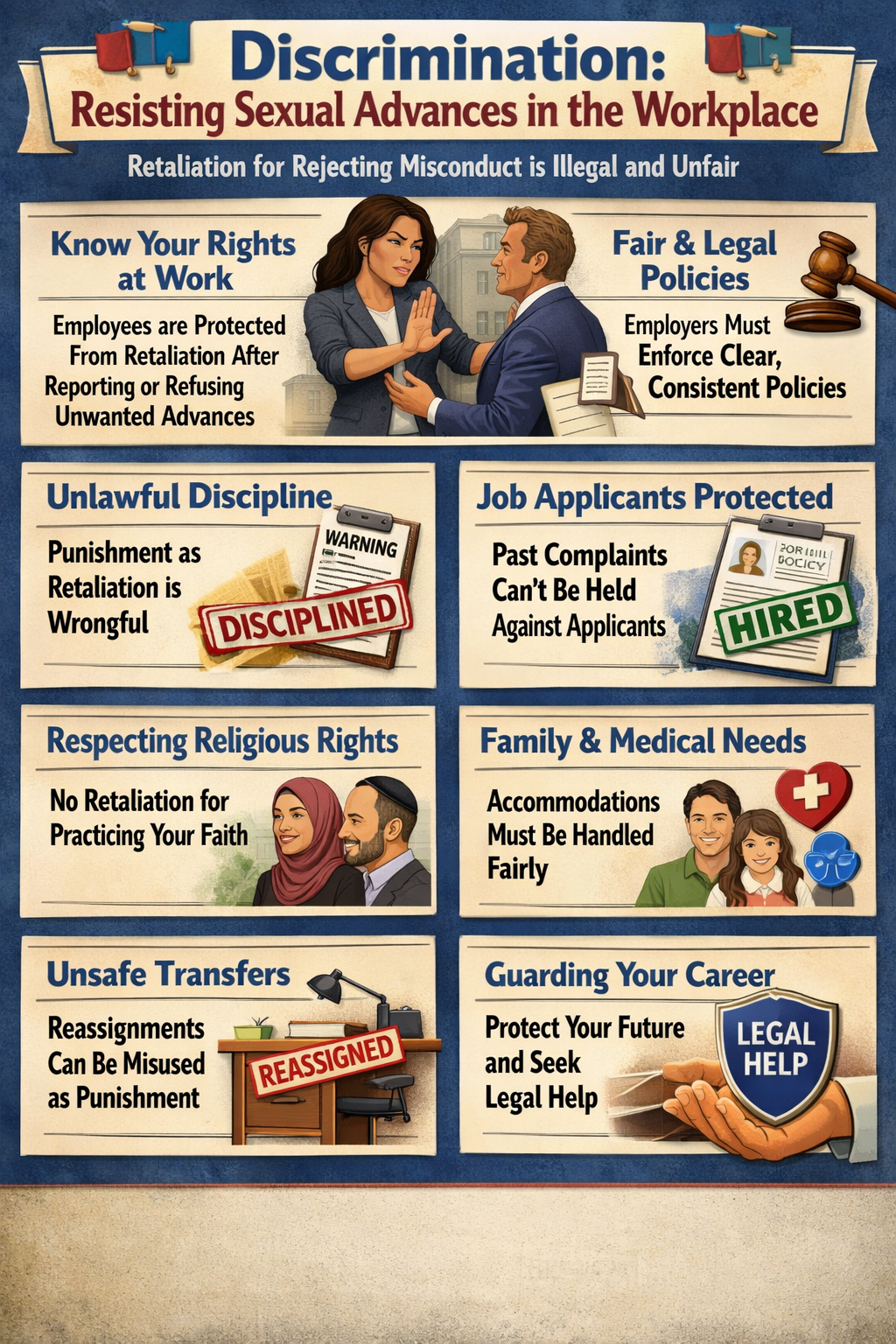
An employee who faces discrimination resisting sexual advances is engaging in a legally protected act. When someone refuses inappropriate behavior or reports misconduct, they should not face retaliation or adverse consequences from an employer. Unfortunately, some workplaces respond negatively, which can lead to serious legal concerns under employment discrimination laws. Employees who take a stand in these situations often do so with a reasonable belief that their rights are being violated, and that belief is an important legal factor.
The Importance of Issue Internal Policies Consistent With the Law
Employers have a responsibility to issue internal policies consistent with federal and state laws governing workplace conduct. These internal policies should clearly outline how complaints are handled, how investigations are conducted, and how employees are protected. When policies are vague or inconsistently applied, it can create confusion and increase the risk of retaliation. Strong, consistent policies help ensure fairness and accountability across the organization.
Actions That Must Be Specifically Authorized
In many workplace investigations, certain actions must be specifically authorized by leadership or an agency head. This includes decisions involving leave, reassignment, or disciplinary measures. Without proper authorization, these actions may raise concerns about fairness and compliance with agency policies. Employees should be aware that unauthorized decisions can sometimes signal deeper issues within the organization.
How Retaliation Can Affect Job Applicants
Retaliation is not limited to current staff; job applicants can also be impacted. If an applicant previously reported misconduct at another workplace, a new employer cannot lawfully deny employment based on that history. Job applicants are protected from unfair hiring practices tied to past complaints involving employment discrimination or harassment. These protections ensure that individuals are not punished for speaking up.
Disciplinary Action as a Form of Retaliation
Sometimes, retaliation appears as formal disciplinary action against an employee. While discipline can be appropriate in certain cases, it must be based on legitimate concerns and not used as a response to a complaint. If the timing of the discipline closely follows a report of misconduct, it may raise red flags. Employers must ensure that any disciplinary decisions are supported by clear, non discriminatory reasons.
Harassment Answering Questions During Investigations
Employees who participate in investigations, including harassment answering questions, are engaging in protected conduct. An employee should not face negative consequences for cooperating in an inquiry or providing truthful information. When an employer retaliates against someone for participating, it undermines the integrity of the entire process. Protecting those who come forward is essential to maintaining accountability.
Acting on a Reasonable Belief of Misconduct
An employee does not need to prove wrongdoing to be protected; acting on a reasonable belief is often enough. If a person genuinely believes that misconduct or employment discrimination is occurring, they have the right to report it. This standard encourages individuals to come forward without fear of being penalized if the claim is not ultimately substantiated. Employers must respect this principle when evaluating complaints.
Respecting Religious Practice in the Workplace
Workplace policies must also respect an employee’s religious practice. If an individual reports discrimination related to religion or seeks accommodations, they are protected under the law. Retaliating against someone for raising these concerns can lead to serious legal consequences. Employers are expected to handle these situations with sensitivity and compliance.
Understanding Such Consequences of Retaliation
The impact of retaliation can be severe, and such consequences often extend beyond the workplace. An employee may experience stress, financial hardship, and damage to their professional reputation. These outcomes highlight why legal protections exist and why enforcement is critical. Employers must consider the broader effects of their actions.
Requesting Accommodation Without Fear
An employee has the right to request adjustments or changes in the workplace, including requesting accommodation for medical, religious, or personal needs. This process should be handled fairly and without retaliation. When an employer responds negatively to such requests, it may violate federal law. Employees should feel secure when advocating for their needs.
Workplace Policies on Blood Donations and Civic Participation
Some organizations have policies related to blood donations or participation in community activities. When these activities are officially sponsored or encouraged, employees should not face negative treatment for participating. These policies should be clearly communicated and applied consistently. Retaliation in these contexts can still raise legal concerns.
Placing Employees on Leave or in New Roles
Decisions about placing employees on leave or assigning new responsibilities must be handled carefully. While there may be valid reasons for such actions, they should not be used to isolate or punish an employee. Transparency and documentation are essential in these situations. Improper placement decisions can appear retaliatory.
Balancing Family Responsibilities in the Workplace
Many employees must manage work alongside family responsibilities, including caring for children or a person's spouse. Employers should not penalize individuals for fulfilling these obligations. If an employee raises concerns about unfair treatment related to family needs, they are protected from retaliation. Respecting these responsibilities is part of maintaining a fair workplace.
Other Provision Protections Employees Should Know
In addition to primary laws, there may be other provision protections that apply depending on the situation. These can include industry-specific rules or contractual rights. Employees should be aware that multiple layers of protection may exist. Understanding these provisions can strengthen a legal claim if needed.
Time Limited Basis for Workplace Decisions
Certain workplace actions, such as leave or reassignment, should be applied on a time limited basis. Indefinite or unexplained decisions can create confusion and raise concerns about fairness. When an employee is affected by prolonged changes without clear justification, it may indicate improper motives. Employers should ensure that all actions are reasonable and well-documented.
Speak With Masterly Legal Solutions About Your Situation
If you believe you are facing retaliation after reporting a school issue, you do not have to figure it out on your own. At Masterly Legal Solutions, we understand how overwhelming it can feel when your career is suddenly uncertain.
Our team is here to listen, evaluate your situation, and help you understand your options. Whether you have been placed on administrative leave, reassigned, or subjected to an unfair investigation, we can provide the guidance you need to move forward with confidence.
Contact us today at (972) 236-5051 for a free consultation. We are ready to answer your questions, help you assess your situation, and take the next steps toward protecting your rights and your career.
Disclaimer: This article is for educational purposes only and does not constitute legal advice. Every situation is unique, and you should consult with a qualified attorney regarding your specific circumstances.




Teacher Rights When Assaulted by a Special Needs Student: Safety, Reporting and Investigation Issues



Looking for Legal & Business Solutions? Contact Us Now
Fill in the form or call us to set up a meeting