

Retaliation at Work Against Teachers Who Advocate for Students
Standing Up for Students Should Not Cost You Your Career
Most teachers enter the classroom with one clear purpose: to protect and support their students. Speaking up for a child who is struggling, reporting unsafe conditions, or raising concerns about discrimination should be part of the profession. Unfortunately, some educators experience retaliation at work after they advocate for students. What begins as a simple concern can turn into disciplinary action, isolation, or even threats of termination.
At Masterly Legal Solutions, our retaliation lawyer and workplace law team has seen how quickly a supportive work environment can shift. An employee who once received praise may suddenly face scrutiny after engaging in protected activity. Retaliation and harassment in the workplace are not just unfair—they can violate federal and state laws. Teachers deserve legal protections when they stand up for what is right. .
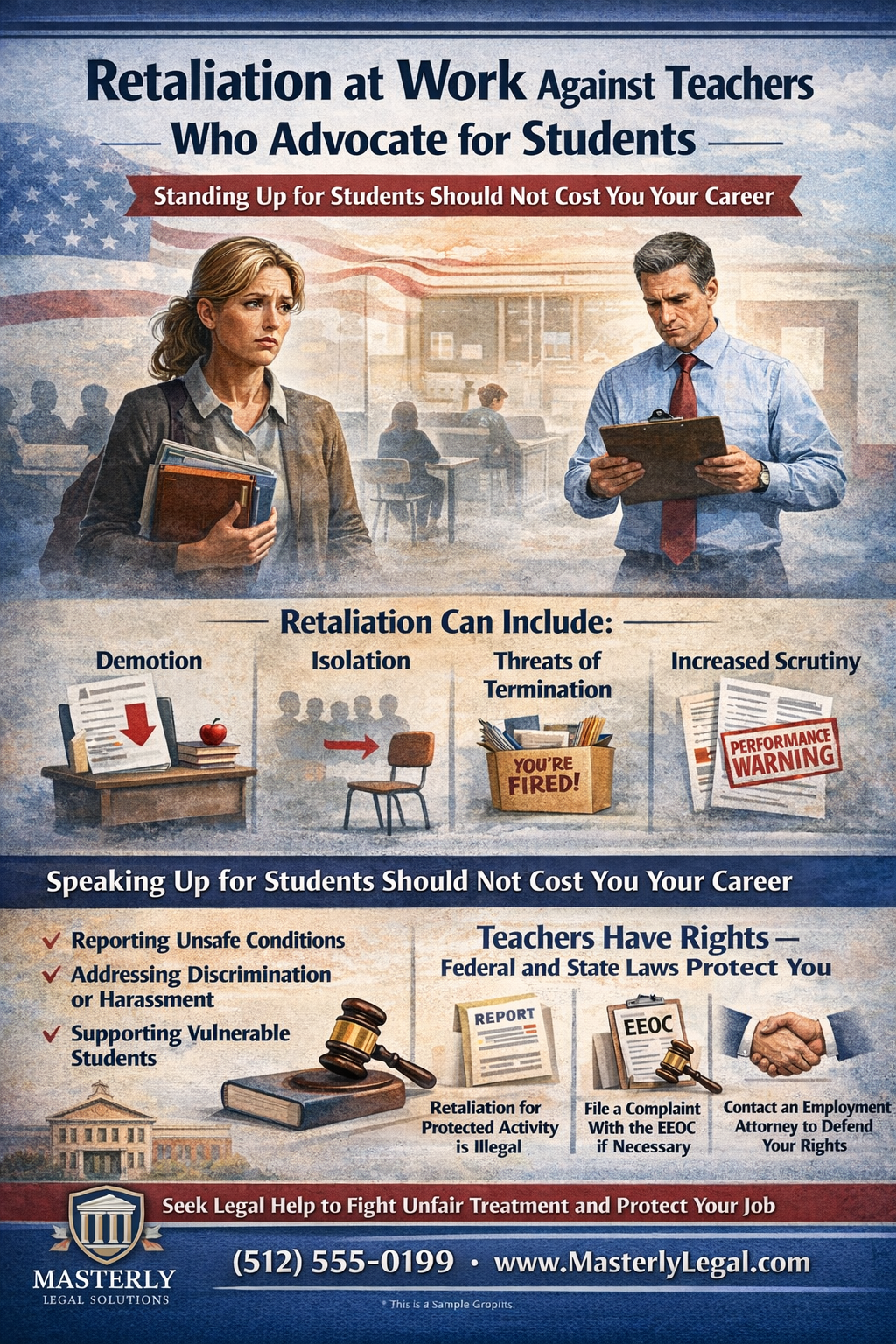
What Retaliation Looks Like in a School Setting
Retaliation can take many forms. It is not always loud or dramatic. Sometimes it begins with subtle changes to the employee's current position or sudden criticism from a supervisor.
An adverse action may include reassignment, denial of promotions, reduced pay, or exclusion from meetings. In more serious circumstances, retaliation can escalate into wrongful termination. Even placing a teacher on administrative leave without clear justification may raise legal concerns.
Advocacy as Protected Activity
When a teacher reports discrimination, harassment, unsafe conditions, or misconduct, that report is often considered protected activity. Federal law and many state laws shield employees from retaliation for engaging in such actions. This includes filing a complaint internally or with outside agencies.
Protected activity may also include resisting sexual advances, supporting a colleague who filed a discrimination complaint, or cooperating in an investigation. Legal protection for teachers who advocate for students with disabilities under the disabilities act are also protected. Employers cannot lawfully punish an employee for doing what the law encourages. .
Federal and State Laws That Protect Teachers
Several federal and state laws protect educators from retaliation and discrimination. Title VII of the civil rights act prohibits discrimination based on race, sex, religion, and national origin. It also makes retaliation unlawful when an employee reports harassment or discrimination, and an expert education lawyer for schools and teachers can help you understand how these protections apply to your situation.
The employment act and other provisions within the united states code provide additional safeguards. Whistleblower laws protect those who report misconduct tied to public funds or student safety. State laws often expand on these federal protections, especially for teachers employed by local governments, and an education lawyer providing expert legal support for teachers and schools can help navigate these overlapping rules.
When Harassment Follows Advocacy
Harassment sometimes follows advocacy. A manager or supervisor may begin criticizing lesson plans, monitoring classroom interactions more closely, or spreading negative comments. This pattern of conduct can create a hostile workplace.
Harassment tied to discrimination resisting sexual advances or supporting a student who reported abuse can be particularly harmful. If the harassment becomes severe or pervasive, it may violate federal law. Teachers should not have to endure mistreatment for protecting students.
Administrative Leave as a Tool of Retaliation
One common tactic in retaliation cases is placing the employee on administrative leave. Administrative leave can be legitimate during an investigation. However, when it is used improperly, it may function as punishment.
Paid administrative leave is sometimes presented as neutral, but it can damage a teacher’s reputation. In some circumstances, the employer may grant administrative leave on an ad hoc basis without clear standards. When administrative leave appears tied to protected activity, it may be legally questionable.
Understanding Investigative Leave and Notice Leave
Investigative leave is typically used while an investigation is ongoing. Notice leave may be used when termination is being considered. Both forms of administrative leave must follow agency policies and applicable law.
OPM regulations and opm guidance provide structure for certain federal employees. While public school teachers are generally governed by state frameworks, the principles are similar. Administrative leave should not be used as retaliation or harassment.
Federal Employees and Local Governments
Some teachers work within systems influenced by federal programs or funding. Federal employees have specific legal protections under federal law. Local governments must also comply with federal and state laws that protect employees.
When retaliation involves local governments, the agency head or agency officials must ensure compliance. Agency policies must issue internal policies consistent with statutory requirements. An agency determines how to handle investigations, but it cannot ignore legal protections.
The Role of Agency Officials in Discipline
Authorized agency officials and other authorized agency officials are responsible for overseeing discipline. Agency judgments must be based on evidence, not personal disagreements. When agency officials act out of retaliation, their decisions may be challenged.
An agency head may claim that placing a teacher on administrative leave supports the agency's mission. However, the agency's mission does not justify unlawful retaliation. Courts look closely at whether the action was truly necessary.
Examples of Retaliation Against Teachers
Consider a teacher who reports age discrimination affecting a colleague. Shortly after filing the complaint, the teacher is reassigned and placed on investigative leave. The employer claims the action is unrelated.
In another example, a teacher who reports sexual advances by a supervisor is placed on paid leave for “performance concerns.” If the timing suggests retaliation, a lawsuit may be appropriate, and an education law attorney offering expert guidance for teachers can explain the strength of your claim. These examples show how retaliation can hide behind neutral language.
Filing a Complaint With the Equal Employment Opportunity Commission
When internal processes fail, filing with the equal employment opportunity commission may be necessary. The eeoc investigates discrimination and retaliation claims under federal law. Filing deadlines are strict, so timing matters, and an education law attorney for teachers and administrators can ensure you act before those windows close.
Teachers may also have claims under state laws. Filing a complaint is often the first step before bringing a lawsuit. Employment lawyers can guide you through this process and help protect your rights.
The Investigation Process and Your Rights
An investigation may involve interviews, document reviews, and written statements. During administrative leave, teachers often feel isolated from other employees. The stress can be intense, which is why working with an experienced education law attorney and lawyer for legal services or an education law attorney offering expert guidance for teachers can be crucial.
Even during brief periods of leave, you have rights. The employer must follow agency policies and comply with law. If the investigation is unfair or biased, legal action may be required.
Administrative Leave and Paid Leave Limits
Administrative leave is typically limited to brief or short periods. In some systems, leave cannot exceed certain days within a calendar year without further approval. Paid leave may be granted, but it must align with policy.
In certain federal settings, a presidential directive or executive order may shape leave rules. A presidential memorandum can also influence agency policies. While these federal frameworks differ from local school policies, the concept of time limited basis still applies, and institutions often rely on higher education law counsel for colleges and universities to craft compliant policies.
Safety Leave and Excused Absence
Safety leave may be granted when an employee faces threats. An excused absence may apply for blood donations or officially sponsored events. These forms of leave are distinct from investigative leave.
Administrative leave should not be confused with routine paid leave. When leave becomes a tool to silence advocacy, it crosses a legal line. Teachers deserve clarity and fairness.
The Impact on Job Applicants and Career Growth
Retaliation does not only affect current teachers. Job applicants who previously engaged in protected activity may face discrimination. Employers cannot lawfully refuse to hire someone for filing a complaint in the past.
Individual employees who advocate for students may worry about future references. A negative evaluation tied to retaliation can limit opportunities. Protecting your record is essential, and in some states that may involve working with a North Carolina educator misconduct defense lawyer to protect your license. .
When Retaliation Leads to Wrongful Termination
Wrongful termination is one of the most severe forms of retaliation. Termination may follow a pattern of harassment and administrative leave. In these circumstances, a lawsuit may be the only path to justice.
Federal and state laws prohibit termination based on protected activity. If the employer cannot provide legitimate reasons, courts may find in favor of the employee. Legal protections exist to deter such conduct.
The Role of Employment Lawyers
Employment lawyers focus on protecting employees from discrimination and retaliation. They evaluate evidence, review agency judgments, and assess whether federal law or state laws were violated. An experienced lawyer can also represent teachers in negotiations.
At Masterly Legal Solutions, we understand how sensitive these cases are. Our office works closely with educators to build strong cases. We aim to protect your career and professional reputation.
Protecting the Agency’s Mission Without Silencing Teachers
School systems often claim that discipline supports the agency's mission. Maintaining student safety and educational quality is important. However, the agency's mission does not excuse unlawful retaliation.
Agency officials must balance discipline with fairness. Internal policies must comply with the law. When retaliation interferes with that balance, it undermines trust.
Evidence and Documentation Matter
Teachers should keep detailed records of incidents. Emails, performance reviews, and witness statements can support your case. Documentation is especially important when filing a complaint.
In many retaliation and harassment cases, timing is key. Showing that adverse action followed protected activity strengthens your argument. Evidence can protect you during investigation and potential lawsuit proceedings.
Filing Deadlines and Strategic Action
Filing deadlines under federal law and state laws can be strict. Missing a deadline may prevent you from pursuing a lawsuit. Acting quickly can protect your rights.
Employment lawyers can help determine the best course of action. Whether filing internally or with the eeoc, strategy matters. Protecting your career requires careful planning.
Protecting Teachers Who Advocate for Students
Teachers who report discrimination, harassment, or unsafe practices serve an important role. Their advocacy benefits students and the broader community. Retaliation discourages this courage.
Legal protections exist to ensure that employees can speak up without fear. The law is designed to protect those who act in good faith. Holding employers accountable reinforces those protections.
Taking the First Step Toward Justice
If you believe you have faced retaliation at work for advocating for students, you are not alone. The circumstances of each case are unique. Understanding your rights under federal and state laws is the first step.
Masterly Legal Solutions is committed to helping teachers protect their careers. We provide additional information, clear explanations, and dedicated representation. Seeking help early can change the outcome.
Speak With Masterly Legal Solutions Today
Advocating for students should never put your livelihood at risk. If you have experienced discrimination, harassment, administrative leave, or retaliation after filing a complaint, our team is ready to listen. We understand the emotional and professional toll these situations create.
Contact Masterly Legal Solutions at (972) 236-5051 for a free consultation. During this confidential conversation, we will review your situation, explain your options, and discuss whether legal action may be appropriate. Our office is committed to protecting educators and pursuing justice when employers cross the line.
You have dedicated your career to protecting students. Let us help protect you.
This article is for informational purposes only and does not constitute legal advice. Reading this material does not create an attorney client relationship. For advice about your specific circumstances, please contact Masterly Legal Solutions directly for a confidential consultation.



Teacher Rights When Assaulted by a Special Needs Student: Safety, Reporting and Investigation Issues



Looking for Legal & Business Solutions? Contact Us Now
Fill in the form or call us to set up a meeting