

Retaliation at Work During School Investigations: What Teachers Should Recognize Early
When a school investigation begins, many teachers focus on answering questions and protecting their professional reputation. What often goes unnoticed is how quickly the workplace dynamic can change once concerns are raised. Retaliation at work can surface subtly, leaving teachers unsure whether what they are experiencing is lawful or actionable. At Masterly Legal Solutions, we help educators recognize early warning signs and understand the legal protections available before lasting damage occurs.
The Reality Teachers Face During School Investigations
School investigations frequently place teachers under intense scrutiny while administrators assess complaints, policies, and conduct. During this period, the employer holds significant authority over schedules, duties, and evaluations. Even well-intentioned processes can create conditions where discrimination or retaliation develops. Recognizing these shifts early allows teachers to protect themselves more effectively.
How Retaliation Develops in Educational Workplaces
When an employer treats a worker unfairly for participating in protected behavior, this is known as retaliation. In schools, this often follows reporting discrimination, harassment, or policy violations. Teachers may notice changes that seem minor at first but gradually escalate. Understanding how retaliation develops is key to responding appropriately.
The Connection Between Complaints and Workplace Changes
Filing a complaint or participating in an investigation is legally protected under federal and state laws. Despite these protections, some employers react defensively when concerns are raised. Changes in job assignments, work hours, or responsibilities may follow. These actions can signal retaliation even if they are framed as administrative decisions.
Federal and State Laws That Protect Teachers
Multiple federal and state laws prohibit retaliation in the workplace. These laws protect employees who report discrimination, harassment, or unsafe conditions. Title VII, the civil rights act, and other federal law provisions work alongside state and local laws. Together, they establish clear legal protections for teachers.
Title VII and School-Based Discrimination Claims
Title VII addresses discrimination based on sex discrimination, national origin, race, religion, and sexual orientation. Teachers who report violations under Title VII are engaging in protected activity. Retaliation against them is prohibited, regardless of whether the underlying complaint is ultimately substantiated. Understanding this protection is essential during investigations.
Age Discrimination and Education Settings
Age discrimination and age discrimination in employment can arise when older teachers are treated differently during investigations. The discrimination in employment act and related laws protect eligible employees from unfair treatment. Changes in performance reviews or job duties based on age may indicate retaliation. Education workers should not ignore these warning signs.
Disabilities Act Protections for Teachers
The americans with disabilities act and related disabilities act provisions require employers to provide reasonable accommodations unless doing so causes undue hardship. Teachers who request accommodations or medical adjustments are protected from retaliation. If an employer denies accommodations and then imposes adverse actions, legal issues may arise. These protections apply across the workplace.
Family Responsibilities and Medical Leave Concerns
Teachers often balance work with family responsibilities and caregiving for a family member. Laws such as the medical leave act and FMLA leave provide job protected leave for eligible employees. Retaliation tied to taking leave or requesting schedule adjustments can violate federal and state laws. Early recognition prevents future discrimination.
Reporting Discrimination Without Fear
Laws protect employees who engage in reporting discrimination, even if the employer disagrees with the complaint. Teachers have the right to raise concerns internally or with a state agency or the equal employment opportunity commission. Retaliation following these reports is unlawful. Documentation becomes critical at this stage.
How Harassment Can Escalate During Investigations
Harassment may increase after a complaint is filed, especially from a co worker or supervisor. This can include exclusion, hostility, or excessive scrutiny. Harassment combined with retaliation creates a hostile workplace. Teachers should treat these behaviors seriously rather than dismissing them as stress-related.
Workplace Discrimination in Subtle Forms
Workplace discrimination is not always overt. It can appear through selective enforcement of policies or inconsistent discipline. Teachers experiencing discrimination should note patterns rather than isolated incidents. Subtle discrimination often becomes clearer over time.
Direct Discrimination Versus Retaliation
Direct discrimination targets protected characteristics such as sex, national origin, or immigration status. Retaliation targets the act of speaking up. Both are prohibited under employment law, but retaliation claims often succeed even when discrimination claims are disputed. Understanding the difference strengthens a teacher’s position.
Adverse Actions That Signal Retaliation
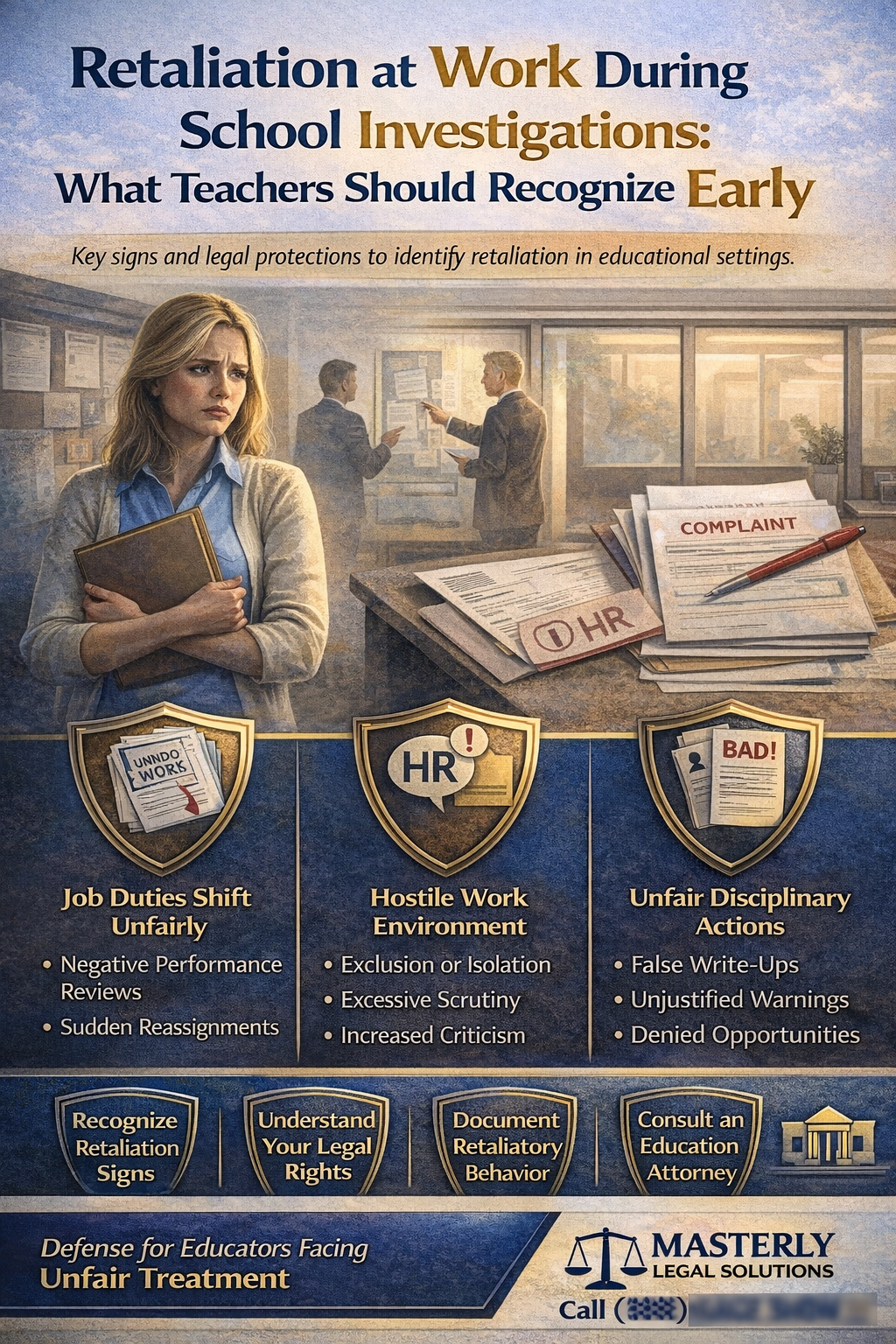
Adverse actions may include negative performance reviews, reassignment, or denial of overtime pay. Employers sometimes justify these actions as operational needs. When they follow a complaint closely, they may constitute retaliation. Teachers should track timing carefully.
Employment Decisions That Raise Red Flags
Employment decisions made during investigations deserve close attention. Sudden changes to employment contracts, reduced responsibilities, or altered job assignments can indicate retaliation. These decisions affect both professional standing and employee morale. Early legal guidance can clarify whether actions cross legal boundaries.
Human Resources and Internal Reporting
Human resources departments are often involved once complaints are raised. While HR is meant to address concerns, it also protects the employer. Teachers should approach HR carefully and document interactions. Statements made to HR can later become evidence.
The Role of Whistleblower Laws in Schools
Whistleblower laws protect workers who report unlawful or unsafe practices. Teachers reporting misuse of funds, safety violations, or unethical conduct may be covered. Retaliation in these situations carries serious legal consequences. Awareness of these laws empowers individual employees.
Occupational Safety and Physical Harm Concerns
Teachers who report occupational safety issues or risks of physical harm are protected. Retaliation following safety complaints violates multiple laws. These protections apply even when investigations are ongoing. Safety concerns should never be ignored.
Immigration Status and Vulnerable Employees
Teachers with concerns about immigration status may feel especially vulnerable during investigations. Federal law and state laws prohibit discrimination and retaliation based on national origin. Employers may not use immigration concerns as leverage. Legal protections extend to all workers.
Federal Employees and Public School Teachers
While federal employees have separate rules, public school teachers benefit from strong federal protections. Federal and state laws apply regardless of district policies. Understanding how these layers interact helps teachers respond confidently. Legal professionals clarify these overlaps.
Retaliation Complaints and Formal Action
Filing a retaliation complaint may involve internal processes or external agencies. Teachers may pursue claims through a state agency or the equal employment opportunity commission. These complaints must meet procedural requirements. Timing and evidence are critical.
The Importance of Evidence and Potential Witnesses
Evidence supports retaliation cases and employment discrimination cases. Emails, schedules, and testimony from potential witnesses strengthen claims. Teachers should preserve records early. Strong evidence influences settlement negotiations and outcomes.
Performance Reviews as a Retaliation Tool
Performance reviews can shift abruptly after a complaint is filed. Lower ratings without explanation may signal retaliation. Teachers should compare reviews over time. Patterns often tell a clearer story than a single example.
Settlement Negotiations and Resolution Paths
Some retaliation cases resolve through settlement negotiations rather than litigation. Negotiations may address reinstatement, compensation, or policy changes. Understanding leverage improves outcomes. Legal representation helps teachers evaluate options realistically.
Punitive Damages and Employer Accountability
In some cases, punitive damages may be available when retaliation is egregious. These damages aim to deter future misconduct. While not guaranteed, they underscore the seriousness of retaliation. Employers must take these risks seriously.
How Retaliation Affects Personal Life
Retaliation impacts more than work; it affects a teacher’s personal life and well-being. Stress, uncertainty, and fear of future discrimination are common. Recognizing this impact validates the need for support. Legal guidance helps restore stability.
Laws That Prohibit Retaliation Clearly
Numerous laws prohibit retaliation explicitly. These include federal statutes, state laws, and local laws. Employers are expected to understand and comply with these requirements. Failure to do so exposes them to liability.
Employment Lawyers and Strategic Guidance
Employment lawyers and labor and employment lawyers provide clarity during uncertain times. They assess whether actions meet legal thresholds and advise on next steps. Early advice prevents missteps. Teachers benefit from informed strategy rather than reaction.
Retaliation Cases in Educational Settings
Retaliation cases in schools often involve layered authority structures. Administrators, boards, and HR may all influence outcomes. Understanding these dynamics is essential. Education-focused legal services address these complexities.
How Masterly Legal Solutions Supports Teachers
Masterly Legal Solutions is a law firm that assists teachers facing retaliation and discrimination during school investigations. We analyze employment practices, evaluate legal issues, and provide tailored legal services. Our goal is to protect careers while addressing misconduct lawfully.
Taking Early Action Makes the Difference
Recognizing retaliation early allows teachers to act before damage becomes permanent. Waiting often limits options and increases stress. Early legal insight can change the direction of a case. Awareness is the first step toward protection.
Speak With Masterly Legal Solutions About Retaliation at Work
If you believe you are facing retaliation at work during a school investigation, you do not have to navigate it alone. Masterly Legal Solutions offers a free consultation to discuss your situation and explain your legal options related to discrimination and retaliation. Our team helps teachers understand how laws protect employees and how to respond strategically. Contact us at (972) 236-5051 to schedule a free consultation and receive guidance focused on protecting your rights and your future.
Disclaimer: This material does not provide legal advice; rather, it is intended solely for informational and educational reasons. An attorney-client relationship is not established by reading this content. Regarding your particular employment or retribution problems, you should speak with an experienced lawyer.


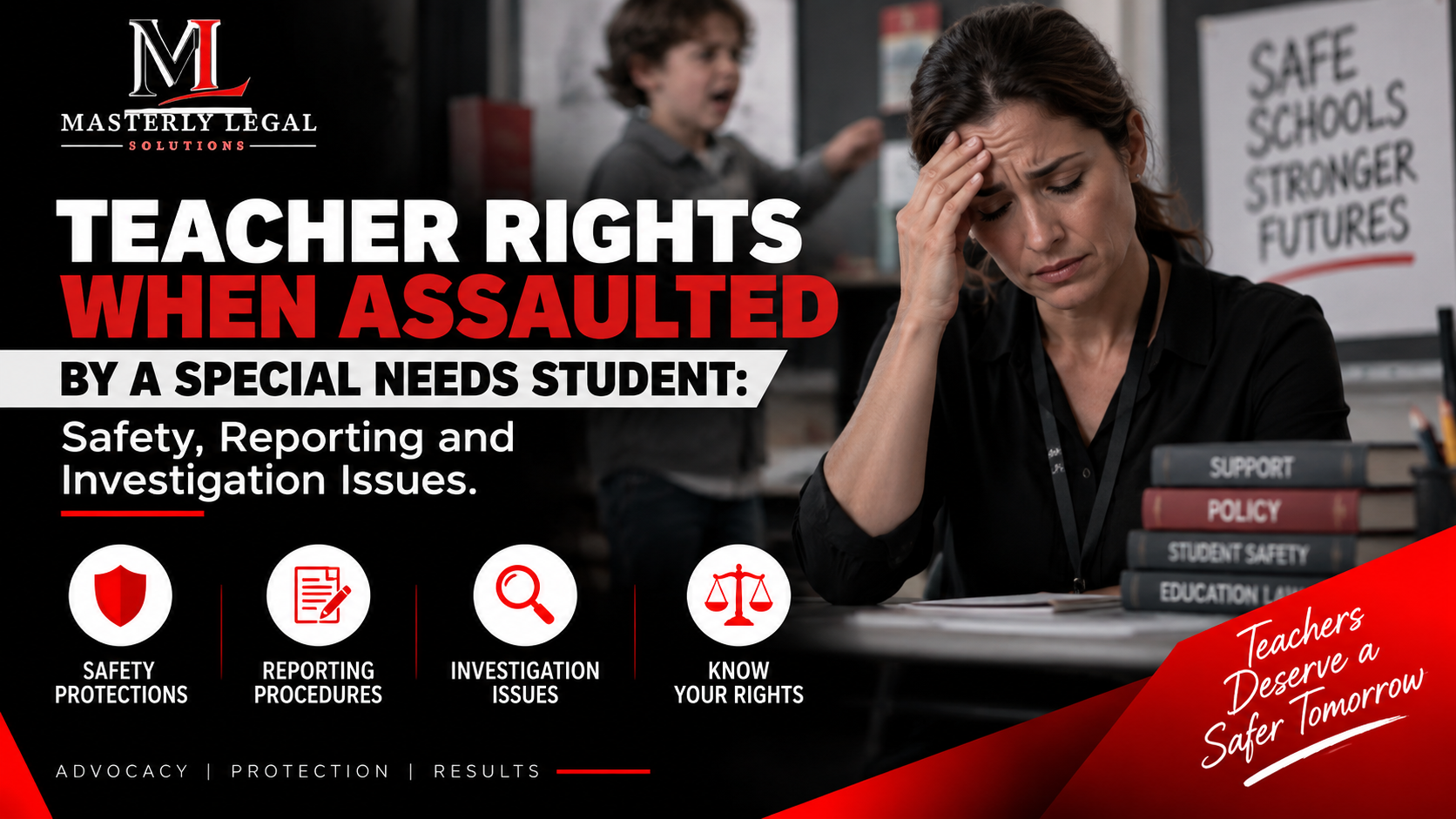
Teacher Rights When Assaulted by a Special Needs Student: Safety, Reporting and Investigation Issues


Looking for Legal & Business Solutions? Contact Us Now
Fill in the form or call us to set up a meeting