
Retaliation During a TEA Investigation: Signs Your District Is Building a Case Against You
Understanding the Emotional Weight of a TEA Investigation
A TEA investigation is rarely just a routine process for educators. For many teachers, it feels personal, isolating, and frightening, especially when careers, reputations, and future employment are on the line. Districts often present these investigations as neutral fact-finding missions, but the reality can be far more complex. When retaliation enters the picture, the balance of power quickly shifts away from the individual educator.
At Masterly Legal Solutions, we regularly hear from teachers who sense something is wrong but cannot yet articulate it. That uneasy feeling is often the first sign that a district may be building a case against you. Recognizing retaliation early can be critical to protecting your rights and your livelihood.
What Retaliation Looks Like in the Education Setting
Retaliation during a TEA investigation does not always look obvious or dramatic. Instead, it often unfolds quietly through administrative decisions, altered communications, or sudden policy enforcement. These actions may seem minor at first, but they can collectively create a damaging record.
School districts are experienced institutions with legal teams, policies, and procedures designed to protect the organization. Teachers, by contrast, are individuals navigating a system that may already be preparing its defense. This imbalance is where retaliation attorneys become essential.
Why School Districts Retaliate During Investigations
Districts face significant exposure during government investigations, including scrutiny from state and federal courts. Allegations involving students, employee benefits, labor issues, or unfair acts can create risk across education, finance, and even transportation funding. In response, districts may attempt to shift blame or reduce liability.
Retaliation can become a strategy to weaken a teacher’s credibility or justify disciplinary action. Once this process begins, it often moves quickly and quietly, making early legal support crucial.
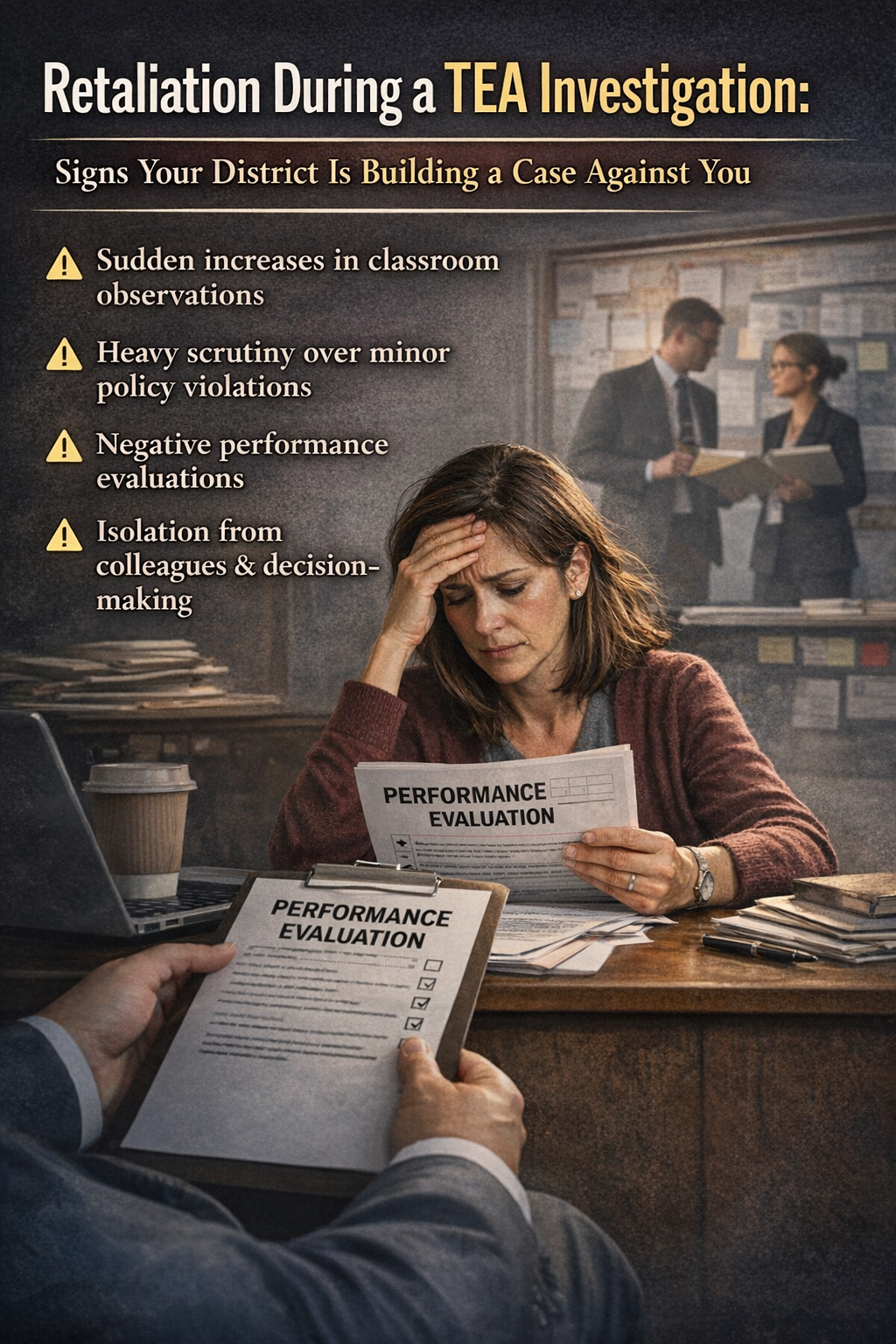
Sudden Changes in Administrative Tone
One of the earliest warning signs is a noticeable shift in how administrators communicate with you. Conversations that were once professional and collaborative may become cold, formal, or adversarial. Emails may suddenly include more people copied, including legal or HR staff.
This change is not accidental. Districts are often careful about creating a paper trail that supports future claims or defenses. Retaliation attorneys understand how these communications are used in litigation and government investigations.
Increased Documentation of Minor Issues
Teachers frequently report that small, previously ignored issues suddenly become formal write-ups. Lesson plans, classroom management, or minor policy deviations may now be treated as serious concerns. This pattern often indicates an effort to build a negative employment record.
While documentation is a normal part of employment, selective enforcement can be a form of retaliation. When this occurs during a TEA investigation, it raises serious legal concerns under employment law.
Being Excluded From Meetings or Decisions
Another red flag is exclusion from meetings or decisions that directly affect your role. You may learn about changes after the fact or be denied the opportunity to respond to concerns. This tactic limits your ability to defend yourself and correct the record.
Exclusion can also signal that decisions are being made without your input, often with litigation or defense strategy in mind. Retaliation attorneys can step in to restore balance and ensure fair communications.
Administrative Leave Without Clear Explanation
Being placed on administrative leave can feel like a neutral pause, but it often carries deeper implications. In many cases, leave is used to remove a teacher from the environment while a case is developed behind the scenes. The lack of transparency during this time can be deeply unsettling.
Administrative leave can also impact future employment, compensation, and professional standing. Legal guidance during this phase is critical to protecting your future.
Pressure to Provide Statements Quickly
Districts may push teachers to give written or recorded statements early in the investigation. These requests are often framed as routine or mandatory, but they can carry significant legal consequences. Statements given without legal support can later be used out of context.
Retaliation attorneys help teachers navigate these requests carefully. Knowing when and how to respond can make a substantial difference in the outcome.
Shifting Allegations Over Time
Another concerning sign is when allegations seem to evolve or expand as the investigation continues. What began as one issue may suddenly include unrelated concerns. This pattern can suggest a search for justification rather than a genuine inquiry.
Shifting allegations are common in cases involving complex commercial litigation, employment disputes, and even personal injury or medical malpractice claims. The same tactics can appear in education-related investigations.
Increased HR and Legal Involvement
When HR and external lawyers become heavily involved early on, it may indicate that the district is preparing for litigation. This is especially true when discussions reference state, federal courts, or compliance obligations. Teachers should not assume this level of involvement is routine.
Districts often act quickly to protect themselves, particularly when they anticipate claims or disputes. Having your own legal team ensures you are not navigating this process alone.
Isolation From Colleagues
Teachers experiencing retaliation often notice a sudden distancing from colleagues. Coworkers may be instructed not to speak with you or may fear involvement themselves. This isolation can be emotionally difficult and professionally damaging.
Isolation is a subtle but powerful tactic. It limits access to witnesses, support, and informal information that could help your defense.
Performance Evaluations That No Longer Reflect Reality
A sharp decline in performance evaluations without clear justification is another warning sign. Positive history may be ignored, and subjective critiques may replace objective measures. These evaluations often become central exhibits in employment litigation.
Retaliation attorneys know how to challenge unfair evaluations and place them in proper context. Documentation and timing are critical in these cases.
Retaliation Linked to Prior Protected Activity
Many teachers face retaliation after engaging in protected activities. These may include reporting concerns, advocating for children, participating in mediation, or raising issues related to labor, compensation, or unfair practices. The law provides protections, but enforcement requires action.
Understanding how your prior actions intersect with the investigation is essential. This is where experienced lawyers provide comprehensive representation.
The Long-Term Career Impact of Retaliation
Retaliation does not end with the investigation itself. Records created during this period can follow teachers throughout their careers. Licensing, future employment, and professional reputation may all be affected.
Educators deserve respect, fairness, and justice. Protecting your future means addressing retaliation before it becomes permanent.
Why Early Legal Support Matters
Waiting to seek legal advice often benefits the district, not the teacher. Early involvement allows attorneys to guide communications, preserve evidence, and push back against unfair practices. This proactive approach can change the trajectory of a case.
At Masterly Legal Solutions, our focus is on helping clients move forward with confidence. We fight on behalf of individuals facing unfair treatment during investigations.
How Retaliation Attorneys Support Teachers
Retaliation attorneys provide more than courtroom defense. They help teachers navigate complex processes, communicate strategically, and understand their rights under employment law. This support is both legal and practical.
Our firm is committed to comprehensive representation, whether matters involve education, government investigations, or broader employment disputes.
Our Broader Legal Perspective
While our work often centers on education law, our experience spans many areas. Our attorneys handle cases involving commercial litigation, workers compensation, personal injury, securities, construction, banking, finance, divorce, DUI defense, and complex disputes across industries. This broad practice strengthens our ability to navigate challenging cases.
We are proud to serve clients across Florida, including those connected to west palm beach, west palm beach fl, and palm beach county, as well as matters reaching federal courts and state and federal courts nationwide.
A Firm Committed to Advocacy and Respect
Masterly Legal Solutions is a professional firm built on service, pride, and commitment. Our team of lawyers works closely with clients, families, and individuals to create strategies that protect careers and futures. We believe in fighting unfair acts and supporting those who serve their communities.
Whether matters involve education, business, or employment, our focus remains on achieving fair outcomes and helping clients move forward.
Taking the Next Step Forward
If you believe your district may be building a case against you during a TEA investigation, you do not have to face it alone. Early action can protect your rights, your reputation, and your future. Understanding the signs of retaliation is the first step toward defense.
Understanding Retaliation at Work Under Employment Law
Retaliation at work occurs when an employer takes adverse action against an employee for engaging in legally protected conduct. Under employment law, retaliation is prohibited by both federal and state laws, including Title VII of the Civil Rights Act. A reasonable employee would view retaliation as conduct that discourages reporting discrimination or unfair treatment. These legal protections exist to preserve fairness, dignity, and overall employee morale in the workplace.
How Retaliation Occurs and Why It Matters
Retaliation occurs in many forms, ranging from subtle workplace changes to overt discipline. It may involve termination, demotion, or reassignment to a less desirable position, even when framed as routine management. These actions can have a negative impact on individual employees and their well being. Retaliation cases often hinge on whether the conduct would dissuade a reasonable employee from filing a complaint.
Federal and State Laws That Prohibit Retaliation
Federal law and state laws work together to prohibit retaliation in the workplace. Laws such as Title VII, the Disabilities Act, and the employment act provide legal protections for workers. Federal agencies, including the Equal Employment Opportunity Commission, enforce these regulations. When an employer violates these standards, it may constitute a possible violation subject to litigation.
Workplace Discrimination and Employment Discrimination Explained
Unfair treatment based on protected characteristics, such as age discrimination, national origin, disability, sexual orientation, or immigration status, is referred to as workplace discrimination. Employment discrimination may also involve harassment, sexual advances, or disparate working conditions. These illegal practices undermine employee morale and expose employers to serious liability. Both discrimination and retaliation are closely connected under employment law.
Protected Activities That Trigger Legal Safeguards
Employees are legally protected when engaging in related protected activity or other related protected activity. This includes filing a complaint, participating in an investigation, or reporting harassment or discrimination. Job applicants and current employees alike are covered under federal and state laws. Retaliation for these actions is considered retaliatory and unlawful.
What Counts as an Adverse Action by an Employer
An adverse action can include termination, suspension, reduced hours, denial of paid time, or transfer from a desirable position to a less desirable position. It may also involve changes that affect family responsibilities or target a family member. Even subtle actions can qualify if they create undue hardship. Courts examine whether the action would deter a reasonable employee.
Employer Responsibilities and Prohibited Conduct
An employer has a legal duty to maintain fair working conditions and comply with regulations that prohibit retaliation. Employers must not punish individual employees for exercising their rights. Retaliation may be directed not only at the reporting employee but also at other employees, a co worker, or a supervisor who participates in the process. Such conduct violates federal law and state laws alike.
Retaliation and Harassment in the Workplace
Harassment and retaliation often overlap, especially when complaints involve sexual advances or discriminatory conduct. Retaliation can follow reports of harassment related to disability, national origin, or sexual orientation. These actions damage overall employee morale and trust. Employers are required to address complaints without creating further harm.
Filing Complaints and Enforcement Through Federal Agencies
Filing a complaint with the Equal Employment Opportunity Commission is often a required step in retaliation cases. Federal agencies investigate claims under Title VII and related statutes. Proper filing preserves legal rights and opens the door to remedies. Missing deadlines can limit options for justice.
Examples of Retaliation in Real Workplace Scenarios
An example of retaliation may include reassignment after reporting discrimination, exclusion from meetings, or unjustified discipline. Another example is when an employer alters job duties following a complaint. These actions are often subtle but legally significant. Context and timing matter greatly in proving retaliation.
Immigration Status and Equal Protection at Work
Immigration status does not eliminate an employee’s right to protection under employment law. Federal and state laws apply regardless of citizenship when discrimination or retaliation is involved. Employers may not use immigration status as leverage. Such conduct is an illegal practice under federal law.
Settlement Negotiations and Litigation Outcomes
Many retaliation cases resolve through settlement negotiations rather than trial. However, some proceed to verdict when disputes cannot be resolved. Litigation outcomes depend on evidence, timing, and credibility. Skilled legal representation is essential in navigating these disputes.
The Broader Impact on Employee Morale and the Workplace
Retaliation harms more than one person; it damages the workplace environment. Declining employee morale and fear among other employees are common consequences. This negative impact affects productivity and trust. Preventing retaliation supports a healthier workplace culture.
When Retaliation Violates Civil Rights Protections
Retaliation tied to discrimination may also violate the Civil Rights Act and Title VII. These laws protect against adverse action linked to protected characteristics. Violations can involve disability, age, national origin, or sexual orientation. Enforcement ensures accountability.
Why Legal Protections Matter for Individual Employees
Legal protections exist to safeguard individual employees from abuse of power. They ensure that speaking up does not result in punishment. Understanding these rights empowers workers to act without fear. Enforcement of these laws promotes justice across workplaces.
Recognizing Retaliation Involving Family Responsibilities
Retaliation may extend to family responsibilities, including actions affecting a family member. Employers may attempt to pressure employees indirectly. Such conduct is still considered retaliatory. The law recognizes these tactics and provides remedies.
Retaliation Beyond the Obvious: Many Forms, Same Risk
Retaliation takes many forms, not all of them obvious. It can involve schedule changes, isolation, or diminished responsibilities. Each form must be evaluated within context. Courts focus on real-world effects rather than labels.
Compliance Expectations Under Federal and State Regulations
Employers are expected to comply with all applicable regulations governing discrimination and retaliation. Failure to do so can result in enforcement action. Compliance protects both employees and organizations. Ignoring these obligations increases legal exposure.
Standing Under the U.S Flag of Workplace Rights
Workplace protections apply across the country under the u.s flag of federal law. These rights reflect national standards of fairness and equality. They ensure consistency regardless of location. Employees should feel secure exercising protected rights.
Contact Masterly Legal Solutions for Support
If you are a teacher facing a TEA investigation and are concerned about retaliation, we invite you to reach out to Masterly Legal Solutions. Our retaliation attorneys are committed to listening to your concerns, answering your questions, and helping you understand your legal options. We offer a free consultation so you can discuss your situation in confidence and determine the best path forward for your legal needs.
Contact us at (972) 236-5051 to schedule your free consultation and speak with a member of our team who is ready to support you.
Disclaimer: This article is provided for informational purposes only and does not constitute legal guidance or legal advice. For expert legal solutions tailored for higher education institutions, consult with a qualified attorney regarding your specific circumstances. Reading this article does not create an attorney-client relationship. Every situation is different, and you should consult with a qualified attorney regarding your specific circumstances.



Teacher Rights When Assaulted by a Special Needs Student: Safety, Reporting and Investigation Issues


Looking for Legal & Business Solutions? Contact Us Now
Fill in the form or call us to set up a meeting