
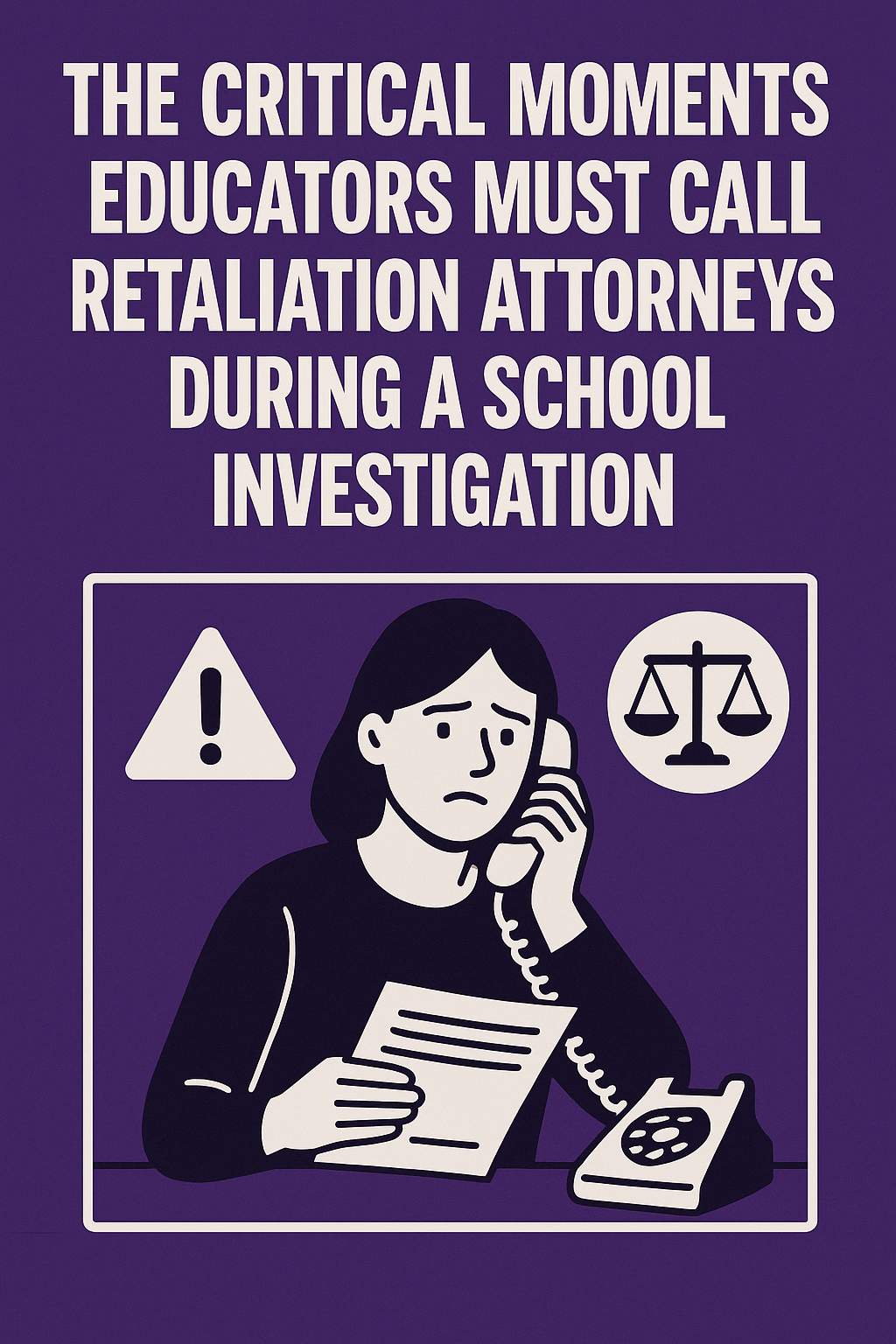
The Critical Moments Educators Must Call Retaliation Attorneys During a School Investigation
Educators rarely expect their careers to be questioned simply for speaking up. Yet many teachers and school staff find themselves under scrutiny after reporting concerns that affect their workplace. When a school investigation begins shortly after a complaint, fear and confusion can set in quickly. Knowing when to act can make the difference between protecting your career and facing long-term consequences.
At Masterly Legal Solutions, we work with educators who never imagined needing legal help until their employer’s response crossed a line. Retaliation can be subtle, fast-moving, and deeply disruptive to your well being. This article is designed as a practical checklist of panic points so you know when it is time to seek immediate legal support.
Understanding Retaliation in the School Workplace
Retaliation occurs when an employer takes adverse actions against employees because they engaged in protected activity. In schools, this often follows a report of workplace discrimination, harassment, or unsafe conditions. These actions can affect working conditions, job security, and professional reputation.
Retaliation is prohibited under federal and state laws, including Title VII of the Civil Rights Act. These laws exist to protect individual employees who raise concerns in good faith. Even when an employer claims their actions are unrelated, the timing and context often tell a different story.
Why Educators Are Especially Vulnerable
Teachers and school workers operate in highly structured environments with multiple layers of management. A supervisor or manager may control evaluations, classroom assignments, and promotion opportunities. This power imbalance makes it easier for retaliation to take many forms while appearing administrative on the surface.
Educators also interact closely with co worker teams, students, and parents. When retaliation begins, it can quickly damage employee morale and overall employee morale across a campus. The stress of an investigation can affect both personal and professional life.
What Counts as Protected Activity for Educators
Protected activity includes any legally protected action where an employee asserts their rights under the law. This protection applies even if the complaint is later disputed. The key question is whether a reasonable employee would believe a possible violation occurred.
Examples of protected activity include reporting discrimination based on national origin, age discrimination, disability, sexual orientation, or immigration status. Complaints related to family responsibilities, sexual advances, or harassment are also covered. Other related protected activity can include cooperating in an investigation or supporting another employee’s complaint.
Common Reports That Trigger Retaliation
Educators often engage in protected activity without realizing the legal significance. These actions are frequently followed by retaliation:
- Filing a formal or informal complaint about workplace discrimination
- Reporting harassment by a supervisor or manager
- Raising occupational safety or classroom safety concerns
- Requesting accommodations under the disabilities act
- Taking leave protected by the medical leave act or being placed on administrative leave
Each of these actions is legally protected under various laws at the federal, state, and local levels.
Panic Point One: Sudden Negative Changes After a Complaint
One of the earliest warning signs is a sudden shift in how your employer treats you. This may include negative performance reviews, increased scrutiny, or disciplinary write-ups that were never an issue before. When these changes follow closely after a report, retaliation should be considered.
Adverse actions do not need to be extreme to be unlawful. Even small changes can have a negative impact when they affect job security or future opportunities. A retaliation attorney can help determine whether these actions are considered retaliatory under the law.
Panic Point Two: Being Moved to a Less Desirable Position
Reassignment is one of the most common forms of retaliation in schools. An educator may be moved from a desirable position to a less desirable position without clear justification. This can include changes in grade level, classroom resources, or teaching assignments.
Employers often argue these moves are operational needs. However, when they follow protected activity and cause a negative impact, they may be unlawful. Federal law and state laws both recognize reassignment as a potential adverse action.
Panic Point Three: Escalation of Harassment or Isolation
Retaliation is not always formal discipline. It can take many forms, including increased harassment or professional isolation. This may involve exclusion from meetings, loss of collaboration opportunities, or being undermined in front of other employees.
Harassment after a complaint can violate multiple laws, including Title VII and state and local laws. When an employer allows or encourages this behavior, they may be responsible. Documenting these changes is critical. Sexual harassment training is an essential step for employers to ensure compliance and help prevent workplace harassment.
Panic Point Four: Threats of Termination or Non-Renewal
Termination threats are one of the most frightening panic points for educators. Even subtle hints about contract non-renewal can cause serious distress. Retaliation laws protect workers from being fired for engaging in protected activity.
Actual termination, suspension, or forced resignation following a complaint is a serious red flag. These adverse actions often form the basis of a retaliation lawsuit. Immediate legal guidance is essential in these moments.
Panic Point Five: Being Discouraged From Filing or Reporting
An employer may attempt to stop an employee from filing a report or continuing with an investigation. This can include pressure from a supervisor, manager, or human resources. Such conduct may itself be illegal.
Employees have the right to report concerns internally or externally, including to the EEOC or equal employment opportunity commission. Interference with this process may violate federal and state laws. Educators should never be punished for seeking help.
Panic Point Six: Retaliation Through Evaluations and Promotions
Performance evaluations and promotion decisions are powerful tools in schools. Retaliation can occur when an employer suddenly blocks advancement or denies benefits after a complaint. This can affect long-term employment prospects.
Denial of promotion, removal from leadership roles, or unfair evaluations can all qualify as adverse actions. These decisions often appear subjective, making legal analysis especially important. Retaliation attorneys know how to uncover patterns that support a claim.
Panic Point Seven: Retaliation Against Others Connected to You
Retaliation is not limited to the person who filed the complaint. Sometimes a family member, close co worker, or other employees are targeted instead. This type of conduct is still unlawful.
Laws recognize that retaliation against job applicants, witnesses, or supporters can chill reporting. Federal and local laws extend legal protections to these situations. Employers cannot avoid liability by shifting their actions to others.
How School Investigations Can Mask Retaliation
An investigation can be legitimate while still being used as cover for retaliation. Employers may claim they are simply enforcing policies. The key issue is whether the investigation is applied fairly and consistently.
When only one employee is scrutinized after engaging in protected activity, retaliation may be present. A reasonable employee standard is often used to evaluate these situations. Timing, tone, and treatment all matter.
Internal vs External Investigations
School investigations may involve internal administrators, labor representatives, or outside agencies. In some cases, police or federal investigators may also be involved. Each setting carries different risks for employees.
Statements made during an investigation can later be used against you. Having legal support early can help protect your rights and ensure you do not unintentionally harm your case.
The Role of Federal and State Retaliation Laws
Retaliation protections come from a combination of federal law, state laws, and local laws. Title VII, the employment act, whistleblower laws, and other statutes all play a role. These laws prohibit retaliation in clear terms.
Federal employees and public school workers often have additional protections. State and local laws may offer broader coverage than federal standards. Understanding how these layers interact is critical to protecting your employment.
When to Involve the EEOC or State Agencies
Filing with the EEOC or a state agency is often required before a lawsuit can proceed. Deadlines for filing are strict and vary by jurisdiction. Missing these deadlines can end a case before it begins.
Educators should not assume their employer will explain these rights. A retaliation attorney can guide the filing process and coordinate with investigations already underway. Early action preserves options.
How Retaliation Affects Employee Morale and Schools
Retaliation does not only harm the targeted employee. It damages employee morale and creates a culture of fear. Other workers may avoid reporting misconduct, allowing discrimination and harassment to continue.
Schools thrive when employees feel safe engaging in protected activity. Retaliation undermines trust and compliance with laws designed to protect workers. Addressing these issues benefits the entire workplace.
Why Immediate Legal Action Matters
Waiting too long can weaken a retaliation claim. Evidence may disappear, memories fade, and filing deadlines pass. Employers often move quickly once a complaint is made.
Immediate legal action helps preserve records, protect benefits, and reduce further harm. It also signals to the employer that you understand your rights. This alone can sometimes stop retaliation from escalating.
How Masterly Legal Solutions Supports Educators
At Masterly Legal Solutions, we represent teachers and school workers facing retaliation during investigations. We analyze employer actions, identify violations, and help clients engage with agencies like the EEOC. Our goal is to protect your career and your peace of mind.
We understand the unique pressures educators face. From filing a complaint to navigating termination threats, we stand with you at every stage. Our approach is practical, strategic, and focused on your future.
How Federal Agencies and Anti-Discrimination Laws Protect Educators
The equal employment opportunity commission plays a critical role in enforcing legal protections for educators who experience workplace discrimination or employment discrimination. While many teachers work at the state or local level, these protections also extend to federal employees and often influence how schools must respond to complaints. The law prohibits adverse treatment based on factors such as age discrimination, immigration status, and other protected characteristics, regardless of an employee’s position or tenure. When an educator reports discrimination and is later targeted, these federal standards help determine whether the employer’s actions crossed a legal line. Understanding how these protections apply can be essential when deciding whether to take formal action during a school investigation.
When Employers Misuse “Undue Hardship” to Justify Harmful Decisions
Schools sometimes claim undue hardship to defend decisions that negatively affect educators, especially after a complaint has been made. While employers are allowed to consider operational challenges, this standard is often misunderstood or misapplied. An employer cannot lawfully rely on undue hardship to deny fair treatment, retaliate against an employee, or reverse a decision to hire, retain, or support a qualified educator. When this justification appears only after protected activity, it may signal a deeper problem. Careful legal review is often needed to determine whether the explanation is legitimate or simply a cover for unlawful conduct.
Retaliation That Targets Family Responsibilities and Personal Well Being
Educators who raise concerns about discrimination often find their family responsibilities unfairly used against them during a school investigation. Under Title VII, employers are prohibited from taking adverse actions based on protected activity or characteristics that affect an employee’s personal life. Retaliation may appear as schedule changes, increased workload, or discipline that disrupts an educator’s well being and ability to care for a family. These actions are not just harmful on a personal level; they may also be unlawful. When an employer’s response places unnecessary strain on an educator’s family or health, it is often a sign that legal boundaries have been crossed.
Contact Masterly Legal Solutions for Guidance
If you are an educator facing retaliation or feel something has shifted after you spoke up, trust your instincts. A brief conversation can clarify whether your employer’s actions may be unlawful. We invite you to contact us for a free consultation so we can answer your questions and help you understand your options.
Speaking with a retaliation attorney early can protect your rights, your reputation, and your livelihood. You do not have to navigate a school investigation alone. Call Masterly Legal Solutions at (972) 236-5051 to discuss your situation in confidence.
Disclaimer: This article is for educational purposes only and does not constitute legal advice. Reading this article does not create an attorney-client relationship. For legal guidance specific to your situation, please consult a qualified attorney. For information tailored to schools and universities, learn more about our Higher Education Law Services.


Teacher Rights When Assaulted by a Special Needs Student: Safety, Reporting and Investigation Issues


Looking for Legal & Business Solutions? Contact Us Now
Fill in the form or call us to set up a meeting