School Investigations Move Fast Here’s Why You Need Legal Help Now
When a School Investigation Begins, Every Minute Matters
Few moments are more stressful for an educator, administrator, coach, or school employee than learning that a school investigation has been opened against them. In many cases, the person being investigated has little warning. A conversation with a student, a parent complaint, a social media post, or a misunderstanding in the classroom can suddenly trigger a formal review.
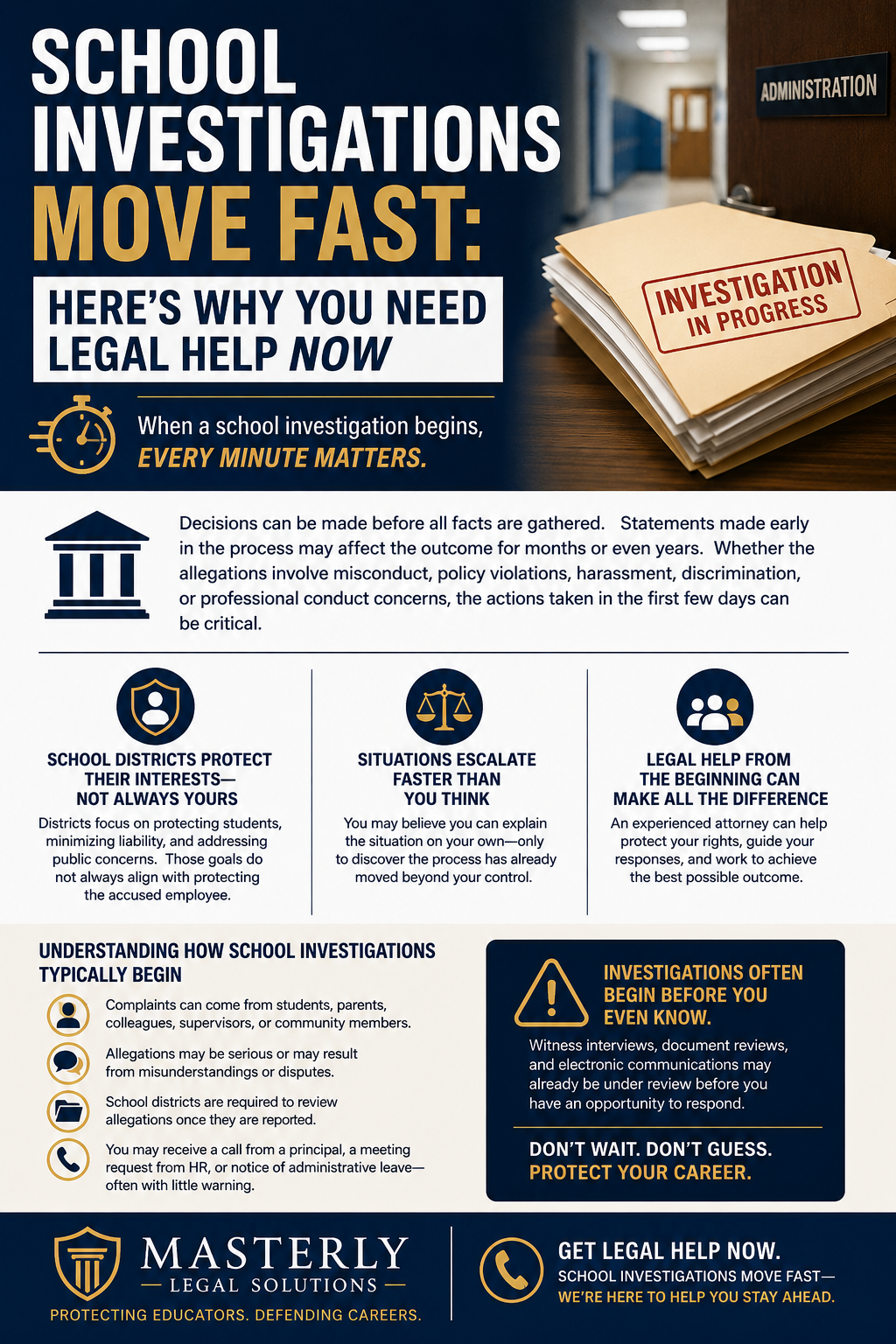
What many school professionals do not realize is that these investigations often move much faster than expected. Decisions can be made before all facts are gathered, and statements provided early in the process may affect the outcome for months or even years. Whether the allegations involve misconduct, policy violations, harassment, discrimination, or professional conduct concerns, the actions taken during the first few days can be critical.
School districts are often focused on protecting students, minimizing liability, and addressing public concerns. While those goals may be understandable, they do not always align with protecting the interests of the accused employee. As a result, an educator may find themselves facing serious consequences before they fully understand what is happening.
At Masterly Legal Solutions, we have seen firsthand how quickly situations can escalate. A teacher, coach, counselor, administrator, or other school professional may believe they can explain the situation on their own, only to discover that the process has already moved beyond their control. Having an experienced attorney involved from the beginning can help ensure your interests remain protected throughout the process.
Understanding How School Investigations Typically Begin
School investigations can originate from many different sources. Sometimes a student reports a concern. Other times a parent, colleague, supervisor, or community member files a complaint with the school or governing agency.
In some situations, the allegations are serious and involve accusations of misconduct. In others, the issue may stem from misunderstandings, communication problems, or disputes between staff members. Regardless of the source, school districts generally have procedures requiring them to review allegations once they are reported.
An employee may receive a phone call from a principal, a meeting request from Human Resources, or notice that they are being placed on administrative leave. In many cases, the employee is surprised by the speed at which the matter develops.
The reality is that school districts frequently begin gathering evidence before the accused employee even knows a report has been made. Witness interviews, document reviews, and electronic communications may already be under review before the employee has an opportunity to respond.
Why School Districts Move Quickly
School districts face significant pressure when allegations arise. They have obligations to students, parents, regulatory agencies, and the public. As a result, many districts move aggressively when investigating concerns involving school personnel, and colleges and universities must also navigate complex higher education law compliance requirements when similar issues arise.
District administrators often believe that swift action demonstrates accountability and protects students. However, moving quickly can sometimes create situations where important facts are overlooked or misunderstood.
For the accused employee, rapid decision-making can be dangerous. Statements made without legal guidance may later be interpreted differently than intended. Documents may be submitted without proper context. Witnesses may provide incomplete information that becomes part of the official record.
An experienced attorney can help ensure that the employee's perspective is presented clearly and accurately before decisions are made.
The Early Stages Often Shape the Entire Case
One of the most important realities of school investigations is that the earliest stages often influence everything that follows. Initial interviews, written statements, and administrative findings frequently become the foundation for future employment actions.
A teacher who speaks without preparation may unintentionally provide information that is misunderstood. A coach may answer questions without realizing the potential consequences. An administrator may believe cooperation alone will resolve the matter, only to discover that statements have been taken out of context.
School employees should remember that investigators are gathering information for the district. They are not acting as personal advocates for the employee under review.
This does not mean employees should refuse to cooperate. It means they should understand their rights and seek legal guidance before making decisions that could affect their careers.
Common Allegations That Trigger School Investigations
School investigations can involve a wide range of allegations. Some concerns involve student interactions, while others focus on employee conduct or compliance issues.
Common allegations include:
- Professional misconduct
- Boundary violations
- Policy violations
- Inappropriate communications
- Academic integrity concerns
- Student discipline disputes
- Harassment
- Sexual harassment
- Workplace conflicts
- Financial irregularities
- Discrimination
- Retaliation allegations
Even allegations that appear minor can result in serious employment consequences if not handled properly.
When Retaliation Becomes Part of the Investigation
In some cases, an investigation begins shortly after an employee reports misconduct or raises concerns regarding workplace practices. This can create questions about whether retaliation may be involved, and employees may benefit from guidance from a dedicated workplace retaliation lawyer.
Various employment laws exist to protect workers who engage in certain legally protected actions. For example, an employee may file a complaint regarding workplace discrimination, safety concerns, unethical conduct, or harassment. If negative treatment follows, questions may arise regarding whether unlawful retaliation has occurred.
A protected activity can include reporting unlawful conduct, participating in an investigation, cooperating with government agencies, or opposing conduct that violates employment laws.
Unfortunately, some school employees report that adverse treatment begins shortly after they raise concerns. When this occurs, it is important to consult an attorney who understands both education law and employment-related claims.
Recognizing the Warning Signs of Retaliation
Not every negative employment decision constitutes retaliation, but certain warning signs should not be ignored. Understanding the difference can be critical.
For example, an educator who reports sexual harassment may suddenly experience increased scrutiny. A coach who raises concerns about policy violations may find themselves excluded from meetings. A counselor who files a retaliation complaint may face unexpected changes to duties or assignments.
Potential examples of retaliatory behavior may include:
- Unjustified disciplinary action
- Exclusion from important meetings
- Reduction of responsibilities
- Denial of promotional opportunities
- Negative evaluations that differ from previous reviews
- Spreading false rumors
- Increased monitoring without justification
- Termination of employment
Each situation is unique, but these warning signs should be taken seriously.
Protected Activities Under Employment Laws
Many school employees are surprised to learn that numerous actions qualify as a protected activity under various state and federal law provisions.
Examples may include reporting harassment, opposing unlawful conduct, cooperating with investigations, or participating in proceedings involving employment rights. Employees who engage in such actions may be protected against unlawful retaliation.
The civil rights act, Title VII, disability-related protections, wage protections, and other employment statutes contain provisions designed to prohibit retaliation.
Whether an employee is a teacher, administrator, counselor, coach, or support staff member, understanding these protections is important when concerns arise.
How Workplace Discrimination Can Lead to Retaliation Claims
Allegations involving workplace discrimination frequently overlap with retaliation concerns. An employee may initially report conduct involving race, gender, age, religion, national origin, or disability issues.
After making a report, the employee may experience negative treatment that did not previously exist. This can create a basis for a potential retaliation claim depending on the circumstances.
For example, a school employee who reports discrimination based on national origin may suddenly receive poor evaluations despite years of positive performance reviews. Another employee who reports discrimination based on a disability may encounter unexplained changes to responsibilities.
These situations often require careful legal analysis because employers may provide alternative explanations for their decisions.
Why Documentation Matters from Day One
Documentation can become one of the most valuable tools available during a school investigation. Accurate records often help establish timelines, clarify communications, and preserve important evidence.
Employees should consider maintaining copies of relevant emails, performance evaluations, meeting requests, and other communications. Notes regarding significant conversations may also be helpful.
The goal is not to create conflict. The goal is to preserve information before memories fade or records become difficult to obtain.
When working with an experienced attorney, documentation can help identify strengths, weaknesses, and potential defenses that might otherwise be overlooked.
The Risk of Facing Investigators Alone
Many educators assume that honesty alone will resolve the situation. While honesty is essential, it is not always enough.
Investigators may ask questions that appear straightforward but have broader implications. Answers provided without preparation may unintentionally create confusion or expose the employee to additional scrutiny.
An experienced attorney can help prepare employees for interviews, review documentation, identify concerns, and develop an appropriate response strategy.
Seeking legal help does not suggest wrongdoing. It demonstrates a commitment to protecting your professional future.
What Happens When an Employer Prioritizes Its Own Interests
It is important to remember that the employer conducting the investigation is generally focused on protecting the institution. School districts have legal obligations, financial concerns, and public relations considerations that influence decision-making.
Although many administrators strive to be fair, the district's interests may not align with those of the employee under investigation.
Understanding this reality can help school professionals make informed decisions and avoid assumptions that may place their careers at risk.
How Retaliation Lawyers Help Employees Protect Their Careers
When school employees face allegations, disciplinary actions, or unfair treatment, experienced retaliation lawyers can play a critical role in protecting their careers. An attorney can evaluate whether unlawful conduct has occurred, identify available legal remedies, and guide clients through complex employment disputes. Legal representation becomes especially important when an employee believes adverse treatment followed a report of misconduct or another protected activity. Taking action early often provides the strongest opportunity to preserve employment and professional reputation.
Understanding Workplace Retaliation and Your Legal Protections
When an employer retaliates against an employee for exercising a legally protected privilege, this is known as workplace retaliation. This may include reporting misconduct, participating in an investigation, or opposing unlawful behavior. Both state and federal laws provide protections designed to prevent retaliation from occurring in schools and other workplaces. Employees should understand these protections before responding to allegations or disciplinary actions.
The Role of the Equal Employment Opportunity Commission in Retaliation Cases
The Equal Employment Opportunity Commission investigates allegations involving discrimination and retaliation in the workplace. Employees who believe they have been subjected to unlawful treatment may have the right to file a charge with this agency or pursue other retaliation and labor complaints through appropriate channels. The commission reviews evidence, evaluates potential violations of employment laws, and may assist in resolving disputes. Understanding the agency's role can be important when determining available legal options.
Special Considerations for Federal Employees Facing Workplace Investigations
Although many school employees work for local districts, some educational professionals may qualify as federal employees or work within federally funded programs. These individuals may be subject to additional regulations and procedures when workplace disputes arise. Federal employment matters often involve unique deadlines and administrative requirements. Seeking legal guidance early can help ensure compliance with all applicable rules.
Recognizing Retaliatory Conduct Before It Escalates
Not all retaliation is obvious. Sometimes retaliatory conduct begins with subtle changes in treatment, responsibilities, or opportunities. Employees may notice increased scrutiny, exclusion from meetings, or sudden criticism after reporting concerns. Identifying these warning signs early may help prevent further damage to a professional career. Documentation is often critical when addressing such issues.
When Discrimination Claims and Retaliation Overlap
Many employment disputes involve both retaliation and discrimination claims. An employee may report discrimination and later experience adverse treatment because of that report. These cases often require careful analysis because employers frequently offer alternative explanations for their decisions. An experienced attorney can evaluate whether both discrimination and retaliation concerns may be present.
Navigating Legal Challenges During School Investigations
School investigations frequently create significant legal challenges for employees. Administrators, teachers, coaches, and staff members may face difficult decisions regarding interviews, documentation, and responses to allegations. Without proper guidance, individuals may unintentionally damage their own cases. Early legal representation from a knowledgeable retaliation and employment law attorney can help employees make informed decisions throughout the process.
How State Laws Impact Employee Rights
In addition to federal protections, state laws often provide important safeguards for workers facing retaliation or discrimination. These laws may offer additional remedies, filing opportunities, or protections beyond those available under federal statutes. Understanding which laws apply requires careful review of the facts and circumstances. Legal counsel can help identify the strongest available protections.
Investigations Conducted by Federal Agencies
Certain workplace complaints may eventually involve federal agencies responsible for enforcing employment laws. These agencies may review allegations involving retaliation, discrimination, wage violations, or other employment concerns, and organizations sometimes seek help from firms that focus on labor, employment, and internal investigations. Cooperation with government investigators is important, but employees should also understand their rights throughout the process. Proper legal guidance can help avoid costly mistakes.
When a Fellow Employee Becomes Part of the Investigation
Investigations often involve statements from a fellow employee who may have witnessed events or participated in workplace interactions. While witness testimony can be valuable, misunderstandings and incomplete information sometimes influence the outcome of a case. Employers may also rely on HR consulting and investigation services to manage these processes. Employees should avoid assuming that all witness statements will accurately reflect the situation. Thorough legal review can help identify inconsistencies and clarify disputed facts.
Wrongful Termination Following a Protected Complaint
One of the most serious forms of retaliation involves wrongful termination. Employees who lose their positions after reporting misconduct or participating in protected activities may have legal claims depending on the circumstances. Employers often provide alternative explanations for termination decisions, making careful investigation essential. Protecting employment rights often begins with acting quickly after a termination occurs.
Protected Conduct and the Rights of Employees
Employment laws frequently protect workers who engage in protected conduct, such as reporting misconduct, cooperating with investigations, or opposing unlawful practices. Employees should not fear punishment for exercising these rights. Unfortunately, some employers still take adverse actions against workers who speak up. Understanding what constitutes protected conduct is essential when evaluating potential retaliation claims.
When an Employer Denies Retaliation Allegations
In many disputes, an employer denies that retaliation occurred. Instead, the employer may argue that performance concerns, policy violations, or operational needs justified its actions. Determining the true reason behind adverse treatment often requires careful review of evidence and timelines. An attorney can help uncover facts that may support an employee's position.
Protecting His or Her Job During an Investigation
School investigations can place tremendous pressure on an employee who is trying to protect his or her job. Decisions made during interviews, meetings, and administrative proceedings may affect future employment opportunities. Seeking legal guidance early can help employees avoid common mistakes and present their cases effectively. Preserving a career often requires a strategic approach from the outset.
What Happens When Retaliation Begins
When retaliation begins, the warning signs are not always obvious. Employees may notice changes in workload, increased criticism, or exclusion from important opportunities. Over time, these actions may escalate into more serious employment consequences. Recognizing retaliation early can help employees take appropriate steps to protect their rights.
Immigration Status Should Not Affect Workplace Protections
Employment laws often provide important protections regardless of an individual's immigration status. Workers should not assume they are without rights simply because immigration-related issues exist. Many employment protections remain available despite concerns regarding status. Consulting an attorney can help clarify which protections apply in a specific situation.
Understanding the Legal Process in Employment Cases
The legal process surrounding workplace disputes can be complex and intimidating. Employees may encounter internal investigations, administrative complaints, agency reviews, and court proceedings. Each stage presents unique challenges and deadlines. Understanding the process helps employees make informed decisions about protecting their interests.
The Legal Definition of Retaliation
The legal definition of retaliation generally involves adverse treatment connected to a protected activity. While the exact standards vary depending on the applicable law, retaliation often occurs when an employer punishes an employee for exercising legal rights. Understanding this definition can help employees recognize when legal concerns may exist. Proper legal analysis is essential because not all workplace disputes qualify as retaliation.
Hostile Work Environment Concerns After Reporting Misconduct
Some employees experience a hostile work environment after reporting concerns or participating in investigations. They may face exclusion, hostility, or ongoing negative treatment from coworkers or supervisors. These situations can create significant emotional and professional stress. Early legal intervention may help address problems before they escalate further.
Individual Employees Have Rights During School Investigations
Many individual employees mistakenly believe they have no power once a school district opens an investigation. In reality, workers often have important legal rights that can affect how the matter proceeds. Understanding those rights is critical when facing allegations, interviews, or potential discipline. An experienced attorney can help ensure those rights are respected throughout the investigation process.
Recovering Lost Wages After Unlawful Employment Actions
When unlawful actions lead to suspension, demotion, or termination, employees may suffer significant financial consequences. In some cases, workers may be entitled to recover lost wages resulting from improper employment decisions. These damages can become an important part of a legal claim. Taking action quickly often helps preserve evidence necessary to support financial recovery.
Family Responsibilities Should Not Lead to Retaliation
School employees frequently balance demanding careers with important family responsibilities. Caring for children, assisting aging parents, or supporting a family member should not result in unlawful treatment at work. Various employment laws exist to protect workers who need flexibility for legitimate family-related obligations, and clear policies in an employee handbook drafted by legal professionals can help set expectations for both employers and staff. When adverse actions occur after requesting accommodations, legal concerns may arise.
Job Protected Leave and Employee Rights
Certain forms of job protected leave allow employees to address personal and family matters without fear of losing employment. Whether the leave involves health issues, family care, or other qualifying circumstances, employers must comply with applicable legal requirements. Employees who experience retaliation after taking protected leave should consider consulting an attorney immediately. Understanding available protections can make a significant difference in the outcome of a dispute.
Medical Leave Requests Can Trigger Disputes
Requests for medical leave sometimes become a source of conflict between employees and an employer. Although many employers comply with legal obligations, disputes occasionally arise regarding eligibility, documentation, or workplace accommodations. Employees should carefully document communications related to leave requests. Legal guidance may help prevent misunderstandings from escalating into larger employment disputes.
Overtime Pay Complaints Are Protected by Law
Employees who raise concerns regarding overtime pay may be engaging in legally protected activities. Federal and state wage laws often prohibit employers from punishing workers for asserting compensation-related rights. If an employee faces retaliation after raising wage concerns, the situation deserves careful review. A qualified attorney can evaluate whether employment laws may have been violated.
Adverse Actions and Negative Employment Decisions
An adverse action can take many forms. While termination is one of the most obvious examples, employees may also experience demotions, reduced responsibilities, or other forms of a negative action affecting their careers. These actions become particularly concerning when they occur shortly after protected conduct. Understanding the timing and circumstances surrounding such decisions is often critical.
What to Do If You Are Experiencing Retaliation
Employees who are experiencing retaliation should avoid assuming the situation will resolve itself. Early action can help preserve evidence and strengthen potential legal claims. Important steps may include documenting events, saving communications, and seeking legal advice. Waiting too long can sometimes limit available options and remedies.
Receiving Disciplinary Action After Reporting Concerns
Many workers become alarmed when they find themselves receiving disciplinary action shortly after filing a complaint or participating in an investigation. While discipline is not automatically unlawful, timing can raise important questions. School districts must ensure that disciplinary decisions are supported by legitimate reasons rather than retaliation. Legal representation can help determine whether the discipline is justified or potentially unlawful.
When Managers and Supervisors Create Problems
A manager or supervisor has significant influence over an employee's work environment. In some situations, workplace disputes arise because management personnel mishandle complaints, ignore concerns, or fail to follow district policies. These actions can create unnecessary risk for both the employee and the district. Careful legal review can help identify whether improper conduct has occurred.
Protecting Your Well-Being During a Stressful Investigation
School investigations can affect more than employment status. They can also impact an employee's emotional and professional well being. The uncertainty of an ongoing investigation often creates anxiety, stress, and concerns about the future. Seeking legal guidance can provide clarity and help employees make informed decisions during a difficult period.
Illegal Retaliation Can Have Serious Consequences
Certain forms of retaliation are clearly illegal under employment laws. Employers who punish workers for engaging in protected activities may face significant legal exposure. Whether the issue involves discrimination complaints, harassment reports, or other protected conduct, the law may provide remedies for affected employees. Understanding these protections is essential for anyone facing workplace disputes.
Seeking Justice When Rights Are Violated
Employees who have suffered unlawful treatment often want more than financial compensation. They want justice and accountability. Legal action may help correct unfair treatment, restore professional reputations, and discourage future misconduct. Every case is unique, but understanding available legal remedies can help employees move forward with confidence.
The Importance of Court Proceedings in Employment Cases
While many disputes are resolved before trial, some cases ultimately proceed to court. Litigation can involve extensive evidence, witness testimony, and legal arguments. Employees should understand that preparation often begins long before a case reaches a courtroom, especially when working with a full-service Texas law firm that can guide them through each phase. Early legal representation can help build a strong foundation if litigation becomes necessary.
Employers Cannot Retaliate Against Protected Employees
Employment laws generally prohibit an employer from attempting to retaliate against workers who engage in legally protected activities. Whether an employee reports misconduct, participates in an investigation, or opposes unlawful practices, protections may apply. Understanding these safeguards is essential when evaluating potential employment claims.
Filing an EEOC Charge
In some circumstances, employees may choose to file a charge with the EEOC after experiencing retaliation or discrimination. This process often serves as an important step before pursuing additional legal remedies. Because strict deadlines may apply, employees should seek guidance promptly. Missing a filing deadline can affect available legal options.
When a Lawsuit Becomes Necessary
Although many disputes are resolved through negotiation or administrative proceedings, some situations ultimately require a lawsuit. Litigation may become necessary when employers refuse to address unlawful conduct or provide appropriate remedies. An experienced attorney can evaluate whether pursuing legal action is in the employee's best interests. Strategic planning is essential before taking this step.
Preventing Harm to Your Career and Reputation
The consequences of an investigation often extend beyond immediate employment concerns. Allegations, disciplinary actions, and workplace disputes can cause long-term harm to professional reputations. Taking proactive measures early in the process can help protect future career opportunities. Employees should never underestimate the importance of responding strategically.
Protecting Your Job Starts with Early Action
For many educators and school professionals, protecting a job means protecting years of hard work, dedication, and service. When investigations move quickly, employees cannot afford to wait and hope problems disappear on their own. Early legal intervention from a firm experienced in education law and TEA license defense often provides the best opportunity to preserve employment, protect professional licenses, and defend reputations. The sooner an employee seeks guidance, the more options may be available.
How Co Workers Can Influence a School Investigation
During a school investigation, statements made by co workers can have a significant impact on the outcome of a case. Colleagues may be asked to provide information, participate in interviews, or share observations regarding workplace events. While many co workers strive to be honest and accurate, misunderstandings, incomplete information, or personal conflicts can sometimes affect the facts presented to investigators. Employees should never assume that others will fully understand or accurately communicate their side of the story. Working with an experienced attorney can help ensure that all relevant facts are presented fairly and that your interests remain protected throughout the investigation process.
Taking Proactive Steps to Protect Your Career and Reputation
When facing a school investigation or concerns about retaliation, taking proactive steps early can make a meaningful difference. Employees should preserve relevant documents, maintain records of important communications, and seek legal guidance before responding to allegations or participating in formal interviews. Waiting until disciplinary action has already occurred can limit available options and make defending your position more difficult. By acting quickly and strategically, employees can better protect their professional reputation, employment opportunities, and legal rights while navigating an increasingly complex situation.
National Origin Discrimination in Schools and Educational Workplaces
Employees have the right to work in an environment free from national origin discrimination. Federal and state employment laws prohibit employers from treating workers unfairly because of their ancestry, ethnicity, accent, cultural background, or the country where they or their family members were born. Unfortunately, school employees sometimes face unequal treatment, offensive comments, or employment decisions influenced by stereotypes related to national origin. When these situations occur, it is important to understand your legal rights and seek guidance from an experienced attorney who can help evaluate potential claims and protect your career.
Recognizing Discrimination Based on Protected Characteristics
Employment decisions should be based on qualifications, performance, and legitimate business considerations—not discrimination based on protected characteristics. When an employee experiences unfair treatment because of race, sex, age, religion, disability, national origin, or another legally protected status, serious legal concerns may arise. Discrimination based on protected characteristics can affect hiring decisions, promotions, discipline, compensation, and even termination. Employees who believe they have been subjected to unlawful treatment should document their concerns and seek legal advice as soon as possible to understand their options and protect their professional future.
Talk to Masterly Legal Solutions Before the Situation Moves Further
When a school investigation, retaliation concern, or workplace dispute begins, waiting can make the situation harder to control. Statements may be taken, documents may be reviewed, and decisions may be made before you have a real chance to protect yourself. If your job, reputation, license, or future opportunities are at risk, you deserve guidance before the process moves any further.
Masterly Legal Solutions helps employees understand their options when they are facing school investigations, workplace retaliation, discrimination, harassment concerns, wrongful termination, or other employment-related disputes. We know these matters can feel personal, stressful, and overwhelming, especially when your career is connected to years of service and dedication. Our goal is to help you understand the legal process, protect your rights, and take informed steps toward the best possible outcome.
Contact us at (972) 236-5051 for a free consultation. We can answer your questions, review the situation, and help you determine what steps may be available before the matter escalates.
This article is for educational purposes only and does not constitute legal guidance or legal advice. Reading this article does not create an attorney-client relationship. For advice about your specific situation, contact Masterly Legal Solutions directly.



Looking for Legal & Business Solutions? Contact Us Now
Fill in the form or call us to set up a meeting