

Service Participation and Compliance Expectations During CPS Investigations
When Compliance Becomes the Center of Your Case
For many parents, the most confusing part of a CPS investigation is not the initial report—it is what comes after. Once child protective services becomes involved, families are often asked to follow specific steps, attend programs, and comply with detailed expectations. These requirements can feel overwhelming, especially when you are trying to protect your child and keep your family together.
What many families do not realize is that service participation is not just a recommendation—it can directly affect the outcome of your case. Every action, every missed appointment, and every completed requirement becomes part of your case record. Understanding compliance expectations early can help you avoid mistakes and protect your parental rights.
Understanding the Role of Child Protective Services
Why Child Protective Services Requires Participation
Child protective services is responsible for ensuring the child's safety and evaluating whether abuse or neglect has occurred. During a cps investigation, CPS workers gather information, assess risk factors, and determine whether the child is safe in their current environment. If concerns are identified, the department may require parents to participate in services.
Child protective services cps often uses service plans as a way to address safety concerns while keeping the child in the home. These plans are designed to reduce risk and improve the child’s care. Participation shows cooperation and a willingness to address issues raised during the investigation.
How Protective Services Evaluates Compliance
Protective services closely monitors how parents respond to required services. CPS workers document participation, attendance, and progress in the case record. This information is used to determine whether the family is making meaningful changes.
Compliance is not just about showing up—it is about demonstrating improvement. Protective services evaluates whether the child’s home environment has become safer and whether risk levels have decreased.
The CPS Investigation Process and Service Expectations
What Happens During the Investigation Stage
The cps investigation process begins after a report is made, often involving suspected child abuse or child neglect. During the investigation stage, CPS workers investigate reports, conduct interviews, and perform a home visit. They also assess risk factors and determine whether the child is in immediate danger.
At this stage, CPS may begin recommending or requiring services. These services are often tied directly to the concerns identified during the investigation.
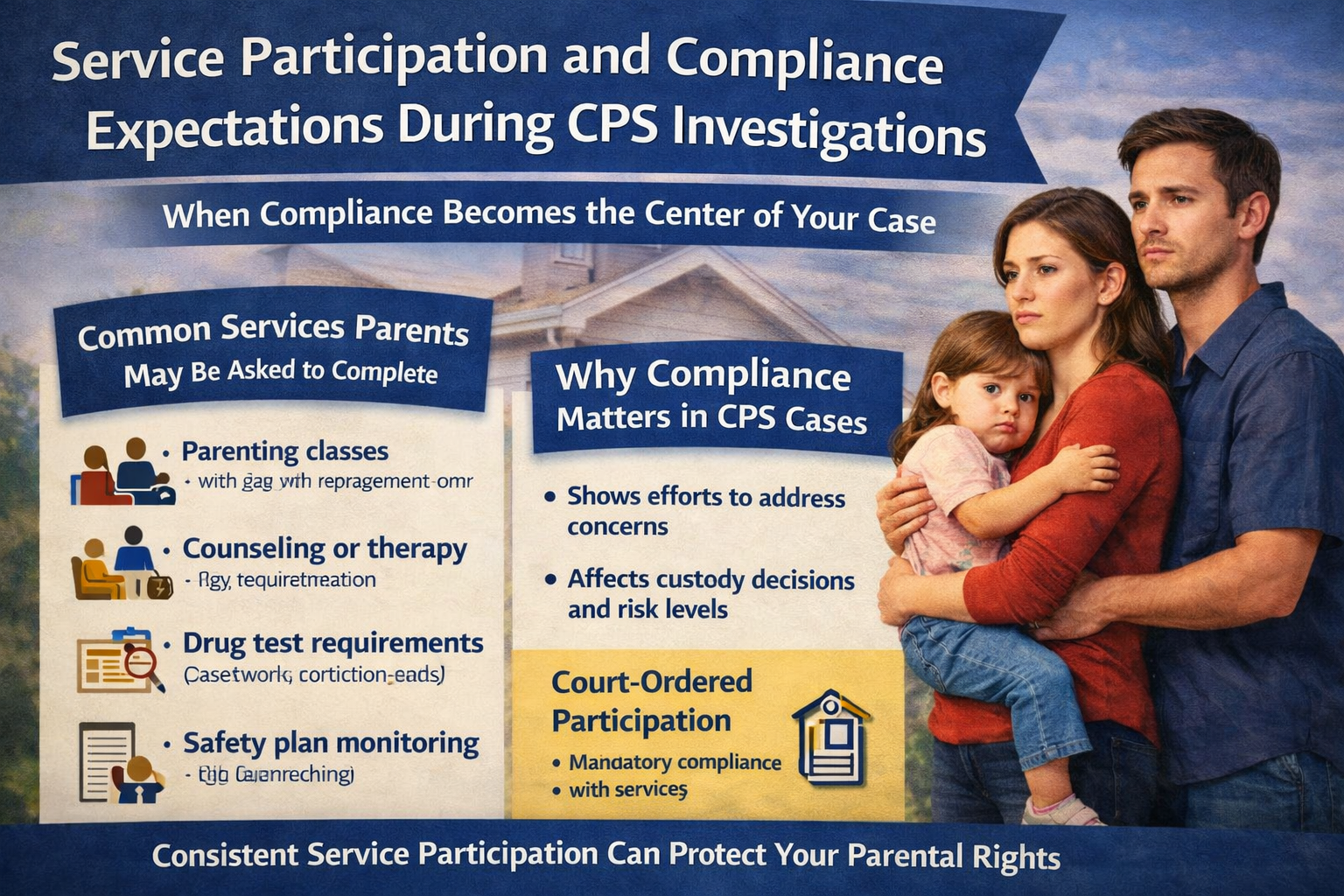
Common Services Parents May Be Asked to Complete
- Parenting classes focused on improving the child’s care
- Counseling or therapy for family members
- Drug test requirements if substance concerns exist
- Safety plan development and monitoring
- Regular check-ins with cps workers
These services are designed to address issues and reduce the overall risk to the child.
The Importance of a Safety Plan
What a Safety Plan Includes
A safety plan is one of the most important tools used during a cps investigation. It outlines specific steps that parents must follow to ensure the child safe environment. This may include supervision requirements, restrictions on certain individuals, or changes within the child’s home.
Safety plans are often created when CPS identifies immediate concerns but believes removal is not necessary. The goal is to keep the child in the home while addressing safety issues.
Why Compliance With a Safety Plan Matters
Failure to follow a safety plan can lead to serious consequences, including court involvement or removal of the child. CPS workers will document whether parents are following the plan and whether safety concerns are improving.
Consistent compliance shows that parents are taking the situation seriously and are committed to protecting their child.
Risk Assessment and Decision-Making
How CPS Determines Risk Level
CPS workers conduct a detailed risk assessment to evaluate the situation. This assessment considers factors such as the severity of alleged abuse, the presence of neglect, and the overall stability of the family.
The risk level assigned to the case influences the type of services required and whether additional action is needed. Higher risk levels often lead to more intensive monitoring and stricter compliance expectations.
The Role of Evidence in Risk Evaluation
Evidence gathered during the investigation plays a key role in determining outcomes. This may include statements, documentation, and observations made during home visits. CPS workers use this evidence to determine whether abuse or neglect occurred.
Strong evidence of improvement can help reduce risk and support keeping the family together.
Voluntary Services vs Court-Ordered Services
Understanding Voluntary Services
In some cases, CPS offers voluntary services to families. These services are not mandated by a court order but are strongly encouraged. A voluntary agreement may allow parents to address concerns without formal court proceedings.
However, declining voluntary services can sometimes lead to further action if CPS believes the child is at risk.
When Services Become Court-Ordered
If concerns are serious or compliance is lacking, CPS may seek a court order requiring participation. Court-ordered services are mandatory and must be completed as directed.
Failure to comply with court-ordered services can result in additional consequences, including changes in custody or placement in foster care.
Court Involvement and Compliance Expectations
The Role of Juvenile Dependency Court
Juvenile dependency court plays a central role in many CPS cases. This court reviews evidence, evaluates compliance, and determines what actions are necessary to protect the child.
Judges rely heavily on reports from CPS workers when making decisions. This is why compliance with services is so important.
What Happens During Court Proceedings
During court proceedings, the judge will review the case, hear testimony, and evaluate whether the child’s safety is being maintained. The court may issue orders related to services, visitation, or custody.
Parents must follow all court orders carefully to avoid further complications.
When Foster Care or Voluntary Placement Is Considered
Understanding Foster Care Placement
If CPS determines that the child is in immediate danger, they may remove the child and place them in foster care. This decision is typically based on risk assessment and evidence gathered during the investigation.
Foster care is intended to provide temporary safety while the case is resolved.
Voluntary Placement Options
In some situations, parents may agree to a voluntary placement with a relative or approved caregiver. This can be an alternative to foster care and may help keep the child within the family network.
These decisions are often made during the later stages of the investigation process.
The Role of Legal Representation
Why Legal Counsel Matters
Navigating a CPS investigation without legal counsel can be risky. An experienced education lawyer with CPS and school investigation experience can help you understand your rights, review your case, and guide you through the process.
Legal representation ensures that you are not facing CPS alone and that your interests are protected.
How Attorneys Support Families
Attorneys can assist by:
- Reviewing investigation results and evidence
- Preparing for court hearings and the initial hearing
- Ensuring compliance with court orders
- Protecting parental rights
This support can significantly influence the outcome of your case.
Managing Compliance to Protect Your Family
Steps Parents Should Take
- Attend all required services and appointments
- Follow the safety plan consistently
- Communicate clearly with cps workers
- Document all interactions and progress
These steps can help demonstrate commitment and reduce risk.
Why Consistency Matters
Consistency is one of the most important factors in CPS cases. CPS workers look for patterns of behavior, not isolated actions. Showing ongoing improvement can help move the case toward closure.
The Long-Term Impact of Compliance
How Compliance Affects the Outcome
Compliance with services and court orders can directly affect whether the case is closed or continues. Families who actively participate are more likely to achieve positive outcomes.
Protecting Your Future
Even after a case is closed, the information remains on record. Demonstrating compliance can help protect your reputation and reduce the impact of future reports.
Understanding the Role of a Compliance Report in CPS Cases
A compliance report is often used by CPS workers and the court to track how well parents are following required services and expectations. This document outlines whether parents have completed programs, followed the safety plan, and addressed concerns related to child abuse or neglect. A strong compliance report can support keeping the child in the home, while negative findings may raise additional concerns. Because this report can influence major decisions, it is important for families to take every requirement seriously.
How Child and Family Services Support Families
Child and family services are often introduced during a CPS investigation to help stabilize the home and improve the child’s care. These services may include counseling, parenting education, and support programs designed to address risk factors. The goal of child and family services is to strengthen the family while ensuring the child’s safety, and many families also turn to comprehensive legal services for long-term family stability. Participation in these programs can demonstrate a commitment to positive change.
What Happens During Child Protective Investigations
Child protective investigations involve a detailed review of reports, interviews, and observations to determine whether a child is at risk. CPS workers gather information to assess whether abuse or neglect has occurred and whether intervention is necessary. These investigations are structured but can feel overwhelming for families. In complex situations, especially when workplace or institutional misconduct is alleged, organizations may benefit from outside counsel for internal investigations. Understanding how child protective investigations work can help parents respond more effectively.
The Role of the Alleged Perpetrator in CPS Cases
In many CPS cases, one individual may be identified as the alleged perpetrator of abuse or neglect. This person’s actions, history, and interactions with the child will be closely reviewed during the investigation. The alleged perpetrator may be asked to participate in services or comply with certain restrictions. How this individual responds can significantly influence the outcome of the case.
When a Criminal Investigation Is Involved
In some situations, CPS cases overlap with a criminal investigation, especially when serious allegations of child abuse or neglect are present. Law enforcement may become involved to determine whether criminal charges should be filed. This adds another layer of complexity and increases the importance of seeking legal guidance, particularly from counsel experienced in internal investigations and organizational legal compliance. Families should understand that both processes may occur at the same time.
How Criminal History Can Affect CPS Decisions
A parent’s or caregiver’s criminal history may be reviewed during a CPS investigation, particularly if it relates to past abuse or neglect. This information can influence how CPS evaluates risk and determines the next steps. Even older incidents may be considered when assessing the child’s safety. Being aware of how criminal history is used can help families prepare.
The Importance of Family Services in CPS Cases
Family services are often recommended to help address concerns identified during the investigation. These services may focus on improving parenting skills, communication, and overall stability within the home. Many of the same principles apply in schools, where special education teachers must comply with complex laws and responsibilities. By engaging in family services, parents can show their willingness to improve and protect their child. Consistent participation can positively affect the case.
Addressing Child Abuse or Neglect Concerns
CPS cases often center around concerns of child abuse or neglect, whether physical, emotional, or environmental. These concerns must be addressed carefully and thoroughly during the investigation. CPS workers evaluate evidence to determine whether child abuse or neglect occurred and whether the child is safe. Responding appropriately to these concerns is essential.
How Family Law Intersects With CPS Cases
Family law plays a significant role in CPS cases, particularly when issues of custody and parental rights are involved. Decisions made during a CPS investigation can influence future family law proceedings. Courts may consider CPS findings when determining custody arrangements, making it valuable to work with a firm that understands family, education, and compliance-focused legal services. Understanding this connection is important for protecting your rights.
Temporary Custody Decisions During CPS Cases
In certain situations, CPS may seek temporary custody of a child if there are serious safety concerns. This decision is often made through the court and may be based on the findings of the investigation. Temporary custody arrangements can be difficult for families but are intended to protect the child. Taking immediate action can help address these concerns.
Understanding the Services Provided by CPS
The services provided during a CPS case are designed to address specific issues identified during the investigation. These services may include counseling, parenting programs, or substance abuse treatment. By completing the services provided, parents can demonstrate progress and reduce risk. Participation is often a key factor in case outcomes.
How CPS Works to Provide Services
CPS works to provide services that support families and improve the child’s safety. These services are tailored to the needs of each case and may involve multiple programs. The goal is to help families address concerns while keeping the child in the home when possible. Cooperation with these services is critical.
The Importance of Reasonable Accommodations
In some cases, parents may need reasonable accommodations to participate fully in required services. This could include adjustments for disabilities, language barriers, or other challenges. CPS and the court may consider these needs when evaluating compliance, similar to how legal support for educators navigating accommodations and investigations helps protect professional rights. Ensuring that accommodations are provided can help parents succeed in meeting expectations.
Comparing CPS Practices Beyond Texas
While CPS procedures are specific to Texas, similar processes exist in other regions such as southern California. In both areas, child protective investigations focus on assessing risk and ensuring the child’s safety. Although laws may differ, the core principles remain consistent. Understanding these similarities can provide helpful context.
When a Criminal Case Develops From CPS Allegations
A CPS case may evolve into a criminal case if evidence suggests serious abuse or neglect. This transition can significantly increase the stakes and require additional legal support, much like educators facing misconduct investigations that threaten their licenses and careers. Families should be aware that criminal proceedings may occur alongside CPS involvement. Taking early action is essential in these situations.
The Role of the CPS Investigator
A CPS investigator is responsible for gathering information, conducting interviews, and evaluating the situation. This individual plays a key role in determining the outcome of the case. Their findings are used by the department and the court to make decisions. Understanding their role can help families navigate the process.
Focusing on the Child’s Well Being
At the center of every CPS case is the child’s well being. All decisions made by CPS and the court are intended to protect the child and ensure a safe environment. For many parents, part of safeguarding that well being also includes creating powers of attorney for children’s medical and care decisions. Families should keep this focus in mind when responding to the investigation. Demonstrating concern for the child’s well being can positively influence the case.
Planning for the Near Future
Parents should think about how their actions during a CPS case will affect the near future. Decisions made now can influence custody, services, and long-term outcomes. Taking proactive steps, including getting essential legal documents for your family in place, can help create a more stable path forward. Planning ahead is an important part of managing the situation.
Responding to General Allegations
Many CPS cases begin with general allegations that may lack specific details. Even so, CPS is required to investigate these claims thoroughly. Families should take all allegations seriously and respond carefully. Addressing general allegations effectively can help protect your rights and your family.
Speak With Masterly Legal Solutions Today
If you are dealing with a CPS investigation and feel unsure about compliance expectations, you are not alone. Many families struggle to understand what is required and how to protect their rights while meeting CPS demands.
At Masterly Legal Solutions, we help families navigate these difficult situations with clarity and confidence. We take the time to answer questions, review your situation, and help you find answers that protect your child and your future. Whether you are at the beginning of a CPS investigation or in the later stages, we are here to assist you.
Call us today at (972) 236-5051 for a free consultation. Let us help you understand your options, stay compliant, and keep your family intact.
This article is for educational purposes only and does not constitute legal advice. Every case is different, and you should consult with a qualified attorney regarding your specific circumstances.







Looking for Legal & Business Solutions? Contact Us Now
Fill in the form or call us to set up a meeting