Signs You Are Being Targeted: How Retaliation Happens During School Investigations
When Something Feels Off in Your Workplace
Most teachers enter the workplace focused on helping students succeed, supporting coworkers, and building a strong school community. But sometimes, something changes. Conversations feel different, decisions seem unfair, and suddenly your actions are being questioned in ways that don’t feel right. If you have recently filed a complaint, reported concerns, or participated in an investigation, you may begin to wonder if retaliation is happening.
That uneasy feeling should not be ignored. Retaliation can develop quietly, often disguised as routine management decisions or disciplinary steps. What starts as subtle behavior can quickly escalate into serious consequences for your career, your reputation, and your future in education.
Why Retaliation Happens During School Investigations
School investigations are supposed to uncover facts and ensure fairness. However, in many cases, the process becomes complicated when an employer feels challenged or exposed. When teachers engage in protected activity, such as reporting misconduct or raising concerns about discrimination, retaliation can follow.
When an employer treats a worker unfairly because they exercised a protected right, this is known as retaliation. Under federal and state laws, this type of conduct is prohibited. Still, retaliation cases continue to arise in schools, especially when internal pressure and workplace dynamics come into play.
Understanding Protected Activity in Schools
What Counts as Protected Activity
Protected activity includes actions that the law recognizes as legally safeguarded. Teachers who engage in these actions should not face punishment, yet retaliation often follows.
Examples of protected activity include:
- Reporting discrimination or harassment in the workplace
- Filing a formal complaint with the school district or department
- Participating in an investigation or providing statements
- Raising concerns about student safety or violations involving disabilities
- Engaging in whistleblowing related to misconduct
When an employee takes these steps, they are engaging in activity protected under laws such as Title VII and other federal protections.
Why Protection Matters for Teachers
Teachers are not just employees; they are professionals responsible for shaping students’ futures. When educators are punished for doing the right thing, it creates a chilling effect across the entire workplace.
Protection under employment law helps ensure that teachers can speak up without fear. It also supports overall employee morale and reinforces accountability within schools and educational institutions.
Early Warning Signs of Retaliation
Subtle Changes in Treatment
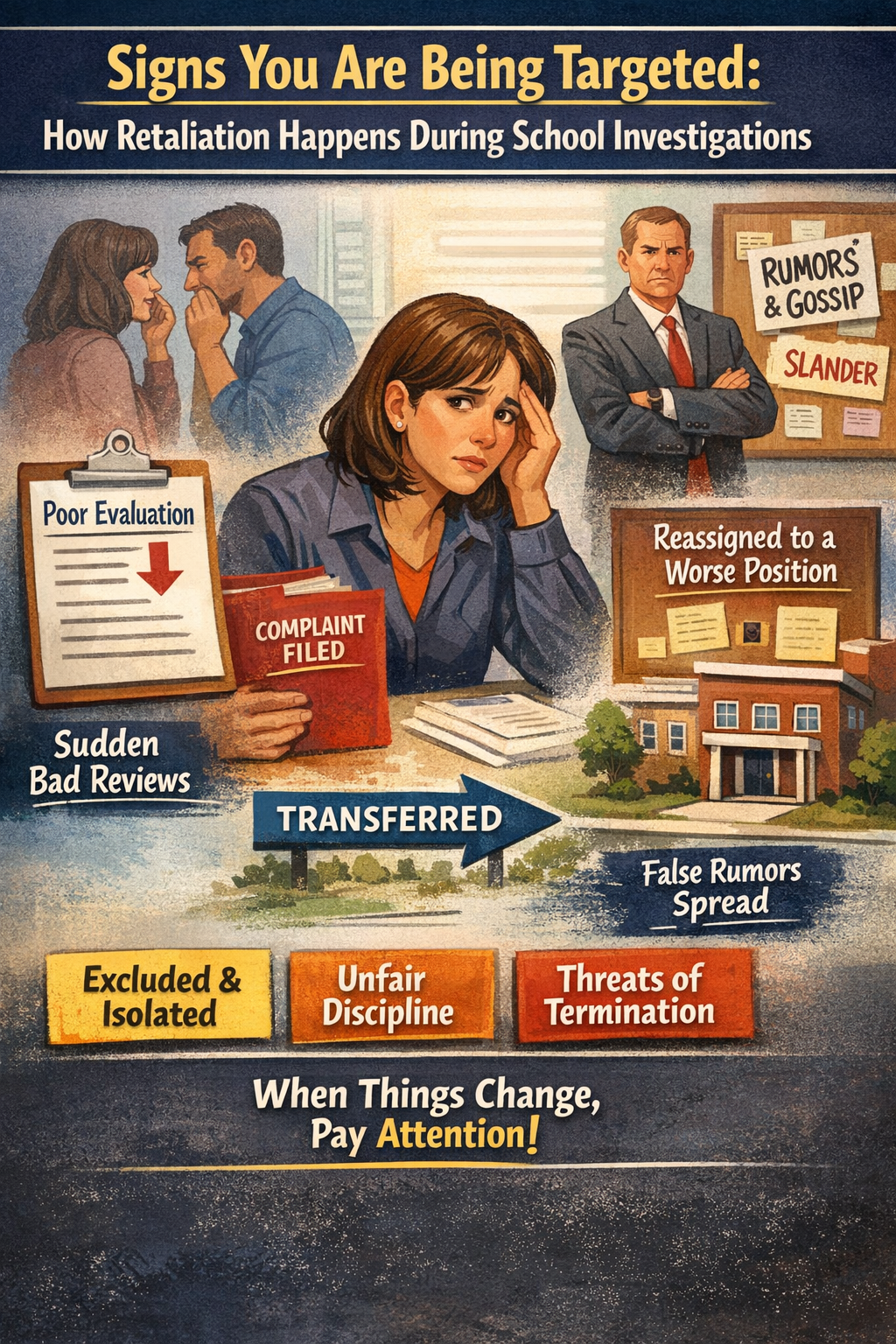
Retaliation does not always begin with obvious actions like termination. Often, it starts with subtle changes in how an employee is treated.
You may notice:
- Being excluded from meetings or communication
- A shift in your manager’s tone or attitude
- Increased scrutiny of your work
- Changes in responsibilities without explanation
These actions may seem minor at first, but they can signal a pattern of retaliation behavior.
Sudden Negative Evaluations
A common example of retaliation is receiving negative performance reviews after engaging in protected activity. If your evaluations were previously positive and suddenly decline without clear justification, this could indicate a possible violation.
A reasonable employee would question why their performance is suddenly under scrutiny. This type of adverse action often appears during or after an investigation.
Being Assigned to a Less Desirable Position
Another sign of retaliation occurs when an employee is moved from a desirable position to a less desirable position without a valid reason. This could involve reassignment, schedule changes, or removal from key responsibilities.
These changes can have a negative impact on your career and your ability to perform effectively. In many retaliation cases, these decisions are used as a way to punish employees indirectly.
Common Forms of Retaliation in Schools
Disciplinary Actions That Feel Unfair
Discipline is sometimes necessary in schools, but when it is used as a tool for retaliation, it becomes a legal issue. Teachers may face write-ups, warnings, or even suspension after engaging in protected activity.
These acts may be presented as standard procedure, but the timing and circumstances often reveal the true intent.
Termination or Threats of Being Fired
Being fired or threatened with termination is one of the most serious forms of retaliation. In some instances, teachers are placed under investigation and quickly removed from their position
.
If this occurs after reporting concerns or participating in an investigation, it may support a retaliation claim. These actions can significantly impact an employee’s livelihood and professional standing.
Spreading False Rumors or Damaging Reputation
Retaliation can also take the form of false rumors or attempts to damage an employee’s reputation. This behavior can come from a supervisor, manager, or even coworkers.
These tactics create a hostile workplace environment and can lead to long-term harm. In many cases, they are used to isolate the employee and justify further adverse action.
The Role of Employers and Management
How Employers Respond to Complaints
When a complaint is filed, an employer is expected to respond appropriately and conduct a fair investigation. However, in some cases, management may view the complaint as a threat.
Instead of addressing the issue, the employer may retaliate against the employee who raised the concern. This is especially common in situations involving discrimination, harassment, or violations of workplace policies.
The Influence of Supervisors and Administrators
Supervisors and administrators play a significant role in how retaliation develops. Their actions can directly impact an employee’s experience in the workplace.
If a supervisor begins to treat an employee differently after a complaint, it may indicate retaliation. These actions often escalate quickly if not addressed.
How Retaliation Affects the Workplace
Impact on Employee Morale
Retaliation does not only affect one individual. It can lower overall employee morale and create a culture of fear within the workplace.
When workers see others being punished for speaking up, they may hesitate to report concerns. This can lead to ongoing issues and a lack of accountability.
Effects on Students and School Community
The impact of retaliation extends beyond employees. It can affect students, parents, and the entire school community.
When teachers are distracted or under stress, it can influence their ability to support students effectively. Maintaining a fair and respectful workplace is essential for the success of everyone involved.
Legal Protections Against Retaliation
Federal and State Laws That Protect Employees
There are several laws in place to protect employees from retaliation. Federal laws, including Title VII, prohibit employers from taking adverse action against employees who engage in protected activity.
State laws and labor regulations provide additional protections. These laws are designed to ensure that employees can report concerns without fear of punishment.
What Constitutes an Adverse Action
An adverse action is any action taken by an employer that negatively affects an employee’s job. This can include termination, demotion, pay reduction, or changes in responsibilities.
Understanding what qualifies as adverse action is essential when evaluating retaliation claims. A retaliation lawyer can help determine whether your situation meets these criteria.
Building a Strong Retaliation Claim
Gathering Evidence
To build a strong claim, it is important to gather evidence that supports your case. This may include emails, performance reviews, witness statements, and documentation of events.
Attorneys review this information to identify patterns and establish a connection between the protected activity and the adverse action.
Filing a Complaint with the EEOC
In many retaliation cases, employees file a complaint with the EEOC. This process allows workers to pursue legal action against an employer who has violated their rights.
Filing with the EEOC is often a necessary step before pursuing a lawsuit. A retaliation lawyer can guide you through this process and help ensure that all requirements are met.
The Importance of Legal Representation
Why You Need Retaliation Attorneys
Retaliation attorneys provide critical legal support during these situations. They understand how to navigate employment law and protect your rights, especially when you work with an experienced retaliation lawyer for workplace disputes.
Without legal representation, employees may struggle to prove their case or respond effectively to employer actions. Attorneys work to ensure that your voice is heard and your interests are protected.
How a Retaliation Lawyer Supports You
A retaliation lawyer helps clients understand their rights, evaluate their situation, and determine the best course of action. This includes reviewing evidence, advising on next steps, and representing clients in legal proceedings.
Their goal is to achieve the best possible outcome while minimizing stress and uncertainty.
Taking Action When You Suspect Retaliation
Steps to Protect Yourself
If you believe you are experiencing retaliation, it is important to take action quickly. Delaying can make it more difficult to protect your rights.
Consider the following steps:
- Document all incidents and communication
- Report concerns through appropriate channels
- Avoid discussing the situation with coworkers unnecessarily
- Seek legal advice as soon as possible
These actions can help strengthen your case and protect your position.
When to Contact a Law Firm
Timing is critical when dealing with retaliation. Your chances of developing a compelling case increase with the time you get in touch with a law firm.
An initial consultation allows attorneys to review your situation and provide guidance. This step can make a significant difference in how your case progresses.
How Masterly Legal Solutions Can Help
Dedicated Support for Teachers and Employees
At Masterly Legal Solutions, we understand the challenges teachers and workers face when dealing with retaliation. Our firm is committed to providing tailored legal services for educators and school employees that address your specific needs.
We have extensive experience handling retaliation cases and employment law matters. Our team works closely with clients to develop strategies that protect their rights and careers.
Focused on Protecting Your Future
Our attorneys are focused on helping you navigate complex legal issues with confidence. Whether you are dealing with an investigation, disciplinary action, or workplace conflict, we are here to support you.
We are committed to advocating for our clients and achieving results that reflect their best interests.
Other Related Protected Activity
In addition to filing a formal complaint, there are many forms of other related protected activity that are recognized under employment law. These include participating in internal reviews, supporting coworkers who have reported misconduct, or cooperating with an ongoing investigation. Even informal reporting or raising concerns to a supervisor can qualify as related protected activity. Employees who engage in these actions are protected by law, and any negative response from an employer may raise serious concerns about retaliation.
Intimidation in the Workplace
Intimidation is a common tactic used when retaliation occurs, especially after an employee speaks up. This behavior may come from a manager, supervisor, or even coworkers and can include threats, pressure, or attempts to silence concerns. In some cases, intimidation is subtle, such as increased monitoring or hostile communication. These actions can create a stressful workplace environment and may signal that the employee is being targeted unfairly.
Company Decisions That Raise Red Flags
When a company begins making sudden or unexplained changes after an employee engages in protected activity, it can be a warning sign. These decisions may involve shifts in job duties, exclusion from meetings, or reassignment within the organization. While businesses have the right to manage operations, these changes must not be used as a tool for retaliation. Employees should carefully review the timing and reasoning behind these actions to determine if there is a connection.
Changes to Wages and Compensation
One clear example of adverse action is a change in wages following a complaint or other protected behavior. If an employee experiences a reduction in pay, loss of benefits, or denial of expected compensation, it may indicate retaliation. These actions can have a direct financial impact and may violate both federal and state laws. Any unexplained changes to wages should be taken seriously and evaluated carefully.
Asserting Your Rights as an Employee
Employees have the right to protect themselves by asserting their legal rights in the workplace. This includes speaking up about concerns, filing complaints, and participating in investigations without fear of punishment. Asserting these rights is a critical part of maintaining fairness and accountability within any organization. When retaliation follows, it becomes important to seek legal guidance to protect your interests.
Recognizing When You Are the Victim
It can be difficult to identify when you have become the victim of retaliation, especially when actions are subtle or disguised as routine management decisions. However, patterns of negative treatment, combined with timing after a complaint or protected activity, often reveal the truth. Recognizing these signs early allows employees to take action before the situation worsens. Awareness is the first step in protecting your career and reputation.
Other Type of Retaliation to Watch For
Retaliation does not always follow the same pattern, and there are many other type of actions that may raise concerns. These can include denial of promotions, increased workload, or being isolated from important projects. Each situation is unique, and what may seem minor on its own can become significant when viewed as part of a larger pattern. Employees should document any unusual behavior to better understand what is happening.
When Business Interests Conflict With Employee Rights
Sometimes a business or school system may prioritize its reputation or internal operations over the rights of an employee. When this happens, decisions may be made that unfairly impact the individual who raised concerns. While organizations must manage their operations effectively, they cannot do so at the expense of employee protections. Balancing business interests with legal obligations is essential for maintaining a fair workplace.
Involving Police or External Authorities
In certain situations, an investigation may involve the police or other external authorities. This can add another layer of complexity and increase the pressure on the employee involved. When outside agencies become part of the process, it is even more important to have proper legal guidance. Understanding how these interactions affect your rights can help you respond appropriately.
Workplace Concerns Within the Office
Many retaliation issues begin with concerns raised within the office environment. Whether it involves communication with management, interactions with coworkers, or internal complaints, these situations can escalate quickly. The office setting often becomes the focal point for changes in behavior and treatment. Paying attention to these shifts can help employees identify when something is not right and take steps to protect themselves.
Retaliation Cases
Retaliation cases often arise when an employee takes a stand by reporting misconduct, discrimination, or unsafe conditions in the workplace. These cases focus on whether an employer took adverse action because the employee engaged in protected activity. Each situation is unique, but many retaliation cases share similar patterns, such as sudden discipline, negative evaluations, or changes in job responsibilities. Understanding how these cases are built is essential for protecting your rights and responding effectively.
Initial Consultation
An initial consultation is one of the most important first steps when facing potential retaliation. During this meeting, attorneys review your situation, examine key details, and help you understand your options moving forward. This process allows you to ask questions and gain clarity about your rights under employment law. Taking advantage of an initial consultation early can help prevent further harm and position you for a stronger outcome.
Legal Issues That May Arise
Retaliation situations often involve complex legal issues that can impact your career and future opportunities. These issues may include violations of federal or state laws, improper disciplinary actions, or failure to follow proper procedures during an investigation. Navigating these challenges without legal guidance can be overwhelming. Working with experienced attorneys ensures that these legal issues are properly addressed and that your interests are protected.
Experiencing Retaliation in the Workplace
Employees who are experiencing retaliation may feel isolated, stressed, and uncertain about what to do next. The workplace can quickly become uncomfortable when behavior shifts and actions begin to feel targeted. Recognizing the signs early and taking action is critical to protecting your rights. With the right legal support, employees can respond confidently and work toward resolving the situation effectively.
Speak With Retaliation Attorneys Today
If you are feeling targeted, noticing changes in your workplace, or questioning whether retaliation is happening, trust your instincts. These situations rarely resolve on their own, and waiting can put your career and reputation at risk. What may seem like small actions today can quickly turn into serious consequences that affect your future.
At Masterly Legal Solutions, we understand how overwhelming this experience can be. Our team is here to listen, evaluate your situation, and provide clear guidance on your next steps. If you believe your employer has taken adverse action against you after engaging in protected activity, now is the time to act. Contact us at (972) 236-5051 for a free consultation and let us help you protect your career, your rights, and your peace of mind.
Disclaimer: This article is for educational purposes only and does not constitute legal advice. Every situation is unique, and you should consult with a qualified attorney regarding your specific legal concerns.
Teacher Rights When Assaulted by a Special Needs Student: Safety, Reporting and Investigation Issues





Looking for Legal & Business Solutions? Contact Us Now
Fill in the form or call us to set up a meeting