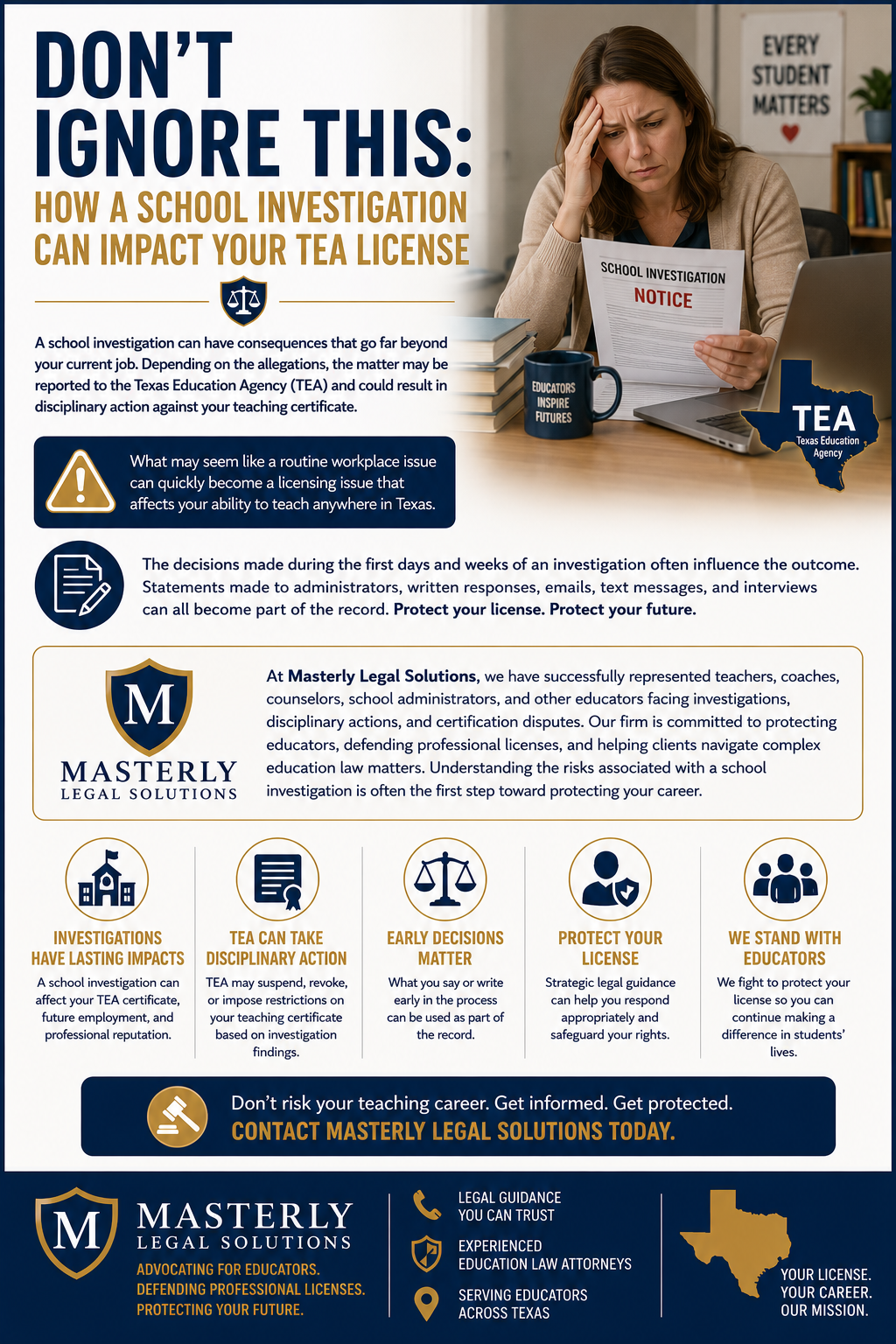
Don’t Ignore This: How a School Investigation Can Impact Your TEA License
For most educators, earning a Texas teaching certificate is not simply another professional achievement. It represents years of education, training, student teaching, testing, and dedication to a career centered on helping students succeed. Many teachers spend decades building their reputation inside the classroom, working with parents, mentoring students, and contributing to their schools and communities. Because of that investment, receiving notice of a school investigation can be one of the most stressful experiences an educator will ever face.
Unfortunately, many educators underestimate the seriousness of an investigation during its early stages. Some believe the matter will remain internal to the school district. Others assume that if no criminal charges are filed, their teaching certificate is safe. In reality, a school investigation can have significant consequences that extend far beyond your current employment situation. Depending on the allegations, the matter may eventually be reported to the Texas Education Agency, commonly known as TEA, resulting in potential disciplinary action against your certification.
The decisions made during the first days and weeks of an investigation often influence the outcome. Statements made to administrators, written responses, emails, text messages, and interviews can all become part of the record. What may seem like a routine workplace issue can quickly evolve into a licensing matter that affects your ability to teach anywhere in Texas.
At Masterly Legal Solutions, we have successfully represented teachers, coaches, counselors, school administrators, and other educators facing investigations, disciplinary actions, and certification disputes. Our firm is committed to protecting educators, defending professional licenses, and helping clients navigate complex education law matters. Understanding the risks associated with a school investigation is often the first step toward protecting your career.
Why School Investigations Should Never Be Ignored
When a school district initiates an investigation, many educators immediately focus on their current job. While employment concerns are important, the investigation may also affect your teaching certificate, future employment opportunities, and professional reputation.
School districts are often required to report certain allegations and findings to the Texas Education Agency. Even if the district does not terminate your employment, information generated during the investigation may still trigger a separate review by TEA.
Educators who fail to take the investigation seriously may inadvertently damage their own defense. Early legal guidance often helps identify risks before they become larger problems.
Understanding the Texas Education Agency's Role
The Texas Education Agency regulates educator certification and professional conduct throughout the state. While school districts manage day-to-day employment decisions, TEA oversees teacher credentialing and certification enforcement.
When allegations involve misconduct, inappropriate relationships, dishonesty, abuse, criminal activity, or other serious concerns, TEA may open its own review. This review is separate from any action taken by the district.
An educator may successfully resolve employment concerns and still face licensing consequences through TEA investigations and certification proceedings.
How a School District Investigation Typically Begins
Most investigations begin with a complaint or report.
The report may come from:
- Parents
- Students
- Teachers
- School administrators
- Support staff
- Community members
- Law enforcement
- Other educators
Once concerns are raised, the school district generally begins gathering information to determine whether policies, regulations, or laws may have been violated.
The Initial Meeting With Administration
Many educators first learn about an investigation when they are called into a meeting with administration.
These meetings often occur unexpectedly. An administrator may inform the educator that allegations have been made and that an investigation has been initiated. In some cases, the educator may receive very little information regarding the specific concerns.
It is important to remember that anything you say during these meetings may later become part of the investigative record.
Why Educators Often Make Early Mistakes
One of the most common mistakes educators make is assuming they can simply explain their way out of the situation.
While honesty is important, speaking without fully understanding the allegations can create unnecessary complications. Statements made during interviews may later be interpreted differently than intended.
Many experienced attorneys recommend seeking legal advice before providing detailed written or verbal responses whenever possible, especially after receiving notice of a TEA investigation.
Administrative Leave and What It Means
Educators are frequently placed on administrative leave while investigations are pending.
Being removed from the classroom can feel humiliating and frightening. Many teachers immediately assume that administrative leave means termination is inevitable.
In reality, administrative leave is often a procedural step that allows the district to conduct its investigation without interference. However, it should still be treated as a serious development.
Common Allegations That Trigger Investigations
School investigations arise from many different situations.
Allegations Involving Students
Complaints involving students often receive immediate attention due to the district's obligation to protect student welfare.
Allegations may involve classroom interactions, communication practices, discipline concerns, or boundary issues.
Because schools prioritize student safety, these matters are often investigated aggressively.
Workplace Conduct Allegations
Workplace disputes can also trigger investigations.
Examples include:
- Harassment allegations
- Discrimination complaints
- Conflicts between employees
- Professional misconduct concerns
- Policy violations
These matters can affect both employment and certification status.
Allegations Involving Documentation
Records and documentation play a significant role in education.
Concerns regarding grading, attendance records, testing procedures, financial matters, or other forms of writing and documentation may result in investigations if inaccuracies are alleged.
Integrity issues are taken seriously by both school districts and TEA.
How Teacher Contracts Can Be Affected
Many educators focus on their teacher contracts when an investigation begins.
Depending on the allegations, the district may pursue disciplinary measures affecting employment status. Contract nonrenewal, suspension, and dismissal are among the possible outcomes.
Understanding your contractual rights often requires legal knowledge and careful review of district policies.
Due Process Rights Matter
Educators possess important due process rights when facing disciplinary action.
These rights help ensure that decisions are made fairly and that educators have an opportunity to respond to allegations.
Due process protections may vary depending on employment status, tenure, and the specific circumstances involved.
Failing to exercise these rights effectively can negatively affect the outcome of the matter.
Understanding Process Rights During Investigations
Process rights exist to help ensure fairness.
These rights may include opportunities to review allegations, present information, challenge evidence, and participate in hearings.
Many educators are unfamiliar with these protections and therefore fail to take advantage of them.
Experienced legal representation can help educators understand and exercise available rights.
The Importance of Evidence
Evidence frequently determines the outcome of investigations.
Investigators may review:
- Emails
- Text messages
- Social media content
- Witness statements
- Security footage
- Personnel records
- Student statements
Preserving potentially helpful information is extremely important from the beginning of the process.
Why Written Responses Require Careful Attention
Many school districts request written responses during investigations.
A written statement may seem straightforward, but it can become one of the most important pieces of evidence in the case. Once submitted, the statement may be reviewed repeatedly by investigators, administrators, attorneys, and TEA personnel.
Educators should carefully consider obtaining guidance before providing written responses.
The Relationship Between Employment and Certification
Many educators mistakenly assume employment decisions and certification matters are identical.
In reality, these are separate issues.
A school district may decide not to pursue termination while TEA continues investigating certification concerns. Conversely, an educator may lose employment but ultimately retain certification.
Understanding this distinction is critical.
How TEA Reviews Reported Conduct
Once TEA receives information, the agency evaluates whether additional investigation is necessary.
The agency may review district records, witness statements, disciplinary findings, and other relevant documentation.
TEA then determines whether the allegations warrant further action under applicable regulations.
The review process may take months and often creates significant uncertainty for educators.
Potential Disciplinary Outcomes
Certification investigations can result in several possible outcomes.
Potential consequences include:
- Written warnings
- Restrictions
- Reprimands
- Suspension
- Revocation of certification
The specific outcome depends on the allegations, available evidence, prior history, and other relevant factors.
Administrative Hearings and TEA Proceedings
Some certification matters proceed to administrative hearings.
Administrative hearings allow educators to challenge allegations and present evidence in their defense. These proceedings often resemble court cases and may involve testimony, documentation, and legal arguments.
Preparation is critical because the outcome can significantly affect an educator's future.
Why Legal Representation Matters
Facing a TEA investigation without legal representation can be risky.
Certification cases often involve complicated regulations, procedural rules, and evidentiary issues. Educators who attempt to handle matters alone may unknowingly make mistakes that affect their defense.
Having an attorney who understands education law can help level the playing field.
How Experienced Attorneys Help Educators
Experienced attorneys assist educators in many ways.
They may help:
- Review allegations
- Evaluate evidence
- Prepare responses
- Represent clients during interviews
- Defend certification rights
- Attend hearings
- Negotiate resolutions
The goal is to protect both employment interests and professional licenses.
School Administrators Face Risks Too
Investigations are not limited to classroom teachers.
School administrators, principals, assistant principals, coaches, counselors, and other educational professionals may also face allegations affecting certification.
The higher an educator's position within administration, the greater the potential impact on reputation and future employment opportunities.
College Professors and University Employees
Although TEA primarily regulates K-12 educators, allegations involving college professors and employees at universities can also create professional consequences.
Professional licensing boards, institutional policies, and employment agreements may all become relevant depending on the circumstances.
Educational professionals at every level should take investigations seriously.
Understanding Harassment Allegations
Harassment allegations frequently lead to investigations.
These complaints may involve coworkers, students, parents, or other individuals within the educational environment.
Even allegations that appear minor initially can escalate if not handled properly.
Early legal guidance often helps educators navigate these sensitive situations more effectively.
Discrimination Complaints and Educator Liability
Discrimination complaints may arise from interactions involving students, coworkers, or members of the public.
Federal and state laws prohibit discrimination in many educational settings. School districts are generally required to investigate allegations thoroughly.
Understanding applicable laws and regulations can be essential when responding to these claims.
Reasonable Accommodations and the Disabilities Act
The Disabilities Act requires schools and employers to provide reasonable accommodations under certain circumstances.
Misunderstandings regarding accommodations can sometimes trigger complaints and investigations.
Educators accused of failing to comply with accommodation requirements may face scrutiny from both districts and regulatory agencies.
These situations often require careful legal analysis.
Probationary Period Educators Face Additional Challenges
Educators working during a probationary period often face unique concerns.
Because probationary employees may have fewer employment protections than tenured educators, investigations can feel especially threatening.
However, probationary status does not eliminate important legal rights.
Understanding available protections remains important regardless of employment status.
The Role of Tenure
Tenure provides additional employment protections in some educational settings, but working with a Texas law firm experienced in education and compliance matters can help clarify how those protections apply in practice.
Although tenure does not prevent investigations, it may affect procedural rights and disciplinary processes.
Educators should understand how tenure influences their specific situation.
A knowledgeable attorney can help explain applicable protections.
Teacher Credentialing Issues Beyond Investigations
Teacher credentialing concerns are not limited to misconduct allegations.
Application issues, reporting requirements, criminal matters, and documentation concerns may also affect certification.
Educators should remain aware of obligations associated with maintaining their credentials.
Failure to address these issues can create avoidable complications.
The Importance of Speaking Carefully
Many educators feel compelled to immediately speak in their own defense.
While cooperation is important, educators should avoid making impulsive statements. Once information is provided, it can be difficult to correct misunderstandings later.
Knowing when to speak and how to respond strategically can make a significant difference.
How Unions and Professional Organizations May Help
Some educators belong to unions or professional organizations.
Organizations such as local chapter associations, CTA members groups, and other educator associations may provide certain forms of assistance.
However, educators should understand the scope of available support and determine whether additional legal representation is necessary.
Learning From Organizations Nationwide
Educational organizations throughout the country advocate for educators facing professional challenges.
Groups such as the California Teachers Association and the California Commission on Teacher Credentialing frequently address issues involving educator rights, discipline, and certification.
While Texas laws differ, reviewing nationwide trends often highlights the importance of protecting professional licenses.
Why Parents and Community Concerns Matter
Parents play a significant role in many investigations.
Complaints originating from parents often receive immediate attention because schools have a responsibility to address concerns regarding students and educational environments.
Even when allegations lack merit, districts are generally obligated to investigate.
Understanding this reality helps educators prepare for the process.
The Impact on Future Jobs
A school investigation may affect future jobs even if the matter is ultimately resolved favorably.
Potential employers may review employment history, disciplinary records, and certification status when making hiring decisions.
Protecting your professional reputation early often reduces future complications.
This is one reason why a strong defense matters.
Protecting Academic Freedom and Professional Interests
Educators often worry that investigations may affect their professional freedom.
Academic freedom, classroom discretion, and professional judgment remain important considerations in many cases. However, balancing these interests with district policies can be challenging.
Legal guidance can help educators understand how these competing concerns may affect their matter.
When Criminal Allegations Are Involved
Some investigations involve allegations that extend beyond employment concerns.
If criminal allegations arise, educators may face simultaneous reviews by law enforcement, school districts, and TEA.
The risks become substantially greater in these situations, making immediate legal assistance critical.
Building a Strong Defense Strategy
Every investigation requires a thoughtful defense strategy.
Effective defense often includes:
- Reviewing evidence
- Identifying weaknesses in allegations
- Preserving documentation
- Preparing responses
- Understanding procedural requirements
A proactive approach generally produces better outcomes than a reactive one.
How Masterly Legal Solutions Helps Educators
At Masterly Legal Solutions, we understand what is at stake when educators face investigations. Our education lawyer team has successfully represented teachers, school administrators, coaches, counselors, and educational professionals in a wide variety of education law matters. We provide legal representation designed to protect professional licenses, employment interests, and future career opportunities.
Our experienced attorneys work closely with clients to review allegations, evaluate evidence, prepare responses, attend administrative hearings, and defend certification rights. Whether you are accused of misconduct, facing disciplinary action, responding to a district investigation, or dealing with TEA scrutiny that could affect your license, we are committed to helping you navigate the process.
We understand the challenges educators face and remain dedicated to protecting the careers that our clients have worked so hard to build.
Addressing Legal Issues Before They Become Larger Problems
Many educators underestimate how quickly legal issues can develop during a school investigation. What may initially appear to be a minor workplace concern can evolve into disciplinary action, certification review, or even employment consequences if not addressed properly. Understanding your rights and obligations early in the process allows you to make informed decisions rather than reacting under pressure. Seeking legal guidance at the first sign of trouble can often help educators avoid mistakes that may affect their future careers, and an education law attorney for teachers can provide critical early support.
Understanding the Following Matters During an Investigation
Educators facing investigations should pay close attention to the following matters because each may affect both employment and certification status. These issues often include witness statements, written responses, electronic communications, district policies, and compliance with investigative requests. While every case is different, understanding how these factors influence the process can help educators better prepare their defense. A thorough review of the facts often reveals opportunities to address concerns before they escalate.
The Department's Role in Educator Certification Reviews
When serious allegations arise, information may be forwarded to the appropriate department responsible for reviewing educator conduct and certification concerns. The department evaluates records, investigative findings, and supporting evidence to determine whether additional action is necessary. Because these reviews can affect an educator's professional future, it is important to respond carefully and strategically. Early legal representation can help ensure that relevant information is properly presented during the review process, and an experienced education law attorney can guide you through each step.
Understanding the Mandate to Protect Students
Every school district operates under a mandate to provide a safe educational environment for students. As a result, administrators are often required to investigate complaints and concerns even when allegations have not been proven. While this mandate serves an important purpose, it can sometimes create challenges for educators who find themselves accused of misconduct. Understanding the district's responsibilities can help educators better navigate the investigation process while protecting their own rights, especially with guidance from a Texas law firm focused on educator defense.
Why Fair Treatment Matters During School Investigations
Educators deserve a fair process when allegations are made against them. Fair treatment includes the opportunity to respond to concerns, present evidence, and have allegations reviewed objectively rather than based on assumptions or speculation. While school districts have important responsibilities to students and the community, they must also respect the rights of employees throughout the investigation. Protecting fairness benefits everyone involved and helps maintain confidence in the process.
When You Should Contact a Lawyer
One of the most important decisions an educator can make during an investigation is determining when to contact a lawyer. Waiting until disciplinary action has already occurred may limit available options and make it more difficult to build an effective defense. A lawyer experienced in education law can help review allegations, evaluate evidence, prepare responses, and protect your professional interests from the beginning. Early intervention often places educators in a stronger position as the matter progresses.
Protecting a Respected Career in Education
Most educators spend years earning the trust of students, parents, coworkers, and their communities. A respected professional reputation can be one of the most valuable assets an educator possesses. Unfortunately, investigations can threaten that reputation even before findings are made. Taking allegations seriously and responding strategically can help protect the respected career you have worked hard to build throughout your years in education.
How Superintendents Influence Investigation Decisions
Superintendents often play an important role in school district investigations, particularly when allegations involve serious misconduct or potential employment consequences. They may review findings, evaluate recommendations, and participate in decisions affecting discipline or contract status. While superintendents must balance the interests of students, employees, and the district, their decisions can significantly impact an educator's future. Understanding how district leadership influences the process can help educators prepare more effectively.
Why You Should Never Miss an Investigation Schedule
During a school investigation, meetings, interviews, deadlines, and hearing dates are often placed on a strict schedule. Missing an interview, failing to submit requested information, or overlooking an important deadline can negatively affect your ability to respond to allegations. Educators should carefully track all communications and maintain an organized schedule throughout the process. Staying informed and prepared demonstrates professionalism and helps ensure that important opportunities to present information are not lost.
Why Education Law Matters During a School Investigation
Education law governs many of the rules, procedures, and protections that affect teachers, administrators, and other educational professionals throughout their careers. When a school investigation begins, education law often becomes an important factor because it influences due process rights, employment protections, certification requirements, disciplinary procedures, and interactions with regulatory agencies such as the Texas Education Agency. Many educators are surprised to learn that an internal workplace matter can quickly involve complex legal issues that extend beyond their current position. Understanding how education law applies to your situation can help you make informed decisions, protect your professional interests, and respond effectively to allegations that may affect your future in education.
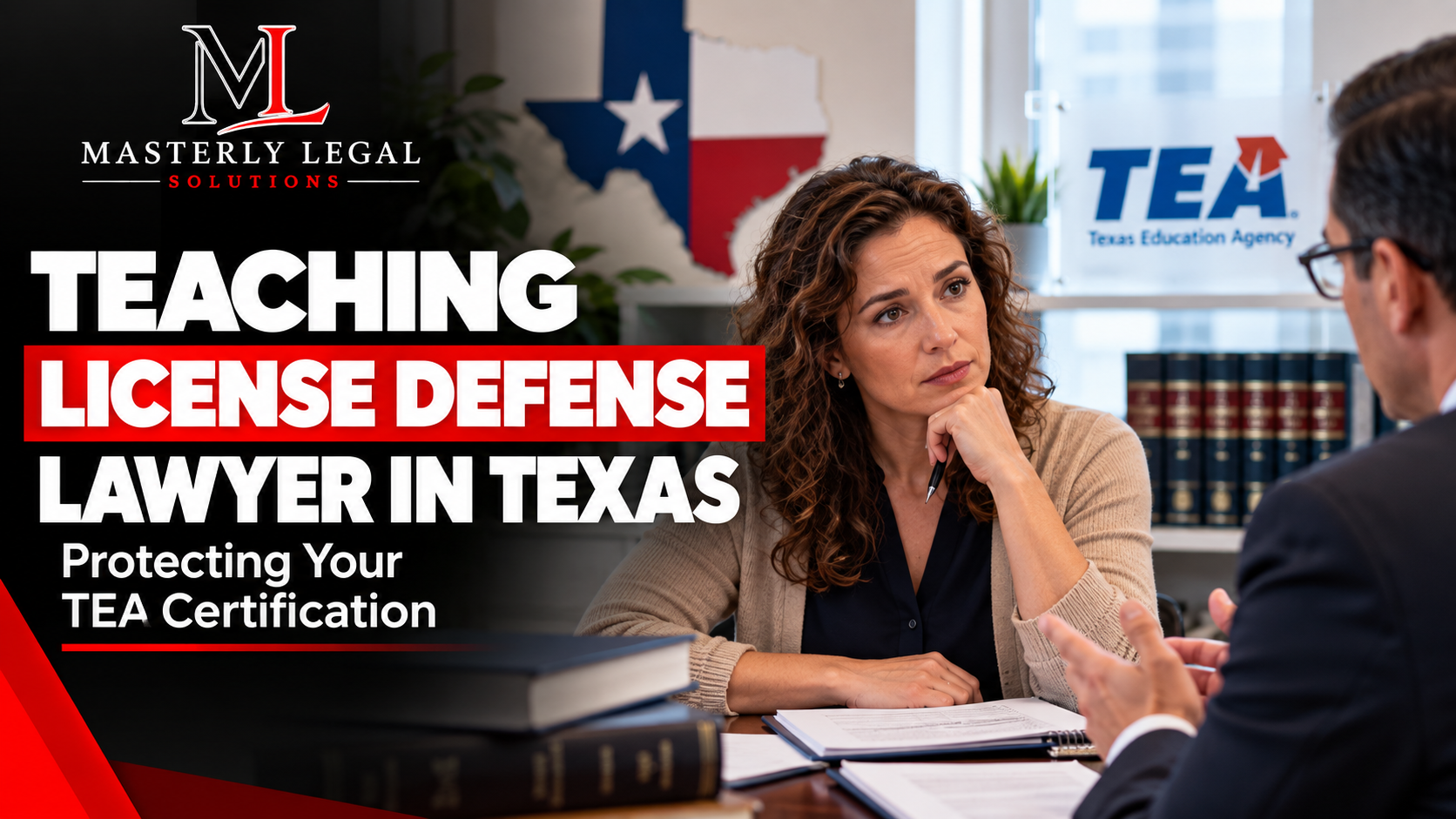
Speak With an Attorney Dallas Educators Trust
If you are under investigation by a school district, do not assume the matter will simply disappear. What starts as an internal workplace concern can quickly affect your teaching certificate, employment opportunities, and professional reputation. The earlier you obtain legal guidance, the more options you may have to protect your interests and strengthen your defense.
Masterly Legal Solutions is committed to helping educators understand their rights, evaluate their options, and respond strategically to investigations. If you have questions regarding TEA certification issues, disciplinary proceedings, administrative hearings, harassment allegations, discrimination complaints, teacher contracts, or other education law concerns, contact our office today.
Call (972) 236-5051 for a free consultation. Our team is ready to provide the advice, guidance, and legal representation you need during this difficult time. Your career, your reputation, and your future deserve protection from an attorney Dallas educators can rely upon when it matters most.
Disclaimer: This article is provided for educational and informational purposes only and does not constitute legal advice. Reading this article does not create an attorney-client relationship. Every situation is unique, and laws may change over time. If you are facing a school investigation or TEA certification issue, contact Masterly Legal Solutions directly for legal guidance regarding your specific circumstances.



Looking for Legal & Business Solutions? Contact Us Now
Fill in the form or call us to set up a meeting