
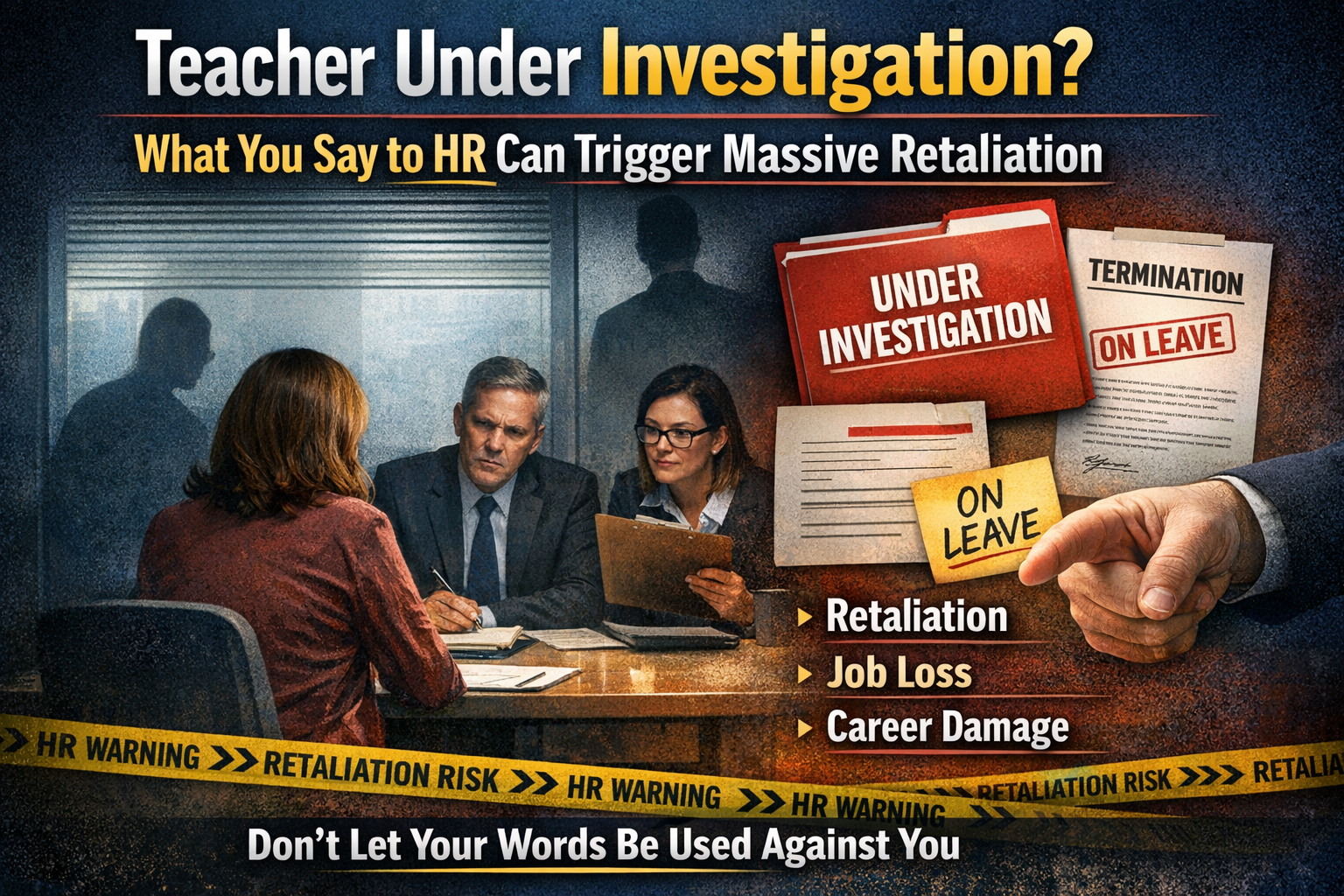
Teacher Under Investigation? What You Say to HR Can Trigger Massive Retaliation
If you’re a teacher under investigation, it can feel like the ground shifts under your feet overnight. One day you’re managing students, lesson plans, and parents, and the next you’re being called into an office meeting where the questions feel sharper than they should. It’s normal to want to explain yourself immediately, especially if you believe the situation is unfair. But in the real world of employment investigations, what you say to HR can be used in ways you never expected.
Many educators assume HR is there to “clear things up” or protect a reasonable employee from unfair accusations. Sometimes that’s true. But other times, HR’s priority is to protect the employer, limit risk, and control the narrative. That’s why it is so important to understand that even one sentence, one email, or one rushed written statement can trigger retaliation, discipline, or job loss.
At Masterly Legal Solutions, we’ve seen how fast these situations escalate. The goal of this article is not to scare you, but to protect you with practical guidance before you speak, write, or sign anything. If you’re facing an investigation, you deserve to approach it strategically, not emotionally.
The Reality of Being “Under Investigation” as a Teacher
An investigation is not always a neutral process. In many school systems, the moment a complaint is filed, the employer begins building a record. That record can later justify administrative leave, a disciplinary action, or termination. Even when the investigation starts informally, it often becomes formal the moment HR documents your statements.
Teachers are frequently told the meeting is “just a conversation” or “not a big deal.” But that doesn’t mean the notes won’t be used against you later. In many cases, the teacher becomes the subject of the process before they even understand the allegations. That confusion can lead to mistakes that create long-term consequences.
If you are called in, your best move is to treat it seriously from the start. The employer may already have statements from other workers, emails, video, or reports from a supervisor. Your job is to protect your position and your future.
Why HR Interviews Can Become Dangerous Fast
HR interviews often feel friendly at first. The manager may smile, offer water, and say they want your side of the story. But the purpose of the interview is often to determine whether the employer can justify adverse actions later. That’s why even honest teachers can get trapped.
HR is trained to ask questions in a way that invites extra details. They may let you talk until you contradict yourself, admit something unnecessary, or speculate about what happened. The employer can later claim your statements show “inconsistency,” “dishonesty,” or “insubordination.” This is one of the most common ways retaliation occurs after an investigation begins.
Even worse, teachers often assume they must answer everything immediately. But in most circumstances, you have the right to ask for time, request clarity, and seek guidance before responding.
The Hidden Risk: “Your Words Become the Evidence”
When you speak to HR, you’re not just talking. You’re creating evidence. HR notes, summaries, recorded meetings, and written statements can all become part of your employment file. That file may later be shared with decision-makers in the department, outside agency investigators, or even attorneys defending the employer.
Your words may also be compared to other reports, security footage, student accounts, and emails. If there is any difference, the employer may claim you were dishonest, even if the difference is small and innocent. This is why teachers should avoid guessing, exaggerating, or filling in details they don’t truly remember.
The safest approach is to be accurate, limited, and intentional. If you’re unsure, it is often better to say you need time to review information rather than guessing in the moment.
How Teachers Accidentally Trigger Retaliation Without Realizing It
Retaliation isn’t always loud. It doesn’t always look like someone yelling at you or firing you immediately. Retaliation can happen quietly through scheduling changes, documentation, and professional isolation. It can come from a supervisor, a manager, or higher-level administrators who feel threatened by what you reported or how you responded.
In many cases, the teacher did not “do anything wrong.” They simply engaged in protected activity, such as reporting discrimination, harassment, or unsafe conditions. The employer may respond by punishing the teacher in subtle ways, hoping they will quit or stop speaking up.
This can create a negative impact on the teacher’s career, pay, and reputation. It can also damage employee morale, especially when other workers see what happens to someone who speaks up. Over time, overall employee morale can collapse because employees stop trusting the process.
What Counts as Retaliation at Work in a School Setting
Retaliation at work generally means an employer punishes an employee because they participated in protected activity. In a school environment, retaliation can appear in many forms, including professional discipline, sudden investigations, or changes in assignments.
Here are examples that may be considered retaliation depending on the facts:
- Being moved into a less desirable position without a real reason
- Losing a desirable position you previously held
- Receiving unexpected write-ups after years of good performance
- Getting placed on administrative leave without clear explanation
- Being assigned unreasonable duties or extra work hours
- Being denied pay increases, benefits, or opportunities
- Being excluded from meetings or treated as a “problem employee”
- Being threatened with termination for raising concerns
- Being pressured to resign
Retaliation occurs most often after the employer believes you are challenging authority or exposing a possible violation. This is why teachers should treat HR meetings seriously, even if the employer claims it’s “routine.”
The Difference Between a Complaint and a Case Against You
Many teachers file a complaint thinking it will lead to a fair review. But once a complaint is made, the employer may shift the focus toward defending itself. In some cases, the teacher becomes the target rather than the protected party.
This is especially common when the complaint involves harassment, discrimination, or reporting misconduct. Instead of correcting the issue, the employer may try to discredit the teacher, isolate them, or build a record to justify firing them later. That is why filing a complaint should be done carefully and with legal guidance when possible.
A complaint can be valid, truthful, and still lead to retaliation. The system does not always reward honesty, especially when it creates risk for the employer.
Why “Just Cooperate” Can Be Bad Advice
Teachers are often told to “just cooperate” and everything will work out. Cooperation is important, but blind cooperation is not the same as protecting yourself. There is a major difference between being professional and being unprotected.
When you walk into a meeting without preparation, you may:
- Admit facts you don’t need to admit
- Accept blame you don’t deserve
- Give opinions that get twisted later
- Provide written statements that create inconsistencies
- Sign documents you do not fully understand
You can cooperate while still being careful. You can be respectful while still protecting your rights. You can provide information without volunteering unnecessary details.
How Written Statements Can Become a Trap
A written statement feels like a chance to “tell your side.” But it can also become the most damaging document in your file. Once you write something down, it can be used against you for months or even years.
Many teachers make these mistakes in written statements:
- Writing while emotional or overwhelmed
- Including speculation instead of facts
- Using strong language that sounds defensive
- Making accusations without evidence
- Naming people unnecessarily
- Admitting policy violations without realizing it
- Over-explaining and creating contradictions
Even small details can be framed as dishonesty later. If the employer decides to take adverse actions, they may use your statement to justify discipline. That is why you should never rush a written statement without getting guidance first.
Why “I Don’t Remember” Can Be Safer Than Guessing
Teachers often feel pressured to answer quickly. They want to look honest and cooperative. But guessing is dangerous because it creates a record that may later conflict with evidence.
If you truly don’t remember, it is generally better to say:
- “I don’t recall that detail at this time.”
- “I want to be accurate, so I need time to review my notes.”
- “I can provide additional information after I confirm the timeline.”
A reasonable employee should not be punished for wanting to be accurate. But many employers still push for immediate answers because they want you to commit to a version of events.
The Most Common “Investigation Topics” That Lead to Teacher Discipline
Teacher investigations can start from many different issues. Some are serious, and some are misunderstandings that spiral out of control. What matters is how the employer frames the issue and what evidence they build.
Common investigation topics include:
- Allegations of inappropriate communication with students
- Classroom management complaints
- Social media conduct
- Accusations of favoritism or unfair grading
- Workplace conflict with other employees
- Attendance and absence issues
- Policy compliance concerns
- Reporting concerns about safety or misconduct
Even when you believe you did nothing wrong, the investigation process can still create risk. The employer may interpret your actions differently, especially if there is political tension inside the office.
Harassment Complaints and Retaliation After Reporting
Harassment cases are some of the most emotionally draining investigations for teachers. Many educators report harassment expecting protection, but instead experience retaliation for speaking up. In the workplace, harassment can include inappropriate jokes, comments, intimidation, and unwanted behavior that affects employment conditions.
Sometimes harassment overlaps with sexual advances, especially when a teacher is pressured by a superior. In serious situations, discrimination resisting sexual advances may become part of the legal analysis, particularly when the teacher experiences punishment after rejecting that behavior.
Even when the teacher’s report is truthful, the employer may attempt to “manage the problem” by moving the teacher rather than addressing the person causing the harm. That can look like a transfer, schedule change, or a less desirable position that damages the teacher’s career path.
Discrimination Claims Can Escalate the Risk Quickly
Discrimination investigations often involve high legal exposure for the employer. That means the employer may respond aggressively to control the narrative. Discrimination can involve race, gender, disability, national origin, religion, or other protected categories under laws like Title VII.
Teachers may face discrimination in hiring, assignments, evaluations, promotions, or discipline. Sometimes discrimination is obvious, and sometimes it is subtle. Either way, if you report it, you must be prepared for the employer to respond defensively.
This is why legal guidance before speaking to HR matters. Your words can either strengthen your position or unintentionally give the employer ammunition.
How Title VII Protects Employees in Certain Situations
Title VII is a major federal law that can protect employees from discrimination and retaliation. It can apply in many workplace situations, including school districts and public employers. While every case depends on facts, Title VII is often part of the legal framework when discrimination and harassment are involved.
The key is that teachers must communicate carefully and document properly. Many cases fail not because discrimination didn’t happen, but because the teacher didn’t know how to establish the record. The employer may later claim the teacher never reported the issue or that the complaint was unclear.
That is why you should treat every complaint and every HR interview as a legal moment, not just a workplace conversation.
Protected Activity: What It Means and Why It Matters
Protected activity is a core concept in retaliation cases. It generally means you took an action that the law protects, such as reporting discrimination, harassment, or unsafe conditions. It can also include participating in an investigation or supporting another employee’s complaint.
Examples of protected activity can include:
- Filing a complaint with HR
- Reporting harassment by a supervisor
- Reporting discrimination in employment decisions
- Reporting safety concerns tied to occupational safety
- Cooperating with an internal investigation
- Reporting misconduct to an outside agency
- Supporting another worker’s complaint
There is also other related protected activity that may apply depending on the situation. This includes related protected activity like asking for accommodations or opposing unlawful practices.
When you engage in protected activity, the employer is generally prohibited from retaliating. But that does not mean they won’t try. Retaliation can be subtle, and that’s why early legal help matters.
Adverse Actions That Can Look “Normal” But Still Be Retaliation
Many teachers assume retaliation must be dramatic, like being fired. But adverse actions can include smaller changes that harm your career. The employer may try to make the action look routine, even when it is punishment.
Examples of adverse actions can include:
- Sudden negative performance reviews
- Unfair classroom assignments
- Denial of training opportunities
- Increased scrutiny and documentation
- Unreasonable schedule changes
- Threats of discipline for minor issues
- Removal from committees or leadership roles
The key question is whether the action would discourage a reasonable employee from speaking up. If the answer is yes, it may support a retaliation claim depending on the circumstances.
Administrative Leave vs. Paid Administrative Leave
Teachers often hear the words “administrative leave” and panic, and that reaction is understandable. Administrative leave may mean you are removed from campus while the investigation continues. Sometimes it is paid administrative leave, and sometimes it is not.
Even when paid, administrative leave can still harm you. It can isolate you, damage your reputation, and signal to others that you did something wrong. It can also be used as a tool to pressure you into resigning.
If you are placed on administrative leave, you should immediately take the situation seriously. You should determine what the employer claims is the reason, what rules they are relying on, and what your next steps should be.
Why Employers Use Administrative Leave Strategically
Employers sometimes use administrative leave to control the environment. They may want to separate you from students, coworkers, and potential witnesses. They may also want to prevent you from gathering evidence or responding in real time.
In many cases, administrative leave is framed as “standard procedure.” But it can also be the first step toward firing. It can be used to justify further adverse actions later, even if the underlying complaint is weak.
This is why teachers should not assume leave means neutrality. You must treat it as a serious employment event that can shape the entire investigation.
What You Say About Your Supervisor Can Shift the Whole Case
Teachers often want to explain that a supervisor is unfair, biased, or targeting them. That may be true, but how you say it matters. If you accuse your supervisor emotionally, the employer may label you as “difficult,” “insubordinate,” or “unprofessional.”
Instead, you should focus on facts, dates, and patterns. You want to establish what happened, not attack someone personally. That approach is often more effective and safer.
A supervisor may also be involved in documenting your performance. If that person is hostile, they can influence the investigation outcome. That’s why it’s important to be strategic and careful with your language.
The Role of the Manager and the HR Department
Teachers sometimes think HR is separate from management. In reality, HR often works closely with the manager and leadership team. They may coordinate responses, prepare documents, and decide what discipline is “appropriate.”
The department may already have internal discussions before you ever walk into the room. That means the employer may not be “starting fresh” when they talk to you. They may already be leaning toward a specific outcome.
Understanding this dynamic helps you avoid walking into the interview unprepared. It also reinforces why legal guidance before interviews matters so much.
When an Investigation Turns Into Discipline
Not every investigation ends in discipline, but many do. A teacher may be placed on a performance plan, written up, suspended, or terminated. In some cases, the employer may also report the matter to licensing bodies or outside authorities.
A disciplinary action can be based on:
- Alleged policy violations
- Alleged misconduct
- Alleged insubordination
- Alleged dishonesty in statements
- Alleged safety issues
- Alleged inappropriate communication
Sometimes the discipline is justified. Other times, it is retaliation dressed up as “accountability.” That’s why the facts, documentation, and timeline matter so much.
How Retaliation Can Lead to Being Fired
Being fired is the outcome teachers fear most, and unfortunately it happens more often than people realize. Teachers may be fired after filing a complaint, reporting misconduct, or refusing to accept unfair treatment. Sometimes the employer uses “performance issues” as the official reason, even when the real reason is retaliation.
Retaliation can also lead to a slow push-out strategy. The employer may create stress, isolate the teacher, and increase scrutiny until the teacher quits. This is one of the most damaging forms of retaliation because it impacts your future employment opportunities.
If you suspect retaliation, it’s important to recognize it early. Waiting too long can make it harder to establish the pattern and protect your rights.
Whistleblower Laws and Reporting Misconduct
Whistleblower laws can protect workers who report wrongdoing, especially in public institutions. Teachers may report fraud, abuse, safety risks, or other unlawful conduct. When a teacher reports misconduct, the employer may claim the teacher is being “disruptive,” even though the report was legitimate.
Whistleblower laws can apply differently depending on whether you work for a district, a charter school, or a government entity. Local governments and state agencies may have their own procedures and regulations. Federal employees also have specific protections and processes that may apply in certain circumstances.
The key is that whistleblower reports must be handled carefully. A report can be powerful, but it can also trigger retaliation if the employer feels exposed.
Occupational Safety Issues Can Trigger Investigations Too
Occupational safety concerns are not just for factories. Schools have safety issues every day, including violence, threats, building hazards, and unsafe student situations. Teachers may report safety concerns, and those reports can be protected activity in many cases.
But even when the report is valid, employers sometimes respond by investigating the teacher instead. They may claim the teacher “overreacted,” “handled it wrong,” or “created panic.” This can be deeply unfair, especially when the teacher was trying to protect students and staff.
Safety-related investigations should be treated with seriousness. Your goal is to protect yourself while showing you acted responsibly.
How Threats and Intimidation Show Up in Teacher Cases
Threats in the workplace can be obvious or subtle. A teacher may be threatened with discipline for speaking up. They may be told they are “not a team player” or warned that complaints will “hurt their career.”
Some threats are not spoken directly. They are implied through actions, such as being reassigned, isolated, or placed under constant monitoring. These patterns can support a retaliation case depending on the facts.
Teachers should document threats and intimidation carefully. Even small statements can matter later when you need to establish the timeline.
The Impact on Pay, Hours, and Financial Stability
Investigations often disrupt your pay, work schedule, and financial stability. Even if you are not fired, the employer may cut extra duties, remove stipends, or limit overtime opportunities. Teachers may lose coaching roles, summer assignments, or leadership opportunities.
A change in hours or assignments can be framed as “operational needs,” but it can still be retaliatory if it happens right after protected activity. The negative impact can extend beyond wages. It can affect benefits, retirement contributions, and long-term career growth.
Teachers should take these changes seriously. Pay and benefits are not just numbers, they are part of your livelihood.
Why Employee Morale Matters in Retaliation Cases
When retaliation happens to one teacher, other employees notice. They may become afraid to report problems, speak up about harassment, or raise safety concerns. This can crush employee morale across the campus.
Overall employee morale suffers when workers believe reporting misconduct leads to punishment. Schools rely on trust, teamwork, and communication. When that breaks down, students are impacted too.
Employers sometimes ignore morale until it becomes a crisis. But teachers should not have to sacrifice their careers just to maintain silence.
Immigration Status and Workplace Retaliation
In some cases, immigration status becomes part of the pressure. Some employers may use fear or confusion to intimidate workers, especially if the employee is not fully informed about their rights. This is unacceptable and may be unlawful depending on the circumstances.
Teachers and staff should know that retaliation is not justified by someone’s background. Everyone deserves fair treatment and protection under the law. If immigration-related threats are involved, legal counsel can be critical.
This is a sensitive area where careful documentation and professional legal support matter greatly.
How Federal and State Laws Can Apply to Teacher Investigations
Teacher investigations can involve both federal and state laws. Federal protections may apply through anti-discrimination rules, retaliation protections, and constitutional rights in certain public employment settings. State laws may add additional protections, deadlines, and procedures.
Sometimes teachers assume the school district has “all the power.” In reality, the employer must follow regulations, policies, and legal standards. The issue is that teachers often don’t know what protections apply until it’s too late.
Understanding the legal framework helps you make better decisions. It also helps you avoid signing away rights or missing deadlines.
Federal Government Employment vs. School District Employment
Not all teachers work under the same structure. Some work for public districts, some for charter schools, and some in systems connected to the federal government. Federal employees may have different complaint processes and timelines.
There are also differences in how agencies handle discipline, leave, and investigations. A federal agency may have formal steps, while a district may rely on internal procedures. In either case, your goal should be to protect your record and your future.
If you are unsure what system you are in, it is worth getting legal guidance quickly.
Local Governments and School Investigations
School districts often operate under local governments or are closely tied to local governance structures. That can influence how investigations are handled and how decisions are made. Politics, budgets, and public pressure can all shape outcomes.
Sometimes a teacher becomes the “easy solution” to calm a situation, even if the teacher did nothing wrong. The employer may prioritize public image over fairness. That’s why teachers must be proactive, not reactive.
You cannot assume the system will automatically protect you. You must protect yourself.
The Role of the EEOC in Retaliation and Discrimination Cases
The EEOC is a federal agency that handles certain discrimination and retaliation complaints. If discrimination or harassment is involved, the EEOC may become part of the process. Filing with the EEOC can be a major step, and it should be done carefully.
EEOC processes involve deadlines, evidence, and documentation. Teachers may also need to determine whether their case falls under federal law, state law, or both. Mistakes in filing or timing can weaken a strong case.
Even if you are not ready to file, understanding the EEOC process can help you plan your strategy.
The Danger of Being Labeled “Uncooperative”
Teachers often fear being labeled “uncooperative” if they request counsel or ask for time. But asking for legal guidance is not wrongdoing. It is a smart step when your career is on the line.
Employers may try to pressure you by saying:
- “We need your statement today.”
- “If you don’t answer, it looks bad.”
- “This is standard, don’t make it a legal thing.”
But when the employer is building a case, it is already a legal thing. Your job is to protect yourself while remaining professional.
What to Do Before You Speak to HR
Before you speak to HR, slow down. You do not need to fix everything in one meeting. You need to protect your position and avoid giving the employer ammunition.
Here are practical steps to take:
- Ask what the meeting is about and who will attend
- Request the allegations in writing if possible
- Do not speculate or guess about facts
- Gather your timeline, emails, and documents
- Consider bringing counsel or requesting to consult counsel first
- Keep your tone calm and factual
This approach helps establish control. It also reduces the chance you will say something that triggers adverse actions later.
How to Handle Requests for “Additional Information”
HR may ask you to provide additional information after the meeting. This could include documents, texts, lesson plans, or explanations. You should not ignore the request, but you also should not rush.
Ask what specifically is needed, what deadline applies, and how the information will be used. If you are unsure, get guidance before sending anything. The wrong document or statement can unintentionally support the employer’s narrative.
Remember, you are not just “helping HR.” You are building a record that may decide your future employment.
How Employers Build a “Possible Violation” Narrative
Employers often look for a way to label your behavior as a possible violation of policy. Once they frame it that way, they can justify discipline more easily. Even if the underlying issue is minor, the employer may treat it as serious.
For example, they may claim you violated:
- Communication policies
- Reporting rules
- Professional boundaries
- Safety procedures
- Technology use standards
Sometimes the “violation” is exaggerated. Sometimes it is misunderstood. Either way, the employer may use it to establish a paper trail for termination.
Why Investigations Often Include Police Reports
In some cases, police involvement enters the situation, especially if allegations involve student safety, threats, or physical incidents. Even when police are not directly involved, the employer may mention police to increase pressure.
Teachers should understand that police reports and internal investigations are not the same thing. What you say in one setting may affect the other. If there is any possibility of criminal exposure, you should contact counsel immediately before speaking.
Even if you believe the situation is “nothing,” it can become serious quickly when police are mentioned.
Understanding Agency Investigations and External Reporting
Some cases involve an outside agency, especially when there are allegations involving safety, discrimination, or misconduct. When an agency becomes involved, the stakes increase.
An agency may request interviews, documents, or reports. The employer may coordinate responses to protect itself. Teachers should be careful about what they provide and how they communicate.
Once external investigators are involved, your statements may carry more weight. This is not the time to guess or rush.
How to Recognize When Retaliation Is Already Happening
Many teachers don’t recognize retaliation until it’s severe. But there are early warning signs. You should pay attention if you notice sudden changes after you engage in protected activity.
Warning signs include:
- New scrutiny over minor issues
- Unexpected negative evaluations
- Being isolated from colleagues
- Being reassigned without explanation
- Increased monitoring or micromanagement
- Pressure to resign or accept discipline
Retaliation can come in many forms, and it often begins quietly. Recognize it early so you can protect yourself.
Why “Transfers” Can Be Punishment in Disguise
A transfer may sound neutral, but it can be a career setback. Teachers may be moved away from preferred grade levels, leadership roles, or supportive environments. The employer may claim it is for “operational needs,” but the timing may reveal a different story.
Being transferred into a less desirable position can damage your growth, reputation, and job satisfaction. It can also create stress that pushes you out of the profession.
If a transfer follows a complaint or protected activity, it should be reviewed carefully.
When Job Applicants and Hiring Decisions Connect to Retaliation
Retaliation is not limited to current employees. In some cases, job applicants face retaliation-like behavior when employers refuse to hire them due to past complaints or reports. While the legal framework may differ, hiring decisions can still involve discrimination and unlawful bias.
Teachers applying for new positions may be asked about their past. They may be pressured to explain why they left. Employers may use references to block opportunities.
This is why protecting your record during an investigation matters. Your employment file can follow you longer than you think.
How Unlawful Retaliation Can Be Disguised as “Performance Issues”
One of the most common strategies is to label retaliation as performance management. The employer may claim the teacher is “not meeting expectations” after years of positive reviews. They may suddenly document issues that were never raised before.
This can be unlawful when it is tied to protected activity. The employer may hope the teacher will not challenge it or will assume they have no options.
A strong strategy involves documenting your performance history, collecting supportive evidence, and challenging unfair narratives early.
The Emotional Weight Teachers Carry During Investigations
Investigations are stressful, and teachers often feel shame, fear, and isolation. You may worry about your students, your reputation, and your family. You may feel like you can’t talk to coworkers because you don’t know who is safe.
This emotional pressure is exactly why teachers make mistakes in HR interviews. They talk too much. They apologize when they shouldn’t. They try to “fix it” quickly. They accept blame just to end the stress.
You deserve to protect your mental health and your career. Taking time, getting counsel, and planning your response is not weakness. It is strength.
How to Stay Professional Without Giving Away Your Case
You can be professional and still protect yourself. You do not need to argue, panic, or become defensive. You need to be calm, clear, and strategic.
Strong professional habits include:
- Staying factual and brief
- Avoiding emotional language
- Asking for questions in writing when possible
- Reviewing documents before signing
- Keeping your own timeline and records
- Requesting counsel before major interviews
This approach shows maturity while protecting your rights.
What “Engaging in Protected Activity” Looks Like for Teachers
Engaging in protected activity is not always dramatic. It can be as simple as reporting harassment, raising discrimination concerns, or participating in an investigation. It can include opposing unlawful practices or requesting a reasonable accommodation.
Teachers often don’t realize they are protected when they speak up. They assume they must endure unfair treatment quietly. But the law exists to protect workers who do the right thing.
The challenge is that employers don’t always respect those protections. That’s why documentation and strategy matter.
How to Document Your Timeline Without Breaking Policy
Documentation is critical, but teachers must be careful not to violate policies regarding student records or confidential information. You should document what you can in a lawful and ethical way.
Helpful documentation may include:
- Dates and times of key events
- Who attended meetings
- What was said in general terms
- Copies of your own emails and communications
- Written summaries of conversations
If you are unsure what you can keep, get legal guidance. Your goal is to establish the facts without creating new problems.
When “Paid Leave” Still Harms Your Career
Teachers sometimes feel relieved when they are placed on paid administrative leave. But paid leave does not always mean protection. It can still harm your reputation and future opportunities.
Even if you continue receiving pay, you may lose leadership roles, coaching opportunities, and professional trust. The employer may use the time to build a case, gather statements, and prepare discipline.
Paid leave can be a holding pattern. It is not the same as being cleared.
The Difference Between Unfair Treatment and Illegal Retaliation
Not all unfair treatment is illegal. That’s a painful truth for many teachers. Some workplace behavior is unethical but not legally actionable. However, retaliation tied to protected activity can cross the line.
The key is to determine whether:
- You engaged in protected activity
- The employer knew about it
- The employer took adverse actions afterward
- There is a connection between the two
A strong case is built on evidence, timing, and patterns. That’s why early guidance matters.
How a Lawsuit Can Become Necessary in Serious Cases
Many teachers want to avoid conflict. They don’t want to sue. They want peace. But sometimes a lawsuit becomes the only way to protect your career and hold the employer accountable.
A lawsuit is not always the first step. Often, the process begins with internal complaints, agency filings, or negotiations. But when the employer refuses to correct unlawful behavior, legal action may be necessary.
The goal is not revenge. The goal is protection, accountability, and a fair outcome.
Why Teachers Should Contact Counsel Before Interviews or Statements
This is the most important message in this article: contact counsel before HR interviews or written statements. When you speak without guidance, you may unintentionally harm your own case.
Legal guidance can help you:
- Understand what the employer is really investigating
- Prepare clear and safe responses
- Avoid admissions that can be twisted
- Protect your rights under laws and regulations
- Recognize retaliation early
- Establish a strategy to protect your employment
You only get one chance to make a first statement. Make it count.
The Biggest Mistakes Teachers Make When Under Pressure
When teachers feel threatened, they often act on instinct. Unfortunately, instinct can lead to mistakes. These mistakes can be used against you later.
Common mistakes include:
- Over-explaining and giving unnecessary details
- Apologizing when you did nothing wrong
- Guessing facts you don’t remember
- Writing emotional statements late at night
- Signing documents without reading carefully
- Talking to coworkers who may report back to management
- Assuming HR is “on your side”
Avoiding these mistakes can protect your career.
How to Protect Yourself While Staying Employed
Teachers often ask how to protect themselves without making things worse. The answer is to stay calm, document carefully, and get guidance early.
You should focus on:
- Maintaining professionalism
- Following policies as best as possible
- Avoiding emotional conflict
- Keeping written communication clean and factual
- Protecting your record and reputation
Your goal is to survive the investigation while building the strongest position possible.
What Masterly Legal Solutions Can Do for Teachers Facing Retaliation
When you’re facing retaliation, you need more than generic advice. You need a plan. At Masterly Legal Solutions, we help teachers and school employees protect their careers when investigations turn hostile.
We help individual employees respond strategically to HR interviews, administrative leave decisions, and disciplinary threats. We also help workers understand how discrimination, harassment, and retaliation can overlap in real cases. Our goal is to protect your livelihood, your reputation, and your future opportunities.
If you feel like the employer is trying to push you out, we can help you recognize what’s happening and respond the right way.
Contact Masterly Legal Solutions for a Free Consultation
If you’re a teacher under investigation, you don’t have to face HR alone. One conversation, one written statement, or one rushed response can change your career. Before you walk into another meeting, before you send another email, and before you sign anything that could be used against you, it’s worth getting real legal guidance.
At Masterly Legal Solutions, we understand how retaliation works in education settings and how quickly an employer can turn a complaint into discipline. We’ll help you understand your options, protect your record, and respond with confidence. If you’re dealing with retaliation, harassment, discrimination, administrative leave, or fear of being fired, we’re here to help you take the next step with clarity.
Call (972) 236-5051 for a free consultation so we can answer your questions and help you protect your career.
Disclaimer: This article is for educational purposes only and does not constitute legal guidance or legal advice. Every situation is different, and you should speak with a qualified attorney about your specific circumstances.

Teacher Rights When Assaulted by a Special Needs Student: Safety, Reporting and Investigation Issues






Looking for Legal & Business Solutions? Contact Us Now
Fill in the form or call us to set up a meeting