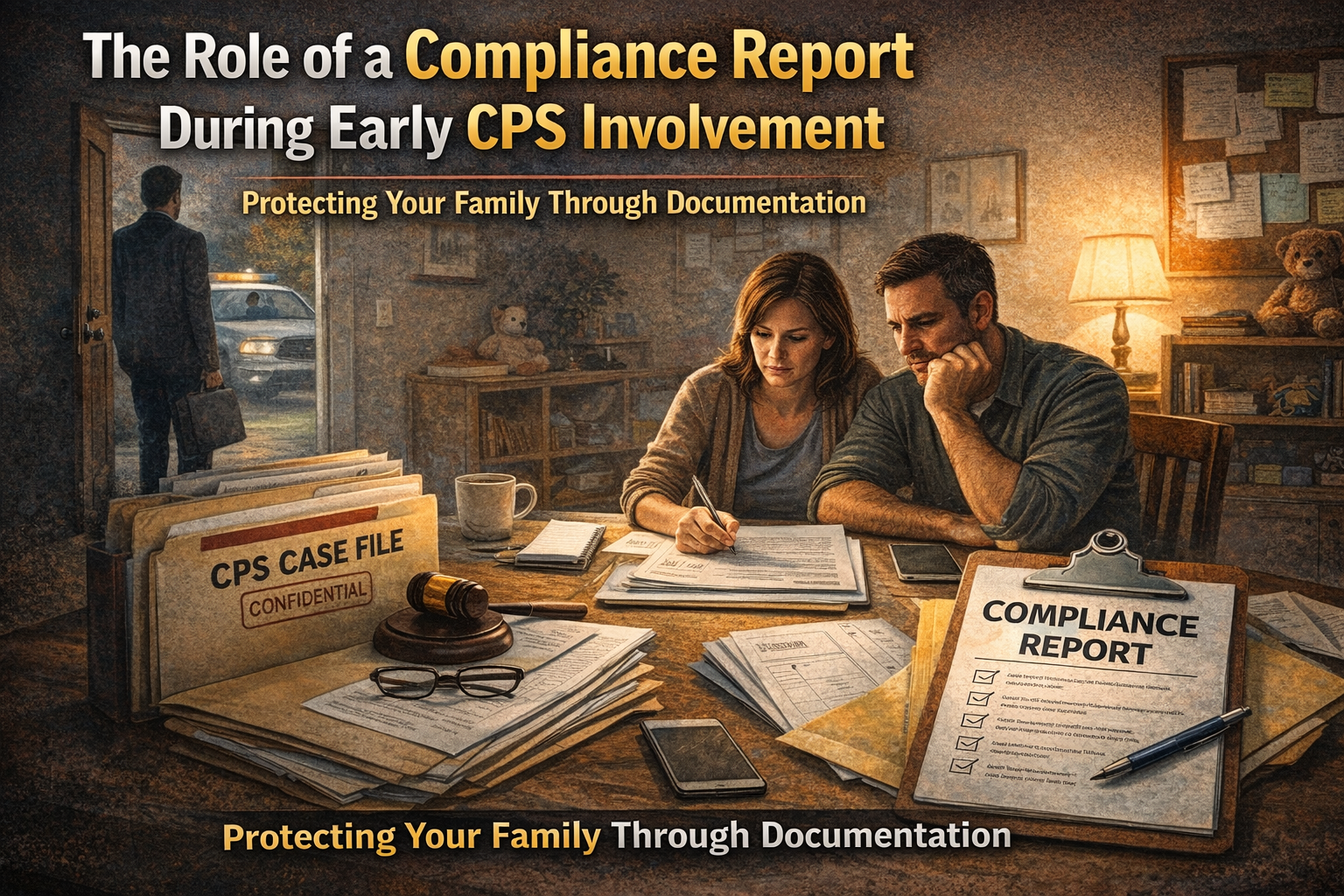
The Role of a Compliance Report During Early CPS Involvement
When Child Protective Services first gets involved with your family, it can feel like time speeds up and slows down at the same moment. You may hear new phrases you’ve never dealt with before, get a knock at the door, or receive a call that instantly makes your stomach drop. The uncertainty is heavy, especially when you’re trying to keep your child calm while you’re internally panicking. In those early days, families often want to do “the right thing,” but they don’t know what the system expects.
One of the most overlooked tools during early CPS involvement is the compliance report. It sounds formal, even corporate, and many parents assume it has nothing to do with their child’s safety. But in reality, a compliance report can influence how the investigation unfolds, how risk is assessed, and what protective services may be recommended. It can also shape what ends up in court later if the case moves toward juvenile dependency court.
At Masterly Legal Solutions, we help families understand what CPS is looking for, how investigation records are built, and how early documentation impacts outcomes. This blog post is designed to give you a clear, practical understanding of why a compliance report matters, what it should include, and how legal representation can help you avoid mistakes that can follow you for months or years. Most importantly, it’s about helping you protect your child, your family, and your parental rights while staying steady under pressure.
What Early CPS Involvement Really Means
Early CPS involvement usually begins with a report alleging abuse or neglect, sometimes based on general allegations and sometimes tied to a specific incident. Families are often surprised by how quickly an investigation starts. A CPS case may begin with a phone call, a home visit, or contact through a school, doctor, or other community resources. In this investigation stage, CPS is gathering information to decide the risk level to the child and whether protective services are needed.
The first phase can feel like a blur because you are trying to answer questions while also trying to understand what you’re being accused of. CPS investigations can involve interviews, data collection, and requests for documents. The investigation process can also involve coordination with police if there are allegations that suggest a criminal investigation. Even if you believe the situation will end quickly, early steps create the record that will follow your family.
Why Documentation Becomes the Foundation of the CPS Case
A CPS case is built on documentation. What gets written down often carries more weight than what you remember later. Investigators create notes, compile evidence, and produce a report that becomes part of investigation results. This documentation can affect whether the case closes through administrative closure or escalates toward court involvement.
Parents often assume “the truth will speak for itself,” but the system doesn’t work that way. The agency relies on written records, timelines, and risk assessment tools. When a family provides a structured compliance report early, it can help clarify misunderstandings and present the family’s actions in a way the agency can evaluate. It can also show that the family is addressing safety issues and taking informed decisions seriously.
What a Compliance Report Is in the CPS Context
A compliance report is a structured written record that shows what steps the family has taken to comply with safety expectations during early child protective services involvement. While compliance reports are often associated with regulatory compliance in business settings, the concept translates directly into protective services because the agency must document whether risks are being addressed. In the CPS setting, a compliance report can summarize actions the family has taken to protect the child, cooperate with reporting processes, and support the child’s well being.
A well-prepared compliance report is not a confession and not a legal admission. Instead, it is a careful way to document safety actions, services engaged, and steps taken to reduce risk factors. It can also address concerns raised by CPS in a neutral, factual tone. When prepared with legal counsel, it can be a powerful tool that supports the family without creating unnecessary exposure.
How a Compliance Report Supports Child’s Safety Without Over-Explaining
CPS is focused on the child’s safety and whether the child can remain child safe in the child’s home. A compliance report can support that goal by showing specific steps taken to prevent immediate risk. When a safety plan is discussed, the compliance report can document how the plan is being followed and how the family is preventing abuse or neglect from reoccurring.
The key is balance. Families sometimes panic and provide long emotional narratives. That can unintentionally create new concerns or contradictions. A compliance report should be structured and focused on actions, not emotional arguments, while still acknowledging the reality of what the family is experiencing.
The Connection Between Compliance Report and Risk Assessment
Risk assessment is a central part of CPS investigations. Investigators look at risk factors such as past incidents, supervision concerns, household stability, and any alleged perpetrator issues. They also look at protective factors, including responsible caregivers, safe housing, and willingness to engage with services. A compliance report can help highlight protective actions that reduce the risk level.
When a compliance report clearly documents steps taken to address safety concerns, it can influence how the investigation is framed. It can also help the agency determine whether voluntary services are appropriate rather than court involvement. Risk assessment is not only about what happened, but about what the family is doing now to prevent future harm.
The Role of a Safety Plan and Why It Must Be Documented
A safety plan is often introduced quickly when CPS believes there may be risk to the child. The safety plan may include supervision rules, temporary arrangements, or conditions for contact between the child and an alleged perpetrator. A compliance report can document how the safety plan is being followed, including dates, actions, and practical steps taken.
Parents sometimes think a verbal agreement is enough. But verbal agreements can be misremembered or recorded differently in the agency report. A compliance report provides a written record that supports the family if there is later disagreement. When the case reaches juvenile dependency court, documentation of the safety plan can become critical.
Abuse or Neglect Allegations and the Need for Careful Language
Many CPS investigations involve alleged abuse or alleged neglect, even when the family believes the situation is exaggerated or misunderstood. It is important to recognize that CPS terms can be broad. What you consider a parenting mistake might be framed as abuse or neglect by the agency. That is why written documentation must be precise and thoughtful.
A compliance report should never be used to argue aggressively or accuse others without evidence. It should present facts, safety actions, and cooperation with protective services. When the allegations involve child abuse, sexual abuse, or serious child abuse or neglect claims, the need for legal representation increases because a criminal case may develop alongside the CPS case.
Child Protective Investigations Often Overlap With Criminal Investigation
In some situations, CPS investigations overlap with police involvement. This overlap is common when allegations involve child abuse, sexual abuse, or serious harm. The agency may coordinate with law enforcement during investigating allegations, especially if they believe the facts suggest a possible criminal case.
A compliance report can still help, but it must be handled carefully. Families should avoid making statements that could be interpreted as admissions. This is where legal counsel is essential. Early legal representation helps families cooperate without creating unnecessary exposure in a criminal investigation.
How a Compliance Report Fits Into Reporting Processes
CPS relies on reporting processes and internal decision-making systems. Investigators gather data, evaluate risk, and prepare documentation that becomes the official report. A compliance report can serve as an organized supplement that helps ensure the family’s efforts are visible.
This matters because agencies handle high volumes of cases. Important details can be missed, misunderstood, or summarized too broadly. A compliance report can provide clarity and show the family’s commitment to protective services and the child’s safety.
Why “Compliance” Is Not About Pleasing the Agency
Families sometimes hear the word compliance report and assume they must “please” CPS to win. That mindset can lead to over-sharing and unnecessary concessions. The real purpose is not to impress the agency. The purpose is to document reasonable steps that reduce risk and protect the child.
Compliance is about creating a reliable record. It is also about showing that the family is taking the situation seriously and acting responsibly. When done correctly, a compliance report supports informed decisions by the agency and protects the family from mischaracterizations.
Regulatory Compliance Concepts That Also Show Up in CPS Cases
Even though CPS is not a corporate regulator, the system still uses regulatory compliance concepts. There are applicable laws, internal rules, and regulatory requirements that guide how cases are handled. The agency follows policies that resemble compliance initiatives, including documentation standards and procedural checklists.
CPS may also rely on internal controls, structured risk management tools, and standardized reporting requirements. A compliance report aligns with that structure by giving the agency organized information it can use. Families who understand this structure often feel less helpless because they can respond in a way the system recognizes.
The “Report” That Matters Most Is the One in the File
Families may submit their own report, provide records, or give statements. But the report that often carries the most weight is the official agency report. That report can influence juvenile dependency court decisions, temporary custody recommendations, and the scope of protective services.
A compliance report helps ensure the agency report includes your efforts. It can provide valuable insights into what the family did, how quickly they responded, and what changes were made. When your compliance report is clear, it becomes harder for the official record to ignore your actions.
What Should Be Included in a Strong Compliance Report
A strong compliance report focuses on facts and safety actions. It should be organized and easy to follow. It should also reflect the reality of the home without sounding defensive.
Common sections include:
- Summary of the CPS case timeline and key dates
- Current safety plan steps and who is responsible
- Actions taken to address abuse or neglect concerns
- Services engaged, such as counseling or parenting classes
- Support from family and community resources
- Any changes made in the child’s home to improve safety
- Documentation of communication with protective services
- Evidence of compliance with requested appointments or visits
This is not meant to overwhelm you. It is meant to create structure during a chaotic time.
Data Collection and Evidence: Why Organization Matters
CPS investigations rely heavily on data collection and evidence. That evidence may include medical records, school reports, photos, witness statements, and prior agency history. Families often have their own evidence too, such as messages, attendance records, or proof of services.
A compliance report can organize evidence in a way that supports the family’s narrative without arguing. When the agency sees organized documentation, it can reduce confusion and prevent mistakes. It can also support a clearer risk assessment.
Compliance Risks Families Don’t Realize They Are Creating
In the stress of early CPS involvement, families sometimes create compliance risks without noticing. These risks are not always about wrongdoing. Sometimes they are about inconsistency, missed appointments, or unclear communication.
Compliance risks can include:
- Contradictory statements from different family members
- Missed home visit appointments without documentation
- Failing to follow the safety plan exactly as written
- Sending emotional messages that create new concerns
- Allowing contact with an alleged perpetrator against plan terms
A compliance report can help reduce these risks by keeping everyone aligned and documenting the plan.
The Role of Family Members and Support Networks
Family members can be a major protective factor in a CPS case. Supportive relatives can help with childcare, supervision, transportation, and stability. CPS often looks at whether the family has safe support options rather than needing foster care.
A compliance report can document the involvement of family members and how they help keep the child safe. It can also document family and community resources that the family is using. These details can influence whether voluntary services are recommended instead of court action.
Foster Care and Temporary Custody Risks
When CPS believes there is immediate risk and no safe plan, the case may move toward temporary custody or foster care. That is one of the most frightening outcomes families face. The agency may seek a court order to remove the child from the home.
A compliance report cannot guarantee prevention, but it can support a strong argument that safety steps are in place. It can show that the child’s home is stable and that protective services can be provided without removal. Early legal representation is critical if removal becomes a risk.
Juvenile Dependency Court and Why Documentation Becomes Evidence
If the case escalates, it may enter juvenile dependency court. At that point, the agency report, your statements, and your compliance report may be treated as evidence. Judges look for clear facts, safety planning, and proof of protective actions.
A compliance report can help establish a timeline and show consistent compliance with safety plan terms. It can also clarify misunderstandings before they harden into court findings. The earlier the documentation is organized, the better the family’s position becomes.
Court Order Requirements and the Impact on Daily Life
Court orders can be strict. They may require supervision, services, drug testing, or restricted contact. They can also affect where the child lives and who can provide care. When a court order is in place, compliance becomes even more important because violations can be used against the family.
A compliance report can help track court order requirements and document compliance. It can also help you and your legal representation show progress. This record can support reunification, reduced restrictions, or case closure.
Parental Rights and the Long-Term Stakes
Parental rights are fundamental, but CPS involvement can put those rights under pressure. A CPS case can lead to long-term consequences, including restrictions, court oversight, and future investigations. Parents must treat the early stage seriously to protect long-term outcomes.
A compliance report can help show that parents are taking protective services seriously and working to ensure the child’s safety. It can also help demonstrate that any issues are being addressed responsibly. This documentation can matter if the case lasts months or returns later.
The Alleged Perpetrator Issue and Separation Decisions
Many cases involve an alleged perpetrator. That may be a parent, a partner, a relative, or another person in the home. CPS may require separation, supervised contact, or other restrictions.
A compliance report can document how the family is managing contact and ensuring the child is safe. It can also document any steps taken to prevent further abuse. These details can influence risk assessment and whether the case escalates.
Criminal History and How CPS May View It
CPS may consider criminal history when assessing risk. This does not mean a person automatically loses rights, but it can influence how the agency evaluates safety. Families should be prepared to address this carefully without minimizing or over-explaining.
A compliance report can document protective steps that reduce risk. It can also document changes in the home environment that address safety concerns. Legal counsel can help families discuss sensitive history without creating new problems.
Regulatory Bodies, Internal Stakeholders, and Communication
In complex cases, multiple parties may become involved, including regulatory bodies, school systems, medical providers, or other internal stakeholders. Communication can become messy, especially when different people share different stories.
A compliance report can support stakeholder communication by presenting consistent facts and actions. It can also help the family communicate with CPS in a calm and organized way. When communication is clear, the agency is more likely to make informed decisions rather than assumptions.
Compliance Audits and Compliance Program Thinking
Some families are surprised to hear terms like compliance audits and compliance program in this context. But the reality is CPS operates within a compliance-driven system. Investigators have checklists, required fields, and reporting requirements that must be met.
A compliance report can align with this structure by showing step-by-step actions taken. It is similar to how compliance initiatives work in other settings: identify risks, implement controls, and document progress. When families understand this, they can respond more effectively.
Financial Reporting, Financial Regulations, and Data Security
Families sometimes wonder why financial reporting or financial regulations would matter in a CPS context. In some cases, financial stability affects risk assessment, especially if housing, utilities, or basic needs are involved. In other cases, these terms matter when organizations, providers, or service agencies are involved in the child’s care.
Data security matters because CPS cases involve sensitive data collection. Families should be cautious about sending documents through insecure methods. Data breaches can expose private family information, so communication should be handled carefully. A compliance report can include references to safe handling of documents without oversharing sensitive details.
Reporting Requirements and Regulatory Requirements Inside CPS Systems
CPS staff follow reporting requirements and regulatory requirements. They must document what they did, what they observed, and what services were offered. They must also document whether the family complied with safety plans and recommendations.
A compliance report can help ensure your actions are visible in that documentation. It becomes a tool to show your cooperation with protective services and your focus on the child’s safety. When cases are reviewed internally, clear documentation can reduce misunderstandings.
Investigation Results, Administrative Closure, and Case Resolution
Many families want to know how a CPS case ends. Some cases end with administrative closure, meaning CPS closes the matter without court involvement. Others result in ongoing services, court oversight, or a long-term plan.
A compliance report can support administrative closure by showing that concerns were addressed and risk was reduced. It can also help the agency explain in its report why the child is safe. When the official report reflects strong compliance, closure becomes more likely in appropriate cases.
Voluntary Services and Family Based Safety Services
Not every CPS case requires court action. Sometimes the agency offers voluntary services or family based safety services to address risk factors. Families often feel pressured to accept services without understanding the implications.
A compliance report can document participation in services while also tracking what was agreed to. It can also help ensure that participation is accurately recorded and not misrepresented later. When services are appropriate, documenting them properly can support a better outcome.
Legal Aid, Texas Legal Services Center, and the Limits of General Resources
Some families look for legal aid and resources like the Texas Legal Services Center when CPS becomes involved. These resources can provide support, but they may have limitations depending on availability and case complexity. When a case involves alleged abuse, a criminal investigation, or juvenile dependency court, families often need more direct legal representation.
This is where working with legal counsel matters. You need advice tailored to your specific CPS case, your child’s situation, and your home conditions. A compliance report prepared with legal representation can protect you in ways general resources may not.
Why Legal Representation Changes How the Agency تعامل With You
When families have legal representation early, CPS communications often become clearer and more structured. The agency knows you are informed about applicable laws and legal requirements. That can reduce pressure tactics and help prevent misstatements from being treated as admissions.
Legal representation can also help you determine what to include in a compliance report, what to avoid, and how to present evidence safely. It helps you stay calm and focused during a stressful investigation. Most importantly, it helps protect parental rights while prioritizing the child’s safety.
Risk Management for Families: A Practical Mindset
Risk management is not just for businesses. Families in CPS investigations must think about risk in a practical way. What are the risk factors CPS is worried about? What steps reduce risk? What documentation proves those steps?
A compliance report supports risk management by translating actions into a clear record. It can also help you stay consistent. When the case feels overwhelming, a structured approach brings stability.
Internal Controls in a Family Setting
Internal controls sound like a corporate phrase, but the idea is simple. It means setting household rules and systems that prevent harm and reduce confusion. For example, supervision arrangements, safe sleeping rules, communication boundaries, and consistent routines can all function like internal controls.
A compliance report can document these controls without sounding technical. It can show that the family implemented practical safeguards to keep the child safe. This can improve how risk is evaluated during investigation.
Child Protective Services CPS and the Reality of Ongoing Scrutiny
Child protective services cps involvement can feel intrusive, but the agency’s role is to evaluate child’s safety. Families often feel judged, misunderstood, or treated unfairly. That emotional weight is real and should not be dismissed.
At the same time, families must respond strategically. The agency will document what it sees, what it hears, and what it believes. A compliance report helps ensure the record reflects your protective actions and not just the allegations.
When a Compliance Report Can Hurt Instead of Help
A compliance report can be harmful if it is rushed, emotional, or includes admissions that are not necessary. It can also hurt if it contradicts other statements or includes accusations without evidence. That’s why families should avoid writing one without guidance, especially in serious allegations.
The safest approach is to work with legal counsel. Your compliance report should support the child’s safety and show cooperation, without creating new legal risks. The goal is protection, not storytelling.
How Masterly Legal Solutions Helps Families Use a Compliance Report the Right Way
At Masterly Legal Solutions, we help families respond to early CPS involvement with a plan. We help you understand what CPS is doing, what your rights are, and how to protect your child and your family. We also help you prepare a compliance report that is organized, accurate, and aligned with the realities of the investigation process.
We know that families are often scared and exhausted when CPS becomes involved. Our role is to bring calm structure to a chaotic moment. We focus on protecting the child, supporting parental rights, and presenting your actions clearly so the official report reflects the reality of your family’s efforts.
Contact Masterly Legal Solutions for a Free Consultation
If Child Protective Services has contacted you, you may feel like every choice you make is being evaluated. In early CPS involvement, the record is being built fast, and small missteps can echo later in the CPS case or juvenile dependency court. A clear compliance report can be one of the most effective tools for showing your protective steps, supporting your safety plan, and reducing the risk level—when it’s handled carefully.
Masterly Legal Solutions is here to provide legal representation and practical guidance during CPS investigations, especially when abuse or neglect allegations create fear and uncertainty. If you have questions about a compliance report, safety plan requirements, court order concerns, or how to protect your family while the investigation is still unfolding, we can help you create a strategy that fits your circumstances.
Call (972) 236-5051 for a free consultation so we can discuss your situation and help you move forward with clarity and protection.
Disclaimer: This article is for educational purposes only and does not constitute legal guidance or legal advice. Every CPS case is different, and you should consult a qualified attorney about your specific circumstances.
Teacher Rights When Assaulted by a Special Needs Student: Safety, Reporting and Investigation Issues
Looking for Legal & Business Solutions? Contact Us Now
Fill in the form or call us to set up a meeting