
The Silent Career Damage Caused by Retaliation During TEA Investigations
When Speaking Up Quietly Costs You Everything
For many education professionals, a TEA investigation is already a stressful and uncertain experience. Yet what often causes deeper, longer-lasting damage is not the investigation itself—but retaliation that follows. In many cases, retaliation at work does not arrive loudly or dramatically. Instead, it unfolds in subtle ways that quietly impact an employee’s career, reputation, and future opportunities, particularly when teachers are already facing Texas Education Agency investigations into their conduct or licensure.
Teachers, administrators, and school staff may initially believe they are protected when they engage in a protected activity such as reporting misconduct or participating in an investigation. Federal and state laws, including Title VII, are designed to protect workers from retaliation. However, despite these legal protections, retaliation still occurs in many forms across the workplace.
This article explores how retaliation during TEA investigations can create long-term harm, how it often goes unnoticed, and why taking early action is critical to protect your employment and future, especially if you are already navigating a Texas TEA investigation and need certification help.
Understanding Retaliation in TEA Investigations
What Retaliation Really Means
When an employer treats a worker unfairly because they participated in a protected activity, this is known as retaliation. This could include filing a complaint, reporting harassment, or participating in an investigation. The law is clear—employers must not punish workers for exercising their rights.
However, retaliation does not always look like termination. It may appear as subtle shifts in treatment that still qualify as unlawful under federal laws and state laws.
Common Forms of Retaliation
Retaliation can take many forms, including:
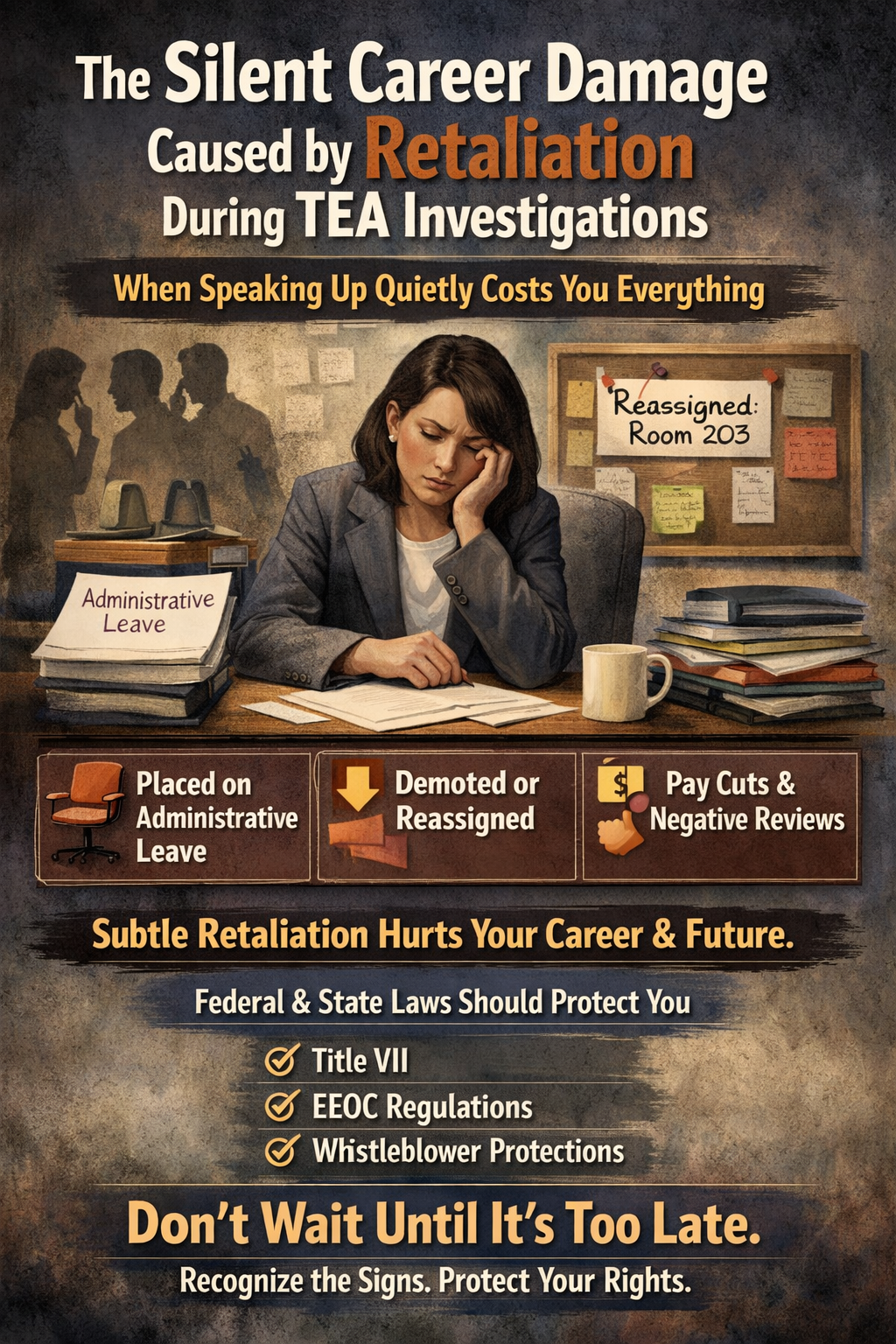
- Being placed on administrative leave without clear justification
- Reduction in pay, wages, or overtime pay opportunities
- Reassignment to a less desirable position
- Removal from leadership roles or desirable assignments
- Increased scrutiny or negative performance reviews
- Isolation from coworkers or decision-making processes
These actions may not immediately seem severe, but over time, they can significantly affect an employee’s career path.
The Role of Administrative Leave in Retaliation
When Administrative Leave Becomes a Problem
Administrative leave is often presented as a neutral step during an investigation. In some cases, it is necessary and appropriate. However, repeated or prolonged administrative leave—especially when unjustified—can signal retaliation, and employees should understand how administrative leave and pay work at their job.
Being placed on paid administrative leave may seem harmless at first, but it can carry hidden consequences. When an employee is removed from their daily responsibilities, they lose opportunities to demonstrate their skills, maintain relationships, and build their professional reputation.
The Hidden Consequences of Administrative Leave
Administrative leave can lead to:
- Loss of visibility in the workplace
- Missed opportunities for promotions or leadership roles
- Reduced employee morale and overall employee morale
- Long-term negative impact on future employment opportunities
Even when administrative leave includes paid time, the professional damage can be lasting.
Subtle Signs That Retaliation Occurs
How to Recognize Retaliation Early
Many workers fail to recognize retaliation because it does not always involve obvious disciplinary action. Instead, it may involve small but meaningful changes in treatment.
A reasonable employee would notice patterns such as being treated differently after filing a complaint or participating in an investigation.
Warning Signs to Watch For
Some signs that retaliation occurs include:
- Sudden changes in work hours or assignments
- Being excluded from meetings or decision-making
- Receiving unwarranted disciplinary actions
- Being reassigned to a less desirable position
- Increased oversight from a supervisor or manager
Recognizing these patterns early is essential to protect your rights.
The Legal Framework That Should Protect You
Federal Protections Against Retaliation
Several federal agencies enforce laws designed to prohibit retaliation. The Equal Employment Opportunity Commission (EEOC) plays a key role in investigating claims related to discrimination and retaliation, and many workers benefit from guidance from a dedicated retaliation lawyer focused on workplace retaliation claims.
Under Title VII and other federal laws, employers cannot take adverse action against an employee for engaging in protected activity. These protections apply to many forms of discrimination, including those based on disability, national origin, and genetic information.
State Laws and Additional Protections
In addition to federal protections, state laws provide further safeguards for workers. Some states also recognize whistleblower laws, which protect employees who report misconduct or violations.
These laws are intended to ensure that workers can report concerns without fear of retaliation. However, enforcement often requires employees to take action and file a complaint.
Why Retaliation During TEA Investigations Is So Damaging
The Long-Term Career Impact
Retaliation does not just affect an employee’s current job—it can shape their entire career. Being labeled as “difficult” or “problematic” can follow a worker across future employment opportunities.
In some cases, retaliation leads to career setbacks so severe that employees feel pressured to resign, raising questions about whether an employer can force you to resign or quit your job.
- Loss of job opportunities
- Difficulty securing references
- Reduced pay and benefits over time
- Increased risk of future discrimination
These consequences often extend far beyond the initial investigation.
The Emotional and Professional Toll
Retaliation can also impact mental health and overall well-being. Workers may experience stress, anxiety, and fear of further adverse action. In extreme cases, retaliation can even lead to physical harm or serious emotional distress.
Retaliation and Workplace Dynamics
How Managers and Supervisors Influence Outcomes
A manager or supervisor plays a critical role in how an investigation unfolds. In some cases, a higher level manager may indirectly contribute to retaliation by allowing unfair treatment to continue.
Human resources departments are expected to protect employees, but they often represent the employer’s interests. This can create challenges for workers seeking fair treatment.
The Impact on Employee Morale
Retaliation does not only affect one employee—it can damage overall employee morale across the workplace. When workers see colleagues being punished for speaking up, they may become less willing to report concerns.
This creates an environment where violations go unreported, allowing harmful behavior to continue.
Protected Activities That Should Not Lead to Retaliation
What Counts as Protected Activity
Protected activity includes actions such as:
- Filing a complaint with the EEOC
- Reporting discrimination or harassment
- Participating in an investigation
- Requesting job protected leave such as FMLA leave
- Reporting wage or labor violations
Employees who engage in these actions are legally protected from retaliation.
Examples of Protected Situations
An example of protected activity includes a teacher reporting harassment by a supervisor or filing a complaint about unpaid wages or overtime pay. Another example is an employee requesting FMLA leave to care for a family member.
In all of these circumstances, the employer must not take adverse action against the employee.
How Retaliation Can Affect Pay and Benefits
Financial Consequences of Retaliation
Retaliation often affects pay in ways that are not immediately obvious. This may include reduced wages, loss of overtime pay, or denial of benefits.
An employee placed on administrative leave may still receive paid time, but long-term financial growth can be affected.
Examples of Financial Harm
For example, an employee may be removed from a desirable position that offered higher pay or leadership opportunities. Another example is being reassigned to a less desirable position with fewer benefits.
Over time, these changes can result in significant financial loss.
The Role of Human Resources in Retaliation Cases
What HR Should Do
Human resources departments are responsible for investigating complaints and ensuring compliance with employment laws. They should protect employees from unlawful retaliation and ensure fair treatment.
What Actually Happens
In reality, HR may prioritize the employer’s interests. This can lead to incomplete investigations or failure to address retaliation properly.
Employees should not rely solely on HR to protect their rights.
Filing a Complaint and Taking Action
When to File a Complaint
If you believe retaliation has occurred, it is important to act quickly. Filing a complaint with the EEOC or another appropriate agency or pursuing retaliation and labor complaints through the Department of Labor—can help protect your rights.
Steps to Take
- Document all incidents of retaliation
- Report concerns to human resources
- File a complaint with the EEOC
- Seek legal guidance
Taking these steps can help determine whether a violation has occurred.
The Legal Consequences for Employers
When Retaliation Becomes a Lawsuit
If retaliation is proven, the employer may face serious legal consequences, including a lawsuit. Courts may award damages for lost wages, emotional distress, and other harm.
Why Employers Still Take the Risk
Despite the risks, some employers engage in retaliation due to poor management practices or lack of understanding of the law. This is why it is critical for employees to protect themselves.
Real-World Examples of Retaliation
Example of Subtle Retaliation
An example includes an employee who files a complaint about discrimination and is later placed on administrative leave without explanation. Although the leave is paid, the employee is excluded from important projects and loses opportunities for advancement, similar to the challenges faced by Texas teachers placed on administrative leave and the steps they should take.
Example of Direct Retaliation
Another example involves a worker who reports harassment and is reassigned to a less desirable position with reduced pay and benefits. This constitutes an adverse action and may violate federal laws.
Protecting Your Career During a TEA Investigation
Why Early Action Matters
The earlier you recognize retaliation, the easier it is to protect your career. Waiting too long can make it more difficult to prove a violation.
Key Strategies to Protect Yourself
- Keep detailed records of all interactions
- Understand your rights under federal and state laws
- Seek legal advice early in the process
- Avoid making statements without proper guidance
These steps can help protect your employment and future opportunities.
The Importance of Legal Representation
Why You Should Not Navigate This Alone
TEA investigations and retaliation claims involve complex laws and procedures. Having experienced legal representation can make a significant difference in the outcome, especially when you must defend your Texas educator license during a TEA investigation.
How Legal Support Helps
An attorney can help:
- Determine whether retaliation has occurred
- Guide you through the complaint process
- Represent you in negotiations or litigation
- Protect your rights at every stage
Taking Control of Your Future
Recognizing the Bigger Picture
Retaliation is not just a workplace issue—it is a career issue. The decisions made during a TEA investigation can affect your professional future for years to come.
Standing Up for Your Rights
Workers have the right to report concerns without fear of retaliation. Understanding your rights and taking action, often with help from a dedicated retaliation lawyer for workplace and employment issues, can help protect your career and ensure fair treatment.
Eligible Employees and Who Is Protected Under the Law
Not all workers fully understand who qualifies for protection during a workplace investigation, but generally, eligible employees include anyone who engages in a protected activity under federal or state laws. This means teachers, administrators, and other school workers who report concerns, participate in an investigation, or support a coworker’s complaint are often covered. Even if an employee is unsure whether a violation has occurred, they may still be protected if they act in good faith. Understanding eligibility is critical because it helps determine whether an employer’s response could be considered unlawful retaliation.
Immigration Status and Workplace Protections
Many workers worry that their immigration status may affect their ability to speak up, but federal laws still offer protections regardless of background. An employer cannot use immigration status as a tool to intimidate or silence an employee who is reporting misconduct or participating in an investigation. In many cases, retaliation tied to immigration concerns can itself be considered a possible violation of employment laws. Employees should feel empowered to report issues without fear that their personal status will be used against them.
Identifying a Possible Violation Early
A possible violation may not always be obvious at first, especially when retaliation occurs in subtle ways. However, when an employee notices negative changes after engaging in protected activity, it is important to take those concerns seriously. These changes may include reduced responsibilities, exclusion from meetings, or disciplinary actions that seem inconsistent with past treatment. Recognizing a possible violation early allows workers to document events and take steps to protect their rights before the situation escalates further.
Understanding Discrimination Based on Protected Characteristics
Discrimination based on factors such as disability, national origin, or genetic information is prohibited under federal laws like Title VII. When retaliation is connected to discrimination based on these protected characteristics, the situation becomes even more serious. Employees who experience both discrimination and retaliation often face compounded harm in the workplace. It is important to identify when treatment crosses the line from unfair behavior into unlawful conduct that requires immediate attention.
Other Related Protected Activity That Triggers Protection
In addition to filing a complaint or participating in an investigation, there are many forms of other related protected activity that can trigger legal protection. This may include supporting a coworker’s claim, providing witness statements, or raising internal concerns to human resources. Even informal actions, such as voicing concerns to a manager, can qualify as protected depending on the circumstances. Employees should be aware that protection extends beyond formal complaints.
What Counts as Related Protected Activity
Related protected activity includes actions that are closely tied to reporting or addressing workplace issues. For example, assisting in an investigation, providing documentation, or answering questions during an inquiry may all qualify. Employees engaging in related protected activity should not face adverse consequences simply for cooperating. If an employer responds negatively to such involvement, it may indicate unlawful retaliation.
When to Seek Additional Information About Your Rights
If an employee is unsure whether their situation involves retaliation or a possible violation, seeking additional information is an important step. This may involve consulting with legal professionals, reviewing company policies, or contacting agencies such as the EEOC, or using resources designed for Texas educators responding to a TEA complaint notice.Having access to accurate information allows workers to make informed decisions about how to proceed. Acting early can help prevent further harm and strengthen a potential claim.
When Workplace Issues Escalate to Police Involvement
In certain circumstances, workplace disputes or investigations may escalate to the point where police involvement becomes necessary. This can occur if there are allegations of serious misconduct, threats, or potential physical harm. While not all cases reach this level, employees should understand that law enforcement may become involved depending on the severity of the situation. In such cases, protecting your rights becomes even more critical.
The Importance of Respect in the Workplace
Respect is a foundational element of any professional environment, especially during an investigation. When retaliation occurs, it often reflects a breakdown of respect between the employer and employee. Workers have the right to be treated with dignity, even when concerns are raised or complaints are filed. Maintaining a culture of respect helps prevent retaliation and supports a healthier workplace overall.
How These Situations Are Generally Evaluated
These cases are generally evaluated based on whether a reasonable employee would view the employer’s actions as retaliatory. Investigators will examine the timing of events, the nature of the adverse action, and whether there is a clear connection to protected activity. Documentation, witness statements, and consistent patterns of behavior all play a role in determining the outcome. Understanding how these cases are generally reviewed can help employees better prepare and protect themselves.
What It Means to Be Subject to Retaliation
When an employee is subject to retaliation, they may experience changes in their job conditions, responsibilities, or treatment by management. These changes do not always involve termination but can still have a significant impact on career growth and job satisfaction. Being subject to retaliation can also create a stressful and uncertain work environment. Recognizing these patterns is the first step toward taking action and protecting your future.
Speak With Our Team About Your Situation
If you are facing retaliation during a TEA investigation, you do not have to navigate this process alone. At Masterly Legal Solutions, we understand how these situations unfold and how quickly they can impact your career, reputation, and financial stability.
Our team is here to help you evaluate your circumstances, understand your rights under federal and state laws, and take the necessary steps to protect your future. Whether you are dealing with administrative leave, a sudden change in your job duties, or a potential violation of your rights, we are ready to stand by your side.
Call us today at (972) 236-5051 for a free consultation. We will take the time to listen to your concerns, review your situation, and provide clear guidance on your options moving forward.
This article is for educational purposes only and does not constitute legal advice. Every situation is different, and you should consult with a qualified attorney regarding your specific circumstances.








Looking for Legal & Business Solutions? Contact Us Now
Fill in the form or call us to set up a meeting