

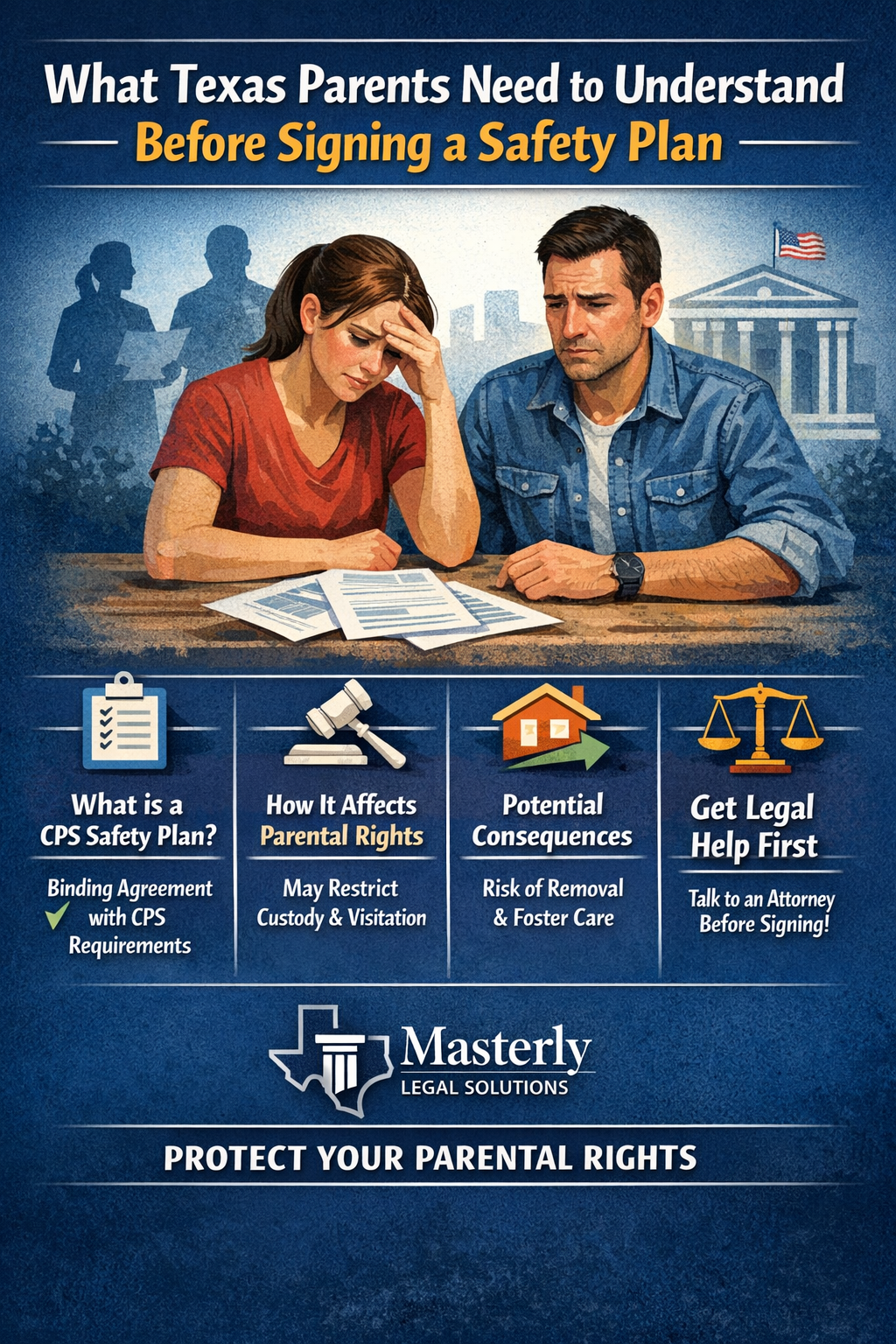
What Texas Parents Need to Understand Before Signing a Safety Plan
When parents are contacted by child protective services, the experience is often overwhelming and emotional. Many families feel blindsided, confused, and pressured to make fast decisions that can have lasting consequences. One of the most misunderstood documents parents are asked to sign is a safety plan. At first glance, it may seem like a cooperative step to protect a child, but in reality, it can deeply affect parental rights, custody, and future court involvement.
At Masterly Legal Solutions, we work with parents across Texas who are facing CPS involvement and need clear, honest guidance. This article is designed to help parents understand what a safety plan really is, how it fits into a CPS investigation, and why speaking with an attorney for CPS cases before signing anything is critical. Understanding your rights early can protect your family life and help you avoid long-term consequences that many parents never see coming.
What Is a CPS Safety Plan in Texas
A safety plan is an agreement created during a CPS investigation when the agency believes there are immediate safety concerns for a child. The plan outlines steps parents or caregivers must follow to reduce perceived risks while the investigation continues. Although it may sound informal, a safety plan can significantly change how a family functions day to day.
In many cases, CPS workers present safety plans as voluntary, but parents often feel they have no real choice. These plans can include restrictions on who may live in the home, requirements for supervised visitation, or demands for services such as counseling. Once signed, the plan becomes a powerful tool used by protective services throughout the investigation process.
Why Safety Plans Are Commonly Used in CPS Cases
Safety plans are frequently used in CPS cases involving allegations of abuse or neglect. The agency’s stated goal is ensuring child safety while avoiding immediate court intervention. However, the way safety plans are used can shift the balance of power away from parents very quickly.
By asking parents to agree to certain conditions, child protective services CPS can monitor the family without a court order. This allows the government agency to control aspects of family life without judicial oversight. Parents often do not realize that signing a plan may later be used as evidence in family court proceedings.
The Difference Between a Safety Plan and a Court Order
A safety plan is not the same as a court order, but it can feel just as restrictive. Unlike a court order, a safety plan is created without a judge reviewing the facts or hearing evidence. This means there is no immediate opportunity to challenge the claims being made against the family.
Despite this, violations of a safety plan can still be used against parents. If CPS believes the plan was not followed, they may escalate the matter to court, seek removal, or request placement in foster care. Understanding this distinction is essential before agreeing to any terms.
How Safety Plans Impact Parental Rights
Many parents are shocked to learn how deeply a safety plan can affect parental rights. While the document may not terminate rights outright, it can limit decision-making authority, restrict contact with a child, or alter custody arrangements. These changes often happen without parents fully understanding the long-term implications.
Once a safety plan is in place, CPS may argue that the parent acknowledged safety concerns. This can weaken a defense later, especially if allegations of child abuse or neglect are disputed. Protecting parental rights requires careful consideration before signing anything.
Common Requirements Found in CPS Safety Plans
Safety plans vary depending on the allegations and the county handling the case. However, many plans include similar requirements that can disrupt normal family routines. These conditions are often framed as temporary but may last for months.
Common requirements include:
- Removal of one parent or caregiver from the home
- Mandatory counseling or parenting classes
- Restrictions on contact between a parent and child
- Frequent check-ins with a CPS caseworker
- Changes to school drop-off or childcare arrangements
Each requirement carries legal consequences if not followed precisely.
The Role of CPS Workers and Caseworkers
CPS workers and CPS caseworker personnel are responsible for investigating reports of suspected harm. While many are dedicated to child protection services, they operate under strict policies and heavy caseloads. Their primary focus is risk assessment, not legal advocacy for parents.
Statements made to a caseworker can be documented and later used as evidence. Even casual comments may be misinterpreted during the investigation process. This is why having guidance from an experienced attorney early on can make a critical difference.
How Investigations Begin and Escalate
Most CPS investigations start with a report alleging child maltreatment, which may include child abuse, sexual abuse, child neglect, or other forms of harm. These reports can come from schools, medical professionals, neighbors, or anonymous sources. Once a report is accepted, CPS has the authority to investigate.
The CPS investigation process typically involves interviews, home visits, and requests for documents. If safety concerns are identified, a safety plan is often introduced quickly. Parents should understand that cooperation does not mean giving up legal protections.
The Importance of Sufficient Evidence
In many CPS cases, allegations are made before sufficient evidence is fully developed. Safety plans may be proposed based on preliminary information rather than confirmed facts. This can put parents at a disadvantage from the start.
Agreeing to a plan may be interpreted as an acknowledgment of wrongdoing, even when allegations are unfounded. A defense attorney can help evaluate whether the evidence supports the claims and whether a safety plan is truly necessary.
When Allegations Involve Abuse or Neglect
Allegations of abuse or neglect are serious and can escalate quickly. Claims involving child abuse and neglect often trigger heightened scrutiny and longer investigations. Even when accusations are false, the emotional and legal impact on families can be devastating.
Parents facing allegations of child abuse or neglect should never assume the situation will resolve on its own. Early legal advice helps parents respond strategically and protect their family from unnecessary harm.
The Risk of Criminal Charges
In some situations, CPS investigations overlap with law enforcement inquiries. Allegations of severe abuse may lead to criminal charges. Statements made during a safety plan discussion can be shared with prosecutors.
This overlap makes it even more important to seek legal representation immediately. A lawyer can help protect against self-incrimination while still addressing child safety concerns.
Juvenile Dependency and Family Court Proceedings
If a case escalates, it may move into juvenile dependency court. At this stage, a judge becomes involved, and formal proceedings begin. Safety plans are often referenced as part of the case history.
Once in court, the focus shifts to the best interest of the child as defined by law. Parents must be prepared to defend their actions, challenge allegations, and present compelling arguments supported by evidence.
How Safety Plans Can Affect Custody and Visitation
Safety plans frequently impact custody arrangements. Parents may lose primary care temporarily or be limited to supervised visitation. These restrictions can last far longer than initially expected.
Judges may view prior safety plans as indicators of ongoing risk. This makes early decision-making critical for protecting long-term custody rights and preserving family stability.
Why Parents Often Feel Pressured to Sign
Parents are often told that signing a safety plan will prevent removal or speed up case closure. In moments of fear, many parents sign without fully understanding the consequences. This pressure can feel intense, especially when children are involved.
Understanding that parents have the right to ask questions, request time, and consult a lawyer is empowering. No parent should feel forced into an agreement without clarity.
The Role of a CPS Defense Attorney
A CPS defense attorney focuses on protecting parents’ rights throughout the investigation. This includes reviewing safety plans, communicating with protective services, and preparing a strong defense if court involvement becomes necessary.
At Masterly Legal Solutions, our law firm has a proven track record of defending families against unsupported allegations. Our attorneys understand how CPS operates and how to push back effectively.
How Legal Counsel Can Change the Outcome
Having a defense attorney early can shift the entire trajectory of a case. An attorney can challenge vague allegations, demand clarity, and negotiate safer alternatives. This often prevents unnecessary escalation.
Legal counsel also ensures that any agreed-upon plan is reasonable, time-limited, and clearly defined. This protection can preserve parental rights and reduce long-term impact.
Understanding Services and Compliance Requirements
Safety plans often require parents to participate in various services, such as counseling or parenting classes. While these may sound helpful, they can also be used as benchmarks to measure compliance.
Failure to complete services on time can be cited as neglect, even when scheduling or financial barriers exist. Legal guidance helps parents navigate these requirements without falling into compliance traps.
The Impact on Daily Family Life
Safety plans can dramatically alter daily routines, affecting work schedules, school drop-offs, and childcare arrangements. These disruptions can strain relationships and create emotional stress for both parents and children.
Understanding how a plan affects family life helps parents make informed decisions. Protecting normalcy is often just as important as addressing safety concerns.
County Variations Across Texas
Procedures and enforcement can vary by county, including differences seen in areas like Orange County and other regions. Some counties pursue aggressive enforcement, while others are more flexible.
Knowing local practices helps parents anticipate what to expect. A law firm familiar with regional differences can provide more effective representation.
Misconceptions About Cooperation with CPS
Many parents believe that full cooperation guarantees case closure. While cooperation is important, it should never come at the expense of legal rights. Unchecked cooperation can actually strengthen a case against parents.
Balanced cooperation, guided by legal advice, protects both the child and the parents. This approach helps ensure child safety while defending against unfair allegations.
When Court Intervention Becomes Likely
If CPS believes safety concerns remain unresolved, they may seek court intervention. At this stage, safety plans become part of the official record.
Preparation is critical before reaching this point. Parents who understand the process and have legal support are better positioned to fight for their family.
What Parents Should Expect During the Process
Parents should expect ongoing investigation, documentation, and communication with CPS. The process can feel invasive and exhausting, especially when allegations are unfounded.
Knowing what to expect reduces fear and helps parents respond strategically. Preparation is one of the strongest forms of protection.
Protecting Children While Defending Parents
Ensuring child safety does not mean sacrificing parental rights. Both goals can coexist when handled properly. A strong defense focuses on protecting children while challenging unsupported claims.
This balanced approach supports healthy family outcomes and prevents unnecessary state intervention.
Choosing the Right Legal Support
Not all attorneys handle CPS cases effectively. Parents need lawyers with specific experience in child protective services cases, juvenile dependency, and family law.
An experienced attorney understands how to build compelling arguments, evaluate evidence, and advocate effectively in court and with protective services.
Why Early Action Matters
The earliest stages of a CPS investigation are often the most critical. Decisions made in the first days can shape the entire case. Waiting too long can limit available options.
Early legal guidance helps parents protect their rights, their children, and their future.
The Role of Social Services and What Parents Should Know
When social services become involved in a family matter, many parents are unsure which agency has authority and how decisions are made. In Texas, investigations are typically handled by a Texas Department agency, while families in Southern California may encounter similar processes through different state systems. Regardless of location, these agencies follow strict procedures when opening a neglect case, including documentation, interviews, and formal filing of reports that may later be reviewed by a court. This is why an initial consultation with an attorney who has specific expertise in child welfare matters is so important, as early legal guidance can help parents understand their rights, respond appropriately, and avoid missteps that could impact the outcome of the case.
Contact Masterly Legal Solutions for Guidance
If you are a parent facing a safety plan or CPS investigation, you do not have to navigate this process alone. At Masterly Legal Solutions, we focus on defending families, protecting parental rights, and guiding clients through complex CPS defense matters with care and precision. Every family’s situation is unique, and early guidance can make a meaningful difference in how your case unfolds.
We invite you to contact our team to schedule a free consultation so we can listen to your concerns, explain your options, and help you decide the best path forward. Speaking with a knowledgeable lawyer before signing anything may protect your family from long-term consequences that are often overlooked in the moment.
Call (972) 236-5051 today to speak with our team and take the first step toward clarity and protection.
Disclaimer: This article is for educational purposes only and does not constitute legal advice. Reading this content does not create an attorney-client relationship. For legal guidance specific to your situation, please contact a qualified attorney.

Teacher Rights When Assaulted by a Special Needs Student: Safety, Reporting and Investigation Issues


Looking for Legal & Business Solutions? Contact Us Now
Fill in the form or call us to set up a meeting