
How TEA Investigations Begin and What Triggers License Review
For educators, few situations feel more unsettling than receiving notice of a Texas Education Agency investigation. Many teachers are caught off guard, unsure how the process began or what it could mean for their professional future. At Masterly Legal Solutions, we regularly speak with teachers who never expected their conduct to be questioned, yet now face serious administrative scrutiny. Understanding how TEA investigations begin and what triggers a license review is critical for protecting your career, reputation, and livelihood.
This article explains the TEA investigative process, common triggers for license review, and why working with knowledgeable education attorneys can make all the difference during these high-stakes proceedings.
The Role of the Texas Education Agency in Oversight
The Texas Education Agency plays a central role in regulating public education across the state. It oversees educator certification, investigates misconduct, and enforces compliance within the education system. While TEA’s purpose is to protect students and uphold standards, its investigations can have life-altering consequences for teachers.
The agency’s authority extends across public school districts, charter schools, and, in some cases, private schools. TEA investigations are administrative matters, but their outcomes can permanently affect an educator’s license.
What Is a TEA Investigation?
A TEA investigation is a formal review into alleged educator misconduct or policy violations. These investigations focus on whether a teacher has violated the Texas Education Code or State Board for Educator Certification rules. The process is not criminal, but the consequences can be just as serious.
Education law governs how investigations proceed and what rights educators have. Understanding this process early helps teachers avoid costly mistakes.
Common Triggers for TEA Investigations
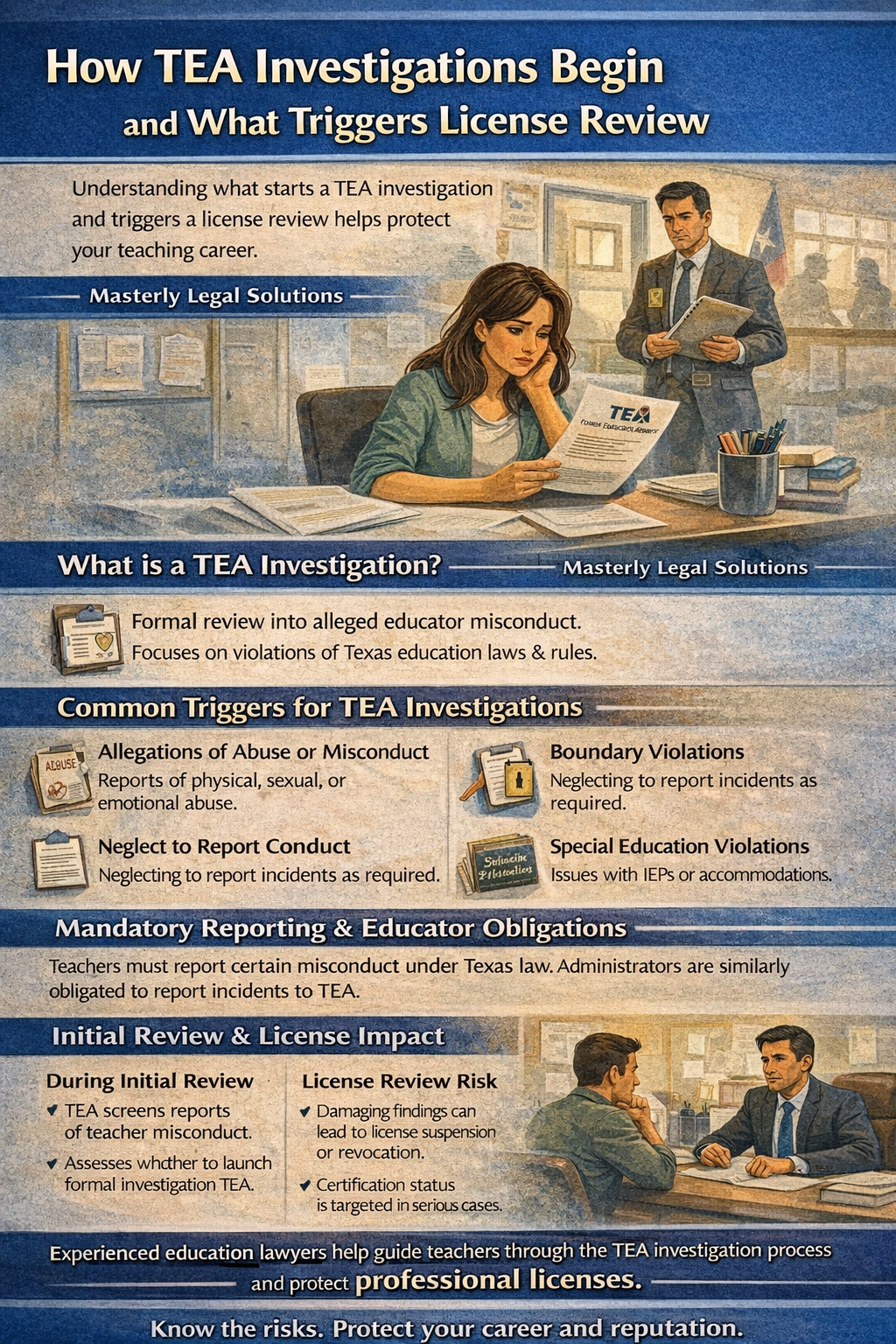
TEA investigations usually begin after a complaint or mandatory report is filed. These reports may come from school administrators, parents, coworkers, or other staff members. In some cases, investigations begin after incidents involving students or disciplinary actions.
Common triggers include:
- Allegations of physical or sexual abuse
- Sexual harassment complaints
- Improper student discipline
- Boundary violations with students
- Special education compliance issues
Even unproven allegations can initiate an investigation.
Mandatory Reporting and Educator Obligations
Teachers and school administrators are mandatory reporters under Texas education law. Failure to report certain conduct can itself trigger an investigation. In some situations, educators are investigated not for direct misconduct, but for failing to act.
Mandatory reporting requirements apply across the public school system, charter schools, and higher education institutions. These obligations often place teachers in difficult positions during fast-moving situations.
How Complaints Reach TEA
Complaints may reach TEA through multiple channels. School districts often report educators directly to the state board when concerns arise. Parents and community members may also submit complaints alleging misconduct.
Once a complaint is received, TEA determines whether it falls within its jurisdiction. If so, a formal investigation may begin, even before the educator is notified.
The Initial Review Stage
During the initial review, TEA evaluates whether allegations, if true, would violate education law or certification standards. This is not a full investigation, but it determines whether the case moves forward.
At this stage, having an experienced education lawyer can be invaluable. Early advocacy may clarify misunderstandings before the investigation escalates.
License Review and Certification Authority
TEA investigations often involve potential license review. The State Board for Educator Certification has authority to suspend, revoke, or restrict licenses. License review is one of the most serious outcomes educators face.
A license review can impact current employment, future opportunities, and professional standing across Texas education.
Allegations Involving Students and Children
Cases involving children receive heightened scrutiny. Allegations of physical or sexual abuse, misconduct, or boundary violations are treated with urgency. Even allegations later found unsubstantiated can have lasting professional effects.
Protecting students is a priority, but teachers also deserve due process. Education attorneys work to balance both concerns.
Title IX Complaints and Investigations
Title IX complaints related to sexual harassment or sexual abuse frequently trigger TEA involvement. These cases often involve parallel investigations by school districts and external agencies.
Title IX matters are complex legal issues that intersect with federal law and state administrative rules. Legal representation helps educators navigate overlapping procedures.
Special Education and Compliance Issues
Special education law violations are another common trigger. Failure to provide special education services, attend IEP meetings, or follow accommodations can lead to investigation. These issues may involve representing students’ rights and a child’s rights under state and federal law.
Special education cases often involve detailed documentation and strict timelines. Experienced education lawyers understand these complexities.
Student Discipline and Administrative Scrutiny
Student discipline decisions can also trigger TEA review, especially when parents allege unfair treatment or civil rights violations. Discipline matters are closely regulated within the educational setting.
Educators must balance classroom management with compliance. Legal guidance helps teachers navigate these challenges safely.
The Role of School Districts and Administrators
School districts play a significant role in initiating investigations. Administrators may report teachers to TEA based on internal findings or policy concerns. These reports often occur quickly, sometimes before teachers can respond.
Understanding district reporting obligations helps educators anticipate potential risks.
Investigations in Public and Private Schools
While TEA primarily regulates public education, investigations may also affect educators working in private schools or charter schools. Certification status often determines jurisdiction.
Educators moving between schools should be aware that prior investigations can follow them.
How Evidence Is Gathered During Investigations
TEA gathers evidence through documents, witness statements, emails, and internal reports. Investigators may request employment records, lesson plans, or disciplinary files.
What educators say and submit during this stage can shape the entire outcome. Legal professionals help ensure accurate and appropriate responses.
Interviews and Educator Statements
Teachers may be asked to provide written statements or participate in interviews. These interactions are critical moments in the investigation.
An education lawyer prepares clients to respond carefully, protecting their teachers rights while cooperating with lawful requests.
Administrative Hearings and Due Process
Some investigations proceed to administrative hearings. These hearings resemble trials, with evidence, witnesses, and arguments presented before an administrative judge.
Due process hearings require knowledge of procedural rules. Skilled lawyers ensure educators’ rights are preserved.
Disciplinary Proceedings and Possible Outcomes
Disciplinary proceedings may result in reprimands, suspension, or revocation of certification. Outcomes depend on the severity of allegations and available evidence.
Education attorneys advocate for proportional outcomes and, when possible, alternatives to license loss.
The Role of Civil Rights in TEA Matters
Civil rights considerations arise in many investigations, especially those involving discrimination or harassment. Educators accused of violating students rights may face heightened scrutiny.
Conversely, teachers may also assert civil rights protections during investigations. Education law matters often involve both perspectives.
Employment Law and Educator Careers
TEA investigations often intersect with employment law. School districts may place educators on leave, terminate contracts, or restrict duties during investigations.
Legal representation helps teachers address both certification and employment consequences.
Higher Education Institutions and University Faculty
University faculty and staff may also face investigations under Texas education oversight. Higher education institutions operate under distinct policies but similar accountability standards.
University educators should seek legal advice tailored to their specific institutional context.
Community Colleges and Certification Issues
Community colleges employ certified educators who may be subject to TEA authority. Investigations at this level can affect broader career paths.
Understanding certification rules across educational institutions is essential.
Grievance Hearings and Internal Appeals
Some cases involve grievance hearings within school systems. These hearings may run parallel to TEA investigations.
Attorneys provide guidance on strategy across multiple proceedings.
The Importance of Legal Representation Early
Early legal representation can change the trajectory of a TEA investigation. Education attorneys help clients understand rights, obligations, and risks before missteps occur.
Experienced education lawyers provide tailored legal services focused on protecting careers.
How Lawyers for Teachers Texas Educators Trust Help
Working with lawyers for teachers Texas professionals rely on ensures familiarity with state-specific rules. Texas education lawyers understand local procedures, agency expectations, and state board practices.
This knowledge often makes all the difference in outcomes.
The Value of an Education Law Firm
An education law firm offers focused experience in complex education law matters. These firms understand the unique pressures educators face.
Masterly Legal Solutions provides tailored legal services designed specifically for teachers and education professionals.
Supporting Teachers Through New Challenges
TEA investigations present new challenges even for seasoned educators. Stress, uncertainty, and fear are common reactions.
Attorneys provide clarity, reassurance, and advocacy during difficult times.
Protecting Best Interests and Professional Futures
Balancing the best interests of students with educators’ rights is central to education law. Effective representation protects both.
Legal professionals work to ensure compliance without unnecessary career damage.
Why Experience Matters in Education Law
Education law is highly specialized. Attorneys with extensive experience understand how regulations, policies, and procedures interact.
Experienced education lawyers bring strategic insight to complex issues.
How Masterly Legal Solutions Helps Educators
At Masterly Legal Solutions, our attorneys focus on education law, administrative hearings, and disciplinary proceedings. We represent teachers, staff members, and education professionals across Texas.
Our law firm is committed to protecting careers and providing strong advocacy.
What Clients Can Expect From Our Team
Clients receive personalized attention, clear communication, and strategic guidance. We explain options, anticipate challenges, and advocate effectively.
Our goal is to help educators move forward with confidence.
Legal Matters That Arise During TEA Investigations
TEA investigations often expand beyond certification concerns into broader legal matters that affect a teacher’s career and livelihood. These matters may involve employment disputes, contractual issues with school districts, or allegations that carry professional consequences outside the education system. Because multiple areas of law can intersect in a single investigation, teachers may feel overwhelmed by the scope of potential exposure. Understanding how these legal matters connect helps educators make informed decisions early.
When Litigation Services Become Necessary
While many TEA cases resolve at the administrative level, some situations require formal litigation services. This may occur when disputes escalate, evidence is challenged, or a teacher’s rights are not adequately protected through administrative channels. Litigation introduces strict rules, deadlines, and procedures that demand careful preparation. Having experienced legal counsel ensures that educators are fully prepared if their case moves into a contested setting.
The Role of Disciplinary Hearings
Disciplinary hearings are a critical stage in many TEA investigations. These hearings allow evidence to be presented and reviewed by decision-makers who may determine whether a license is suspended or revoked. The process can feel intimidating, especially for teachers unfamiliar with administrative law. Proper preparation and representation help ensure that educators are heard and treated fairly during these proceedings.
Personal Injury Allegations in Educational Settings
In some cases, TEA investigations stem from incidents involving personal injury to a student or staff member. Even accidental injuries can trigger scrutiny if questions arise about supervision or safety protocols. These situations often involve multiple reviews, including internal district investigations and state oversight. Addressing personal injury allegations requires careful coordination to protect both professional standing and legal interests.
Disabilities and Compliance Responsibilities
Disabilities-related issues are a common source of TEA investigations, particularly in special education contexts. Allegations may involve failure to provide accommodations, improper discipline, or inadequate support services for students with disabilities. Teachers are often caught between policy expectations and limited resources. Legal guidance helps educators understand their responsibilities while ensuring compliance without unfair blame.
Contact Masterly Legal Solutions for a Free Consultation
If you are facing a TEA investigation or license review, early legal guidance is critical. At Masterly Legal Solutions, we offer a free consultation to discuss your situation and explain how we can help protect your career.
Contact us today at (972) 236-5051 to speak with attorneys who understand education law and are committed to supporting Texas educators.
Disclaimer: This article is for informational purposes only and does not constitute legal advice. Reading this content does not create an attorney-client relationship. For legal advice specific to your situation, consult a qualified attorney.

Teacher Rights When Assaulted by a Special Needs Student: Safety, Reporting and Investigation Issues


Looking for Legal & Business Solutions? Contact Us Now
Fill in the form or call us to set up a meeting