

Administrative Leave Is Not Neutral: What Schools Don’t Tell Teachers
The Hidden Reality Behind Administrative Leave
For many educators, being placed on administrative leave comes as a shock. It is often presented as a neutral step, something routine while an issue is reviewed. However, the reality is far more complex. Administrative leave can carry serious consequences that impact an employee’s career, reputation, and future opportunities in Dallas employment and beyond.
At Masterly Legal Solutions, we have worked with many employees who believed they were simply “waiting things out,” only to discover that their employer had already begun building a case against them. What appears neutral on the surface may actually be the first step in workplace retaliation. Understanding what is really happening is critical if you want to protect yourself.
Why Schools Call It “Neutral”
Schools and other medical care institutions often describe administrative leave as a precautionary measure. They claim it protects both the employee and the organization during an investigation. While that sounds reasonable, it can be misleading.
In practice, administrative leave can signal that the employer suspects wrongdoing. It may also allow the employer to control the narrative while limiting the employee’s ability to respond. This creates a power imbalance that many employees are not prepared for.
The Emotional Impact on the Employee
Being removed from your classroom or workplace can feel isolating. Many employees experience anxiety, confusion, and even fear about their future. This emotional toll can affect job performance later and influence how others perceive you.
The stigma attached to administrative leave can spread quickly among a co worker group. Even without formal findings, rumors can damage your professional reputation. This is especially concerning when workplace discrimination or harassment allegations are involved.
Administrative Leave Can Be an Adverse Employment Action
One of the most important things to understand is that administrative leave can qualify as an adverse employment action. Even if you are still being paid, the consequences can affect your career trajectory.
For example, being placed on leave may lead to missed opportunities, loss of responsibilities, or damage to your professional standing. In some cases, it may even set the stage for wrongful termination. When these actions are tied to a protected activity, they may support a viable claim under the guidance of a dedicated workplace retaliation lawyer.
What Triggers Administrative Leave in Schools
Administrative leave is often triggered by a complaint. This could involve allegations of harassment, workplace discrimination, or violations of workplace policies. In other situations, it may follow reporting discrimination or participating in an internal investigation.
While some complaints are legitimate, others may be complaint based and influenced by misunderstandings or bias. Regardless of the source, the employer’s response can raise serious concerns about unlawful retaliation.
Protected Activity and Your Rights
A key concept in employment law is protected activity. This includes actions like filing a complaint, reporting discrimination, or participating in an investigation. It also covers requesting a reasonable accommodation under the disabilities act or taking fmla leave.
Employees who engage in protected activity are legally protected under federal and state laws. This means an employer cannot retaliate against an employee simply for exercising their rights. Unfortunately, many employees are unaware of how these protections apply.
Common Examples of Protected Activity
Understanding what counts as protected activity is essential. Some examples include:
- Filing a complaint about sexual harassment or workplace discrimination
- Reporting unsafe working conditions
- Requesting medical leave or fmla leave
- Participating in an investigation with human resources
- Supporting a co worker’s discrimination claims
Each of these actions is protected under most anti discrimination laws, including the civil rights act and other federal law protections.
When Administrative Leave Becomes Retaliation
Administrative leave becomes problematic when it is used as a form of retaliation. This can happen when an employer places an employee on leave shortly after they engage in protected activity.
For example, if an employee reports harassment and is then removed from their position, this may indicate employer retaliation. Timing is often a key factor in determining whether unlawful retaliation has occurred.
Signs of Workplace Retaliation
Workplace retaliation can take many forms, and administrative leave is just one of them. Some common signs include:
- Sudden shift change or reassignment
- Increased scrutiny of job performance
- Exclusion from meetings or decision-making
- Disciplinary action without clear justification
These retaliatory acts may not always be obvious, but they can still support a legal claim.
The Role of Human Resources
Human resources departments are often seen as neutral parties. However, their primary responsibility is to protect the employer. Many organizations rely on HR consulting and training services, which can also create conflicts of interest when handling complaints.
Employees should be cautious when dealing with human resources. While they may appear supportive, their actions may ultimately benefit the employer. This is why consulting an employment lawyer is often a critical step.
How Employers Build a Case During Leave
While an employee is on administrative leave, the employer may be gathering important evidence. This can include reviewing emails, interviewing witnesses, and analyzing records.
The employee, on the other hand, may have limited access to information. This imbalance can make it difficult to respond effectively. It is important to act quickly and seek legal advice during this time.
The Danger of Waiting Too Long
Many employees assume they should wait until the investigation is complete before taking action. However, this can be a mistake. There are often very short deadlines for filing a retaliation claim.
Federal agencies like the equal employment opportunity commission and the texas workforce commission have strict timelines. Missing these deadlines can prevent you from pursuing legal action.
Filing a Retaliation Claim
Filing a retaliation claim involves several steps. It typically begins with documenting the events and gathering evidence. This may include emails, witness statements, and records of complaints.
Next, the employee may file a charge with the equal employment opportunity commission or the texas workforce commission, or pursue other retaliation and labor complaints. These agencies investigate claims of unlawful retaliation and workplace discrimination.
What Makes a Viable Retaliation Claim
Not every complaint leads to a viable retaliation claim. To succeed, the employee must show:
- They engaged in protected activity
- The employer took an adverse employment action
- There is a connection between the two
An experienced workplace retaliation and employment attorney can evaluate your situation and determine whether you have a strong case.
The Impact of Unlawful Retaliation on Careers
Unlawful retaliation can have long-term consequences. It can affect future employment opportunities, professional relationships, and financial stability.
For teachers and other employees, these effects can be especially damaging. A single incident can follow you throughout your career, making it difficult to move forward.
Understanding Anti Discrimination Laws
Anti discrimination laws are designed to protect employees from unfair treatment. These laws cover issues like sexual orientation, age discrimination, and disabilities.
Under federal law and state law, employers are prohibited from engaging in unlawful discrimination or retaliation. These protections apply to many employees, including federal employees and those in private institutions.
The Connection Between Discrimination and Retaliation
Retaliation often follows discrimination claims. When an employee reports discrimination based on race, gender, or other factors, the employer may respond negatively.
This can include placing the employee on administrative leave, altering their duties, or even terminating their employment. These actions may constitute unlawful retaliation.
Workplace Harassment and Administrative Leave
Harassment complaints are another common trigger for administrative leave. While addressing harassment is important, the process must be fair.
If an employer retaliated against an employee for reporting harassment, this may lead to legal action. Employees have the right to work in an environment free from a hostile work environment.
The Role of Federal and State Laws
Federal and state laws provide important protections for employees. Law firms that focus on higher education and labor and employment law can help interpret these laws and outline the rights of employees and the responsibilities of employers.
They also establish procedures for filing complaints and pursuing legal claims. Understanding these laws is essential for protecting your rights.
How FMLA Leave Can Be Misused
Fmla leave and medical leave are protected under the medical leave act. However, some employers misuse administrative leave in connection with these protections.
For example, an employee returning from medical leave may be placed on administrative leave without justification. This can raise concerns about unlawful retaliation.
Reasonable Accommodation and Retaliation
Employees who request a reasonable accommodation for a medical condition are engaging in protected activity. Employers must respond appropriately and cannot retaliate.
If an employer retaliated against an employee for making such a request, this may violate the disabilities act and other anti discrimination laws.
The Importance of Good Faith Belief
Employees are protected when they act with a good faith belief that discrimination or illegal acts have occurred. Even if the complaint is not ultimately proven, the protection still applies.
This is a critical point for many employees who hesitate to report issues. Fear of retaliation should not prevent you from exercising your rights.
Common Mistakes Employees Make
Many employees make mistakes during administrative leave that can hurt their case. These include:
- Failing to document events
- Speaking freely without legal guidance
- Missing filing deadlines
Avoiding these mistakes can make a significant difference in the outcome of your case.
Why You Need an Employment Lawyer
An employment lawyer can help you navigate the complexities of employment law. Businesses also benefit from retaining an employment lawyer who can assess your situation, gather evidence, and guide you through the filing process.
Working with a board certified attorney ensures that you have experienced representation. This can be especially important in cases involving workplace retaliation and discrimination.
How a Workplace Retaliation Attorney Can Help
A workplace retaliation attorney can identify patterns of employer retaliation and build a strong case, especially for Texas teachers placed on administrative leave. They can also represent you in dealings with federal agencies and during negotiations.
Their goal is to protect your rights and help you achieve a fair outcome. This may include compensation, reinstatement, or other remedies.
The Role of a Law Firm in Your Case
Choosing the right law firm is critical. A firm like Masterly Legal Solutions with experience in employment law can provide the support and guidance you need.
At Masterly Legal Solutions, we understand the challenges faced by employees in Dallas employment situations. Our multiple Texas office locations make it easier for our team to help clients navigate complex legal issues.
When to Take Legal Action
Timing is crucial when considering legal action. Employees should act as soon as they suspect retaliation or discrimination.
Waiting too long can limit your options and weaken your case. Consulting an employment lawyer early can help you make informed decisions.
Protecting Yourself During Administrative Leave
There are steps you can take to protect yourself while on administrative leave:
- Keep detailed records of all communications
- Avoid discussing the case with others
- Seek legal advice promptly
These steps can help you preserve important evidence and strengthen your position.
The Reality for Texas Employees
Texas employees face unique challenges due to state law and workplace dynamics. Understanding your rights is essential for navigating these challenges.
Whether you are dealing with workplace retaliation, harassment, or discrimination, having the right support can make all the difference.
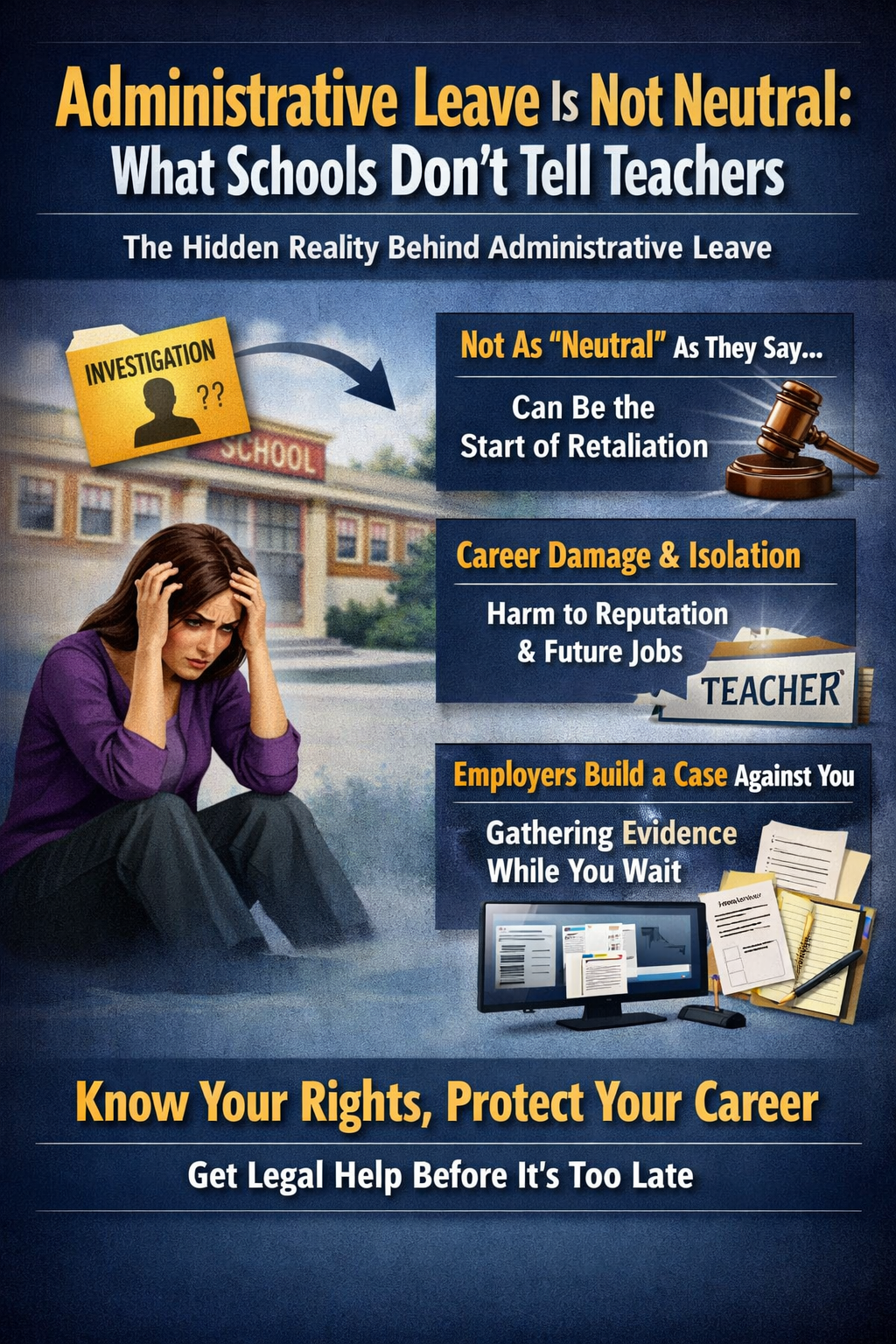
What Schools Don’t Tell Teachers
Schools often emphasize neutrality, but they may not disclose the full implications of administrative leave. This lack of transparency can leave employees unprepared.
Understanding the risks and taking proactive steps can help you protect your career and your rights.
Taking Control of Your Situation
Administrative leave does not have to define your future. By understanding your rights and seeking legal guidance, you can take control of your situation.
An experienced employment lawyer can help you navigate the process and pursue justice if your rights have been violated.
Understanding Employment Rights and Workplace Protections for Dallas Workers
The Employment Act provides critical protections for Dallas workers, especially in cases involving employment discrimination and an employer's discrimination practices. Whether an employer participating in unfair treatment or retaliation is involved, the law ensures that both full time employees and others are protected from unlawful conduct, including violations related to minimum wage and workplace equity. Many individuals hesitate to come forward due to legitimate fears of retaliation, but an employee's participation in reporting misconduct is legally protected. If an employee waits too long to act, it may affect their ability to pursue a claim, so taking action sooner is always advisable. Dallas sooner rather than later is often the best approach when addressing workplace violations to ensure your rights are fully protected.
Speak With a Retaliation Lawyer Dallas Educators Trust
If you believe your employer has taken action against you after a complaint, do not assume it will resolve on its own. Administrative leave may be the beginning of something much more serious. At Masterly Legal Solutions, our team includes board certified professionals who understand how quickly retaliation can escalate in Dallas employment settings.
We offer an initial consultation to help you understand your options and determine whether you may have a viable retaliation claim. Whether you are dealing with workplace retaliation, discrimination, or concerns about unlawful retaliation, we are here to help you take the next step with confidence. Call (972) 236-5051 today to speak with a retaliation lawyer dallas employees rely on and get answers tailored to your situation.
Disclaimer: This article is for informational purposes only and is not legal advice. Every situation is different, and reading this content does not create an attorney-client relationship. If you have questions about your specific circumstances, you should contact a qualified employment lawyer for guidance.



Teacher Rights When Assaulted by a Special Needs Student: Safety, Reporting and Investigation Issues



Looking for Legal & Business Solutions? Contact Us Now
Fill in the form or call us to set up a meeting