

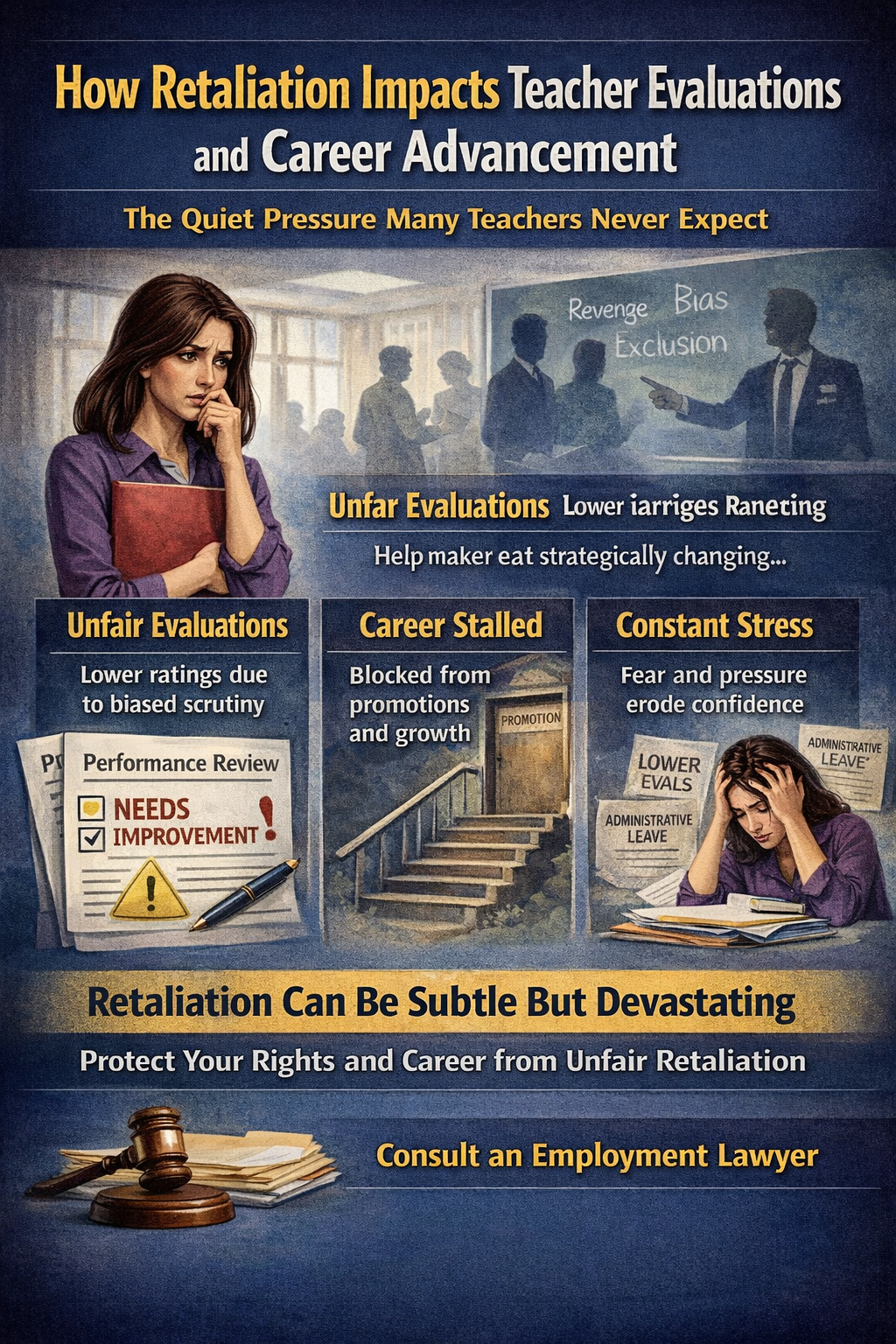
How Retaliation Impacts Teacher Evaluations and Career Advancement
The Quiet Pressure Many Teachers Never Expect
For many educators, stepping into a classroom is about purpose, passion, and making a difference. What is often not discussed openly is how quickly that environment can shift after a complaint or concern is raised. When retaliation enters the picture, it rarely announces itself clearly. Instead, it often hides behind policies like administrative leave, performance reviews, and internal processes that appear routine on the surface.
At Masterly Legal Solutions, we have seen how administrative leave can quietly influence a teacher’s career path. What may begin as a neutral action can later affect evaluations, promotions, and long-term opportunities. Understanding this connection is essential for protecting your professional future.
Administrative Leave Is More Than Just Time Away
Administrative leave is frequently described as a temporary and neutral measure. Schools often say it is used during internal reviews or while investigating alleged misconduct. However, the real impact on your pay, status, and career can go far beyond a simple excused absence.
Even when it is paid administrative leave, the consequences can affect how employees are viewed within their organization. The longer an employee remains on administrative leave, the more likely it is that their role and reputation will be questioned. This can create long-term damage that follows them even after they return.
How Paid Administrative Leave Shapes Perception
Paid administrative leave may sound reassuring at first. Many employees assume that receiving paid leave means their situation is not serious. Unfortunately, that assumption can be misleading, especially for Texas teachers placed on administrative leave.
In reality, paid administrative leave can still influence how supervisors and other employees perceive you. It may signal that the agency determines there is enough concern to remove you from your duties. This perception can directly impact your employee's current position and future opportunities.
The Link Between Administrative Leave and Evaluations
Teacher evaluations are supposed to measure job performance fairly. However, when administrative leave is involved, the process can become biased. Evaluators may unconsciously connect the leave with concerns about professionalism or reliability.
Even if no wrongdoing is proven, the fact that administrative leave occurred can affect evaluation outcomes. This is especially true when internal reviews are ongoing or unresolved. As a result, employees may receive lower ratings that do not reflect their actual performance.
When Alleged Misconduct Becomes a Career Barrier
Administrative leave is often tied to alleged misconduct. While investigations are necessary, the way they are handled can create long-term consequences. Even unproven allegations can follow an employee throughout their career.
In many cases, employees find that administrative leave becomes part of their professional record. This can influence future hiring decisions, promotions, and leadership opportunities. The stigma can be difficult to overcome, even when the claims are unfounded.
Understanding Investigative Leave in Schools
Investigative leave is a specific type of administrative leave used during formal investigations. It is often presented as a neutral step while facts are gathered. However, investigative leave can still have a significant impact on an employee’s reputation.
During investigative leave, employees are typically removed from their workplace and may have limited communication with colleagues. This isolation can affect both the employee and the overall employee morale within the organization.
The Role of Human Resources in Administrative Leave
Human resources departments are often responsible for managing administrative leave cases. They work alongside agency officials and leadership to conduct internal reviews and enforce agency policies.
While human resources may appear neutral, their role is often aligned with the employer’s interests. This can create challenges for employees who are trying to protect their rights. Understanding this dynamic is important when navigating administrative leave.
How Agency Policies Influence Outcomes
Agency policies play a major role in how administrative leave is handled. These policies are often designed to align with federal law, state laws, and opm regulations. However, the way they are applied can vary significantly.
In some cases, agency judgments may favor the organization over individual employees. This can lead to outcomes that feel unfair or inconsistent. Employees should be aware that policies do not always guarantee fairness.
Federal Law and Teacher Protections
Teachers are protected under various federal and state laws. These include the civil rights act, the disabilities act, and other provisions within the united states code. These laws are designed to prevent discrimination based on factors such as age, national origin, and disability, and educators should understand their legal protections and options when facing discipline or termination.
Despite these protections, retaliation can still occur. When an employee engages in protected activity, such as filing a retaliation complaint or requesting reasonable accommodations, they should not face adverse actions. However, this is not always the reality.
The Impact of Administrative Leave on Promotions
Administrative leave can significantly affect career advancement. Promotions often depend on consistent performance, positive evaluations, and strong professional relationships.
When an employee is placed on administrative leave, these factors can be disrupted. The absence from daily responsibilities can create gaps in experience and visibility. This can make it more difficult to compete for advancement opportunities.
How Retaliation Occurs in Evaluation Processes
Retaliation occurs when an employer takes adverse actions against an employee for engaging in protected activity. In education settings, this can influence evaluation scores, feedback, and advancement decisions, making it important to understand how retaliation laws protect employees in schools and workplaces.
For example, an employee who chooses to file a complaint may later receive lower performance ratings. These subtle changes can be difficult to prove but can have a lasting impact on their career.
The Hidden Use of Notice Leave
Notice leave is another form of administrative leave that can be used strategically. It is often implemented when an employer has already made a decision about an employee’s future.
During notice leave, the employee may be removed from their duties while remaining on paid leave. This can limit their ability to demonstrate job performance or respond to concerns.
Administrative Leave and Wrongful Termination Risks
Administrative leave can sometimes lead to wrongful termination. When an employer uses leave as a step toward ending employment, it may raise legal concerns, including whether an employer is effectively forcing you to resign or quit your job.
Employees who feel they were unfairly fired after administrative leave should consider seeking legal guidance. Understanding your rights under federal law and state laws is essential in these situations.
The Role of Agency Officials and Leadership
Agency officials and the agency head play a critical role in administrative leave decisions. Their judgments can influence how cases are handled and resolved.
In some cases, decisions may be based on internal policies rather than objective evidence. This can create situations where employees feel they have been treated unfairly.
Adverse Actions That Follow Administrative Leave
Administrative leave is often just the beginning. Employees may face additional adverse actions, including disciplinary action or changes to their role.
These actions can include reduced responsibilities, altered schedules, or exclusion from key opportunities. Over time, these changes can affect an employee’s career trajectory.
The Importance of Internal Reviews
Internal reviews are meant to ensure fairness and accountability. However, they can sometimes be influenced by bias or incomplete information, especially when organizations lack strong HR consulting, training, and investigation practices.
Employees should be aware that internal reviews are not always impartial. Seeking outside guidance from employment lawyers can provide a more balanced perspective.
How Administrative Leave Affects Employee Morale
Administrative leave does not just impact the individual employee. It can also affect employee morale across the organization.
When other employees see how administrative leave is handled, it can create fear and uncertainty. This can discourage employees from speaking up about concerns.
The Influence of OPM Regulations and Guidance
Opm regulations and opm guidance provide frameworks for handling administrative leave, particularly for federal employees. These rules are intended to ensure consistency and fairness, including for university faculty and administrators facing job termination or discipline.
However, even with these regulations, outcomes can vary. Agency judgments and internal policies often play a significant role in how these rules are applied.
Federal Employees and Administrative Leave
Federal employees are subject to specific rules regarding administrative leave. These include guidelines set by federal agencies and directives from the federal government.
Despite these protections, federal employees may still face challenges when dealing with administrative leave. Understanding these rules is critical for navigating the process.
The Connection to Whistleblower Laws
Whistleblower laws are designed to protect employees who report wrongdoing. These laws apply when employees report issues such as safety violations or unethical practices, and they often intersect with labor and retaliation complaints that can be filed with the Department of Labor.
However, even with these protections, retaliation can still occur. Employees who engage in whistleblowing may find themselves placed on administrative leave as a response.
Safety Leave and Occupational Concerns
Safety leave is another form of administrative leave used in specific situations. It may be implemented when there are concerns about physical harm or workplace safety, and mishandling these issues can lead employees to seek help from a workplace retaliation and employment law attorney.
While safety leave can be necessary, it can also be misused. Employees should understand when it is appropriate and when it may raise concerns.
Administrative Leave and Job Protected Leave
Administrative leave is different from job protected leave under laws like the medical leave act. While job protected leave ensures an employee can return to their position, administrative leave does not always offer the same protection.
This distinction is important for employees dealing with medical conditions or family responsibilities.
The Role of Executive Orders and Directives
Executive order policies and presidential directives can influence how administrative leave is used, particularly in federal agencies. These directives may outline when leave is appropriate and how it should be applied.
However, the interpretation of these rules can vary. Agency officials may apply them differently depending on the situation.
The Impact on Employee’s Current Position
Administrative leave can directly affect an employee’s current position. Being removed from duties can create uncertainty about their role and future.
Even after returning, employees may find that their responsibilities have changed. This can affect their ability to succeed and advance.
How Employees Are Treated Differently
Employees on administrative leave may feel they are treated differently compared to other employees. This can include exclusion from meetings, reduced communication, or limited access to resources.
These differences can create a sense of isolation and impact overall job satisfaction.
The Use of Ad Hoc Decisions in Leave Cases
Some administrative leave decisions are made on an ad hoc basis. This means they are handled case by case without clear consistency.
While flexibility can be beneficial, it can also lead to unfair outcomes. Employees may feel that similar situations are treated differently.
Internal Policies and Their Limitations
Internal policies are meant to guide decision-making. However, they are not always sufficient to ensure fairness.
Employees should understand that internal policies may not fully protect their rights. Seeking advice from employment lawyers can provide additional support.
The Long-Term Impact on Career Advancement
Administrative leave can have lasting effects on career advancement. It can influence how employees are perceived and limit their opportunities for growth, and for Texas educators nearing retirement it may even jeopardize TRS retirement benefits and long-term financial security.
Even after returning to work, employees may face challenges in rebuilding their reputation and advancing their careers.
Steps Employees Can Take to Protect Themselves
Employees facing administrative leave should take proactive steps to protect their rights. These steps may include:
- Documenting all communications and events
- Consulting with employment lawyers early
- Understanding their rights under federal and state laws
Taking these steps can help employees navigate the situation more effectively.
The Importance of Legal Protections
Legal protections exist to safeguard employees from unfair treatment. These protections are outlined in federal law, state laws, and various employment acts.
Understanding these protections is essential for recognizing when your rights may have been violated.
When to File a Complaint
Employees who believe they have experienced retaliation or unfair treatment should consider when to file a complaint. This may involve contacting the equal employment opportunity commission or other authorized agency officials.
Filing a complaint can be a critical step in protecting your rights and seeking justice.
Why Legal Guidance Matters
Navigating administrative leave and retaliation issues can be complex. Employment lawyers can provide valuable guidance and support throughout the process.
At Masterly Legal Solutions, our team understands the challenges employees face in these situations. We are committed to helping clients protect their rights and their careers.
How Administrative Leave Policies Address Specific Workplace Situations
Administrative leave is often applied in very targeted scenarios, sometimes for brief or short periods or even brief periods depending on the situation. Employers may grant administrative leave when they believe it supports the agency's mission or helps maintain workplace stability during an investigation. These decisions are often tied to personnel management strategies and may be outlined in an employee handbook or internal guidance. In many organizations, leadership may issue internal policies consistent with federal law and company policies to ensure that eligible employees are treated fairly. However, even when actions appear neutral, they can still influence concerns about future discrimination, especially if employees begin to feel they are being singled out or treated differently.
How Organizational Policies and Benefits Intersect with Leave Decisions
Administrative leave can also intersect with broader workplace considerations such as health insurance, overtime pay, and employee benefits. In some cases, an employer's decision to place someone on leave may affect access to certain benefits or compensation structures. Employers may justify these actions as specifically authorized under internal procedures or even influenced by guidance like a presidential memorandum or compliance standards related to occupational safety. Additionally, organizations sometimes use administrative leave for unique situations such as officially sponsored events or even participation in blood donations, which are generally viewed as supportive workplace practices. Still, when applied inconsistently, these decisions can raise concerns about fairness, particularly in cases involving age discrimination or other forms of unequal treatment.
Talk to a Team That Understands Workplace Retaliation
If you are dealing with administrative leave and believe it has affected your evaluation, promotion, or professional future, you do not have to handle it alone. At Masterly Legal Solutions, we work with employees who are facing difficult employment situations and need clear, practical guidance.
Our team of labor and employment lawyers takes the time to understand your experience, review your options, and help you determine whether legal action may be appropriate. Whether you are concerned about wrongful termination, adverse actions, or how administrative leave has impacted your employee's current position, we are here to help you move forward with confidence.
Call (972) 236-5051 today for a free consultation. We can answer your questions, explain your rights, and help you decide the best next steps for your situation.
Disclaimer: This article is for informational purposes only and does not constitute legal advice. Reading this content does not create an attorney-client relationship. If you need legal guidance regarding your specific situation, you should contact a qualified attorney.



Teacher Rights When Assaulted by a Special Needs Student: Safety, Reporting and Investigation Issues



Looking for Legal & Business Solutions? Contact Us Now
Fill in the form or call us to set up a meeting





