

Can Teachers Be Disciplined for District Procurement Violations? What Houston ISD’s Case Reveals
Teachers across Texas are asking a difficult question: Can I lose my job or my license if my district says I violated a procurement rule—even if I was never charged with a crime?
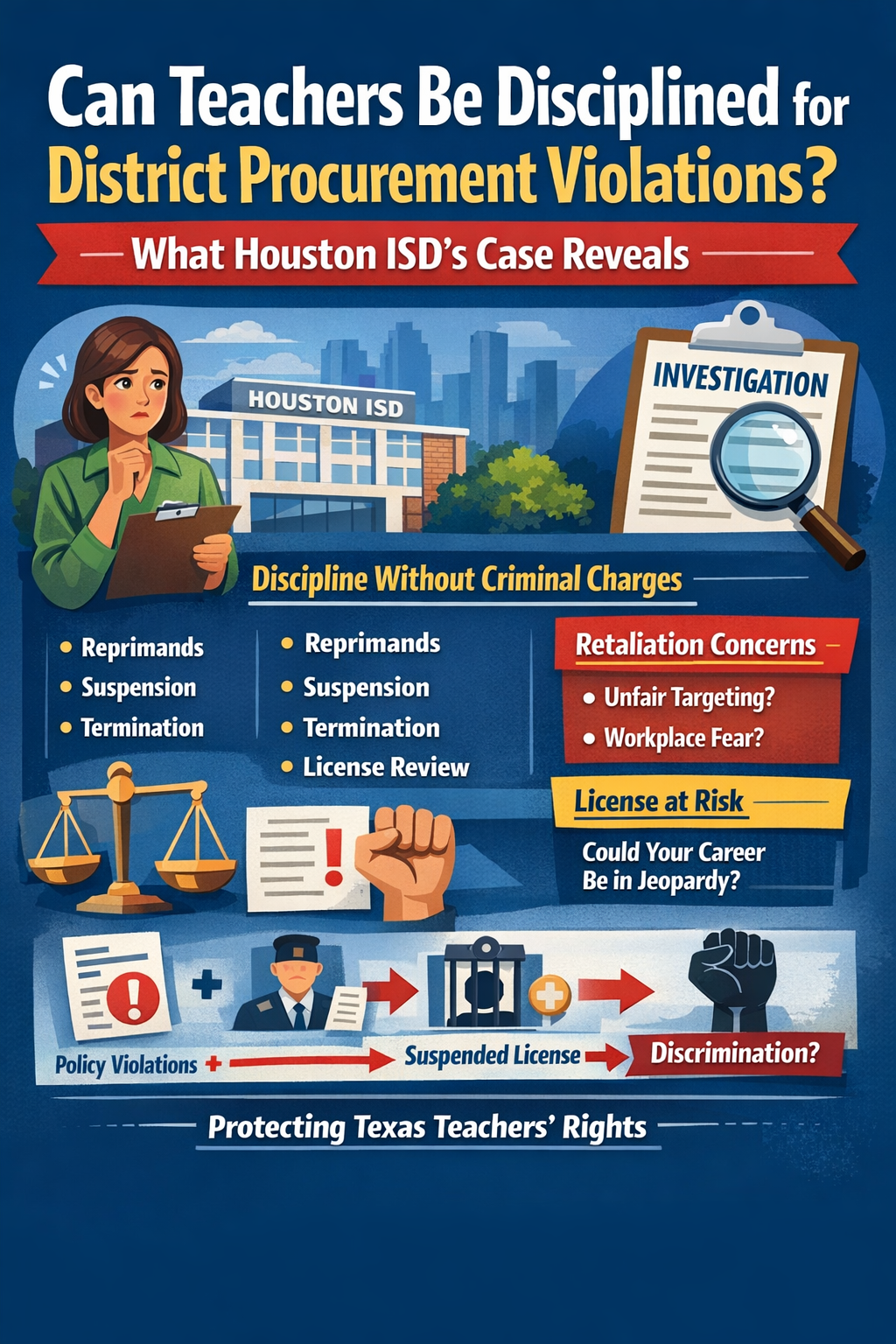
The short answer is yes. Administrative discipline can occur even without criminal charges. A school district, a state agency, or a licensing board may take action based on policy violations alone, including through formal TEA investigations and disciplinary proceedings. For educators in Houston ISD and beyond, that reality has created fear, confusion, and serious concerns about retaliation and discrimination.
At Masterly Legal Solutions, our attorneys represent teachers, administrators, and other workers facing investigations, complaints, and potential license discipline, offering dedicated education law attorneys for teachers in Texas. This article directly addresses the risks, explains how discipline can unfold, and highlights how retaliation in the workplace can complicate these cases.
Why Teachers Are Worried About Procurement Violations
School procurement rules can be complex. Teachers often have limited control over vendor approvals, purchase orders, and district processes. Yet when a violation is alleged, individual employees may be blamed.
In recent Houston ISD matters, concerns arose over purchasing practices and internal investigation procedures. Even without criminal charges, some employees faced administrative action. That has led many teachers to fear that a paperwork mistake—or even participating in the wrong meeting—could threaten their careers.
The fear is not unfounded. Under state laws and federal laws, a district employer can initiate discipline based on policy violations, ethical concerns, or alleged misuse of funds. These actions can affect employment contracts, future employment, and certification status.
Administrative Discipline Can Happen Without Criminal Charges
Many educators believe discipline only follows a criminal conviction. That is not accurate.
An employer may take adverse actions if it determines that a violation of district policy occurred. This can include:
- Written reprimands
- Suspension without pay
- Termination
- Reporting the matter to a state agency for license review
A criminal prosecution requires proof beyond a reasonable doubt. Administrative proceedings operate under a lower standard. That means an investigation alone may lead to consequences.
How a Procurement Investigation Typically Begins
Internal Complaint or Audit
Often, the process starts with an internal complaint. A supervisor, coworker, or vendor may raise concerns about a possible procurement violation.
In other cases, an audit identifies irregular spending. Once a complaint is filed, the employer may open an investigation.
The Investigation Process
The investigation process may include interviews, document reviews, and requests for written statements. Teachers are sometimes surprised by how quickly this unfolds.
During this stage, it is critical to remember that anything said can later be used in disciplinary proceedings. Consulting with experienced employment lawyers, labor and employment lawyers, or an education law attorney for teachers early can protect your rights.
What Houston ISD’s Case Reveals About Risk
Houston ISD’s experience shows that district-level investigations can expand quickly. What begins as a policy review can become a broader employment and license issue, similar to how TEA investigations commonly evolve and affect teacher protections.
Even when no criminal charges are filed, the district may:
- Place the employee on administrative leave
- Limit work hours or assign a less desirable position
- Refer the matter to a state agency
The key lesson is that administrative discipline does not require proof of theft or fraud. A perceived violation of policy may be enough.
Can Your Teaching License Be Suspended or Revoked?
Yes. A state agency that oversees educator certification can suspend or revoke a license based on findings from an investigation, making it critical to understand how to safeguard your Texas teaching license.
Licensing boards evaluate whether conduct reflects on an educator’s fitness to teach. This review can occur independently from any criminal court proceeding.
For many teachers, the greater fear is not just losing a current job. It is the risk of future discrimination and barriers to future employment. A license suspension can follow you for years.
When Discipline Crosses Into Discrimination
Not every discipline case is purely about procurement policy. Sometimes discrimination plays a role.
Employment discrimination occurs when an employer treats an employee differently based on protected characteristics such as race, gender, national origin, disability, age discrimination, or other categories protected under federal and state laws.
For example, under Title VII of the Civil Rights Act, an employer may not discriminate based on race, color, religion, sex, or national origin. If similarly situated employees outside your protected class were not disciplined for similar conduct, that raises serious legal concerns.
Retaliation in the Workplace: A Hidden Risk
Retaliation in the workplace is one of the most common forms of employment discrimination. Retaliation occurs when an employer punishes an employee for engaging in protected activity, and some workers may need to file retaliation and labor complaints with the Department of Labor.
Protected activity may include:
- Reporting discrimination
- Filing a complaint about harassment
- Participating in an internal investigation
- Cooperating with the equal employment opportunity commission
- Reporting safety concerns under occupational safety rules
If an employer retaliates after you engage in protected activity, that action may be illegal under federal laws and state laws.
Example of Retaliation After Reporting Discrimination
Consider this example. A teacher reports employment discrimination involving disability accommodations under the disabilities act. Shortly afterward, that teacher is accused of a procurement violation.
If the timing suggests that the employer retaliates because of the earlier complaint, that may support a retaliation complaint. Courts and administrative agencies look closely at timing, statements from supervisors, and inconsistencies in discipline.
When a Procurement Allegation Is a Pretext
In some cases, an employer may use a policy violation as a pretext. That means the stated reason for discipline hides an illegal motive.
This can happen in cases involving:
- Harassment complaints
- Reporting discrimination
- Wage disputes involving overtime pay or wages
- Requests for job protected leave under the medical leave act
- Requests for FMLA leave
If an employer retaliates after an employee engages in protected conduct, that discipline may violate Title VII, the employment act, and other federal and state laws.
Understanding Protected Activity
Protected activity includes engaging in actions that the law shields from retaliation. This can involve filing internal complaints, cooperating with investigators, or participating in legal proceedings.
For example, federal employees and eligible employees who request FMLA leave or medical leave act protections are engaged in protected activity, and many benefit from guidance from an education lawyer for teachers in Texas on education law. If the employer retaliates by demoting them to a less desirable position or reducing compensation, legal protections may apply.
Harassment and Procurement Investigations
Harassment claims often overlap with procurement disputes. An employee who reports harassment may later face scrutiny in unrelated areas.
Harassment and discrimination are prohibited under Title VII and other laws. If an employer retaliates because an employee complained about harassment, that can create liability for punitive damages and other compensation.
The Role of Employment Contracts
Employment contracts in school districts often contain clauses about compliance with district policies. However, these contracts do not allow an employer to engage in illegal retaliation or discrimination.
Even if a contract allows discipline for policy violations, it must be enforced fairly and consistently. Selective enforcement can be evidence of discrimination.
What If You Are a Federal Employee in Education?
Some educators work for federal agencies or receive federal funding. Federal employees have additional layers of protection under federal laws.
They may file complaints with the equal employment opportunity commission or other federal departments. The filing process has strict deadlines, and missing those deadlines can harm your case, which is why early help from attorneys offering broader education law legal insights for teachers and professionals is important.
The Importance of Filing on Time
Filing deadlines in employment discrimination and retaliation cases are critical. In many cases, a complaint must be filed with the equal employment opportunity commission within a specific timeframe.
Delays can prevent you from bringing a lawsuit later. An early initial consultation with employment lawyers can help protect your rights.
What Counts as Adverse Actions?
Adverse actions include more than termination. They can include:
- Suspension
- Demotion to a less desirable position
- Negative performance reviews
- Reduction in wages
- Transfer from a desirable position
- Changes in work hours
If these actions occur after engaging in protected activity, they may support a retaliation claim.
Disability and Procurement Discipline
Under the disabilities act, employers must provide reasonable accommodations for disability. If an employee with a disability is disciplined for a procurement violation without appropriate accommodation, discrimination may be involved.
Disability discrimination can take many forms, including failure to accommodate, unequal discipline, or harassment. These cases require careful investigation.
Immigration Status and Equal Protection
Immigration status can sometimes complicate employment matters. However, employers may not use immigration status as a pretext for discrimination or retaliation.
Federal and state laws provide legal protections to many workers regardless of status. Consulting experienced attorneys is essential if this issue arises.
Family Leave and Procurement Allegations
Requests for FMLA leave or time off to care for a family member are protected under federal laws. If an employer retaliates shortly after a leave request, that timing matters.
For example, if a teacher takes FMLA leave and later faces a sudden procurement investigation, it is worth evaluating whether retaliation played a role.
Whistleblower Laws and Reporting Violations
Whistleblower laws protect employees who report suspected illegal conduct or misuse of funds. Reporting procurement concerns can be protected activity.
If retaliation occurs after such reporting, legal assistance may be necessary to resolve the matter.
The Impact on Employee Morale and Career
Procurement investigations affect more than just one employee. They can damage employee morale across a campus and, in some cases, lead to educators being placed on leave and needing to follow specific steps to take when on administrative leave in Texas.
When workers see colleagues disciplined without clear evidence, fear spreads. That fear can discourage reporting discrimination, harassment, or safety violations.
Potential Witnesses and Documentation
Building a defense often requires gathering documents and identifying potential witnesses. Emails, purchase orders, and internal communications can be critical.
Attorneys experienced in labor and employment matters understand how to conduct a thorough investigation and challenge weak evidence, especially when guiding Texas educators on how to survive a TEA investigation and protect a teaching license.
Wrongful Termination and Lawsuits
If a teacher is terminated for reasons that violate federal or state laws, a wrongful termination lawsuit may be appropriate.
Wrongful termination claims often involve discrimination, retaliation, or violation of protected rights. In some cases, punitive damages may be available.
How Employment Lawyers Can Help
Employment lawyers analyze whether discipline is based on legitimate policy concerns or illegal motives. They evaluate:
- Timing of complaints
- Evidence of discrimination
- Consistency of discipline
- Compliance with federal and state laws
Skilled lawyers and attorneys can negotiate with the employer, represent clients before a state agency, or pursue litigation when necessary.
Why Early Legal Assistance Matters
Waiting too long can limit your options. Early legal assistance helps preserve evidence and avoid damaging statements.
An initial consultation allows attorneys to assess whether retaliation, harassment, or employment discrimination may be involved.
Protecting Your Future Employment
Discipline today can affect future discrimination risks and hiring prospects tomorrow. A notation in your personnel file can follow you.
Taking action early may help resolve the matter, clear your record, or reduce long-term consequences.
What Should You Do If You Receive a Complaint?
If you receive notice of a complaint:
- Do not ignore it
- Do not assume it will go away
- Avoid discussing details with coworkers
- Seek legal guidance immediately
Participating in the investigation without preparation can harm your position.
Masterly Legal Solutions: Standing With Educators
At Masterly Legal Solutions, our attorneys represent teachers, administrators, and other individual employees facing investigations, retaliation, discrimination, and wrongful termination.
We understand the stress that comes with a procurement allegation. We also understand how easily retaliation can occur after reporting discrimination or harassment.
Our lawyers analyze every aspect of the process, from the initial complaint to final disciplinary action. We fight to protect licenses, employment contracts, wages, and professional reputations.
Contact Us for a Free Consultation
If you are facing a procurement investigation, disciplinary hearing, or believe your employer retaliates against you for reporting discrimination or harassment, do not wait. Administrative discipline can occur even without criminal charges, and your license may be at risk.
Our attorneys at Masterly Legal Solutions are ready to review your situation, answer your questions, and explain your options under federal and state laws. Whether you are dealing with retaliation in the workplace, wrongful termination, or employment discrimination, we provide strategic legal assistance tailored to educators.
Call us at (972) 236-5051 for a free consultation. Let us help you protect your career, your certification, and your future.
Disclaimer: This article is provided for general informational purposes only and does not constitute legal guidance or create an attorney-client relationship. Every case is unique, and outcomes depend on specific facts and applicable laws. For advice regarding your individual situation, please contact Masterly Legal Solutions directly.



Teacher Rights When Assaulted by a Special Needs Student: Safety, Reporting and Investigation Issues



Looking for Legal & Business Solutions? Contact Us Now
Fill in the form or call us to set up a meeting