

Placed on Administrative Leave After a Complaint: Do You Need a Retaliation Lawyer Dallas?
Being placed on administrative leave after a complaint can feel like the ground just shifted beneath your feet. One day you are reporting to work, handling your responsibilities, and planning for the future. The next day, you are told to stay home while an investigation unfolds. For many Dallas workers, administrative leave is not just a pause. It is often the first step toward workplace retaliation, adverse employment decisions, or even termination.
At Masterly Legal Solutions, we regularly hear from employees who were shocked to learn that administrative leave can lead to long-term career consequences. If you are asking whether you need a retaliation lawyer Dallas professionals trust, the urgency is real. Leave is often step one, not the end of the story.
Why Administrative Leave Feels So Serious
Administrative leave may be described as “non-disciplinary” at first. However, the practical impact on the employee can be immediate and damaging.
You may lose access to e mail accounts, be cut off from co worker communication, and face rumors in the workplace. Even if you are a full time employee with years of positive job performance, being placed on leave can signal that the employer is preparing for further adverse action. That fear is not unreasonable.
In many Dallas employment disputes, leave is followed by formal disciplinary action, demotion, or termination, which can be especially concerning for Texas educators whose TRS retirement benefits may be affected while on administrative leave. Understanding your rights under employment law early can make a significant difference, especially when it comes to understanding administrative leave and pay at work.
Leave Is Often Step One in Workplace Retaliation
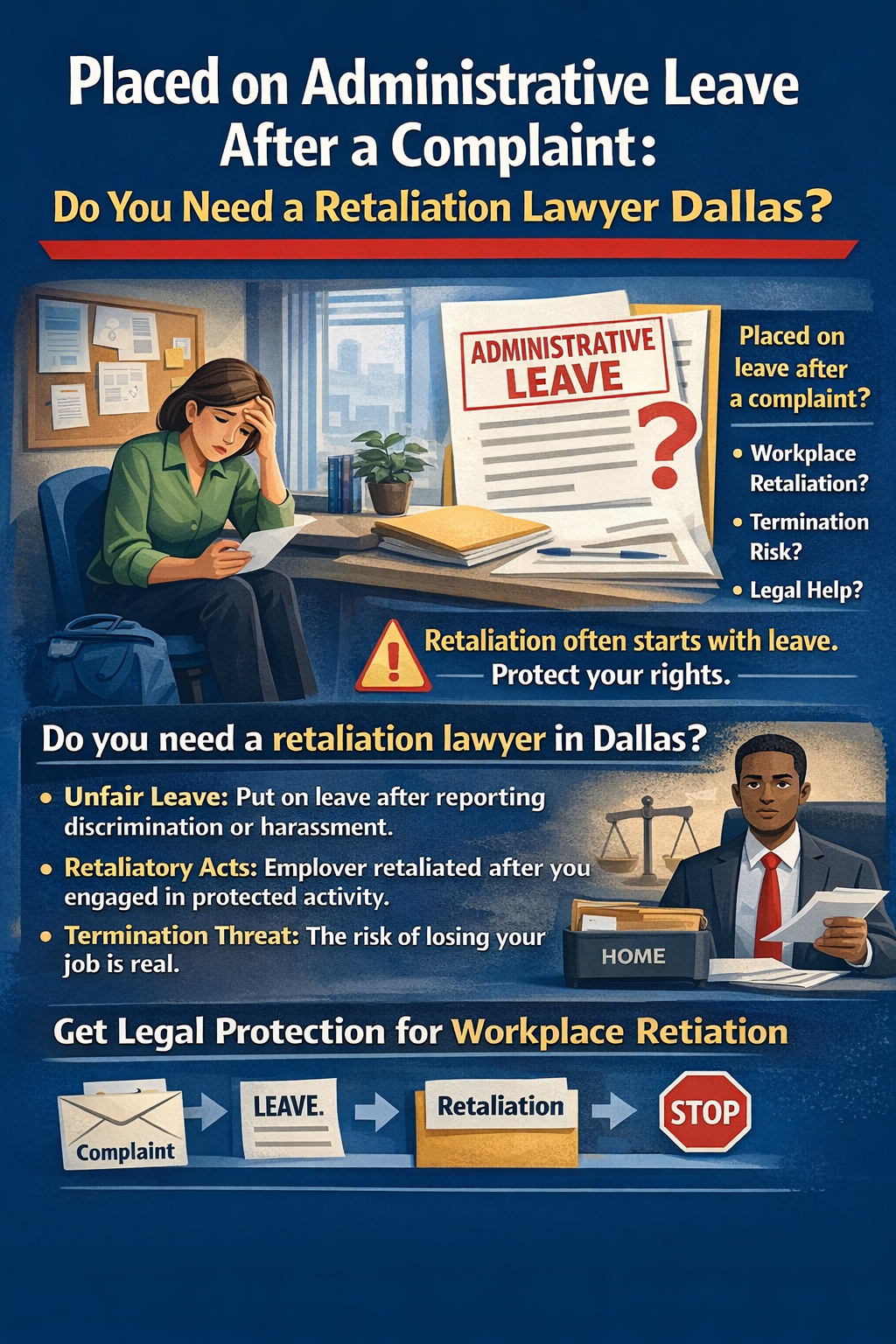
Workplace retaliation often unfolds in stages. An employee engages in protected activity. A complaint is filed or the employee participates in an internal investigation. Shortly afterward, the employer takes what appears to be a neutral step, such as administrative leave.
This pattern is common in retaliation claims. The leave is framed as necessary for an investigation, but it may later support a claim of unlawful retaliation if it qualifies as an adverse employment action.
If your employee's protected activity is closely followed by leave, that timing matters. Courts evaluating unlawful retaliation look carefully at sequence and context.
What Counts as Protected Activity?
Protected activity is central to retaliation claims. Under federal law, including Title VII of the Civil Rights Act, employees are protected when they oppose discrimination or participate in investigations.
Examples of protected activity include:
- Reporting discrimination based on race, sex, disability, or sexual orientation
- Filing discrimination claims internally or with the equal employment opportunity commission
- Requesting reasonable accommodation under the disabilities act
- Taking medical leave or fmla leave under the medical leave act
- Participating in an investigation about sexual harassment
- Filing complaints about minimum wage or wage violations
If the employee engaged in any of these actions in good faith belief that unlawful discrimination occurred, the law offers protection.
How Workplace Retaliation Develops
After an employee engaged in protected activity, an employer may begin taking subtle steps. These may include increased scrutiny of job performance, negative comments in performance reviews, or isolation from other employees.
Over time, those steps may escalate into adverse employment decisions such as demotion, pay reduction, or termination. When an employer retaliated against a worker for engaging in protected activity, that conduct may violate anti discrimination laws.
Workplace retaliation does not always look dramatic at first. It can build gradually, which is why early legal guidance matters.
Is Administrative Leave an Adverse Employment Action?
An adverse employment action is any action that materially affects the terms and conditions of employment. Courts have recognized that certain forms of leave can qualify.
If administrative leave results in:
- Loss of pay
- Damage to professional reputation
- Removal from a desirable assignment
- Limitation of advancement opportunities
It may support a claim of unlawful retaliation.
In Dallas employment disputes, leave combined with public allegations can be enough to meet the standard for adverse employment.
Retaliation and Sexual Harassment Complaints
Sexual harassment remains one of the most common triggers for retaliation claims. An employee may report harassment to human resources or management. Soon afterward, the employer places that employee on leave.
If the leave follows reporting discrimination or harassment, it may constitute unlawful retaliation. The Civil Rights Act prohibits retaliation against employees who oppose sexual harassment or participate in related proceedings.
When an employer retaliated in response to such a complaint, legal action may be necessary to protect the employee’s career.
Medical Leave, Disability, and Retaliation
Employees who request medical leave or fmla leave are engaged in protected activity. The medical leave act and related federal law provide safeguards.
If an employee with a medical condition requests reasonable accommodation or medical leave, and the employer responds with administrative leave unrelated to performance, questions arise. Disability discrimination and retaliation can overlap.
Under the disabilities act, denying reasonable accommodation or punishing an employee for requesting it can be unlawful discrimination. In some Dallas employment matters, employer retaliation follows disability-related requests.
Age Discrimination and Administrative Leave
Age discrimination cases often involve subtle patterns. An older employee may raise concerns about workplace discrimination based on age discrimination. Shortly after, the employer places that employee on leave pending investigation.
When similarly situated employees outside the protected age group are treated differently, that may support retaliation claims. Proving unlawful retaliation requires examining motive, timing, and comparative treatment.
Proving Unlawful Retaliation
Proving unlawful retaliation involves showing that:
- The employee engaged in protected activity
- The employer knew about that activity
- The employer took an adverse employment action
- A connection exists between the activity and the adverse action
Proving unlawful retaliation often relies on circumstantial evidence. Emails, internal memos, and witness statements from other employees can be powerful.
An experienced employment lawyer understands how to analyze these elements under employment law and federal law.
Employer’s Discrimination and Hostile Work Environment
Sometimes retaliation follows complaints about a hostile work environment. A hostile work environment can involve repeated harassment, discriminatory comments, or exclusion.
If an employee’s participation in reporting discrimination leads to leave or other adverse employment decisions, that can signal employer's discrimination combined with retaliation.
Retaliate against an employee for raising concerns is prohibited under federal law and anti discrimination laws.
Administrative Leave During an Investigation
Employers often justify leave as part of an investigation. While investigations can be legitimate, they can also be used strategically.
If the employer participating in the investigation already formed conclusions before gathering facts, the process may be unfair. An employee placed on leave should consider whether the investigation is neutral or a pretext.
An experienced retaliation lawyer Dallas professionals rely on can evaluate whether the employer retaliated under the guise of investigation.
Retaliation and Wrongful Termination
Administrative leave sometimes leads to termination. If termination follows closely after protected activity, wrongful termination claims may arise.
Wrongful termination connected to unlawful retaliation can entitle an employee to compensation, back pay, and possibly damages. Retaliation claims frequently accompany discrimination claims when both are rooted in unlawful discrimination.
Dallas workers should not assume that termination after leave is unavoidable or legal, and should understand whether an employer can force you to resign or quit your job.
Retaliation in Medical Care Institutions
Medical care institutions present unique challenges, much like schools and colleges where an education law attorney can provide expert legal guidance for teachers. Healthcare employees who report safety concerns, harassment, or discrimination based on disability or sexual orientation may face swift employer retaliation.
Federal agencies oversee many aspects of healthcare employment. Filing complaints with the equal employment opportunity commission or other federal agencies involves strict procedures.
Short deadlines apply, and missing them can harm a claim.
Filing with the Texas Workforce Commission
In many cases, filing with the texas workforce commission is required before bringing certain discrimination claims. This administrative step is often connected to federal law requirements.
Filing must occur within short deadlines. Retaliation claims and discrimination claims are time-sensitive, and delay can limit your options.
An initial consultation with a qualified employment lawyer can help determine the correct forum for filing.
The Role of Human Resources
Human resources departments are often the first stop for workplace complaints. However, human resources represents the employer, not the employee.
When an employee reports discrimination, harassment, or wage concerns, the employer’s response may be documented internally. If the employer retaliates after that complaint, those records may become evidence.
Understanding workplace policies and how they are applied to other employees is critical.
Retaliatory Acts Beyond Leave
Retaliatory acts can extend beyond administrative leave. These may include:
- Negative performance reviews not previously documented
- Reduction in responsibilities
- Transfer to less favorable working conditions
- Exclusion from meetings
- Denial of promotions
Each adverse employment action adds context to a retaliation claim.
Retaliation in Dallas Employment Settings
Dallas employment disputes span industries, from education to healthcare to corporate offices, and can even overlap with UIL disciplinary defense for students, coaches, and schools. Dallas workers often assume that administrative leave is routine.
However, in many cases, leave marks the beginning of employer retaliation. Dallas employment law requires careful evaluation of facts under the Civil Rights Act and related statutes.
A retaliation lawyer focused on workplace law and employment attorney help Dallas employees consult can analyze whether adverse employment actions violate federal law.
Employer Retaliation After Wage Complaints
Complaints about minimum wage, overtime, or other compensation issues are protected activity, and in some cases may also involve retaliation and labor complaints that can be filed with the Department of Labor. If an employee engaged in such complaints and the employer retaliated by placing them on leave, that conduct may violate employment act provisions.
Employment law prohibits retaliation for asserting wage rights. Compensation disputes frequently intersect with retaliation claims.
Employer Retaliated: What Evidence Matters?
When arguing that the employer retaliated, courts consider the following factors:
- Timing between protected activity and leave
- Differences in treatment compared to similarly situated employees
- Statements by supervisors
- Inconsistencies in the employer’s explanation
These following factors can strengthen a claim. Documentation is critical.
Discrimination Based on Disability or Sexual Orientation
Discrimination based on disability or sexual orientation remains prohibited under federal law. If an employee reports such unlawful discrimination and is placed on leave, that sequence may indicate unlawful retaliation.
Protected activity includes both reporting discrimination and participating in investigations about discrimination participating employees.
Adverse Employment Decisions After Leave
Even if administrative leave is temporary, subsequent adverse employment decisions may occur. These include termination, demotion, or denial of promotion.
Each adverse action builds the case for workplace retaliation if connected to employee’s protected activity.
Employer Participating in Mediation or Settlement
Sometimes an employer participating in mediation may still pursue adverse action afterward. Retaliation claims can continue even if settlement discussions occur.
Legal action may be required to enforce rights under employment law and anti discrimination laws.
The Importance of Legal Representation
Retaliation claims are fact-intensive. An experienced law firm can assess the strengths and weaknesses of your claim.
At Masterly Legal Solutions, we focus on employment law matters involving workplace retaliation, discrimination, and wrongful termination. Our team understands how employer retaliation develops and how to respond strategically.
Do You Need a Retaliation Lawyer Dallas?
If you were placed on administrative leave after engaging in protected activity, the answer may be yes. Leave is often the first visible sign of unlawful retaliation.
An employment lawyer can evaluate whether the leave qualifies as adverse employment, whether discrimination claims may apply, and whether filing deadlines are approaching.
An initial consultation can provide clarity and direction during a stressful time.
Contact Masterly Legal Solutions for Guidance
If you are a Dallas worker placed on administrative leave after filing a complaint, reporting discrimination, or participating in an investigation, do not assume the situation will resolve on its own. Workplace retaliation can escalate quickly, and short deadlines may apply for filing with the texas workforce commission or the equal employment opportunity commission.
At Masterly Legal Solutions, our law firm represents employees facing unlawful retaliation, harassment, discrimination, and wrongful termination. We understand how employer retaliation can damage careers and reputations. We take the time to review your facts, explain your rights under federal law and Texas employment law, and outline potential next steps.
Call (972) 236-5051 for a free consultation. Let us help you determine whether your administrative leave is simply procedural or the beginning of unlawful retaliation that requires immediate legal action.
Disclaimer: This article is for informational purposes only and does not constitute legal guidance. Reading this content does not create an attorney-client relationship. Every case is different and depends on specific facts and applicable laws. For advice tailored to your situation, please contact Masterly Legal Solutions directly.





Teacher Rights When Assaulted by a Special Needs Student: Safety, Reporting and Investigation Issues



Looking for Legal & Business Solutions? Contact Us Now
Fill in the form or call us to set up a meeting