

CPS Safety Plans and the Legal Consequences Parents Don’t Expect
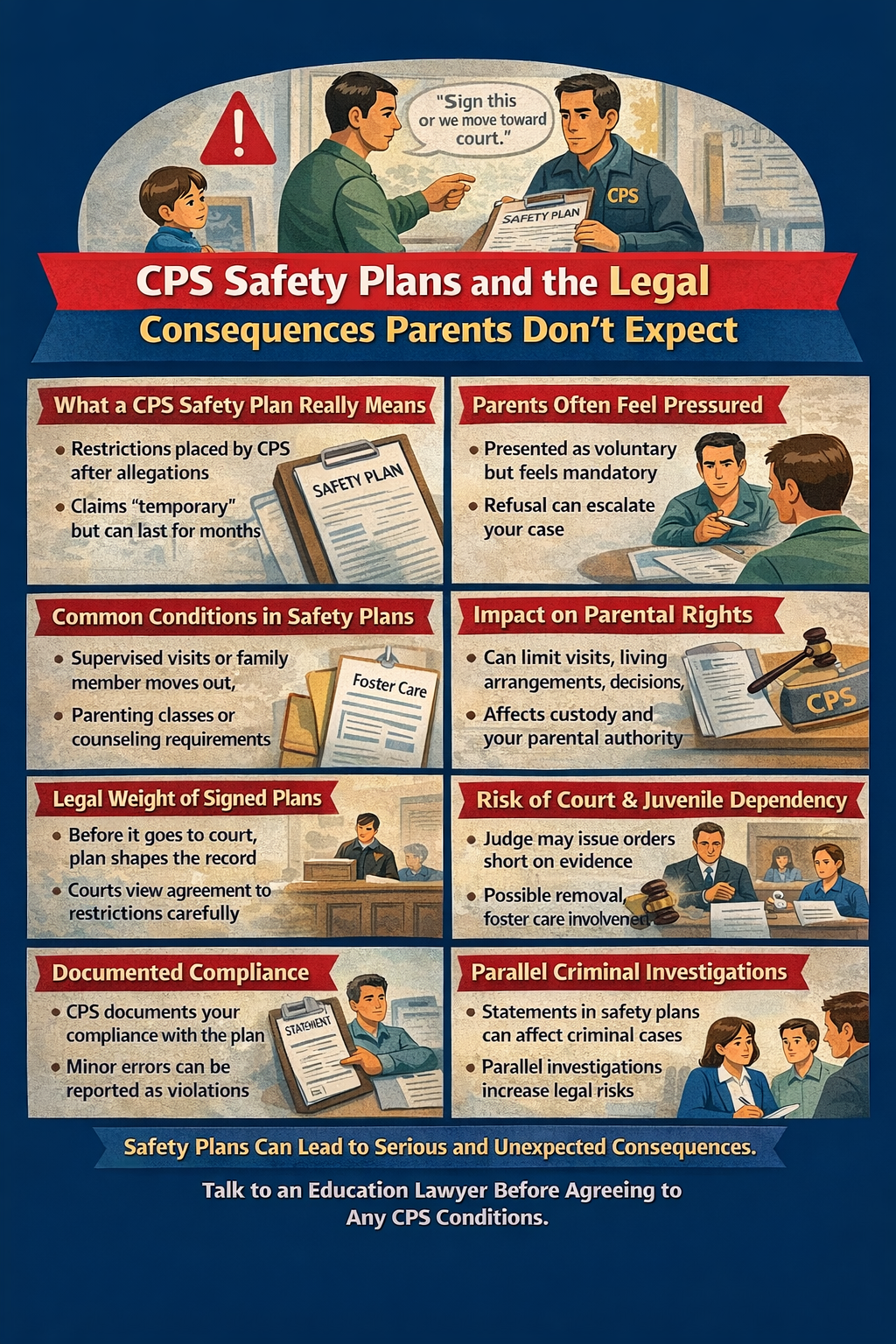
When CPS presents a safety plan, many parents feel cornered into agreement. The document may be framed as temporary or voluntary, yet it can carry lasting legal consequences that affect custody, parental rights, and family stability. In the moment, parents often focus on keeping their child at home and restoring peace, not realizing how a signed plan can reshape the entire cps investigation. At Masterly Legal Solutions, we routinely speak with parents who wish they had paused, asked questions, and spoken with an attorney before agreeing to a CPS safety plan.
Safety plans are not neutral paperwork. They are tools used by child protective services to manage perceived risk while continuing to investigate allegations of abuse or neglect. Understanding what these plans mean, how they are enforced, and how they can lead to court involvement is essential for parents navigating this challenging time.
What a CPS Safety Plan Is Designed to Do
A CPS safety plan is typically introduced early in a cps investigation. It outlines conditions CPS believes are necessary to protect a child while the investigation continues. These plans may restrict who can live in the home, who can supervise the child, or where the child can stay.
Although described as temporary, safety plans can remain in place for weeks or months. During that time, parents may unknowingly comply with terms that weaken their legal position. Understanding the purpose behind the plan helps parents make informed decisions.
Why Parents Often Feel Pressured to Agree
CPS workers often present safety plans during emotional moments. Parents may be told that refusal could result in court intervention or removal of the child. Fear and urgency make it difficult to evaluate options clearly.
While CPS is a government agency tasked with ensuring child safety, parents still have rights. Feeling pressured does not mean parents have no choice. An experienced attorney can help assess whether a plan is truly necessary or legally justified.
Voluntary Does Not Always Mean Optional
Safety plans are frequently labeled as voluntary, but the reality is more complicated. Refusing to sign may escalate cps cases, even when sufficient evidence of danger is lacking. This creates a coercive dynamic that parents often do not recognize.
Once signed, the plan becomes a benchmark for compliance. Any deviation can be viewed as failure to protect the child, even if circumstances change.
How Safety Plans Fit Into the CPS Investigation Process
Safety plans are part of the broader cps investigation process. While CPS continues investigating reports, the plan functions as a control mechanism. It allows child protective services cps to manage perceived risk without immediately going to court.
However, the plan itself may later be cited as evidence. Statements or restrictions within the plan can shape how allegations are evaluated.
Common Conditions Found in Safety Plans
Safety plans vary widely depending on the allegations and county practices. Some plans are narrow, while others impose sweeping restrictions on family life.
Common conditions may include:
- Removal of a parent or family member from the home
- Supervised visitation requirements
- Mandatory counseling or parenting classes
- Restrictions on school pickup or daily routines
The Hidden Legal Weight of a Signed Safety Plan
Many parents assume safety plans carry no legal weight because they are not court orders. In practice, they can heavily influence juvenile dependency proceedings. Judges may view prior compliance as acknowledgment of risk.
This is one reason cps defense attorneys urge caution. Signing without legal advice can unintentionally support CPS allegations.
When Safety Plans Lead to Court Involvement
If CPS believes a plan is violated or insufficient, they may seek a court order. At that point, the case moves into formal proceedings. Family court proceedings introduce judges, hearings, and binding decisions.
Parents often feel blindsided when a safety plan becomes the foundation for custody restrictions or foster care placement.
The Risk of Escalation to Juvenile Dependency
Juvenile dependency cases arise when CPS asks the court to assert authority over a child’s care. Safety plans can be used to justify that request. What began as an informal agreement can evolve into long-term oversight.
Dependency cases are complex and emotionally draining. Early cps defense can reduce the likelihood of escalation.
Safety Plans and Allegations of Abuse or Neglect
Safety plans often reference alleged abuse or neglect, even when claims are unproven. Allegations may involve child abuse, sexual abuse, neglect, or child maltreatment. These references become part of the record.
Parents should understand that agreeing to restrictions does not mean allegations are resolved. It may simply delay a more formal confrontation.
How CPS Workers Document Compliance
CPS workers monitor compliance with safety plans through visits, calls, and reports. Their notes become evidence within child protective services cases. Even minor misunderstandings can be documented as noncompliance.
Parents should remember that cps caseworker observations are subjective. Documentation may not fully capture context or intent.
The Impact on Parental Rights
Safety plans can significantly limit parental rights without a judge’s involvement. Restrictions on supervision, living arrangements, or decision-making can alter custody dynamics.
Over time, these limitations may feel normalized. Parents may not realize how much authority they have effectively surrendered.
Supervised Visitation and Family Separation
One common consequence of safety plans is supervised visitation. Parents may be restricted from being alone with their child. This can strain bonds and disrupt daily routines.
Supervision is often justified as temporary, but extensions are common. Challenging unnecessary supervision requires legal advocacy.
Safety Plans and the Best Interest Standard
CPS often frames safety plans as serving the best interest of the child. While child safety is critical, the standard is not always applied evenly. Parents may disagree with CPS assessments.
Courts consider multiple factors when evaluating best interest. A defense attorney helps present a fuller picture of family well being.
When Safety Plans Involve Foster Care
In some cases, safety plans require temporary placement with relatives or foster care. These arrangements can be emotionally devastating for parents and children. Even short separations can have lasting effects.
Preventing unnecessary placement is a key goal of cps defense. Early intervention matters.
Criminal Charges and Parallel Investigations
Some cps investigations overlap with criminal charges. Statements made in safety plans or during compliance can affect criminal cases. This overlap increases risk for parents facing allegations.
Legal representation helps coordinate defense strategies across systems.
The Role of Evidence in Safety Plan Decisions
CPS does not need sufficient evidence to propose a safety plan. The threshold is often perceived risk rather than proven harm. This low standard surprises many parents.
An attorney reviews evidence and challenges unsupported conclusions. Evidence-based advocacy protects families.
County Differences and Local Practices
Safety plan practices vary by county. What is common in one area may be rare in another. County-level culture influences how aggressively CPS acts.
Understanding local practices, whether in Orange County, southern California, or Texas Department jurisdictions, is critical.
School Involvement and Safety Plans
Schools often cooperate with CPS during investigations. Teachers and administrators may be asked to monitor compliance. School involvement can expand oversight into daily life.
Parents should be aware of how information flows between CPS and schools.
Medical Attention and Safety Assessments
Safety plans may require medical attention for a child, even when parents disagree with the necessity. Medical records then become part of the investigation.
Disputes over treatment can escalate quickly. Legal advice helps parents navigate these decisions carefully.
Counseling and Required Services
CPS frequently includes counseling or services in safety plans. While services may be helpful, agreeing without review can imply fault.
A cps defense attorney helps evaluate whether services are appropriate or excessive.
Safety Plans and Family Members
Plans may require removing or restricting contact with a family member. These decisions can fracture family relationships and create logistical challenges.
Parents should consider long-term effects before agreeing to such terms.
Filing Deadlines and Procedural Risks
Safety plans can lead to filing deadlines for CPS petitions. Parents unaware of timelines may lose opportunities to respond effectively.
Legal guidance ensures deadlines and procedures are properly handled.
When Court Orders Replace Safety Plans
If CPS seeks a court order, the safety plan may be replaced by formal directives. Judges rely on CPS documentation when making decisions.
Early legal challenges can influence how the court views the case.
Defending Against Unnecessary Restrictions
Not all safety plans are justified. Some are overly broad or based on minimal evidence. Challenging these plans requires compelling arguments grounded in law.
A defense attorney focuses on protecting family unity whenever possible.
Why Experience and Expertise Matter
CPS cases involve high stakes and emotional stress. Lawyers with expertise in cps defense understand the system’s pressure points. Their experience helps avoid common pitfalls.
At Masterly Legal Solutions, our law firm brings focused knowledge to these matters.
The Importance of an Initial Consultation
An initial consultation allows parents to understand risks before signing anything. Early advice can prevent long-term consequences. This step often changes the trajectory of cps cases.
Parents deserve clarity before making life-altering decisions.
How Masterly Legal Solutions Helps Parents
We represent parents navigating CPS safety plans, investigations, and court proceedings. Our clients rely on us for clear guidance during a challenging time. We approach each case with care, strategy, and urgency.
Our proven track record reflects our commitment to protecting families.
Taking Back Control During a CPS Investigation
CPS involvement does not mean parents lose control. Knowledge, preparation, and legal advocacy restore balance. Parents can protect their rights while addressing legitimate concerns.
Taking action early is key.
The Role of Child Protection Services in Safety Plan Decisions
Child protection services plays a central role in deciding whether a CPS safety plan is proposed and what restrictions it includes. The agency evaluates reports, interviews families, and assesses the home environment before determining next steps. While the stated mission is child safety, these decisions are often made quickly and with limited context. Parents may not realize how much discretion caseworkers have during this stage. Understanding this role helps families respond more strategically when a safety plan is introduced.
How Safety Concerns Can Trigger Immediate Restrictions
Safety concerns identified by CPS often lead to swift and restrictive safety plans. These concerns may involve supervision, household members, or living conditions that CPS believes pose potential risk. Even when no immediate harm is present, perceived risk can justify significant limitations on family life. Parents are rarely given time to challenge these conclusions before restrictions are imposed. Legal guidance helps ensure that safety concerns are evaluated fairly and proportionately.
Why Safety Plans Are Common in a Neglect Case
A neglect case is one of the most common situations where CPS introduces a safety plan. Allegations may involve issues such as supervision, cleanliness, or unmet medical needs, even when parents believe they acted responsibly. Safety plans in these cases often require changes that disrupt daily routines and family stability. Parents may agree out of fear rather than necessity. Legal review helps distinguish between true neglect and circumstances taken out of context.
When Allegations Involve Child Abuse or Neglect
Allegations of child abuse or neglect significantly increase the likelihood of strict safety plans. These claims are treated with urgency, even before all facts are verified. Parents may find themselves subject to limitations that feel extreme given the uncertainty of the allegations. Safety plans can unintentionally reinforce CPS assumptions during the investigation. Having legal support helps parents protect their rights while addressing CPS concerns.
How CPS Views Child Abuse and Neglect in Safety Planning
Child abuse and neglect allegations heavily influence how CPS structures safety plans. Caseworkers often design plans to reduce perceived risk rather than respond to confirmed harm. This approach can lead to overly broad restrictions that affect custody, visitation, and family relationships. Parents may not realize that agreeing to these terms can shape future court proceedings. An attorney helps parents understand how these allegations impact both immediate and long-term consequences.
Speak With an Attorney for CPS Cases Today
If CPS has presented you with a safety plan or you are under investigation, do not sign anything without understanding the consequences. At Masterly Legal Solutions, we offer a free consultation to discuss your situation and explain how an attorney for CPS cases and educator misconduct can help defend your parental rights and protect your family.
Our experienced cps defense attorneys provide strategic legal representation during investigations, court proceedings, and beyond. Call (972) 236-5051 to schedule your free consultation and take the first step toward protecting your family’s future.
Disclaimer: This article is for informational purposes only and does not constitute legal advice. Reading this article or contacting Masterly Legal Solutions does not create an attorney-client relationship. Laws and procedures vary by jurisdiction and case. For advice specific to your situation, consult a qualified attorney.
Teacher Rights When Assaulted by a Special Needs Student: Safety, Reporting and Investigation Issues


Looking for Legal & Business Solutions? Contact Us Now
Fill in the form or call us to set up a meeting