What Parents Should Know Before Allowing CPS Into Their Home
An outdated, generic, or poorly written employee handbook can create problems for a growing business.
Employees may not understand company expectations. Managers may handle similar situations in different ways. HR leaders may discover that old policies no longer reflect how the company operates. Worse, a handbook may contain language that does not properly address current employment requirements.
If your handbook is creating more questions than answers, it may be time for professional help.
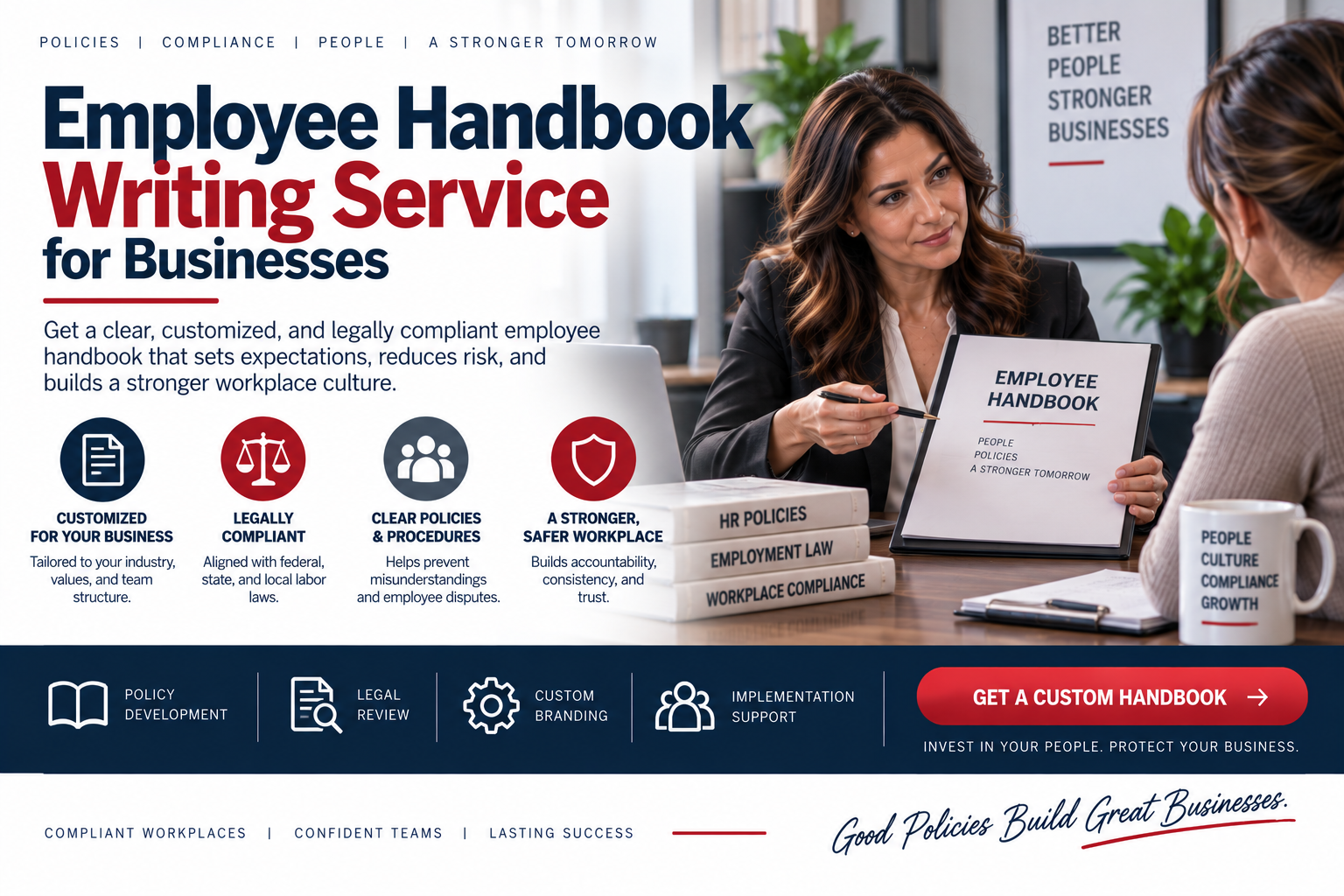
Masterly Legal Solutions provides an employee handbook writing service for business owners, executives, and HR leaders who need clear, practical, professionally developed workplace policies. Our team helps businesses create or improve handbooks that reflect their organization, workforce, and legal needs.
When Your Employee Handbook No Longer Fits Your Business
Your business may have changed significantly since your current handbook was written.
Perhaps you have hired more employees. Maybe you now have remote or hybrid workers. Your management structure may have changed, or your company may have expanded into new locations.
Yet your employee handbook may still contain the same policies it had years ago.
That creates a disconnect between how your business operates and what your handbook says.
A professional employee handbook service can help bring those two things back together.
Instead of relying on a generic template, Masterly Legal Solutions focuses on developing workplace policies that are appropriate for your organization and its needs.
Why a Clear, Plain Language Employee Handbook Matters
An employee handbook is more than an HR document.
It communicates how your organization expects employees and managers to conduct themselves. It can establish consistent workplace standards and provide employees with a central source for important company policies.
A well-developed handbook should provide comprehensive coverage of core workplace policies, including safety procedures and performance management. A well-developed handbook can address areas such as:
- Workplace conduct
- Attendance and timekeeping
- Employee responsibilities
- Anti-harassment policies
- Leave policies
- Remote and hybrid work
- Confidentiality
- Technology and company resources
- Workplace safety
- Performance management
- Disciplinary policies
- Complaint procedures
- Equal employment policies
The right policies depend on the business.
That is why copying another company's handbook may not provide the protection or clarity your organization needs.
Get a Custom Employee Handbook Built for Your Organization with Employee Handbook Software
Every business has its own structure, workforce, culture, and operational needs.
A custom employee handbook allows your organization to communicate policies in a way that reflects how your company actually operates.
Masterly Legal Solutions can help businesses develop handbook language around their specific needs, with guidance shaped by their industry rather than forcing the company into a one-size-fits-all template.
This can be especially valuable for businesses that have grown quickly or have employees working across different locations.
A custom handbook can also give managers a clearer framework for applying workplace policies consistently while reflecting company culture and supporting cultural alignment.
When an Employee Handbook Needs a Compliance Review for Employment Laws
A handbook that was legally appropriate several years ago may need attention today.
The legal landscape can shift with federal rules, local employment laws, workplace practices, and company policies. Your business may also have introduced new benefits, work arrangements, or internal procedures.
A handbook compliance review can help identify policies that may need clarification, revision, or updating. Dozens of new employment laws took effect in the last three years, and 73% of executives expect government enforcement actions to impact their business.
Masterly Legal Solutions can review an existing handbook and help identify areas that deserve legal attention. A full review should be done at least annually, and handbooks should also be revisited when business practices change. The goal is not simply to make the document longer. It is to make the policies clearer, more relevant, and better aligned with the organization's needs through an audit of compliance requirements, legal updates, and other critical issues so the handbook stays legally compliant and helps reduce risk and liability from outdated policies or non-compliance.
Protect Consistency Across Managers and Employees
One of the challenges businesses face is inconsistent policy enforcement.
If one manager handles an employee issue one way while another manager handles a similar issue differently, employees may question whether workplace rules are being applied fairly.
A well-written handbook can provide a common reference point.
It gives employees clearer expectations and gives managers a consistent framework for workplace decisions.
Your handbook should support your management team, not leave managers guessing about what the company expects.
Your Handbook Reflects Your Company
Employees often use a handbook to understand what their employer values and expects.
If the document is confusing, outdated, overly generic, or filled with legal language employees cannot understand, it may fail to serve its purpose.
A professionally written handbook can communicate policies in plain language while maintaining the level of detail your organization requires. Clear design and formatting also improve access, readability, and searchable use for employees.
Masterly Legal Solutions focuses on creating documents that are practical for real workplaces, not simply documents that look formal.
Support for Growing Businesses
Growing businesses often reach a point where informal workplace practices are no longer enough.
When there are only a few employees, company expectations may be communicated directly. As the workforce expands, that approach becomes harder to maintain.
New employees need consistent information. Managers need clear policies. HR teams need reliable documentation.
An employee handbook writing service can help your business establish a stronger foundation as your organization grows.
Masterly Legal Solutions can help businesses develop handbook policies that support their current operations while considering future organizational needs.
Support for HR Leaders and Executives
HR leaders are often responsible for maintaining workplace policies while also managing employee relations, recruiting, compliance, and day-to-day personnel issues.
Executives and business owners have similar concerns but may not have the time or specialized knowledge needed to rewrite an entire handbook.
Professional legal support can take that burden off your internal team.
Masterly Legal Solutions can work with your organization to review existing policies, identify areas that need attention, and develop a handbook that is easier for your employees and managers to use.
Avoid the Problems Created by Generic Templates
Online templates may appear convenient, but a template cannot fully understand your company.
Your business may have unique policies, specific workplace risks, multiple locations, or employment practices that require more careful consideration.
A generic handbook may also contain policies that do not fit your organization.
Professional handbook development provides an opportunity to consider your actual business rather than simply filling in company information on a standard document.
The goal is a handbook that belongs to your organization.
A Legal Team That Understands Business Needs
Masterly Legal Solutions combines legal knowledge with an understanding of the practical challenges businesses face.
Our services are designed for organizations that need more than a generic document. We help business owners, executives, and HR professionals address workplace policies with careful attention to clarity, consistency, and legal considerations.
Whether you need a new handbook or an existing handbook reviewed, our team can help determine the appropriate scope of work for your organization.
What Our Employee Handbook Service Can Address
The appropriate scope depends on your business, workforce, and existing policies.
Our employee handbook service provides comprehensive support and may involve:
- Reviewing an existing handbook
- Identifying outdated or unclear policies
- Developing a new custom handbook
- Revising workplace policies
- Addressing employee conduct standards
- Reviewing harassment and discrimination policies
- Addressing leave and attendance policies
- Reviewing remote work policies
- Improving policy language and organization
- Conducting a handbook compliance review to address compliance requirements and make necessary updates tied to employment-law changes
- Helping businesses maintain clearer workplace documentation
- Providing legal updates and regular review support so current policies stay aligned with new policies as laws change
Where applicable, post-delivery revisions, maintenance options, or automated updates can help you keep the latest version over time.
The objective is a handbook that employees can understand and management can use.
SHRM Employee Handbook Builder: When Businesses Need More Than a Template
A SHRM employee handbook builder may help businesses organize workplace policies, but a digital builder is not a substitute for legal review. Businesses need policies that reflect their actual operations, workforce, and applicable employment requirements. Masterly Legal Solutions can provide professional guidance to help employers develop a handbook that is practical, consistent, and aligned with their business needs.
Employee Handbook Builder for Growing Businesses
An employee handbook builder can make policy creation appear simple, but the quality of the final handbook depends on how well those policies fit the organization. Employers benefit from professional assistance when their handbook needs to address workplace conduct, leave, employee responsibilities, compliance, and other important policies.
Choose a Handbook Builder With Professional Legal Support
A handbook builder may provide a convenient starting point, but businesses often need more than automated documents. Professional legal support helps identify policies that may require clarification, revision, or customization before an employee handbook is distributed to staff.
Employee Handbooks for Businesses Operating in Multiple States
Companies operating across multiple states may face additional challenges because employment requirements can vary by location. A single generic handbook may not adequately address those differences. Masterly Legal Solutions can help businesses develop handbook policies that account for the locations in which they operate.
Digital Distribution for Easier Employee Access
Digital distribution can make an employee handbook easier for employees to access and review. However, employers should also have confidence that the version being distributed reflects their current policies. Professional handbook support can help businesses establish a more organized process for updating and distributing workplace policies.
Acknowledgment Tracking for Employee Records
Acknowledgment tracking can help employers document that employees received and reviewed important workplace policies. A properly structured handbook process can make employee acknowledgments easier to manage while supporting better documentation and consistency across the organization.
Version Control for Updated Employee Handbooks
Version control is important when workplace policies change. Employers need to know which handbook version is current and avoid confusion caused by outdated copies. Masterly Legal Solutions can help businesses review and update handbook language so employees and management are working from consistent policies.
SHRM Membership Does Not Replace Legal Guidance
SHRM membership can provide employers with valuable human resources resources and professional information. However, membership or access to handbook tools does not replace individualized legal guidance. Businesses with significant compliance concerns may benefit from having their handbook reviewed by qualified legal professionals.
Transparent Pricing for Employee Handbook Services
Transparent pricing gives business owners a clearer understanding of the professional services they are considering. Rather than relying solely on the apparent cost of an automated handbook builder, employers should consider the value of customization, legal review, revisions, and ongoing support.
State-Specific Filters and Legal Review
State-specific filters may help online handbook platforms identify policies associated with different jurisdictions. Even so, automated selections may not fully reflect the needs of a particular organization. A professional review can help businesses determine whether their handbook appropriately addresses the locations and circumstances relevant to their workforce.
State-Specific Employee Handbook Policies
State-specific employment requirements can make handbook development more complex for employers with workers in different jurisdictions. Masterly Legal Solutions can help businesses evaluate whether their policies need location-based revisions rather than relying on a one-size-fits-all handbook.
When a One-State Handbook Is Appropriate
A business operating in one state may have a more focused handbook structure, but that does not eliminate the need for careful policy review. Employers still need a handbook that reflects their workforce, business practices, and applicable requirements.
An Employee Handbook Is Essential to Workplace Consistency
An employee handbook is essential for many organizations because it establishes a central reference for workplace expectations and policies. A well-developed handbook can help management communicate consistently while giving employees a clearer understanding of company standards and responsibilities.
Employee Handbook Training Supports Policy Understanding
Handbook training can help employees and managers better understand important workplace expectations. For employers, combining a clear handbook with appropriate training can strengthen communication and support a more consistent workplace culture. Masterly Legal Solutions can help businesses consider both policy development and training needs as part of a broader workplace strategy.
Frequently Asked Questions
What is an employee handbook writing service?
An employee handbook writing service helps businesses develop, revise, and professionally structure workplace policies for their employees and managers, and can help ensure your handbook is compliant and practical for day-to-day use.
Why should I use a professional employee handbook service?
A professional employee handbook service can help ensure that your policies are tailored to your business rather than relying on a generic template.
What is a custom employee handbook?
A custom employee handbook is developed around an organization's specific workplace structure, policies, employees, and operational needs.
Does Masterly Legal Solutions review existing handbooks?
Yes. Masterly Legal Solutions can review an existing handbook and identify outdated policies, missing statements, and at will language that may need clarification, revision, or additional legal attention.
What is a handbook compliance review?
A handbook compliance review is a full review and audit of existing workplace policies to identify provisions that may be outdated, unclear, inconsistent, or create legal and operational issues, with the goal of keeping the handbook legally compliant with current employment requirements.
Should a small business have an employee handbook?
An employee handbook can help businesses establish consistent workplace expectations as their workforce grows. The appropriate policies depend on the organization's size, operations, and workforce.
Can an employee handbook reduce workplace confusion?
A clear handbook can give employees and managers a common reference point for company policies and workplace expectations.
Can Masterly Legal Solutions create a handbook from scratch?
Yes. The firm can provide an employee handbook writing service for organizations that need a new handbook as well as businesses that need an existing document revised.
How often should an employee handbook be reviewed?
There is no single review schedule that fits every business. Companies should consider reviewing their handbook when laws, workplace practices, benefits, company policies, or business operations change.
Give Your Business a Handbook You Can Rely On
Your employee handbook should not be a forgotten document sitting in an HR folder.
It should clearly communicate your company's expectations, support managers, and give employees a reliable source for workplace policies.
If your current handbook is outdated, generic, incomplete, or difficult to use, professional legal support can help.
Masterly Legal Solutions provides employee handbook writing service and compliance-focused support for businesses, executives, and HR leaders that want stronger workplace documentation.
Invite Businesses to Request a Handbook Consultation
If your business needs a new handbook, a custom employee handbook, or a handbook compliance review, contact Masterly Legal Solutions to discuss your needs.
Call (972) 236-5051 to request a consultation and learn how our employee handbook writing service can help your organization create clearer, more practical workplace policies.


Teacher Rights When Assaulted by a Special Needs Student: Safety, Reporting and Investigation Issues

Looking for Legal & Business Solutions? Contact Us Now
Fill in the form or call us to set up a meeting