

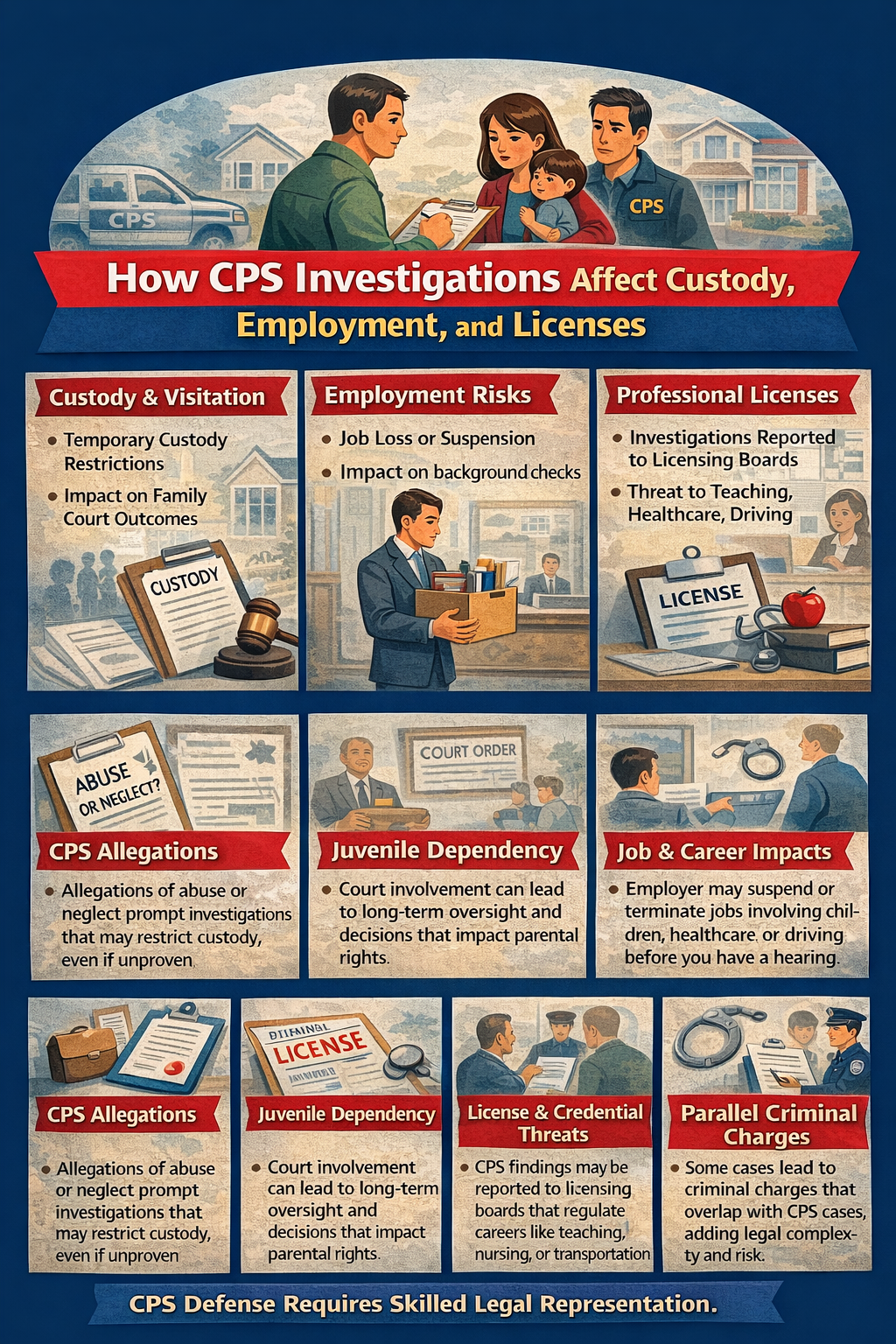
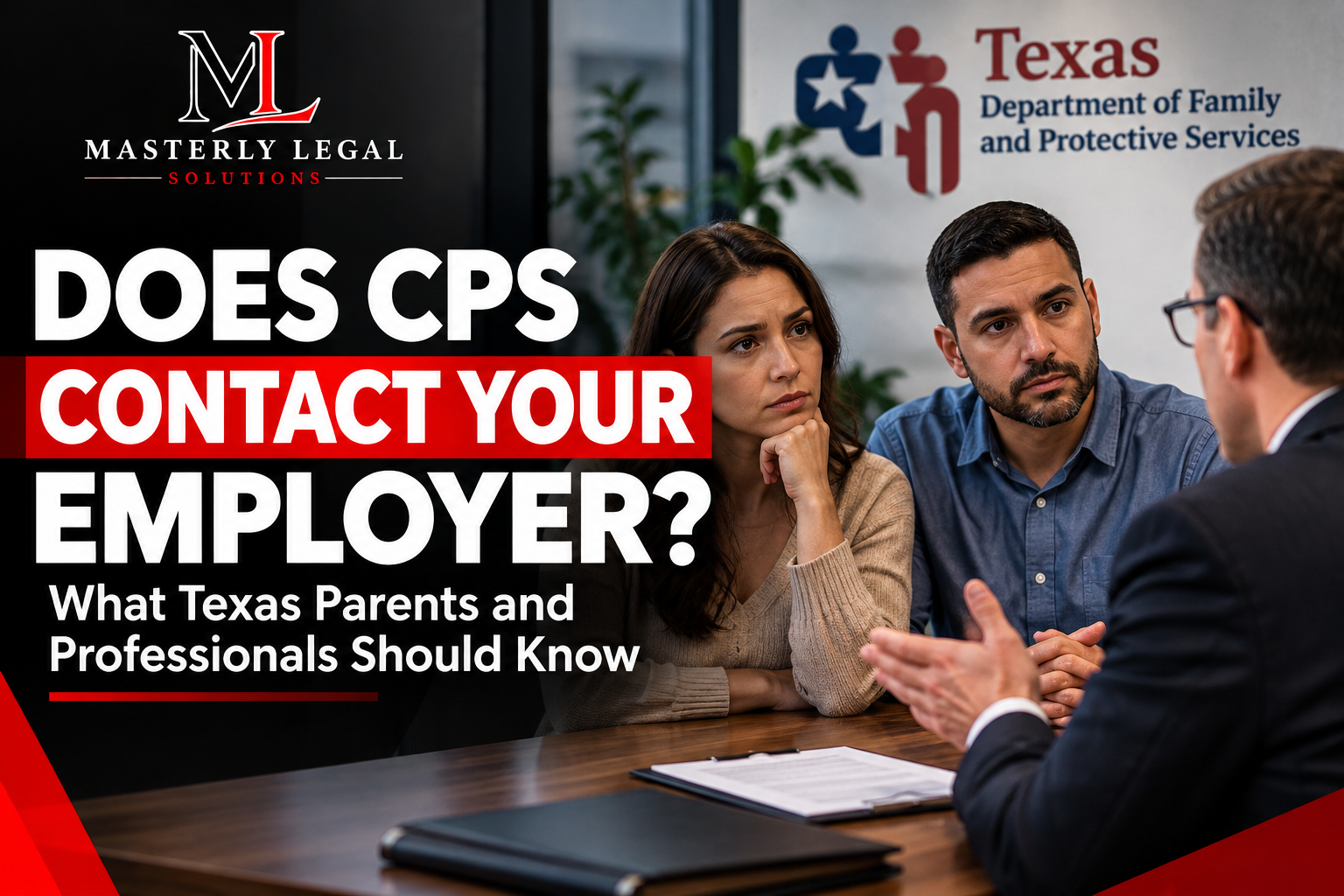
How CPS Investigations Affect Custody, Employment, and Licenses
Few experiences are as unsettling for parents as learning they are under investigation by CPS. What often begins as a single report can quickly ripple into multiple areas of a person’s life, affecting custody, employment, and even professional licenses. Many parents focus on keeping their child at home and overlook how a CPS investigation can quietly create long-term consequences. At Masterly Legal Solutions, we regularly help families who were unprepared for how far-reaching CPS involvement can become.
CPS investigations are not limited to parenting decisions alone. They can influence court outcomes, employer decisions, and licensing boards that regulate careers. Understanding these risks early allows parents to take appropriate actions and protect their family, livelihood, and future.
Understanding the Role of Child Protective Services
Child protective services is a government agency tasked with responding to reports involving a child’s safety. CPS operates under the broader system of protective services and works closely with courts, schools, and family services. Their authority allows them to investigate allegations of abuse or neglect even before evidence is confirmed.
Many parents assume CPS only intervenes when extreme child abuse is present. In reality, CPS investigates a wide range of situations, including neglect case allegations and concerns about supervision or living conditions.
How CPS Investigations Begin
Most cps investigations begin with a report from a concerned party such as a teacher, medical professional, or neighbor. CPS workers are required to take reports seriously and begin investigating reports promptly. The cps investigation process may start without the parents knowing who made the report.
Once the investigation starts, CPS determines the scope and direction of the case. Early decisions often shape how the case proceeds.
What Happens During the CPS Investigation Process
The cps investigation process typically includes interviews, home visits, and document reviews. A cps caseworker may speak with the child, parents, and other family members. These interactions are documented and may later be used in court.
Parents often underestimate how informal conversations can become evidence. This is why legal knowledge and preparation are so important from the start.
Allegations and Their Immediate Impact
Allegations of child abuse or neglect immediately change how CPS views a family. Even unproven allegations can justify safety concerns and restrictions. CPS may implement a safety plan or increase monitoring.
These early steps often affect custody arrangements before a judge is involved. Parents may feel powerless during this stage.
Custody Decisions During CPS Cases
Custody is one of the most immediate areas affected by cps cases. CPS may recommend changes to custody if they believe a child is at risk. These recommendations carry significant weight in family court proceedings.
Temporary custody changes can later influence permanent decisions. Early cps defense can help prevent unnecessary disruptions.
Juvenile Dependency and Court Involvement
When CPS seeks formal oversight, the case may become a juvenile dependency case. Juvenile dependency cases place the child under court supervision and can last months or years. This process significantly impacts parental rights.
Juvenile dependency proceedings involve strict rules, hearings, and compliance requirements. Having a defense attorney during this stage is critical.
How Family Court Proceedings Shape Outcomes
Family court proceedings determine custody, visitation, and parental responsibilities. Judges rely heavily on CPS reports and recommendations. Parents may feel the system favors CPS perspectives.
Strong legal representation helps present evidence that balances CPS narratives and protects parent’s rights.
Supervised Visitation and Restricted Contact
One common result of CPS involvement is supervised visitation. Parents may be required to visit their child only under supervision. This restriction affects family life and emotional bonds.
Supervision is often framed as temporary but can extend longer than expected. Challenging unnecessary supervision requires legal expertise.
Foster Care Placement Risks
In severe situations, CPS may place a child in foster care. Removal is traumatic for both the child and the family. Even short foster care placements can have lasting emotional effects.
Preventing removal or securing reunification quickly is a central goal of cps defense.
The Best Interest Standard and CPS Influence
Courts apply the best interest standard when making custody decisions. CPS often frames recommendations around ensuring child safety. However, best interest evaluations can be subjective.
Parents deserve a full and fair assessment of family well being. Legal advocacy helps ensure all factors are considered.
Employment Consequences Parents Do Not Expect
CPS investigations can extend beyond the home and into the workplace. Employers may learn of investigations through background checks, licensing boards, or required disclosures. This is especially true for jobs involving children or vulnerable populations.
Employment decisions may be made before the investigation is resolved. Parents often feel blindsided by these consequences.
Professional Licenses at Risk During Investigations
Certain professions require licenses regulated by state agencies. CPS findings can be reported to licensing boards. Allegations involving abuse or neglect may trigger separate investigations.
Licensing consequences can affect careers long after cps cases close. Early involvement of a cps attorney can reduce these risks.
Criminal Charges and Parallel Proceedings
Some cps investigations overlap with criminal charges. Statements made to CPS can be used in criminal cases. This overlap raises the stakes significantly.
An experienced attorney coordinates defense strategies across systems to protect parents.
The Role of Evidence in CPS Determinations
CPS does not always need sufficient evidence to take action initially. Risk assessments often rely on perceptions rather than proof. Evidence is gathered during the investigation.
Defense attorneys help present evidence that challenges assumptions and supports family stability.
Safety Plans and Their Long-Term Effects
CPS may introduce a safety plan to address safety concerns. These plans often feel voluntary but carry legal consequences. Violations can escalate the case quickly.
Parents should understand how safety plans affect custody and employment decisions.
Neglect Cases and Misinterpretation
Neglect cases are common and often misunderstood. Poverty, stress, or temporary challenges can be misinterpreted as neglect. CPS may overlook context.
Legal advocacy helps clarify circumstances and protect families from unfair conclusions.
Child Abuse and Neglect Allegations
Child abuse and neglect allegations are taken seriously and investigated thoroughly. However, not all allegations reflect actual harm. Accidents and misunderstandings occur.
Parents facing allegations deserve a fair investigation and strong defense.
How CPS Workers Shape the Case
CPS workers document observations and make recommendations. Their notes often become central to court decisions. Subjective impressions can influence outcomes.
Parents should approach interactions carefully and thoughtfully.
The Importance of Presenting Evidence Early
Waiting to present evidence can weaken a defense. Early presentation helps correct inaccuracies before they solidify. This includes witness statements, records, and expert opinions.
Compelling arguments early can change the trajectory of the case.
County Differences in CPS Practices
CPS practices vary by county. Orange County, Riverside County, San Bernardino County, and San Bernardino each have different procedures. Local practices influence how aggressively CPS acts.
Understanding county-specific dynamics is essential for effective defense.
Southern California and Texas Differences
Procedures in southern California differ from those used by the Texas Department. Laws, timelines, and standards vary significantly. Parents should not assume one system mirrors another.
Local legal expertise matters.
Juvenile Dependency and Long-Term Oversight
Juvenile dependency cases can involve long-term court supervision. Compliance with services and orders is monitored closely. Noncompliance can delay reunification.
Legal services help parents navigate these complex proceedings.
Services CPS May Require
CPS often requires parents to participate in services such as counseling or parenting classes. While services may be helpful, agreeing without advice can imply fault.
An attorney helps evaluate appropriate actions.
Providing Services Versus Admitting Allegations
Participating in services does not always mean admitting abuse or neglect. However, it may be interpreted that way later. Understanding this distinction is critical.
Legal guidance helps parents protect themselves while cooperating.
How Court Orders Affect Daily Life
Court orders may restrict custody, contact, or decision-making. These orders are enforceable and serious. Violations can worsen the case.
Parents should fully understand court expectations.
Protecting Parental Rights Throughout the Process
Parental rights remain intact unless limited by court order. However, rights can erode if not actively protected. Many parents do not realize what they are entitled to.
A cps defense lawyer focuses on preserving these rights.
Why CPS Defense Requires Experience
CPS cases involve law, procedure, and emotion. Lawyers with a proven track record understand how to navigate the system effectively. Experience helps avoid common mistakes.
At Masterly Legal Solutions, our law firm focuses on cps defense.
The Value of an Initial Consultation
An initial consultation provides clarity during a confusing time. Parents learn what to expect and how to respond. Early advice often prevents long-term harm.
This step can shape the entire case.
How Child Protective Services CPS Shapes the Direction of a Case
Child protective services CPS plays a powerful role in determining how an investigation unfolds and what consequences may follow. Once CPS becomes involved, their assessments, reports, and recommendations often guide next steps. Parents may not realize how much influence CPS has over custody decisions, service requirements, and court outcomes. Even early interactions can shape long-term results. Understanding this authority helps families respond more carefully and strategically.
What Parents Should Expect During Court Hearings
Court hearings are often where CPS recommendations become enforceable decisions. Judges rely heavily on CPS reports, testimony, and documented observations when making rulings. Parents may feel overwhelmed by the formality and pace of these hearings. Without preparation, important details can be overlooked. Legal guidance helps parents understand what to expect and how to present their position clearly.
The Purpose of Child Protection Services in Investigations
Child protection services exists to investigate reports involving a child’s safety and well-being. The agency’s mission is to identify potential risks and recommend steps to reduce harm. However, these investigations can feel intrusive and stressful for families. Decisions are sometimes made with limited context or incomplete information. Legal advocacy helps ensure families are treated fairly throughout the process.
How Child Protective Services Cases Move Forward
Child protective services cases typically follow a structured path that may include investigation, recommendations, and possible court involvement. Some cases close quickly, while others escalate into ongoing supervision. Parents are often surprised by how long these cases can remain open. Each phase introduces new requirements and risks. Knowing how cases progress allows families to prepare and respond appropriately.
The Role of Family Law in CPS Proceedings
Family law governs many of the decisions made during CPS involvement, including custody, visitation, and parental rights. CPS cases often intersect with divorce, custody disputes, or other family-related legal matters. These overlapping issues can complicate an already stressful situation. Understanding how family law applies helps parents protect their rights more effectively. Legal representation bridges the gap between CPS procedures and family court standards.
When Allegations Involve Child Endangerment
Child endangerment allegations significantly raise the stakes in a CPS investigation. These claims suggest that a child was placed in a situation that posed serious risk. Even when intent is absent, CPS may treat such allegations aggressively. Parents may face immediate restrictions or court involvement. Legal support is critical to challenge assumptions and provide context.
How Sexual Abuse Allegations Change the Investigation
Sexual abuse allegations trigger heightened scrutiny and urgency from CPS. These cases often involve parallel investigations and strict safety measures. Parents may find themselves facing severe restrictions before facts are fully established. The emotional and reputational impact can be devastating. Legal guidance helps ensure due process and protects families from premature conclusions.
Understanding Claims of Child Maltreatment
Child maltreatment is a broad term that may include physical harm, emotional harm, neglect, or other concerns. CPS uses this classification to assess risk and justify intervention. Parents may not realize how broadly maltreatment can be defined. Misinterpretations are common, especially during stressful investigations. Legal advocacy helps clarify facts and challenge overgeneralized claims.
How Court Intervention Can Permanently Change Outcomes
Court intervention marks a significant turning point in CPS cases. Once a judge becomes involved, decisions carry legal authority and lasting consequences. Court orders can affect custody, visitation, and required services. Parents often lose flexibility once intervention occurs. Early legal action can sometimes prevent unnecessary escalation to court involvement.
How Masterly Legal Solutions Helps Families
Our law firm represents parents facing cps investigations affecting custody, employment, and licenses. We provide legal representation grounded in legal expertise and compassion. Our clients trust us to protect what matters most.
We work to defend families and minimize disruption.
Speak With a CPS Attorney Today
If CPS has contacted you or you are under investigation, do not wait to get help. At Masterly Legal Solutions, we offer a free consultation to discuss your situation and explain how a cps attorney can help protect your parental rights, custody, employment, and professional licenses. Our experienced cps defense attorneys provide strategic guidance throughout investigations and court proceedings.
Call (972) 236-5051 to schedule your free consultation and take the first step toward protecting your family and your future.
Disclaimer: This article is for informational purposes only and does not constitute legal advice. Reading this article or contacting Masterly Legal Solutions does not create an attorney-client relationship. Laws and procedures vary by jurisdiction and case. For more information about legal support for higher education institutions, including compliance with student privacy laws, consult a qualified attorney for legal advice specific to your situation.
Teacher Rights When Assaulted by a Special Needs Student: Safety, Reporting and Investigation Issues

Looking for Legal & Business Solutions? Contact Us Now
Fill in the form or call us to set up a meeting