

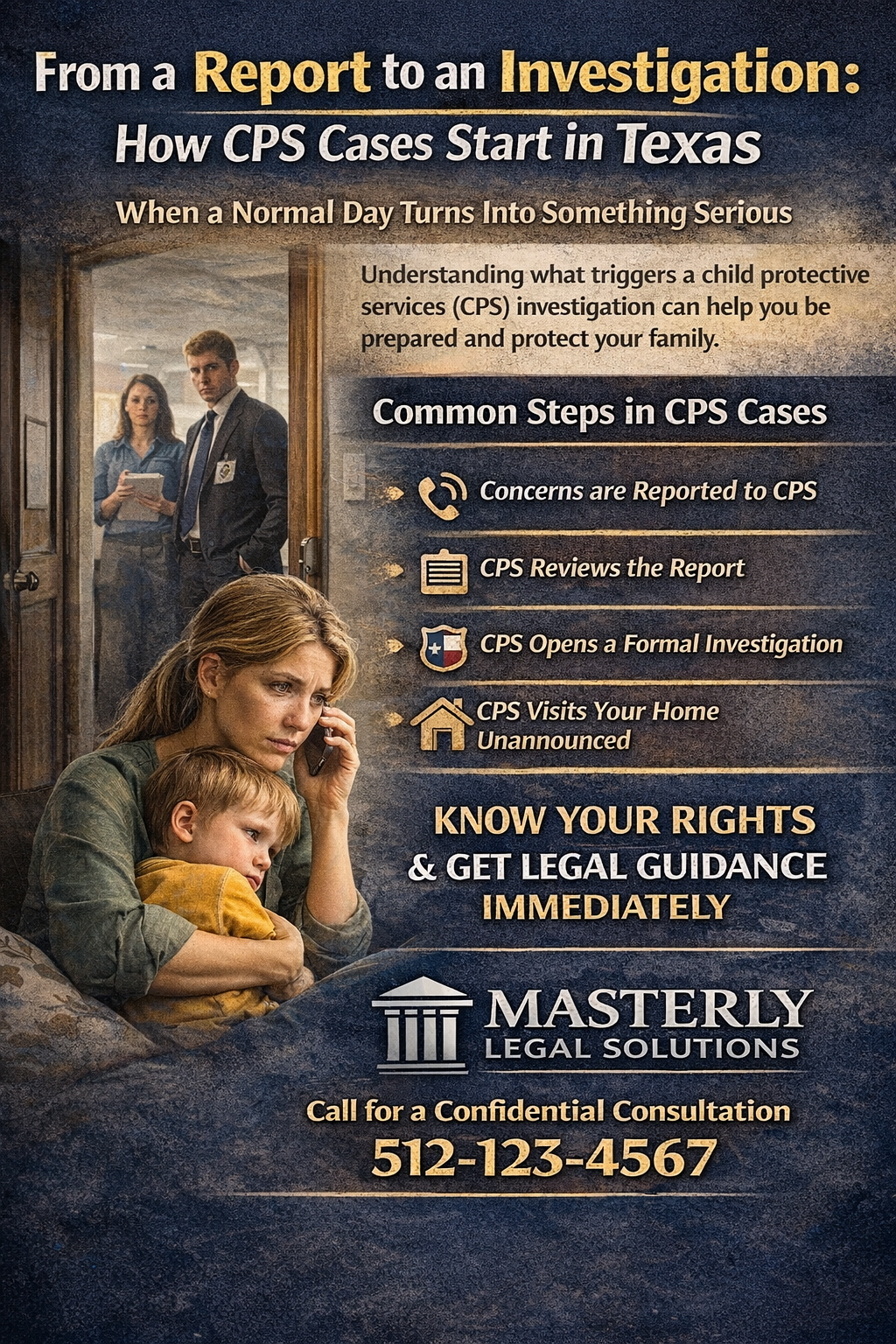
From a Report to an Investigation: How CPS Cases Start in Texas
When a Normal Day Turns Into Something Serious
For most parents and caregivers, life moves forward without ever expecting involvement from child protective services. Then suddenly, a phone call, a knock at the door, or a notice changes everything. What began as a simple report can quickly turn into a formal investigation that affects your family, your children, and your future.
At Masterly Legal Solutions, we understand how overwhelming this moment can feel. Many people do not realize how fast the process moves or how much is at stake. Understanding how CPS cases begin is the first step toward protecting yourself and your family.
Why CPS Exists in Texas
Child protective services CPS is part of a broader child welfare system designed to protect children from harm. In Texas, this system operates under the Texas Department of Family and Protective Services, a government department responsible for responding to concerns about abuse and neglect.
These protective services are guided by both federal laws and state laws. Their purpose is to ensure the safety and well being of children while balancing the rights of parents and caregivers. However, even when intentions are rooted in child abuse prevention, the process can feel overwhelming and confusing.
The Law Behind CPS Investigations
There are many laws that shape how CPS operates. One example is the Child Abuse Prevention and Treatment Act, a federal act that establishes minimum standards for states to address suspected child abuse. If someone were asked to name one law that protects citizens against child violence, this act would often be part of that answer.
Additional legislation, such as the Safe Families Act and the Indian Child Welfare Act, also plays a role in how cases are handled. These statutes are governed by regulations that determine how reports are received, investigated, and resolved.
What Triggers a CPS Report
A CPS case always begins with a report. This report may come from a variety of sources, and it does not require proof—only a reasonable concern.
Common situations that lead to a report include:
- Suspected child abuse or neglect observed by teachers or school staff
- Concerns raised by medical professionals about a child’s health or medical care
- Reports involving domestic conflict or unsafe living conditions
- Observations of physical abuse, child sexual abuse, or exploitation
In many cases, the person making the report is required by law to do so.
Who Can Make a Report
Almost anyone can file a report with child protective services. While professionals like teachers and doctors are mandated reporters, private individuals can also contact authorities if they believe a child is at risk.
This means that neighbors, co workers, or even acquaintances may initiate a CPS report. The system is designed this way to prevent abuse, but it also means families may face investigations based on limited or misunderstood information.
How CPS Evaluates the Report
Once a report is filed, the local department reviews the information to determine whether it meets the legal definition of abuse and neglect. This initial review is critical because it decides whether a formal investigation will begin.
CPS workers analyze the details, including the age of the children involved, the nature of the allegations, and any prior history. Even if the report seems minor, it may still move forward depending on the circumstances.
The Role of the CPS Worker
A CPS worker is assigned to the case if the report meets the criteria for investigation. This worker is responsible for gathering information, interviewing individuals, and assessing the situation.
The worker may contact the family, visit the home, and speak with children directly. Their goal is to determine whether abuse or neglect has occurred and whether the children are safe.
The First Contact With Your Family
The first contact from CPS can feel sudden and unsettling. A worker may arrive unannounced or call to schedule a visit.
During this stage, it is important to remain calm and informed. While CPS is responsible for protecting children, you also have rights that should be respected throughout the process.
What Happens During the Investigation
The investigation process involves several steps. CPS workers gather information from multiple sources to build a complete picture of the situation.
This may include:
- Interviews with parents, children, and other adults in the household
- Conversations with teachers, doctors, or other professionals
- Review of records related to education, health, or prior reports
Each piece of information helps the department determine whether intervention is necessary.
How Abuse and Neglect Are Defined
The legal definition of abuse and neglect can be broader than many people expect. It includes not only physical abuse but also emotional harm, lack of supervision, and failure to provide necessary care.
For example, neglect may involve inadequate housing, insufficient food, or failure to provide medical care. Understanding this definition is important because it determines how CPS evaluates your case.
When Children Are Considered at Risk
CPS focuses heavily on whether children are at risk of harm. This includes both immediate danger and long-term concerns about safety.
Even if no harm has occurred, CPS may still take action if they believe there is a risk. This is why early involvement and proper guidance are so important.
The Role of Social Services
Social services play a central role in CPS cases. The department may offer services aimed at supporting the family and improving conditions.
These services can include counseling, parenting programs, and assistance with housing or resources. While these programs are intended to help, participation may also be closely monitored.
Providing Services to Families
Providing services is one of the primary goals of CPS. The agency often works to create a plan that addresses concerns while keeping children with their family whenever possible.
This plan may involve specific requirements, such as attending classes or participating in evaluations. Following these requirements is critical to resolving the case.
When a Case Escalates
Not all cases remain at the initial stage. If CPS determines that the situation is serious, the case may escalate.
This can involve court involvement, a court order, or even removal of children from the home. In these situations, the stakes become significantly higher.
The Possibility of Foster Care
In some cases, children may be placed in foster care. This happens when CPS believes the home environment is unsafe.
Foster placements are intended to be temporary, but they can have lasting effects on families. The goal is always to act in the best interest of the child, but the process can be difficult for everyone involved.
How Federal Laws Shape the Process
Federal laws such as the Prevention Services Act influence how states handle CPS cases. These laws emphasize keeping families together and providing resources to prevent abuse.
However, they also give CPS authority to act quickly when concerns arise. This balance between prevention and intervention is a key part of the system.
The Importance of Documentation
Documentation is a critical part of any CPS case. Reports, interviews, and records all contribute to the final decision.
Families should also keep their own records, including communications with CPS workers and any services provided. This information can be valuable in protecting your rights.
How Jurisdiction Affects Your Case
Jurisdiction determines which laws and procedures apply to your case. In Texas, CPS cases are governed by state statutes and regulations.
However, federal legislation may also apply, especially in cases involving specific circumstances such as tribal affiliation under the Indian Child Welfare Act.
Differences Across States
While this article focuses on Texas, it is worth noting that CPS processes vary across states. For example, Rhode Island may have different procedures or timelines, and you may need guidance from a firm with broad multi-area legal experience.
Understanding the specific rules in Texas is essential for navigating your case effectively.
The Role of Parents in the Process
Parents play a central role in CPS investigations. Their actions, responses, and cooperation can influence the outcome of the case.
It is important to approach the process carefully and with a clear understanding of your rights and responsibilities.
When Adults Are the Focus
Although CPS is focused on children, adult behavior is often the subject of investigation. This includes actions by parents, caregivers, or other individuals in the household.
The agency evaluates whether any adult has contributed to abuse, neglect, or unsafe conditions.
The Impact on Children
CPS cases can have a significant impact on children. Even when no abuse is found, the process itself can be stressful.
Ensuring the emotional and physical well being of children during this time is essential, and many parents also use this period to put essential legal documents for their family’s future in place.
When Criminal Issues Are Involved
In some cases, CPS investigations may overlap with criminal investigations. This can occur when allegations involve serious harm or exploitation.
When this happens, multiple authorities may become involved, increasing the complexity of the case.
How CPS Determines the Outcome
CPS must determine whether the allegations are supported by evidence. This decision is based on the information gathered during the investigation.
The outcome may include closing the case, providing services, or taking further action.
The Importance of Early Action
Taking action early in a CPS case can make a significant difference. Waiting too long can limit your options and make the situation more difficult to manage.
Seeking guidance at the beginning of the process can help you navigate each step more effectively.
How Masterly Legal Solutions Can Help
At Masterly Legal Solutions, we focus on strategic CPS defense and administrative representation. Our approach is proactive and designed to help clients respond effectively to investigations, drawing on our broader experience serving Texas families and businesses.
We guide families through the process, helping them understand what to expect and how to protect their rights. Our goal is to provide clarity and support during a challenging time.
You Do Not Have to Navigate This Alone
Facing a CPS investigation can feel isolating, but you do not have to go through it alone. There are resources and professionals available to support you.
Having the right guidance can make a meaningful difference in how your case unfolds.
Take the Next Step to Protect Your Family
If you are dealing with child protective services in Texas, it is important to act with intention and awareness. The process may feel overwhelming, but taking the right steps now can help protect your family and your future.
Our team is here to help you understand your situation and determine the best path forward.
How Adoption Can Be Affected by CPS Involvement
Adoption cases can become more complicated when child protective services is involved. If a family is already part of the child welfare system, CPS may evaluate whether adoption is in the best interest of the children based on safety, stability, and long-term well being. In some situations, CPS involvement can delay or even prevent adoption if concerns about abuse or neglect are still being reviewed. Understanding how adoption decisions are made within the system is important for families trying to plan their future, including how trusts and other estate planning tools might support long-term stability for adopted children.
Why Speaking With a Lawyer Matters Early
When CPS becomes involved, speaking with a lawyer as early as possible can make a significant difference. A lawyer can help you understand your rights, review your situation, and guide you through each step of the investigation process. Many families make the mistake of waiting until the situation escalates, but early legal guidance from a full-service Texas law firm can help prevent misunderstandings and protect your position. Having someone experienced on your side ensures you are not navigating the system alone.
When a CPS Case Turns Into a Lawsuit
While many CPS cases are handled administratively, some situations can escalate into a lawsuit. This may happen when there are disputes over findings, removal of children, or allegations of serious abuse. A lawsuit introduces a higher level of legal complexity and may involve court proceedings and formal evidence, similar to the kinds of complex investigations and disputes Masterly Legal Solutions handles for other clients. Understanding when a case could move in this direction helps families prepare and respond appropriately.
How CPS Cases Impact Youth and Their Future
CPS investigations can have lasting effects on youth, even after a case is resolved. The process can affect their emotional well being, education, and sense of stability, especially when school issues or discipline overlap with education law and teacher investigations. For many children, being involved in the system creates uncertainty about their future and living arrangements. Ensuring that youth receive proper support during and after a CPS case is essential to helping them move forward in a healthy way.
Addressing Concerns About Discrimination in CPS Cases
In some cases, families may feel they are being treated unfairly due to discrimination. This can involve concerns related to background, economic status, or other personal factors. While CPS is required to follow strict laws and regulations, perceived or actual discrimination can impact how families experience the process, much like bias or scrutiny can affect businesses that rely on ongoing general counsel and compliance support. If you believe discrimination is affecting your case, it is important to seek guidance and ensure your rights are fully protected.
Contact Masterly Legal Solutions for Guidance
If you or your family are involved with CPS, now is the time to get clear answers and take control of your situation. At Masterly Legal Solutions, we provide a calm, strategic approach to CPS cases—focused on preparation, protection, and informed decision-making, while also assisting clients with related needs like estate planning and asset protection.
We offer a free consultation to help you understand what stage your case is in, what CPS may be looking for, and how you can respond effectively. Call us today at (972) 236-5051 to speak with a professional who is committed to helping you protect your rights and your family.
Disclaimer: This article is for informational purposes only and does not constitute legal advice. Reading this content does not create an attorney-client relationship. For guidance specific to your situation, please contact a qualified professional.

Teacher Rights When Assaulted by a Special Needs Student: Safety, Reporting and Investigation Issues


Looking for Legal & Business Solutions? Contact Us Now
Fill in the form or call us to set up a meeting