

Are You Being Targeted? Signs of Retaliation at Work During School Investigations”
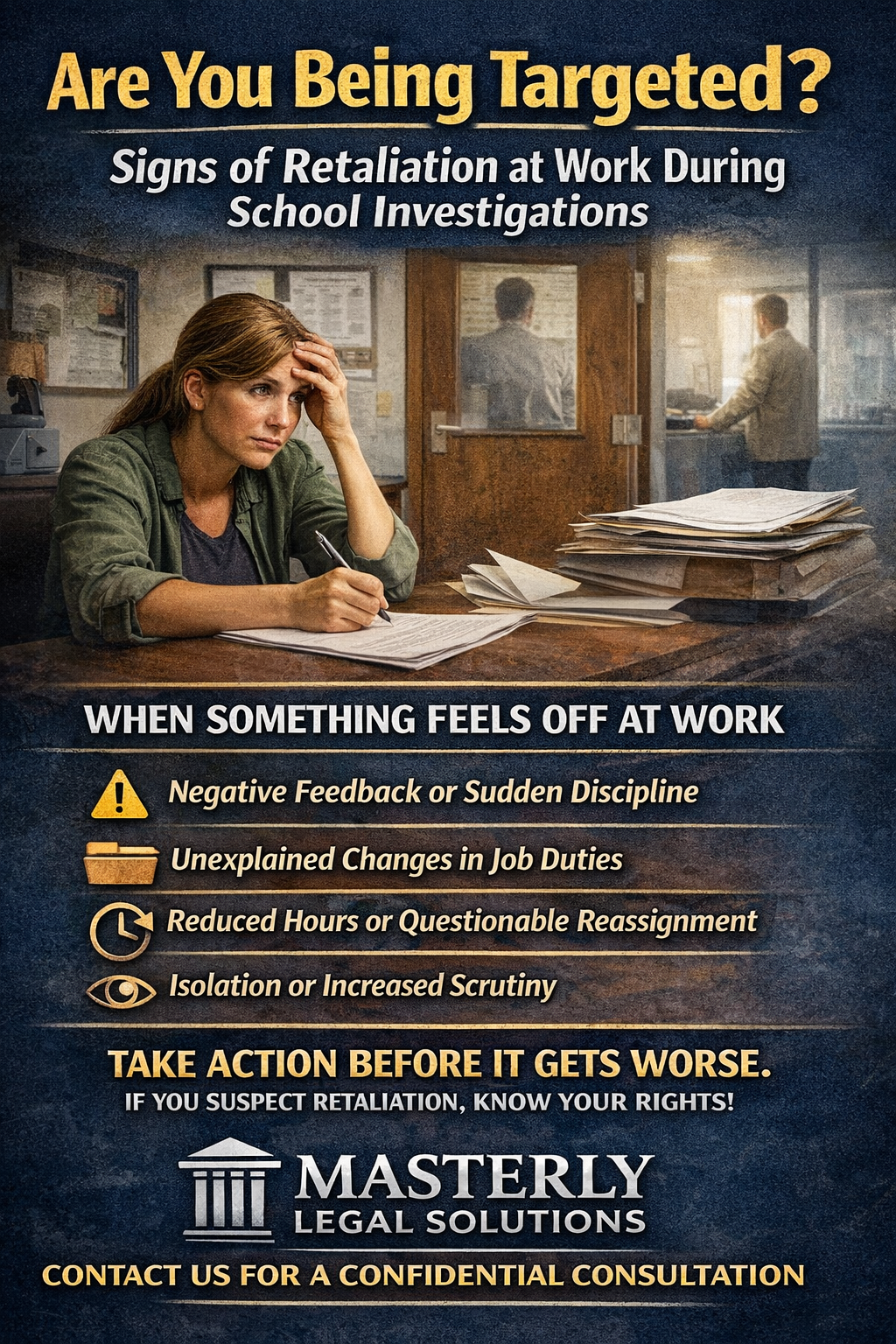
When Something Feels Off at Work
There is a moment many educators recognize but struggle to explain. You walk into the workplace, and something feels different. Conversations stop when you enter, your supervisor seems distant, and your job suddenly feels uncertain. In dallas fort worth school districts, this shift often happens during or after an investigation, leaving employees wondering if they are being targeted.
At Masterly Legal Solutions, we regularly hear from workers who sensed something was wrong long before they could define it. Retaliation does not always announce itself clearly. Instead, it develops quietly, often disguised as routine workplace decisions.
What Retaliation Really Means
Retaliation occurs when an employer takes negative action against an employee for engaging in a protected activity. This could include filing a complaint, reporting harassment, or participating in an investigation as a witness. Under federal law, including Title VII, retaliation is prohibited, but that does not mean it never happens.
The law is designed to protect employees, but employers sometimes push boundaries. Understanding how retaliation is defined can help you recognize when your rights are being violated.
Why School Investigations Create Risk
An investigation can place employees in a vulnerable position. Whether you are the person who filed a complaint, a witness, or someone accused of misconduct, the environment can quickly become tense, often requiring support from legal counsel with experience in education law and internal workplace investigations.
During this period, employers may take steps they claim are neutral, such as placing employees on administrative leave. However, depending on the circumstances, these actions may be part of a broader pattern of retaliation.
The Reality of Administrative Leave
Administrative leave is one of the most common tools used during a workplace investigation. It may be presented as standard procedure, but it can carry serious consequences.
In many cases, administrative leave is framed as paid administrative leave, suggesting that it is not punitive. However, being removed from your job—even temporarily—can damage your reputation, affect your wages, and isolate you from co workers.
Paid Administrative Leave Isn’t Always Neutral
Being placed on paid administrative leave can feel confusing. On the surface, receiving pay may seem like a benefit. But the reality is more complex.
Paid leave often comes with restrictions, including limits on communication, access to school resources, and participation in normal job duties. Over time, this absence can impact how others perceive you, especially during a prolonged investigation period.
Signs You May Be Experiencing Retaliation
Retaliation can take many forms, and not all of them are obvious. Employees should pay attention to changes that occur after they engage in protected activity.
Some warning signs include:
- Sudden changes to your employee's work schedule or hours
- Increased scrutiny from a supervisor or manager
- Being placed on administrative leave without clear explanation
- Receiving discipline for minor issues that were previously ignored
These actions may seem small individually, but together they can establish a pattern of retaliation.
When Discipline Feels Different
Discipline is a normal part of any workplace, but it should be applied fairly and consistently. When discipline suddenly becomes harsher or more frequent, it may signal a problem.
For example, an employee who files a complaint about harassment may begin receiving write-ups for minor infractions. This type of response can indicate that the employer is acting in retaliation rather than addressing legitimate performance concerns.
Changes in Pay and Work Conditions
Another red flag is a sudden change in pay, hours, or job responsibilities. Employees may notice reductions in wages, fewer hours, or reassignment to less desirable duties.
These changes can have a direct impact on your financial stability and career trajectory. If they occur after engaging in protected activity, they may support a retaliation claim.
The Role of Supervisors and Managers
Supervisors and managers play a key role in workplace dynamics. When a supervisor begins treating an employee differently after a complaint or investigation, it can create a hostile environment.
A manager may increase scrutiny, question your performance more aggressively, or exclude you from meetings. These actions can make it difficult to do your job and may be part of a broader pattern of retaliation.
Sexual Advances and Harassment Concerns
Sexual harassment remains a serious issue in many workplaces. Employees who report unwanted sexual advances or inappropriate behavior are protected under federal law.
However, retaliation can follow these reports. A person who speaks up may face isolation, discipline, or even termination. This is why it is critical to document incidents and seek legal guidance early.
Employment Discrimination and Retaliation
Employment discrimination and retaliation often go hand in hand. Employees who report discrimination based on disability, immigration status, or other protected characteristics may become targets.
A discrimination claim can trigger an employer response that includes adverse actions. Understanding this connection is essential when evaluating your situation.
The Importance of Protected Activity
Protected activity is a key concept in employment law. It includes actions such as filing a complaint, cooperating with an investigation, or reporting illegal conduct.
Engaging in protected activity should never result in punishment. If it does, the employer may be violating federal regulations and state laws.
Witnesses Are Not Immune
Even if you are only a witness in an investigation, you are still protected. Participating in an investigation is considered protected activity under federal law, including in situations involving Texas Education Agency (TEA) investigations of educators.
Unfortunately, witnesses may also face retaliation. A witness who provides truthful reports may be treated differently by a supervisor or co workers, especially if their testimony supports a complaint.
The Impact of Investigations on Employees
Investigations can create stress and uncertainty for employees. The process may involve interviews, written statements, and ongoing scrutiny, especially for teachers navigating school and education law investigations.
During this period, employees may feel isolated or targeted. These feelings are not always imagined. In many cases, they reflect real changes in how the employer is acting.
How Federal Agencies Get Involved
Federal agencies such as the equal employment opportunity commission (EEOC) play a critical role in protecting workers. Employees who believe they have been discriminated against or retaliated against can file a complaint with the EEOC or seek help from a retaliation and employment law attorney.
The EEOC investigates claims and may take action against employers who violate the law. Filing with this agency is often a necessary step before pursuing a lawsuit.
Filing a Complaint the Right Way
Filing a complaint requires careful planning. Employees must follow specific procedures and deadlines when submitting claims to the EEOC or other federal agencies.
Missing a deadline or providing incomplete information can affect your ability to pursue a claim. This is why legal assistance is so important.
How Retaliation Can Escalate
Retaliation often begins subtly but can escalate over time. What starts as increased scrutiny may lead to discipline, suspension, or termination.
Understanding this progression can help employees take action early. The sooner you recognize retaliation, the better your chances of protecting your rights.
When Administrative Leave Becomes a Warning Sign
While administrative leave is sometimes necessary, repeated or prolonged use can signal a problem. Being placed on administrative leave multiple times or for extended periods may indicate that the employer is acting unfairly.
This is especially true if the leave follows a complaint or participation in an investigation.
The Emotional Toll of Being Targeted
Being targeted in the workplace is not just a legal issue—it is a personal one. Employees may feel anxious, frustrated, or even fearful about their job security.
These emotions are valid. Recognizing them can help you take steps to protect yourself and seek support.
Understanding Your Legal Protections
Federal law and state laws are designed to protect employees from retaliation, harassment, and discrimination. These laws establish clear guidelines for employer behavior.
However, enforcing these protections often requires action. Employees must be willing to file claims and seek legal assistance when necessary.
The Role of Documentation
Documentation is critical in any employment dispute. Employees should keep records of all communications, reports, and actions taken by their employer.
This information can help establish a pattern of retaliation and support your claim.
Recognizing Patterns of Behavior
Retaliation is rarely a single event. It is usually a series of actions that, when viewed together, reveal a pattern.
For example, an employee may experience changes in hours, increased discipline, and isolation from co workers. Each action may seem minor, but together they can demonstrate retaliation.
How Employers Try to Justify Their Actions
Employers often provide explanations for their actions. They may claim that discipline is performance-based or that administrative leave is standard procedure.
While these explanations may sound reasonable, they should be examined carefully. In some cases, they are used to mask retaliation.
When to Seek Legal Assistance
If you believe you are being targeted, it is important to seek legal assistance as soon as possible. An experienced attorney can help determine whether your situation involves retaliation or another violation of employment law.
Early action can make a significant difference in the outcome of your case.
Protecting Your Career and Future
Your job is more than just a paycheck. It represents your career, your stability, and your future.
Taking steps to protect yourself during a workplace investigation is essential. This includes understanding your rights and seeking guidance when needed.
How We Help Employees
At Masterly Legal Solutions, we are committed to helping employees navigate complex workplace issues. Our team understands the challenges workers face during investigations and retaliation claims.
We work closely with clients to establish strong cases and pursue the compensation they deserve.
You Are Not Alone in This Process
Many employees feel isolated when facing retaliation. However, you are not alone. There are legal protections and resources available to help you.
Reaching out for assistance can provide clarity and support during a difficult time.
Take Action Before It Gets Worse
Waiting too long to act can limit your options. If you notice signs of retaliation, it is important to take them seriously.
Consulting with an attorney early can help you determine the best course of action and protect your rights.
Laws That Prohibit Retaliation in the Workplace
Both federal and state laws are designed to prohibit retaliation against employees who speak up about wrongdoing. These protections apply when an employee files a complaint, participates in an investigation, or reports misconduct. The goal of these laws is to protect workers from fear and ensure that employers cannot punish them for doing the right thing. Understanding how these protections work can help employees recognize when their rights are being violated.
How Retaliation Impacts Private Sectors
Retaliation is not limited to public institutions like schools—it also affects employees across private sectors. Whether someone works in education, healthcare, or corporate business environments, the risk of retaliation can still exist. Employees in private sectors often face similar challenges, including pressure from management and fear of losing their job. These patterns show that retaliation is a widespread issue that requires awareness and legal protection.
When Disciplinary Action Becomes a Warning Sign
Disciplinary action is sometimes necessary in the workplace, but it should always be fair and justified. When an employee suddenly faces repeated discipline after filing a complaint or participating in an investigation, it may be a sign of retaliation. Employers may attempt to justify these actions as performance-related, but the timing and pattern of discipline can reveal a different motive. Employees should carefully evaluate any disciplinary action that follows protected activity.
Why Context Matters in Every Case
Each situation must be evaluated in full regard of the surrounding facts and circumstances. Retaliation cases are rarely straightforward, and small details can make a significant difference. For example, changes in treatment, communication, or expectations may seem minor on their own but become important when viewed together. Looking at the full context helps determine whether an employer’s actions are lawful or questionable.
What Employees Should Know About Workplace Norms
Generally, employees expect fairness and consistency in how workplace policies are applied. When those expectations are suddenly disrupted, it can create confusion and concern. While some changes may be part of normal operations, others may signal deeper issues. Understanding what is typical versus what is unusual can help employees identify potential retaliation early.
The Role of Labor Protections
Labor laws exist to protect employees from unfair treatment and unsafe working conditions. These protections apply to a wide range of workplace issues, including retaliation, discrimination, and harassment. Employees should be aware that labor protections are not optional for employers—they are legal requirements. When these protections are ignored, employees may have grounds to take legal action.
Recognizing Unlawful Behavior
Unlawful behavior in the workplace can take many forms, including retaliation, discrimination, and harassment. Employees should not assume that questionable actions are simply part of the job. If an employer’s conduct violates the law, it may be possible to pursue a claim. Recognizing unlawful actions early can help prevent further harm and protect your rights.
The Role of Government Oversight
Government agencies play a critical role in enforcing employment laws and protecting workers. These agencies investigate complaints, enforce regulations, and hold employers accountable for violations. Employees who believe they have been treated unfairly can turn to these organizations for support. Understanding how government oversight works can help employees navigate the complaint process more effectively.
When Employers Interfere With Your Rights
In some cases, an employer may attempt to interfere with an employee’s ability to report misconduct or participate in an investigation. This could include discouraging complaints, limiting communication, or creating obstacles that make it difficult to come forward. Such actions are often prohibited under employment laws. Employees should be aware that interference itself may be a violation of their rights.
Who Is Covered Under Employment Laws
Most employees are covered under federal and state employment laws, regardless of their position or industry. These protections apply to teachers, administrative staff, and workers in many other fields. However, the specifics may vary depending on the situation. Understanding whether you are covered can help you determine your options and next steps.
How Much Protection Do You Really Have
The extent of legal protection available to employees depends on several factors, including the type of claim and the evidence involved. Some cases may involve multiple laws and protections, while others may be more limited. This is why it is important to evaluate each situation carefully. An experienced attorney can help determine how much protection applies to your case.
When Unpaid Work Becomes a Concern
Issues involving unpaid work or reduced wages can sometimes be linked to retaliation. For example, an employee who reports misconduct may suddenly see changes in pay or compensation. These actions can create financial stress and may violate employment laws if workplace policies and employee handbooks are not properly structured. Employees should monitor any changes to their pay and address concerns promptly.
When Law Enforcement Gets Involved
In certain situations, workplace disputes may escalate to the point where police involvement becomes necessary. This can occur in cases involving serious allegations or conflicts during an investigation. While not common, the presence of law enforcement can add complexity to an already stressful situation. Employees should seek legal guidance if police become part of the process.
The Impact on Business Operations
Retaliation does not just affect employees—it can also disrupt overall business operations. When employees feel unsafe or targeted, morale declines and productivity suffers. Employers who fail to address these issues risk damaging their reputation and facing legal consequences, and may benefit from proactive HR consulting and training services. A healthy workplace benefits both employees and the business as a whole.
Holding Employers Responsible for Their Actions
Employers are responsible for maintaining a fair and lawful workplace. When they fail to do so, they may be held accountable through legal claims, regulatory action, or independent internal investigations into harassment or discrimination. Employees who experience retaliation or other violations have the right to pursue justice. Taking action not only protects your rights but also helps create a safer environment for others.
Speak With Masterly Legal Solutions Today
If you are working in Dallas Fort Worth school districts and feel like you are being targeted during an investigation, now is the time to take control of your situation. You do not have to guess whether your employer’s actions are fair or lawful.
Our team at Masterly Legal Solutions offers free consultations to help you understand your options. We will listen to your concerns, review your situation, and provide clear guidance on how to protect your job and your future. Contact us today at (972) 236-5051 to speak with an experienced attorney who is ready to stand by your side and fight for the respect and protection you deserve.
Disclaimer: This article is for informational purposes only and is not legal advice. Reading this content does not create an attorney-client relationship. For guidance specific to your situation, please contact a qualified attorney.


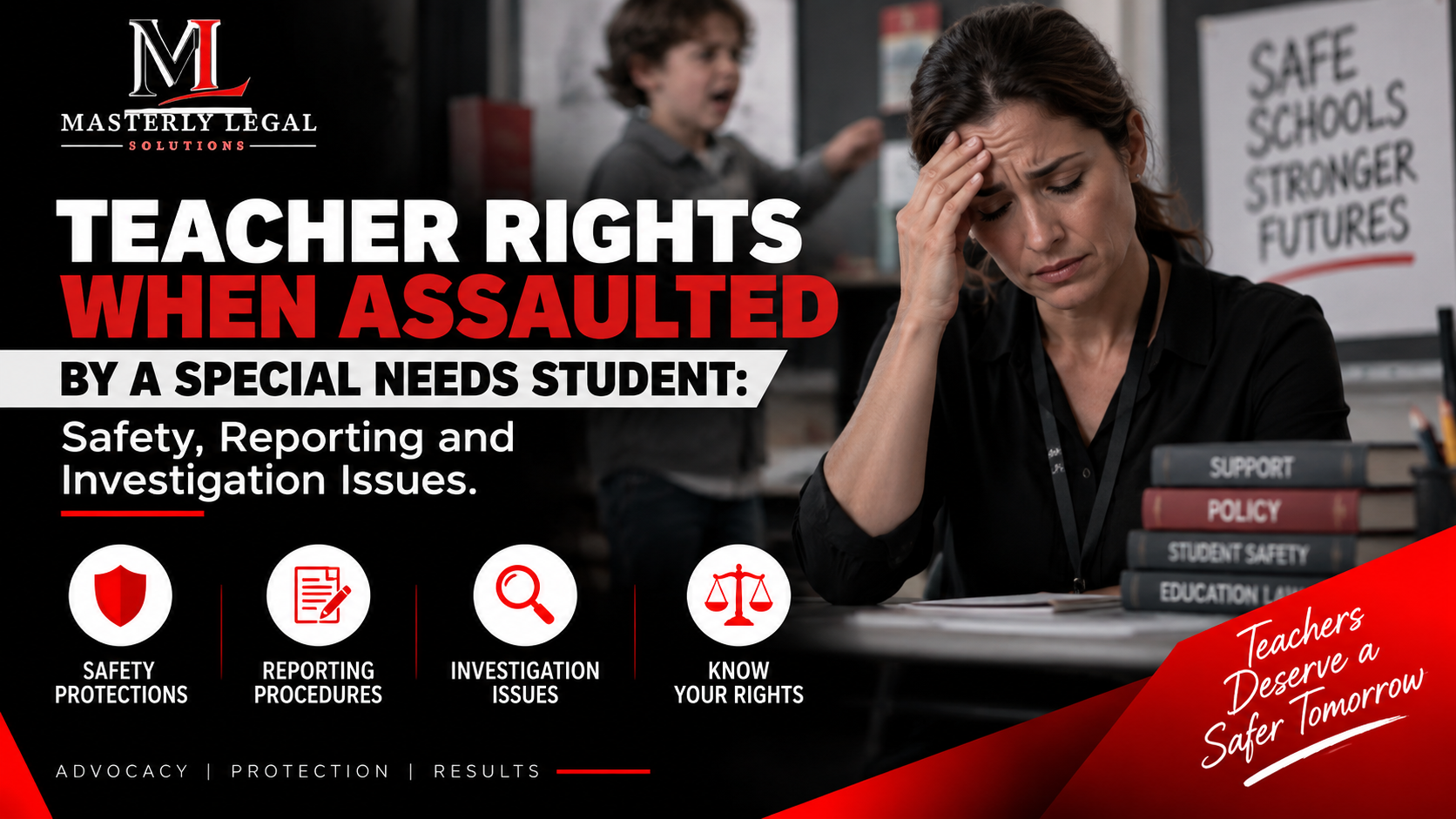
Teacher Rights When Assaulted by a Special Needs Student: Safety, Reporting and Investigation Issues


Looking for Legal & Business Solutions? Contact Us Now
Fill in the form or call us to set up a meeting





