

From Complaint to Revocation: How to Stay Ahead in the TEA Disciplinary Process
Why the TEA Process Matters for Teachers
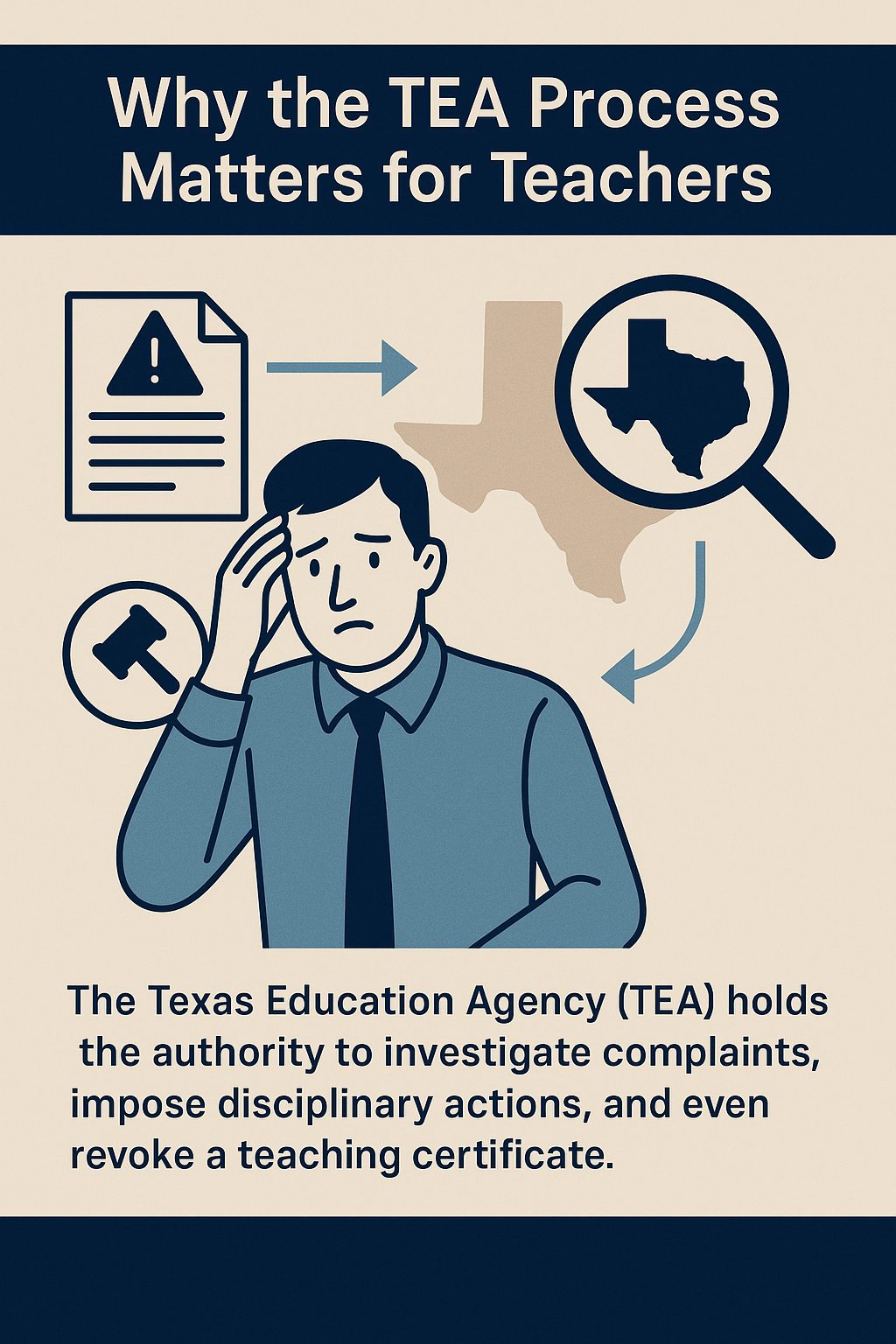
The Texas Education Agency (TEA) holds the authority to investigate complaints, impose disciplinary actions, and even revoke a teaching certificate. For teachers, the process can feel overwhelming and confusing. When allegations arise, even without evidence of wrongdoing, educators often face long and stressful investigations. The outcome can affect not only their job but their entire career in education.
How Complaints Begin Against Teachers
A complaint against a teacher can come from a school district, a parent, or even another educator. Once a complaint is filed, the TEA begins gathering data and searching for supporting evidence. Teachers must take every complaint seriously, no matter how minor it may appear. In many cases, complaints move quickly from informal discussions to full disciplinary proceedings.
The Stages of the TEA Disciplinary Process
The TEA process generally follows these stages:
- Complaint filed with the TEA or the teacher’s school district
- Initial review of available data and documents
- Formal investigation and requests for additional evidence
- Hearing before the State Board for Educator Certification
- Possible revocation or suspension of a teaching certificate
At each stage, teachers must remain proactive to protect their careers.
How School Districts Drive Investigations
Most disciplinary actions begin within a school district before moving to the TEA. Public school districts in Texas are required to report certain complaints directly to the agency. Because districts are under pressure to act quickly, teachers may feel the process is stacked against them. Having experienced support helps balance the scales.
Public School Districts and Mandatory Reporting
Public school districts in Texas must report allegations of misconduct or other violations involving teachers. This duty applies regardless of the severity of the accusation. Once reported, the TEA evaluates the complaint and decides whether to investigate further. Teachers facing reports from public school districts need immediate guidance to avoid career-ending consequences.
The High Stakes of Losing a Teaching Certificate
A teaching certificate is more than a credential—it is the foundation of a teacher’s career. Losing it through revocation means losing the ability to teach in public schools, charter schools, and even some private schools. For teachers who have dedicated years to their profession, the stakes could not be higher. Protecting this license is the top priority when facing TEA disciplinary actions.
Legal Representation for Teachers Makes All the Difference
Teachers should never navigate the TEA process alone. Legal representation for teachers provides critical protection at every stage. Experienced attorneys understand the agency’s procedures, anticipate district strategies, and defend educators before hearings. With proper representation, teachers increase their opportunity to protect their certificate and reputation.
How Students and Communities Are Affected
When teachers face disciplinary actions, students and school communities also feel the impact. Public schools may lose experienced educators, and students lose stability in the classroom. Parents may worry about turnover or the quality of instruction. The TEA process is not just about individual teachers—it affects schools, districts, and entire communities.
Understanding the Role of Schools in the Process
Schools have obligations to report misconduct but also responsibilities to protect teachers’ rights. Unfortunately, some schools fail to provide adequate support during investigations. In these situations, teachers need attorneys who can hold schools accountable and ensure that due process is followed.
The Impact of Public Scrutiny
Disciplinary actions against teachers often draw public attention. Media outlets may publish details that make the process more stressful. Once a case becomes public, reputational harm can spread quickly. Teachers must respond strategically to protect their careers and their ability to continue teaching in public school districts.
The Importance of Data in TEA Cases
The TEA relies heavily on data collected during investigations. This includes employment history, disciplinary records, and witness statements. Teachers must understand how data is used against them and work with attorneys who can challenge inaccuracies. Failing to correct misleading data may result in harsher disciplinary actions.
The Role of Research and Evidence
Strong legal defense requires careful research into the facts of each case. Attorneys analyze documents, interview witnesses, and build arguments based on verifiable evidence. Teachers who try to defend themselves without legal guidance often struggle to gather the necessary research, putting them at a disadvantage.
How North Carolina Cases Provide Perspective
Though this article focuses on Texas, educators can learn from cases in other states, including North Carolina. North Carolina teachers face similar disciplinary processes, with school districts reporting misconduct to state boards. Comparing North Carolina to Texas shows that education law issues are not unique—teachers everywhere benefit from legal representation during investigations.
Raleigh and the Broader Education Landscape
In Raleigh and other areas across North Carolina, teachers encounter challenges similar to those in Texas. School districts must enforce laws, report complaints, and discipline teachers. This comparison highlights how important it is for educators everywhere to understand the process and secure professional representation.
Why Districts Report to the State
Districts in Texas and North Carolina are required by law to report serious complaints to the state. This ensures accountability but also creates risks for teachers. Once the state is involved, the process becomes more formal and less forgiving. Teachers must act quickly to protect their rights.
How Public Schools Handle Complaints
Public schools follow strict rules when complaints arise. Administrators must act according to state law, but mistakes often occur. Teachers may be disciplined unfairly or without proper notice. When this happens, attorneys step in to challenge wrongful actions and protect careers.
The Role of School Boards in the Process
School boards play a significant role in disciplinary proceedings. They review complaints, oversee hearings, and enforce disciplinary actions. Because school boards act under public scrutiny, their decisions can make or break a teacher’s future. Attorneys ensure that school boards follow the law and respect teachers’ rights.
The Map of the TEA Process
For teachers, the disciplinary process can feel like a confusing map with too many turns. Complaints lead to investigations, hearings, and possible revocation. Without guidance, teachers may lose track of deadlines or fail to submit critical evidence. Attorneys help educators navigate the map, ensuring no step is missed.
Searching for the Right Legal Support
Teachers often search for help once the process begins, but waiting too long can be costly. Early representation provides the best opportunity to build a strong defense. By acting quickly, teachers can respond to complaints before they spiral into full revocation proceedings.
The List of Mistakes Teachers Should Avoid
Teachers under investigation often make avoidable mistakes. Some of the most common include:
- Speaking to investigators without legal advice
- Failing to gather documents and data
- Ignoring notices from the TEA or their district
- Waiting too long to secure representation
Avoiding this list of mistakes makes a significant difference in outcomes.
How Opportunity Plays a Role
Teachers dedicate years to building their careers, and one complaint should not erase that opportunity. Attorneys fight to ensure educators retain the opportunity to teach and continue contributing to public education. Protecting this opportunity is about more than a job—it is about preserving a lifelong career.
What Makes the Difference in TEA Cases
What makes success possible in TEA disciplinary cases is preparation and representation. Teachers who act early, gather evidence, and work with attorneys are more likely to keep their teaching certificate. Without guidance, the process often leads to unnecessary revocation.
Staying Ahead of the Process
The TEA disciplinary process is challenging, but teachers can stay ahead with the right support. Knowing how school districts handle complaints, how the TEA investigates, and what steps to take is critical. With skilled attorneys guiding them, teachers increase their chance of keeping their careers intact.
How TEA Discipline Can Impact the College Admissions Process
Teachers often overlook how disciplinary actions may affect their students beyond the classroom. When a teacher’s certification is revoked or their role in a public school district is disrupted, students may lose valuable guidance during critical milestones such as the college admissions process. High school teachers and counselors play an essential role in helping students prepare applications, gather recommendations, and navigate deadlines. If disciplinary actions remove experienced educators from schools, students may face fewer resources and opportunities. Protecting a teaching certificate not only safeguards a teacher’s career but also ensures students have the professional support they need for their academic future.
Contact Masterly Legal Solutions for TEA Defense
If you are a teacher facing a TEA complaint, disciplinary hearing, or the threat of certificate revocation, you do not need to face it alone. At Masterly Legal Solutions, we provide legal representation for teachers across Texas, protecting careers and fighting for fair treatment. Our attorneys understand the school district reporting process, TEA investigations, and the steps needed to defend your teaching certificate.
Call us today at (972) 236-5051 for a free consultation. We will answer your questions, explain your rights, and help you prepare for every stage of the process. With Masterly Legal Solutions on your side, you can protect your future in education and continue serving the students and schools that rely on you.
Disclaimer: This article is for informational purposes only and does not constitute legal advice. Reading this article does not create an attorney-client relationship.



Teacher Rights When Assaulted by a Special Needs Student: Safety, Reporting and Investigation Issues


Looking for Legal & Business Solutions? Contact Us Now
Fill in the form or call us to set up a meeting





