HIPAA Training for Employees: What Employers Should Cover Before Access to Protected Health Information Begins
Giving an employee access to patient or health information before they understand your privacy and security expectations can create a serious business problem. A new hire may be skilled at the job and still misunderstand when information can be viewed, discussed, emailed, printed, shared, or stored.
That is why HIPAA training for employees should happen before workforce members access protected health information, and it should be more than a generic presentation or a box checked during onboarding. Employers and organizations that handle protected health information need training that connects HIPAA principles with the policies, systems, responsibilities, and risks employees face in their actual roles.
For organizations that handle protected health information, effective training supports more than compliance. It helps employees apply privacy and security rules in everyday decisions, builds security awareness, supports ongoing training obligations, protects patient trust, reinforces professional standards, and reduces business risk by giving employees clearer expectations before they receive workforce access to sensitive information.
Masterly Legal Solutions provides customized training sessions to organizations and offers HIPAA Training among its training programs. The firm provides training both in person and virtually.
The Problem Starts Before an Employee Opens a Patient Record
Many employers focus on whether an employee needs access to protected health information. An equally important question is whether that employee understands what comes with that access.
Protected health information, commonly called PHI, can include identifiable health information maintained by organizations subject to HIPAA. HIPAA's Privacy, Security, and Breach Notification Rules protect identifiable health information held by covered entities and their business associates.
Employees may encounter sensitive information through electronic records, emails, documents, conversations, scheduling systems, billing processes, or other workplace activities. Different positions may also interact with information in very different ways.
A receptionist, manager, clinician, billing employee, administrator, and IT professional may not have the same responsibilities. Training should make those differences easier to understand.
HIPAA Training for Employees Should Connect the Rules to Their Roles
A credible employee training program should help employees understand the policies and procedures that apply to the work they perform.
The HIPAA Privacy Rule requires a covered entity to train workforce members on its policies and procedures concerning PHI as necessary and appropriate for their functions. Training is also required for new workforce members within a reasonable period after joining and for workforce members whose functions are affected by certain material policy or procedure changes. Covered entities must document that required training has been provided.
This role-based approach matters because employees need more than definitions. They need to understand how the organization's privacy expectations apply when they are performing everyday tasks.
Good HIPAA compliance training should therefore be built around the organization and its workforce rather than treating every employee as if they perform the same job.
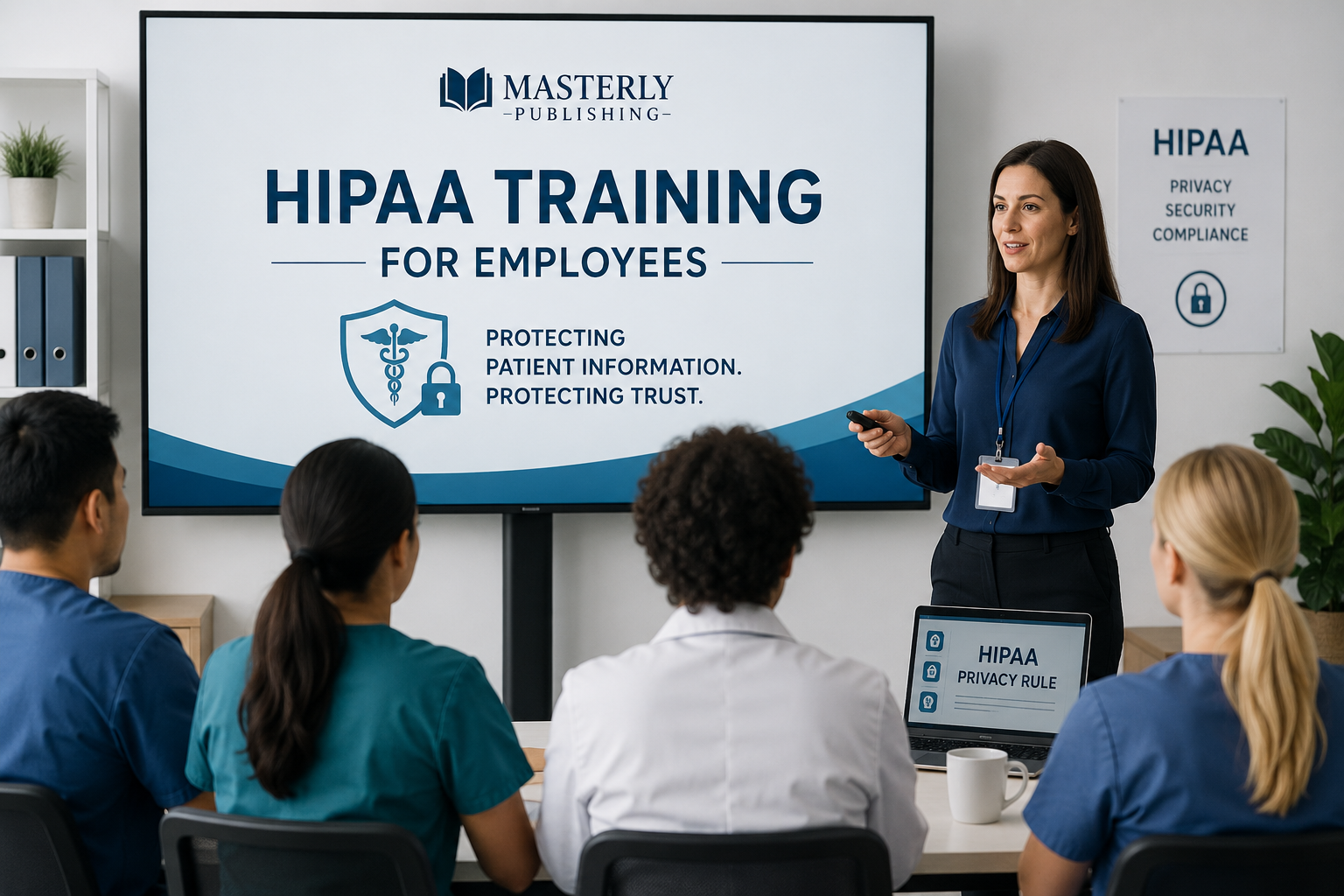
Privacy Rule Training Should Address Everyday Decisions
Privacy problems do not always begin with an employee deliberately misusing information. They can begin with routine decisions made without enough understanding.
An employee may need to know whether information can be discussed with another person, which records are needed for a task, where a conversation should take place, or what to do when someone requests information.
Privacy rule training should help employees understand the organization's policies for handling these situations.
HHS explains that the Privacy Rule generally requires covered entities to take reasonable steps to limit uses, disclosures, and requests for PHI to the minimum necessary to accomplish the intended purpose when the minimum necessary standard applies.
Training should help employees understand how the employer's policies put those principles into practice.
Employees Need Clear Expectations About Protected Health Information
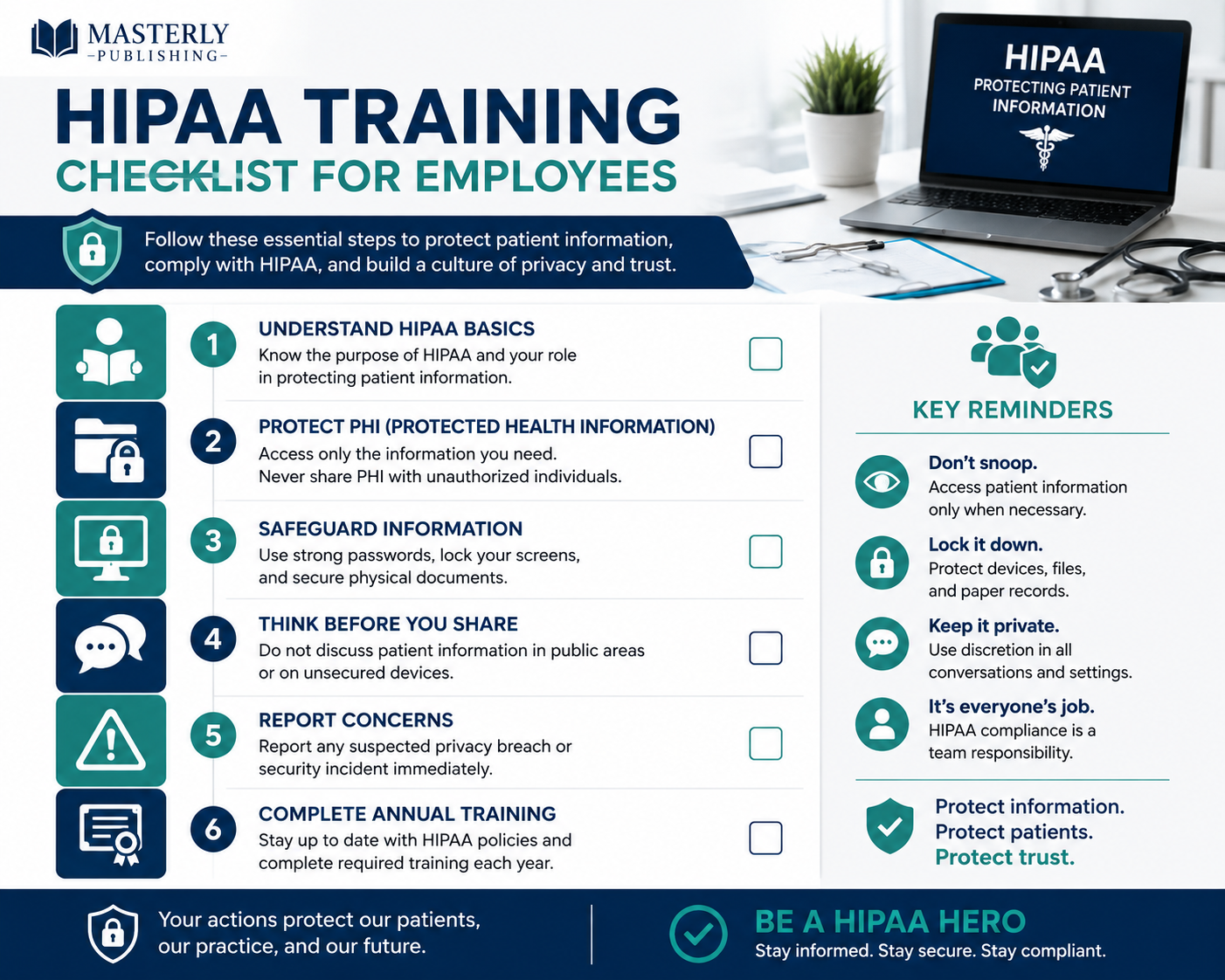
A useful training program should address the types of protected health information (PHI) employees may encounter and the responsibilities associated with that information.
Depending on the organization and employee's role, relevant subjects may include:
- recognizing information that may be PHI;
- understanding when they may access PHI for their role;
- following organizational privacy policies;
- limiting unnecessary access or disclosure;
- handling verbal, paper, and electronic information appropriately;
- following procedures for requests involving PHI;
- protecting information in shared or public work areas; and
- knowing where to report questions or suspected problems, including to the organization's privacy officers where applicable.
The goal is not to turn employees into HIPAA lawyers. It is to make organizational expectations understandable before employees are placed in situations where they must make decisions involving sensitive information.
Workforce Access Deserves Special Attention
Access to information should have a business purpose.
The HIPAA Security Rule addresses workforce security and information access management for electronic protected health information. HHS explains that regulated entities must maintain policies and procedures concerning appropriate workforce authorization, supervision, and access to ePHI. Access management should authorize access when it is appropriate for the user's or recipient's role.
For employers, that makes workforce access an important training subject.
Employees should understand that having technical ability to open a record does not automatically mean they should access it. Training can reinforce the employer's policies about who may access information, why access is provided, and what employees should do when they are unsure.
This is especially important when employees change jobs or responsibilities within an organization. Their access and training needs may change with their functions.
Security Awareness Should Be Part of Employee Training
Modern healthcare compliance involves both privacy and information security.
The HIPAA Security Rule requires a security awareness and training program for workforce members, including management. HHS's audit materials examine whether organizations provide security awareness and training to new and existing workforce members and whether training is designed to help employees meet their security responsibilities.
For that reason, security awareness should not be separated from the way employees actually use systems and information.
Depending on an organization's policies, systems, and workforce responsibilities, training may address matters such as password practices, malicious software, login activity, security incidents, and procedures for reporting suspicious activity. HHS guidance identifies security reminders, protection from malicious software, login monitoring, and password management within the Security Rule's security awareness framework.
Employees should leave training knowing where their responsibilities begin and what internal procedures they are expected to follow.
Generic Training Can Leave Important Questions Unanswered
A generic or free HIPAA presentation may explain HIPAA terminology, but it can still miss the situations employees encounter inside a particular organization.
Consider two workplaces.
One organization may have employees who regularly work with electronic patient records. Another may have administrative personnel who encounter PHI through benefits administration, billing, communications, or another limited function.
The same presentation may not address both workforces equally well.
HHS recognizes that Privacy Rule procedures can be tailored to the size and needs of providers and health plans. Training tied to organizational policies and employee functions can therefore provide greater practical advantages than material employees cannot easily connect to their jobs.
Employee Training Also Protects the Organization's Reputation
Healthcare compliance is ultimately about people as well as policies.
Patients, employees, business partners, and leadership expect sensitive information to be treated carefully. When employees do not understand their responsibilities, even an avoidable mistake can create internal disruption and damage confidence in the organization. HIPAA violations can trigger Office for Civil Rights investigations, corrective action plans, and significant penalties; in 2023, OCR collected over $15 million in HIPAA settlements, and individual penalties can reach $4.3 million.
A well-designed training program communicates that privacy and security are workplace responsibilities.
It can also create a common standard across departments. Employees receive clearer expectations, supervisors have a stronger foundation for reinforcing policies, and leadership can demonstrate that privacy and security have been addressed as organizational priorities.
That matters for both compliance and reputation.
Training Should Reflect the Organization's Actual Policies
Employers should be cautious about viewing HIPAA training as a stand-alone activity that has no connection to internal policies.
Under the Privacy Rule, workforce training concerns the covered entity's policies and procedures regarding protected health information as necessary and appropriate for employees to perform their functions.
This distinction is important.
An employee can remember a general HIPAA principle and still be uncertain about the employer's procedure for handling a specific situation. Effective training should help close that gap.
For example, employees may need to know whom to contact with a privacy question, how an incident should be reported, what internal process applies to certain requests, whether updated guidance affects staff who handle business associate agreements, or what restrictions apply to their particular access.
Those details depend on the organization.
When Employers Should Revisit HIPAA Compliance Training
HIPAA training should not be treated as something an organization considers once and then forgets, and annual HIPAA training is recommended for all employees rather than handled as a one-time task.
Employers may need to revisit training when new workforce members join or when material changes to relevant policies or procedures affect employees' functions. Security awareness is also an ongoing component of the Security Rule framework.
Many healthcare organizations treat annual refresher training as standard, and annual refresher training helps keep compliance expectations fresh for staff when business operations, technology, job responsibilities, or internal procedures change.
The key question is whether the training still reflects what employees need to understand to perform their jobs appropriately.
A Practical Framework for Evaluating Employee HIPAA Training
Before employees begin handling sensitive information, leadership can evaluate a training program through four simple questions.
Does the training reflect our organization? Employees should be able to connect the material to the policies and procedures they are expected to follow.
Does it reflect employee roles? Training should address responsibilities that are necessary and appropriate for different workforce functions.
Does it address privacy and security? Employees who interact with PHI or ePHI need clear expectations concerning appropriate handling, access, and security.
Does it tell employees what to do when something goes wrong? Employees should know the organization's reporting and escalation procedures instead of trying to solve a privacy or security concern on their own.
This framework keeps the focus where it belongs: preparing employees to follow the organization's requirements when they encounter protected information.
Customized HIPAA Training from Masterly Legal Solutions
Employers do not have to rely on a generic program that leaves their workforce trying to translate broad information into workplace decisions.
Masterly Legal Solutions provides customized training sessions to entities and organizations of different sizes. Its legal services page specifically identifies HIPAA Training among the firm's available training programs and states that this HIPAA training course can be provided in person or virtually.
For employers, customized training offers an opportunity to focus employee education on the organization's workforce, policies, responsibilities, and operational environment, using a more comprehensive approach that can help reduce organizational risk of violations.
Where a program includes a HIPAA training certificate or certificate of completion, certified staff can help demonstrate training completion and reduce risk.
The objective is straightforward: give employees clearer guidance before they begin making decisions involving sensitive health information.
Learn more about Masterly Legal Solutions' legal services and training programs.
Frequently Asked Questions About HIPAA Training for Employees
What should HIPAA training for employees cover?
The training should give employees enough HIPAA knowledge to understand HIPAA regulations, HIPAA requirements, and the organization’s policies. Relevant areas should match employees’ functions and may include protected health information, privacy procedures, workforce access, information security, reporting procedures, security awareness, patient rights, patient privacy, and patient information handling where applicable.
Does HIPAA require employees to receive privacy training?
The HIPAA Privacy Rule requires covered entities to train workforce members on their PHI-related policies and procedures as necessary and appropriate for their functions; this training duty exists under the Health Insurance Portability and Accountability Act so organizations can comply with HIPAA rules and applicable privacy standards.
Should new employees receive HIPAA training?
Covered entities must provide required Privacy Rule training to new workforce members within a reasonable period after they join the workforce. For each new member, that timing is governed by HIPAA’s reasonable-period standard, though in Texas new employees may need to complete training within 90 days.
Does employee HIPAA training include cybersecurity topics?
Security awareness and training are part of the HIPAA Security Rule framework for workforce members. The subjects addressed should reflect applicable security responsibilities and organizational policies, such as using strong passwords and recognizing a phishing email, which also helps reduce the risk of data breaches involving unsecured PHI.
Should managers receive HIPAA security awareness training?
Yes, where the Security Rule applies. HHS describes the security awareness and training standard as applying to all workforce members, including management.
Is the same HIPAA training appropriate for every employee?
Not necessarily. The same training is not appropriate for every employee, because different healthcare professionals and healthcare workers may need different levels of detail depending on how they access PHI. Healthcare providers and other members of a covered entity's workforce may also have different responsibilities based on role. Privacy Rule training is based on what is necessary and appropriate for workforce members to perform their functions, so employee responsibilities can affect the training they need.
Why customize HIPAA compliance training?
Customization can support a comprehensive training approach or a complete program that connects privacy and security principles with the organization's policies, employee roles, systems, and workplace situations. Because HIPAA compliance matters in day-to-day work, training should prepare employees for patient care settings and real workplace decisions, not just provide an overview.
Does Masterly Legal Solutions provide HIPAA training?
Yes. Masterly Legal Solutions lists HIPAA Training among its training programs and states that it provides customized training sessions in person and virtually, which may suit organizations looking for online HIPAA or online HIPAA training options. If you are evaluating HIPAA certification or a HIPAA compliant training program, confirm which format and documentation best fit your needs.
Request a Consultation About a Customized HIPAA Training Program
Your employees should understand the expectations attached to protected health information before they are expected to make decisions involving it.
Masterly Legal Solutions can work with your organization on HIPAA training for employees designed around your workforce and business needs in the healthcare industry. Rather than relying solely on broad training material, your organization can discuss a customized program focused on clearer employee understanding, practical healthcare compliance, and role-based expectations that help employees complete training before access begins.
Call Masterly Legal Solutions at (972) 236-5051 or visit MasterlyLegal.com to discuss your organization's training needs.




Teacher Rights When Assaulted by a Special Needs Student: Safety, Reporting and Investigation Issues




Looking for Legal & Business Solutions? Contact Us Now
Fill in the form or call us to set up a meeting