
How a CPS Attorney Challenges DFPS Findings Before Court

January 6, 2026

When child protective services becomes involved in a family’s life, everything can change overnight. Parents often feel confused, frightened, and overwhelmed by the speed and seriousness of the process. A CPS investigation can begin with little warning and quickly escalate into court involvement that threatens parental rights and family stability. At Masterly Legal Solutions, we understand how critical it is to respond early, strategically, and with experienced legal guidance.


DFPS findings are not final truths, even though they are often treated that way by a government agency. CPS attorneys play a vital role in challenging flawed assumptions, weak evidence, and procedural mistakes before a judge ever rules. Understanding how a defense attorney confronts CPS findings can make a meaningful difference in the outcome of a case involving a child, parents, and the entire family.


Understanding the Role of Child Protective Services

Child protective services exists to investigate reports of child abuse or neglect and to address safety concerns involving a child. While the goal is protection, the process is far from perfect. CPS workers are tasked with managing high caseloads, tight deadlines, and emotionally charged situations. This pressure can lead to rushed conclusions and incomplete investigations.


Child protective services CPS operates as a state agency with significant authority. Once an investigation begins, parents may find themselves facing allegations that feel one-sided or unsupported. This is where legal representation becomes essential.


How a CPS Investigation Begins

A CPS investigation often starts with a report from a concerned party such as a teacher, doctor, neighbor, or family member. These reports may involve suspected abuse, neglect, or abuse or neglect based on limited information. CPS caseworker involvement usually includes interviews, home visits, and document collection.


During this stage, parents may not realize how quickly statements and observations can be used against them. Anything said during an investigation can later appear in court filings. Early involvement of a CPS defense attorney helps protect families from avoidable missteps.


Why DFPS Findings Are Often Challenged

DFPS findings are based on the investigation conducted by CPS workers. These findings may rely on subjective interpretations rather than sufficient evidence. Physical injuries, school reports, or secondhand statements can be misunderstood or taken out of context.


Defense attorneys against CPS carefully review how findings were reached. They assess whether the investigation followed the law, respected parental rights, and considered alternative explanations. Challenging these findings before court is often the most effective strategy.


The Importance of Early Legal Counsel

Having legal counsel early in the process changes the balance of power. Parents who wait often discover that decisions have already been made without their input. A defense attorney ensures that the family’s voice is heard from the beginning.


Legal counsel also helps parents understand their rights and obligations. This knowledge allows families to respond thoughtfully instead of react emotionally during a CPS investigation.


What a CPS Defense Attorney Actually Does

A CPS defense attorney does far more than appear in court. They analyze evidence, communicate with CPS lawyers, and prepare compelling arguments to counter unsupported allegations. Their role is to defend families while focusing on the child’s well being and best interest.


CPS defense requires a deep understanding of juvenile dependency law and court procedures. An experienced attorney knows how to challenge assumptions before they become formal findings.


Reviewing the Evidence Collected by CPS

Evidence is the foundation of every CPS case. However, not all evidence is reliable, complete, or properly obtained. Defense attorneys carefully review photographs, medical records, witness statements, and CPS notes.


If evidence lacks credibility or was collected improperly, it can be challenged. Demonstrating gaps or inconsistencies is a critical part of CPS defense.


Challenging Allegations of Abuse or Neglect

Allegations of child abuse or neglect are serious, but they are not proof. Many CPS cases involve misunderstandings, parenting differences, or temporary hardships. A lawyer evaluates whether allegations meet the legal definition required under the law.


Defense attorneys work to show that allegations do not rise to the level required for court intervention. This approach can prevent unnecessary court orders and family separation.


Addressing Claims of Physical or Sexual Abuse

Cases involving physical injuries or sexual abuse receive heightened scrutiny. These allegations often rely on limited evidence or assumptions made by investigators. A CPS lawyer examines medical opinions, timelines, and alternative explanations.


Protecting parents while ensuring child safety requires careful legal strategy. A skilled defense attorney balances both priorities in court proceedings.


Juvenile Dependency and the Court Process

Juvenile dependency cases move through family court proceedings that can feel intimidating. Judges rely heavily on DFPS reports unless challenged effectively. Court hearings are where findings can either be reinforced or dismantled.


Defense attorneys present evidence, question witnesses, and advocate for parental rights during these hearings. Preparation is essential at every stage of the process.


The Role of Court Appointed Attorneys and Public Defenders

Some parents are assigned a court appointed attorney or public defender. While these lawyers provide necessary services, they may carry heavy caseloads. This can limit the time spent on each CPS case.


Choosing a CPS defense attorney from a dedicated law firm often provides more focused attention. Personalized strategy can make all the difference in complex cases.


Guardian ad Litem and the Child’s Interests

A guardian ad litem may be appointed to represent the child’s interests. Their recommendations can influence custody decisions and supervised visitation arrangements. Defense attorneys work to ensure that these recommendations are based on complete and accurate information.


When the child’s best interest is discussed, all relevant facts must be presented clearly. Advocacy matters in shaping these outcomes.


Protecting Parental Rights During Proceedings

Parental rights are fundamental but can be restricted quickly in CPS cases. Temporary custody changes, court orders, and service plans may be imposed early. Without a lawyer, parents may unknowingly agree to terms that harm their case.


Defense attorneys help parents protect their rights while complying with lawful requirements. This balance is critical to long-term outcomes.


Custody, Visitation, and Court Orders

CPS cases often involve custody disputes and supervised visitation. These decisions affect daily life and family relationships. A judge relies on evidence and arguments presented during hearings.


A defense attorney challenges unnecessary restrictions and works to maintain family connections whenever possible.


Addressing Neglect Allegations

Neglect allegations are among the most common in CPS cases. They may involve housing conditions, supervision concerns, or access to services. Many neglect claims stem from poverty or temporary hardship rather than intentional harm.


Defense attorneys argue context and reality, not assumptions. Showing proactive steps taken by parents can significantly impact court decisions.


Criminal Charges and CPS Cases

Some CPS investigations overlap with criminal charges such as domestic violence or abuse. These situations require careful coordination between criminal defense and CPS defense. Statements made in one case can affect the other.

An experienced attorney understands how to navigate both systems without compromising either defense.


Home Visits and CPS Worker Conduct

Home visits are a routine part of CPS investigations, but they must follow legal boundaries. CPS workers may document conditions in ways that do not reflect everyday reality. Defense attorneys scrutinize these reports closely.


Improper or misleading observations can be challenged effectively before court.


The Role of Counseling and Services

CPS often requires parents to engage in counseling or other services. While these services can be helpful, they may also be used as evidence of wrongdoing. A lawyer helps parents understand what participation means legally.


Strategic compliance can strengthen a defense rather than weaken it.


Filing Motions and Pre-Court Challenges

Before court hearings, defense attorneys may file motions challenging DFPS findings. These filings address lack of sufficient evidence, procedural errors, or violations of rights. Early filings can shape the entire process.


Strong written advocacy supports oral arguments later in court.


Court Hearings and Presenting Compelling Arguments

Court hearings are where defense attorneys fight for families. Presenting compelling arguments requires preparation, knowledge, and confidence. Judges consider credibility, evidence, and legal standards when making decisions.


An attorney’s ability to defend parents effectively can influence the course of the case.


The Importance of Knowledge and Experience

CPS cases are highly specialized. Knowledge of county practices, judges, and CPS lawyers matters. An attorney with a proven track record brings insight that inexperienced counsel cannot.


At Masterly Legal Solutions, our lawyers use experience to anticipate challenges and respond effectively through a range of legal services.
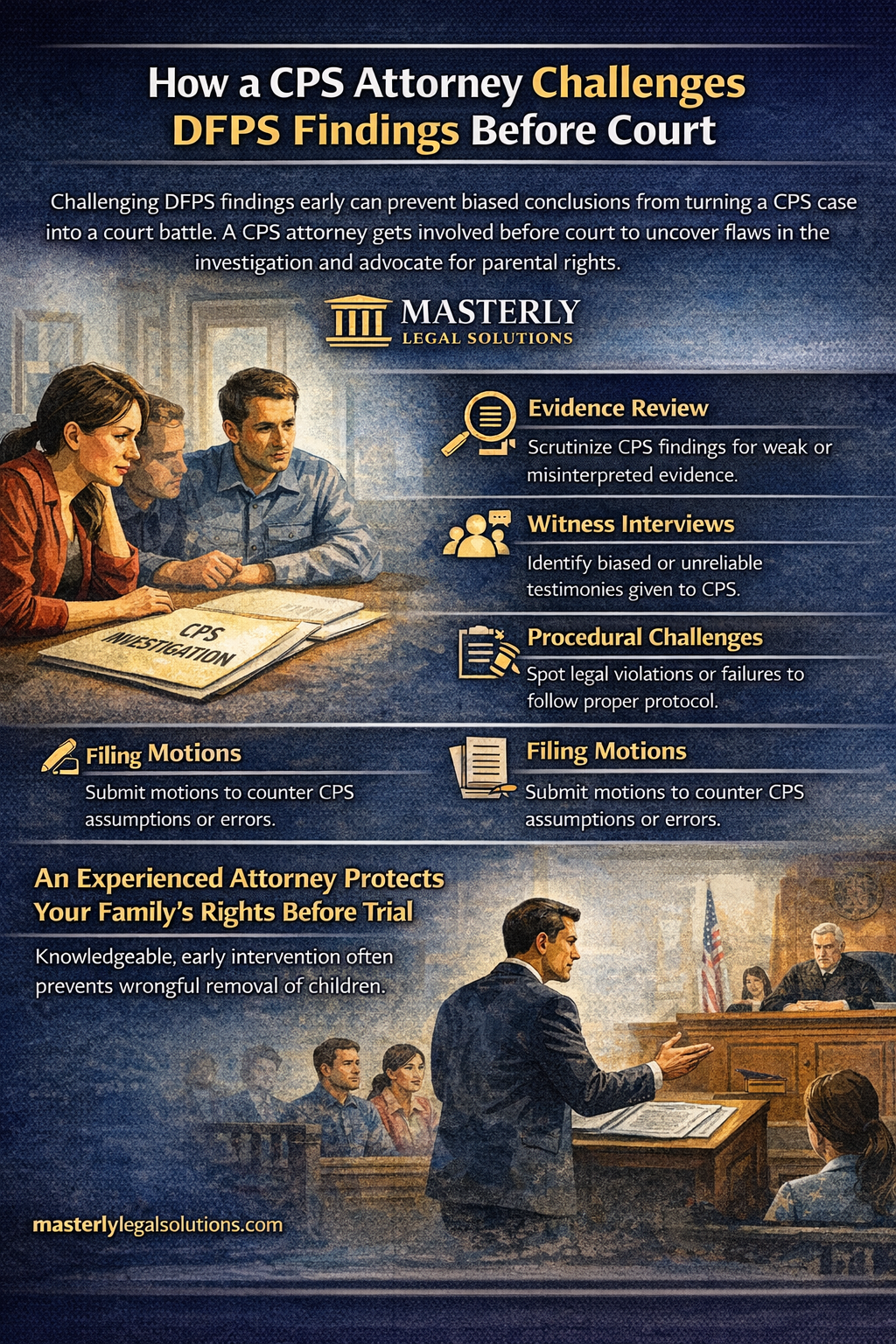
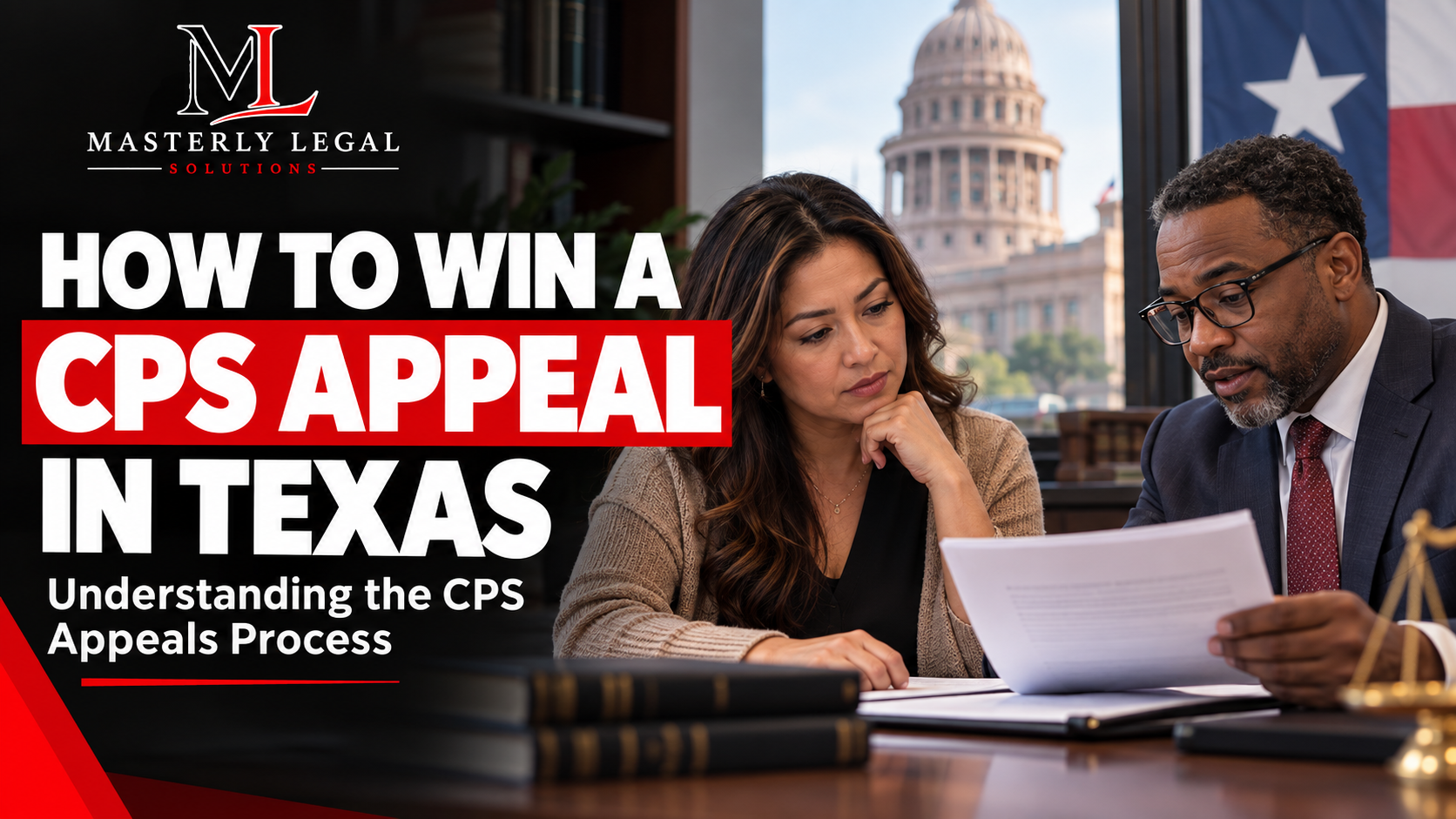
Informational graphic by Masterly Legal Solutions titled “How a CPS Attorney Challenges DFPS Findings Before Court,” showing parents meeting with an attorney during a CPS investigation and a courtroom scene. The image outlines key defense steps such as evidence review, witness interviews, procedural challenges, and filing motions, emphasizing early legal intervention to protect parental rights and prevent wrongful child removal before trial.


CPS Cases Across Counties and Regions

CPS practices can vary by county and region, including areas like Orange County or other parts of Southern California. Understanding local procedures and expectations is essential.


A law firm with broad experience across counties offers stronger representation.


Working With Families During a Difficult Process

CPS cases affect the entire family, not just parents. Children experience confusion, fear, and disruption. Defense attorneys work to minimize trauma while protecting legal rights.


Clear communication helps families feel supported throughout the process.


Why Defense Attorneys Against CPS Matter

Defense attorneys against CPS exist to level the playing field. A government agency has resources, authority, and influence. Families need equally strong advocacy to protect themselves.


CPS lawyers ensure that investigations and findings are tested, not blindly accepted.


How Masterly Legal Solutions Defends Families

Masterly Legal Solutions is a law firm dedicated to CPS defense and protecting families. Our attorneys focus on defending parents, protecting children, and challenging unsupported findings. We approach each case with care, strategy, and determination.


Our clients benefit from experienced attorney guidance and personalized legal representation.


Contact Masterly Legal Solutions for a Free Consultation

If you are facing CPS allegations or a CPS investigation, you do not have to face the process alone. Early legal guidance can protect your rights, your family, and your future. Speaking with a defense attorney can help you understand your options and next steps before court involvement escalates.


Contact Masterly Legal Solutions at (972) 236-5051 for a free consultation. We are here to answer your questions, explain the process, and fight for your family when it matters most.


Disclaimer: This article is for informational purposes only and does not constitute legal advice. Reading this content does not create an attorney-client relationship. For advice specific to your situation, consult a qualified higher education attorney.
(972) 236-5051
Employee retaliation at work illustration.
January 7, 2026
Learn how retaliation in the workplace violates federal law, how employers retaliate at work, EEOC review options, and how law provides to protect your rights.
Washington County CPS child protective services office
January 7, 2026
Find Washington County child protective services for abuse reports, CPS department services, and how to contact local child protective services in Washington.
CPS attorney representing a family in court
January 7, 2026
Experienced CPS attorney and lawyer provide child protective services defense, CPS case support, parental rights protection, and CPS lawyers near you to help.
TEA educator certification license document.
January 7, 2026
Learn about Texas education certification, TEA requirements, certificate options, and steps educators must take to maintain compliance and licensure statewide.
Lawyer handling CPS cases for families.
January 7, 2026
A CPS lawyer and attorney provide defense during a CPS investigation, guide your case, and protect your rights with experienced law office support available.
January 7, 2026
Early Mistakes Educators Make During TEA Investigations Facing an investigation by the Texas Education Agency can feel overwhelming for teachers and administrators alike. In an educational setting built on trust, professionalism, and accountability, a sudden inquiry can disrupt careers, reputations, and personal lives. Many educators assume that cooperating fully and quickly will resolve concerns, but early missteps often make situations far worse. Understanding these mistakes is essential for protecting teachers’ rights, students’ rights, and long-term employment in the education system. At Masterly Legal Solutions, we routinely work with teachers, administrators, and staff members across Texas education environments. We see patterns emerge in how investigations escalate, especially when educators act without guidance. This article explains the most common early mistakes educators make during TEA and UIL investigations and how an experienced education lawyer can make all the difference. Understanding the Role of TEA in Education Oversight The Texas Education Agency oversees public education to ensure compliance with state law, professional standards, and civil rights obligations. When allegations arise, TEA investigations can involve employment issues, student safety, special education services, or Title IX compliance. These investigations are not informal conversations; they are structured legal matters with serious consequences. Educators working in a public school, private school, charter schools, or higher education institutions are all subject to different layers of oversight. TEA inquiries may involve school administrators, school districts, or even the state board. Understanding this structure helps educators avoid decisions that unintentionally worsen their legal position. Mistake One: Treating the Investigation as Informal One of the earliest mistakes teachers make is assuming a TEA inquiry is simply a routine administrative matter. Investigations often begin with emails or phone calls that appear conversational, which can create a false sense of security. In reality, statements made early can become evidence in disciplinary proceedings or administrative hearings. Educators should understand that investigators are gathering information to determine whether law or policy violations occurred. This includes potential employment law implications, civil rights concerns, or allegations involving students. Treating the process casually can lead to inconsistencies that harm credibility. Mistake Two: Speaking Without an Education Attorney Many educators believe hiring an education attorney signals guilt. In truth, legal representation is a protective measure, not an admission of wrongdoing. An experienced education attorney for teachers understands education law matters and helps educators navigate complex legal issues before irreversible mistakes occur. Without legal professionals advising them, teachers may provide unnecessary details or speculate about events. An education lawyer ensures communications are accurate, measured, and aligned with the educator’s best interests. Early legal representation can prevent misunderstandings that escalate investigations. Mistake Three: Not Understanding Teachers’ Rights Teachers’ rights exist to protect fairness in the education system, but they are often misunderstood or overlooked. During a TEA investigation, educators may have rights related to due process hearings, disciplinary hearings, or grievance hearings depending on their employment status. Failing to assert these rights early can limit options later. An education law firm with extensive experience helps educators understand when and how to assert protections afforded under Texas education law. This knowledge can significantly affect outcomes. Mistake Four: Overlooking Employment Implications A TEA investigation often overlaps with employment issues within a school district or school system. Teachers sometimes focus only on certification concerns while ignoring employment consequences such as suspension, termination, or contract nonrenewal. Employment law intersects with education law in complex ways. Statements made to administrators or investigators can influence employment decisions. An education attorney helps educators protect both their professional license and their employment status simultaneously . Mistake Five: Failing to Document Early Events Documentation is critical in any legal matter, especially in education-related investigations. Teachers often assume records will be maintained by the school or investigators, but personal documentation can be vital. Emails, lesson plans, incident reports, and timelines can all support an educator’s account. Without documentation, educators may struggle to recall details accurately months later. Legal professionals often rely on early documentation to build strong defenses in disciplinary proceedings or administrative matters. Mistake Six: Ignoring the Impact on Students TEA investigations frequently involve students, particularly in cases related to special education, disabilities, or Title IX. Educators may unintentionally minimize the importance of how decisions affect children and their rights. This can be problematic when investigators assess compliance with education law and civil rights obligations. Understanding students’ rights and a child’s rights is central to many investigations. Education lawyers experienced in representing students and representing teachers help educators frame actions within lawful educational objectives. Mistake Seven: Mishandling Special Education Issues Special education cases require heightened care due to strict legal standards. Mistakes during investigations involving special education services, IEP meetings, or special needs children can carry severe consequences. Educators may not realize how technical special education law can be. Failure to ensure compliance with special education requirements can lead to allegations of denying services or violating civil rights. An education attorney familiar with special education law helps educators understand obligations and defend decisions appropriately. Mistake Eight: Assuming Administrators Will Protect Them Teachers often trust school administrators to advocate on their behalf. While administrators may be supportive, their responsibilities are to the school system and educational institutions as a whole. Conflicts of interest can arise quickly during investigations. Relying solely on administrators without independent legal representation can leave educators vulnerable. An education lawyer serves as an advocate focused exclusively on the educator’s interests. Mistake Nine: Delaying Legal Help Time is critical in TEA investigations. Delaying consultation with an education attorney can limit defensive strategies. Early intervention allows attorneys to address issues before formal disciplinary hearings or administrative hearings occur. Texas education lawyers understand procedural deadlines and investigative timelines. Prompt legal services can prevent small issues from becoming career-threatening legal issues. Mistake Ten: Misunderstanding Title IX Obligations Title IX investigations involve sensitive allegations, including sexual harassment or sexual abuse. Educators sometimes underestimate the seriousness of these claims or assume internal processes will resolve them quietly. Title IX matters often involve overlapping TEA and school district procedures. An education law firm experienced in Title IX cases helps educators navigate these complex issues while protecting due process rights. Mishandling Title IX allegations can result in severe disciplinary proceedings and long-term consequences. Mistake Eleven: Inconsistent Statements Consistency matters greatly in legal investigations. Teachers may unintentionally provide differing accounts when speaking with administrators, investigators, or colleagues. These inconsistencies can be interpreted as dishonesty even when unintentional. Education lawyers help educators prepare clear, consistent narratives supported by documentation. This preparation reduces risk during interviews and written responses. Mistake Twelve: Discussing the Case Publicly Educators may seek emotional support by discussing investigations with colleagues, parents, or on social media. Unfortunately, these conversations can be misinterpreted or used against them. Public discussions can complicate legal matters and damage reputations. Legal professionals advise educators on appropriate communication boundaries. Protecting confidentiality is often crucial in maintaining a strong defense. Mistake Thirteen: Ignoring Civil Rights Considerations Civil rights are central to education law, especially when investigations involve discrimination, disabilities, or unequal treatment. Educators may not recognize how everyday decisions intersect with civil rights law. Education attorneys provide guidance on how civil rights standards apply within schools and universities. This understanding helps educators respond appropriately to allegations and demonstrate lawful intent. Mistake Fourteen: Underestimating the Scope of Investigations TEA investigations can expand beyond initial allegations. What begins as a narrow inquiry may grow to include additional legal issues, employment concerns, or policy violations. Educators who assume the scope is limited may be unprepared for broader scrutiny. An education lawyer anticipates potential expansion and prepares educators accordingly. This proactive approach often improves outcomes. Mistake Fifteen: Not Preparing for Disciplinary Proceedings Disciplinary proceedings can follow TEA investigations, including disciplinary hearings before the state board. Educators sometimes assume matters will resolve before reaching this stage, leaving them unprepared. Preparation includes understanding procedures, evidence standards, and potential outcomes. Skilled lawyers with extensive experience guide educators through these processes with clarity. Mistake Sixteen: Overlooking Higher Education Implications Educators working in universities or community colleges face unique challenges. Higher education institutions have additional policies and contractual obligations that affect investigations. University faculty may also face academic freedom concerns. Education lawyers familiar with higher education law help educators navigate these layered responsibilities. This ensures compliance while protecting professional interests. Mistake Seventeen: Confusing Administrative and Criminal Issues Some investigations involve allegations of physical or sexual abuse or sexual harassment. While TEA investigations are administrative, they may overlap with criminal inquiries. Educators sometimes confuse these processes and make statements that affect both. An education attorney helps distinguish between administrative matters and potential criminal exposure. This guidance is essential when allegations involve students or children . Mistake Eighteen: Failing to Advocate for Themselves Educators are advocates by profession, yet many hesitate to advocate for themselves during investigations. Fear of retaliation or appearing defensive can silence important perspectives. Legal representation empowers educators to advocate appropriately within legal boundaries. Attorneys provide strategies that balance cooperation with protection. Mistake Nineteen: Assuming Outcomes Are Predetermined Some teachers believe TEA investigations are biased or predetermined. This belief can lead to disengagement or resignation. In reality, outcomes depend heavily on evidence, procedure, and representation. Education lawyers know how to present facts effectively and challenge assumptions. Active participation often changes outcomes significantly. Mistake Twenty: Not Understanding Long-Term Consequences TEA findings can affect future employment, certifications, and professional reputation. Educators may focus only on immediate stress without considering long-term impacts on their careers within the education system. An education attorney helps educators assess both short-term and long-term consequences. Strategic decisions early can protect future opportunities. The Value of Tailored Legal Services in Education Law Every TEA investigation is unique. Tailored legal services address the specific circumstances of each educator, school district, and educational institution. A law firm experienced in education law understands the nuances of public education, private education, and charter schools. At Masterly Legal Solutions, our attorneys provide legal representation grounded in extensive experience and deep knowledge of Texas education law. We focus on protecting educators while ensuring compliance with applicable law. How Skilled Lawyers Support Educators Through Investigations Skilled lawyers do more than respond to allegations. They advise on documentation, communication, and strategy. They prepare educators for interviews, administrative hearings, and potential litigation services if necessary.  Attorneys provide clarity during uncertain times, helping educators navigate new challenges and complex issues with confidence.
Retaliation attorneys handling workplace retaliation claims.
January 7, 2026
Retaliation lawyer and attorney for workplace retaliation claims, protecting employees from employer retaliation, discrimination, and unlawful workplace practices.
California CPS investigation process overview.
January 7, 2026
CPS investigations explained, covering the CPS investigation process, state timelines, CPS investigator roles, law enforcement involvement, and assessments.

Looking for Legal & Business Solutions? Contact Us Now

Fill in the form or call us to set up a meeting

(972) 236-5051
A black and white drawing of a straight line on a white background.