

Understanding CPS Appeals and Critical Filing Deadlines
When Child Protective Services steps into a family’s life, the experience can feel overwhelming and deeply personal. Parents are often shocked by how quickly a CPS investigation moves and how much power this government agency holds over decisions involving a child. Many families assume that once CPS makes a finding, there is little that can be done. In reality, CPS appeals exist for a reason, and understanding them can protect your family life and parental rights.
At Masterly Legal Solutions, we regularly work with parents who wish they had known sooner about appeal options and filing deadlines. CPS cases move fast, and missing a deadline can permanently affect custody, reputation, and future opportunities. This article explains how CPS appeals work, why deadlines matter, and how CPS defense attorneys help families defend themselves when facing allegations.
Why CPS Findings Are Not Always Final
CPS findings are based on the investigation conducted by child protective services, but those findings are not immune to error. CPS workers often operate under intense pressure while investigating reports of abuse or neglect. This can lead to conclusions drawn without sufficient evidence or without considering the full context of a family’s situation.
Appeals exist because the law recognizes that mistakes happen. A CPS appeal allows parents to challenge findings that may unfairly label them as abusive or neglectful. Acting quickly is essential to protect the child and the family.
Understanding the CPS Investigation Process
The CPS investigation process begins when child protective services CPS receives a report alleging child abuse or neglect. Investigating reports may come from a school, medical professional, neighbor, or other concerned party. CPS caseworkers then gather information through interviews, home visits, and document reviews.
During this investigation, statements made by parents and observations recorded by CPS workers become part of the official record. These records later play a critical role in CPS cases and any potential appeal. Legal guidance during this phase can shape what evidence exists to challenge later.
How Allegations Turn Into CPS Cases
Not every report results in court involvement, but many do. CPS allegations may involve neglect, child maltreatment, or more serious claims such as sexual abuse. Even when allegations are unfounded, the investigation itself can disrupt family stability.
Once allegations are substantiated, CPS may recommend court intervention. At that point, the case enters juvenile dependency proceedings, where parental rights and custody are at risk.
The Emotional Impact on Parents and Children
CPS involvement affects more than paperwork and deadlines. Parents often experience fear, confusion, and anxiety about losing their child. Children may feel frightened by interviews, temporary placements, or supervised visitation orders.
Appeals provide a path to correct errors and protect the well being of the child. Understanding the process helps families regain a sense of control during an otherwise uncertain time.
What Is a CPS Appeal
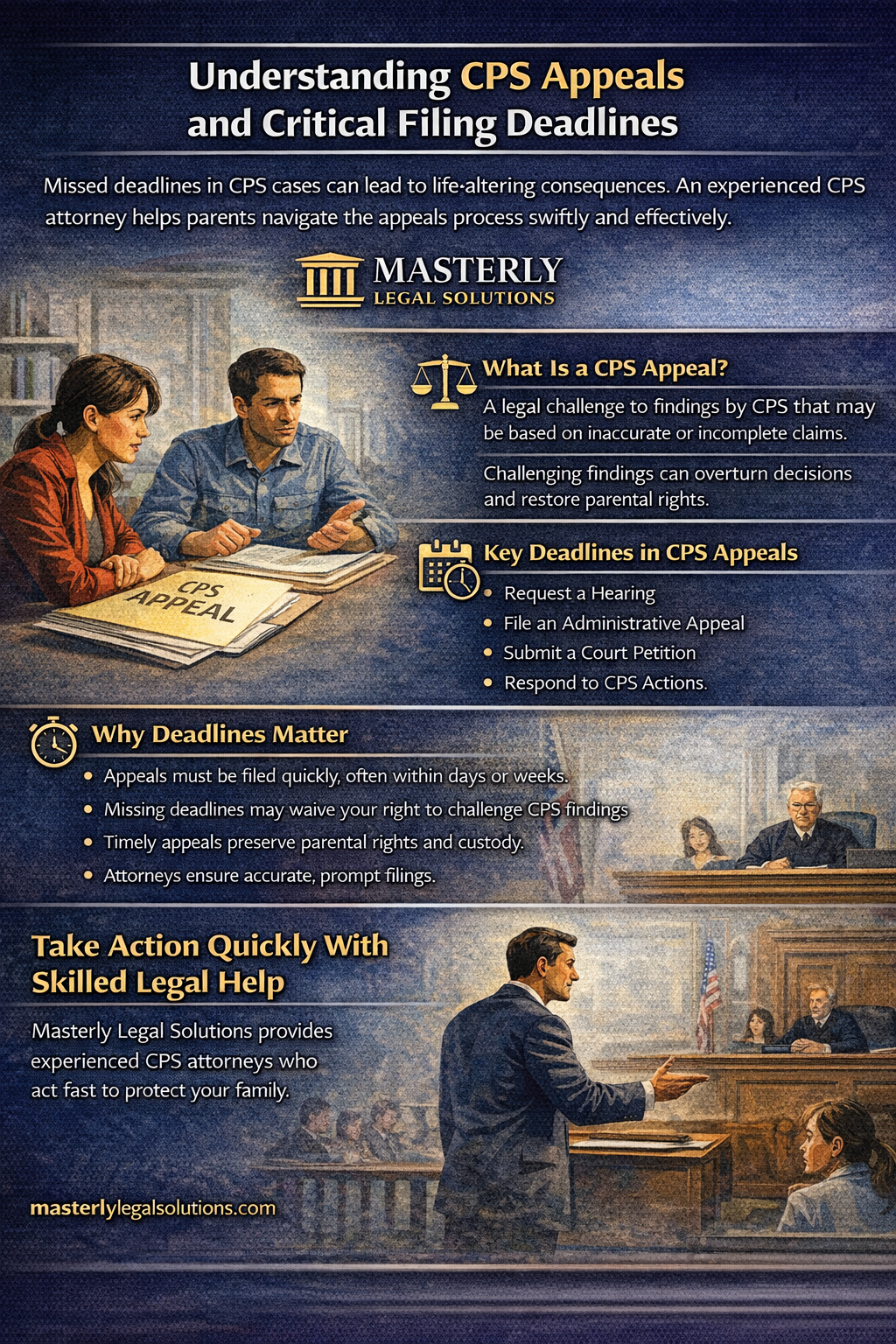
A CPS appeal is a formal challenge to findings made by child protective services cases. Appeals often focus on whether evidence supports the conclusions reached by CPS. They may also address procedural mistakes or violations of parental rights.
The appeal process is governed by strict law and filing rules. Missing a deadline can end the appeal before it begins.
Critical Filing Deadlines in CPS Appeals
Filing deadlines are one of the most important aspects of CPS appeals. These deadlines can be surprisingly short, sometimes requiring action within days or weeks of receiving notice. Parents who wait often lose the ability to challenge findings entirely.
Deadlines apply to:
- Administrative appeals
- Court filings
- Requests for hearings
- Responses to CPS actions
CPS defense attorneys ensure filings are timely and accurate.
Why Deadlines Matter More Than Evidence Alone
Even strong evidence cannot help if a filing deadline is missed. Courts and agencies strictly enforce deadlines to keep the process moving. Judges often have little discretion once a deadline passes.
Timely filing preserves your right to defend yourself. It also ensures that allegations do not become permanent findings without review.
Administrative Appeals Versus Court Appeals
Some CPS appeals begin as administrative reviews rather than immediate court proceedings. These reviews examine whether CPS followed proper procedures and relied on sufficient evidence. Administrative appeals often have separate deadlines from court appeals.
If administrative remedies fail, court involvement may follow. Understanding both tracks is critical to a successful CPS defense.
Juvenile Dependency and Court Involvement
Juvenile dependency cases place decision-making authority in the hands of the court. Judges rely heavily on CPS reports unless challenged effectively. Family court proceedings move quickly once initiated.
A defense attorney presents evidence, questions CPS workers, and argues for the best interest of the child. Appeals can influence custody outcomes and service requirements.
Parental Rights and CPS Appeals
Parental rights are fundamental, but they can be limited through CPS actions. Findings of abuse or neglect can affect custody, employment, and future interactions with social services. Appeals are a key tool to protect these rights.
Parents who appeal demonstrate that they are actively defending their family and challenging unsupported conclusions.
The Role of CPS Defense Attorneys
CPS defense attorneys guide parents through the appeal process from the initial consultation forward. They analyze investigation records, identify weaknesses, and prepare compelling arguments. Their role is to defend families while prioritizing child safety.
At Masterly Legal Solutions, our CPS defense attorneys and educator misconduct defense specialists bring focused experience to every case. We understand how protective services operate and how to challenge them effectively.
Reviewing Evidence in CPS Appeals
Evidence is central to any appeal. Defense attorneys review medical records, photographs, witness statements, and CPS notes. They look for inconsistencies, omissions, and assumptions.
When evidence does not support the findings, attorneys highlight those gaps. Demonstrating lack of sufficient evidence can lead to overturned or modified findings.
Addressing Allegations of Abuse or Neglect
Appeals often focus on whether allegations truly meet legal definitions of abuse or neglect. Many cases involve parenting choices that differ from CPS expectations rather than actual harm.
A neglect case may arise from temporary hardship rather than intentional wrongdoing. CPS defense attorneys ensure that context is fully presented.
Child Abuse and Neglect Findings and Long-Term Consequences
Findings of child abuse and neglect can follow parents for years. These findings may appear in background checks and affect employment, licensing, and custody. Appeals help prevent long-term harm caused by inaccurate conclusions.
Protecting the family’s future requires timely action and knowledgeable legal representation.
Criminal Charges and CPS Appeals
Some CPS investigations overlap with criminal charges. Statements made during CPS interviews can impact criminal cases and vice versa. Appeals must be handled carefully to avoid unintended consequences.
An experienced attorney coordinates defense strategies to protect parents on all fronts.
Supervised Visitation and Custody Orders
CPS findings often result in court orders limiting contact with a child. Supervised visitation and custody restrictions disrupt family life and emotional bonds. Appeals may challenge whether such measures are necessary.
Judges consider evidence, safety concerns, and the child’s best interest when reviewing these orders.
Foster Care and Temporary Placements
In severe cases, children may be placed in foster care during proceedings. Appeals can address whether removal was justified and whether less intrusive options exist. Ensuring child safety does not always require separation.
Defense attorneys advocate for alternatives that protect both the child and the family.
The Role of Counseling and Services in Appeals
CPS often requires counseling or services as part of a safety plan. While these services may be beneficial, they can also be used to justify findings. Appeals examine whether service requirements are reasonable and supported by evidence.
Legal guidance helps parents navigate services without undermining their defense.
CPS Workers and Case Documentation
CPS workers document observations that heavily influence appeal outcomes. These notes may include subjective opinions or incomplete information. Defense attorneys scrutinize documentation closely.
Challenging inaccurate or misleading records is a key part of CPS defense.
County Practices and Regional Differences
CPS practices vary by county and region, including Orange County and other areas of Southern California. Understanding local procedures helps attorneys anticipate challenges.
A law firm with experience across counties offers stronger advocacy.
Government Authority and Limits
Child protective services holds significant authority, but that authority has limits under the law. Appeals hold CPS accountable when those limits are exceeded.
Defense attorneys ensure that government power does not override parental rights without justification.
Filing Appeals and Preparing Hearings
The filing process requires precision. Appeals must meet format, timing, and content requirements. Errors can result in dismissal regardless of merit.
CPS defense attorneys manage filing details so parents can focus on their family.
What Parents Should Expect During Appeals
Appeals can be stressful, but knowing what to expect helps reduce anxiety. Hearings may involve testimony, document review, and legal arguments. Judges focus on evidence and procedure.
Preparation and representation increase the likelihood of a fair outcome.
The Importance of Early Legal Strategy
Appeals are strongest when planned early. Waiting until after findings are finalized limits options. Early involvement allows attorneys to shape the record from the start.
An initial consultation can clarify rights and deadlines before opportunities are lost.
Proven Track Record and Experience Matter
CPS appeals require specialized expertise. Attorneys with a proven track record understand how to defend families effectively. Experience with juvenile dependency and CPS cases matters.
At Masterly Legal Solutions, our lawyers bring focused knowledge to every appeal.
Protecting the Best Interest of the Child
Every CPS appeal ultimately centers on the child. Courts consider safety, stability, and well being. Defense attorneys demonstrate that protecting parental rights aligns with the child’s best interest.
Balanced advocacy supports both family unity and safety.
How Masterly Legal Solutions Supports Families
Masterly Legal Solutions is a law firm dedicated to CPS defense and family protection. Our attorneys provide strategic legal representation tailored to each case. We understand the urgency and emotional weight of CPS appeals.
Our clients receive guidance, clarity, and strong advocacy throughout the process.
Child Protection Services and the Scope of CPS Authority
Child protection services operate with broad authority to investigate reports involving the safety and welfare of a child. These agencies are tasked with responding quickly to concerns, but rapid action can sometimes lead to conclusions that overlook important family context. When child protection services intervene, parents may feel powerless as decisions are made that affect custody, visitation, and daily family life. Understanding how these agencies function helps families respond appropriately and protect their rights during an investigation or appeal.
Child Neglect Allegations and Common Misunderstandings
Child neglect allegations are among the most frequent issues raised during CPS investigations. Neglect is often misunderstood and may be based on temporary hardships rather than intentional harm or disregard for a child’s needs. Financial strain, lack of resources, or momentary lapses can be misinterpreted as ongoing neglect. Legal guidance helps clarify these distinctions and ensures that families are not unfairly labeled or penalized.
The Texas Department and State-Level Oversight
The Texas Department plays a central role in overseeing child welfare investigations and enforcement throughout the state. As part of state-level oversight, the department establishes policies, procedures, and timelines that directly affect how CPS cases are handled. Families navigating this system must comply with specific rules while also preserving their right to challenge findings. Understanding how the Texas Department operates is essential for responding effectively and protecting family interests.
Contact Masterly Legal Solutions for a Free Consultation
If you are facing CPS findings or worried about missing an appeal deadline, now is the time to act. CPS appeals are time-sensitive, and early legal guidance can protect your child, your rights, and your family’s future. Speaking with knowledgeable CPS defense attorneys can help you understand your options and next steps.
Contact Masterly Legal Solutions at (972) 236-5051 for a free consultation. We are here to answer your questions, explain the appeal process, and help you protect your family with essential legal documents when it matters most.
Disclaimer: This article is for informational purposes only and does not constitute legal advice. Reading this content does not create an attorney-client relationship. For advice specific to your situation, consult a qualified attorney.


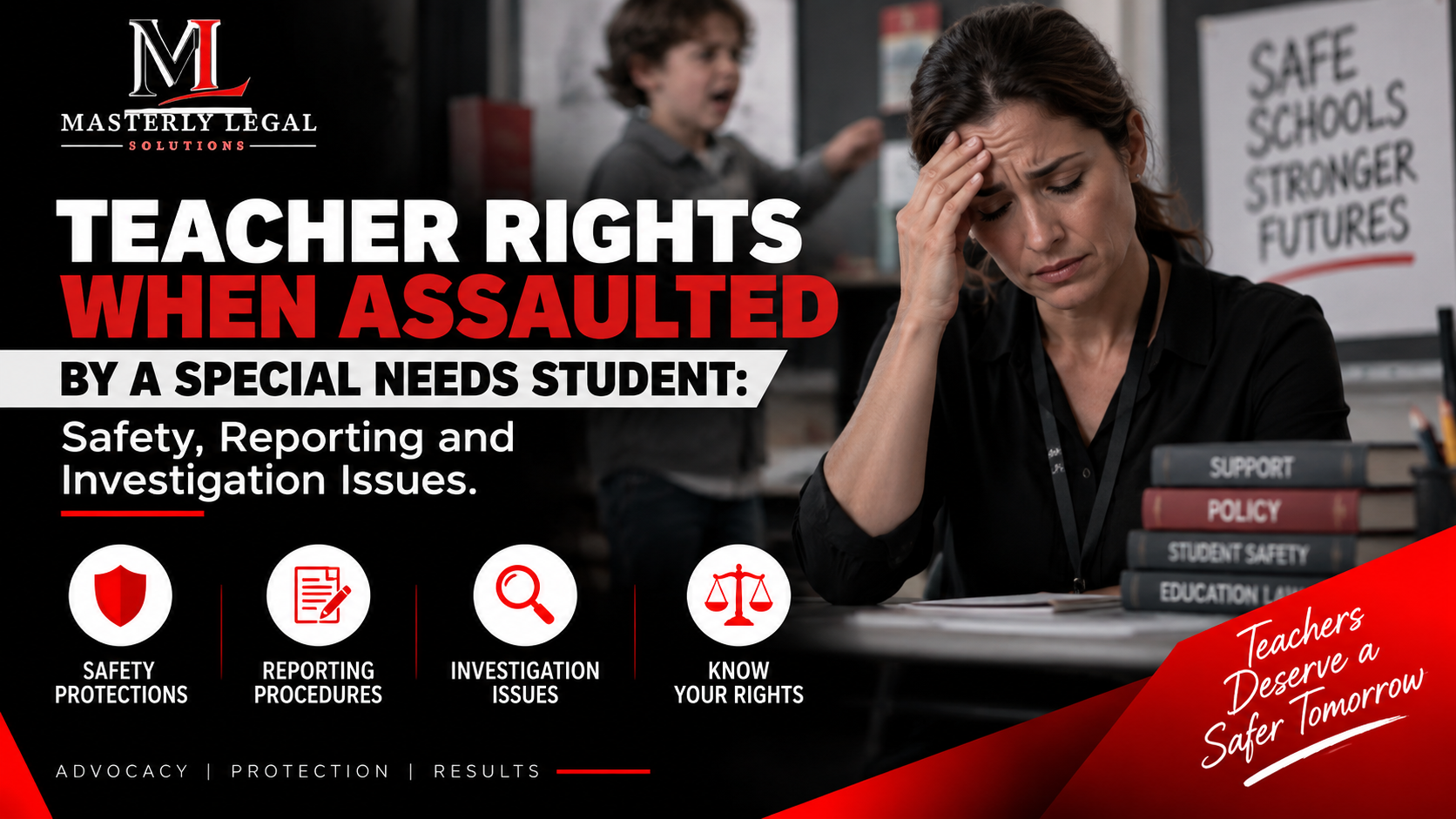
Teacher Rights When Assaulted by a Special Needs Student: Safety, Reporting and Investigation Issues


Looking for Legal & Business Solutions? Contact Us Now
Fill in the form or call us to set up a meeting