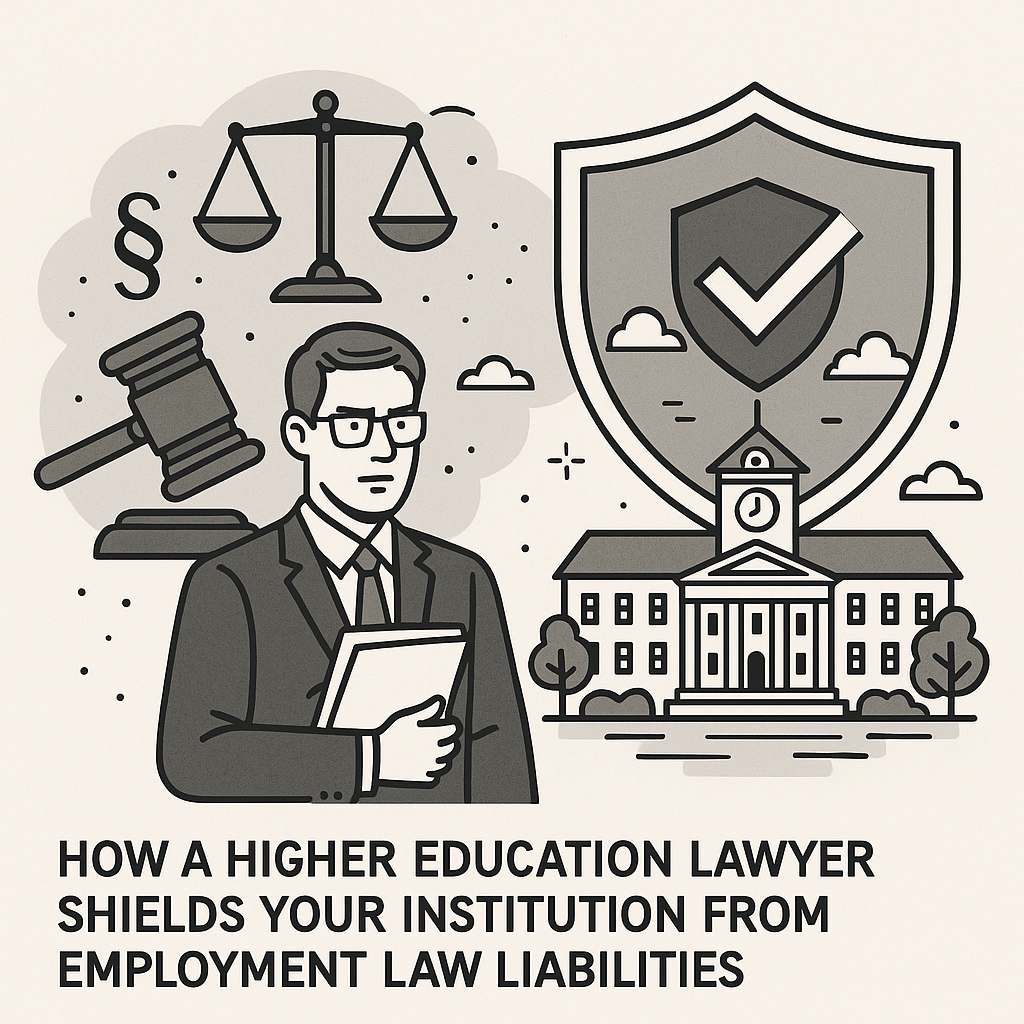
How a Higher Education Lawyer Shields Your Institution from Employment Law Liabilities
Understanding the Expanding Legal Landscape in Higher Education
Higher education has evolved into one of the most regulated and heavily scrutinized sectors, with colleges and universities facing increasing pressure from federal and state agencies. As campus culture shifts and employment expectations grow more complex, educational institutions must navigate legal issues that span hiring, training, discipline, compliance, and workplace investigations. A dedicated higher education lawyer ensures that institutions stay aligned with changing laws, protect their mission, and mitigate costly liabilities. Many educational institutions now depend on experienced attorneys to help them maintain safe and compliant environments for faculty, staff, and students.
Why Employment Law Risks Are Growing for Colleges and Universities
Employment challenges in the higher education sector have expanded over the past decade. Higher education institutions face claims involving discrimination, retaliation, academic misconduct, faculty tenure disputes, and workplace harassment. College and university clients often deal with overlapping federal laws that require constant monitoring. When internal processes fail, litigation defense becomes expensive and disruptive. A higher education attorney provides the expertise needed to avoid missteps, guide institutional clients, and reduce exposure before issues escalate into legal action.
How Higher Education Attorneys Protect Your Workforce and Your Reputation
Employment matters within colleges and universities often blend legal and practical issues. A higher education lawyer offers legal guidance that supports senior administrators, general counsel, and human resources teams as they address employee concerns. They represent clients in disputes, help resolve conflicts before they turn adversarial, and build strong compliance programs. By partnering with experienced attorneys, institutions gain a national leader in education law on their side—one equipped to deal with everything from crisis management to regulatory compliance.
Supporting Educational Institutions Across the Higher Education Sector
Colleges and universities are not a monolith. Higher education clients range from large research universities to small liberal arts colleges, community colleges, private colleges, state universities, and proprietary schools. Each setting faces its own risks, and a higher education attorney adjusts strategies to match the institution’s size, culture, and structure. Whether guiding a private research university through complex litigation or helping community colleges update faculty and staff handbooks, higher education lawyers assist institutions with a broad range of needs.
The Role of University Attorneys in Reducing Employment-Related Exposure
University attorneys often work closely with in house counsel when employment disputes arise. They handle summary judgment motions, settlement negotiations, hearings before the National Labor Relations Board, and actions brought by federal and state agencies. Their legal expertise also covers Title IX, family educational rights, academic freedom, and student records. By keeping employment matters tightly managed, higher education lawyers help institutional clients strengthen internal policies and avoid legal outcomes that could tarnish an institution’s public image.
Ensuring Proper Compliance with Federal Laws and Employment Regulations
Compliance is one of the most important responsibilities handled by college and university attorneys. Federal laws evolve rapidly, and institutions must keep pace to avoid penalties. Higher education attorneys counsel clients on Title IX compliance, sexual harassment prevention, discrimination training, and sexual misconduct investigations. They also work closely with human resources departments to align hiring and promotion processes with national association standards and applicable regulations. With proper regulatory compliance support, institutions minimize the risk of employment discrimination claims and violations.
Guiding Institutions Through Title IX, Sexual Misconduct, and Workplace Investigations
Title IX is one of the most complex areas of higher education law. Colleges and universities must follow strict procedures when addressing sexual harassment, academic misconduct, and sexual misconduct allegations. A higher education lawyer ensures investigations remain fair, unbiased, and legally sound. By supporting student affairs offices, compliance teams, and university clients, attorneys help institutions avoid procedural errors that often lead to federal scrutiny or litigation. Learn more about the Title IX investigation process and your rights as a respondent.
Maintaining Safe Campuses Through Strong Policies and Preventative Measures
Employment risks increase when institutional policies are unclear or outdated. Higher education attorneys update student handbooks, faculty and staff handbooks, and campus security policies to reflect evolving regulations. They help educational institutions create guidelines that foster positive campus culture and reduce opportunities for misconduct. When policies align with best practices, institutions create stable environments for learning and working—and reduce legal exposure.
Protecting Intellectual Property, Charitable Giving, and Employee Benefits
Hiring faculty, researchers, and administrators also introduces risks related to intellectual property ownership, employee benefits administration, unrelated business income tax, and charitable giving rules. University attorneys offer comprehensive legal resources that clarify rights, responsibilities, and obligations in these areas. By assisting institutions with documentation and training, higher education lawyers reinforce fairness, transparency, and compliance in employee relationships.
Managing Crises and High-Risk Employment Events with Care
Employment-related crises can arise suddenly, whether due to allegations involving collegiate athletics, personal injury claims, employee misconduct, or disputes between faculty members. A higher education lawyer guides general counsel and senior administrators through crisis management strategies that protect the institution’s reputation while honoring legal requirements. These attorneys counsel clients on how to respond, communicate, and document events in ways that mitigate risks and preserve trust.
Strengthening Human Resources Through Training and Legal Support
Human resources departments benefit significantly from close collaboration with higher education attorneys. Employment issues such as performance reviews, discrimination complaints, and workplace disputes require legal guidance that blends policy knowledge with practical experience. By providing training across departments, attorneys prepare HR teams to handle complaints professionally and consistently. This protects education clients while helping institutions maintain fairness and transparency in all employment processes.
Supporting Public Institutions and Private Colleges Equally
Public institutions often face additional layers of regulation compared to private colleges or proprietary schools. Higher education lawyers understand these differences and help institutions uphold constitutional requirements, administrative rules, and state-specific mandates. Private research universities and small liberal arts colleges may face different pressures related to academic freedom, campus culture, or donor relations. Legal counsel adapts to each institution’s structure, ensuring consistent protection across the education sector.
Addressing Claims of Employment Discrimination and Retaliation
Employment discrimination remains one of the most common legal challenges for colleges and universities. Claims may involve faculty hiring, promotions, tenure, compensation, or workplace environment issues. A higher education attorney responds to complaints, conducts investigations, and advises HR teams on next steps. By guiding institutions through dispute resolution or litigation defense, attorneys help educational institutions avoid damaging outcomes and maintain strong professional communities.
Representing Colleges and Universities Before Government Agencies
Employment matters often escalate to government agencies, including the Equal Employment Opportunity Commission, state labor boards, and federal oversight bodies. Higher education lawyers represent clients before the National Labor Relations Board when labor disputes arise or when faculty unions raise concerns. They communicate with regulatory agencies on behalf of colleges and universities to ensure clarity, fairness, and compliance.
Providing Strategic Legal Counsel to Senior Administrators
Senior administrators rely on higher education attorneys as trusted legal counsel for high-level employment decisions. These decisions may involve faculty tenure reviews, staff discipline, policy formation, crisis response, or dispute resolution. By providing a comprehensive range of guidance, higher education lawyers ensure that institutions remain focused on their educational missions while reducing legal distractions.
Creating Stronger Internal Processes to Reduce Future Claims
Well-designed internal processes help minimize employment risks before they develop into disputes. Legal experts evaluate grievance procedures, performance review systems, and conflict-resolution pathways. They implement improvements that support fairness, accountability, and transparency. With stronger processes, colleges and universities reduce their overall exposure while building trust among faculty and staff.
Reducing Risks Through Effective Documentation and Recordkeeping
Student records, faculty files, and HR documents must align with family educational rights rules and federal laws. Higher education attorneys help institutions maintain accurate, organized, and compliant documentation. Good recordkeeping protects institutions during audits, investigations, and litigation, while reinforcing the credibility of internal decisions.
Supporting School Districts and Academic Organizations with Employment Issues
Some higher education lawyers also support school districts, national associations, and academic organizations. Their education team helps manage employee complaints, contract matters, and policy development across diverse education settings. This wide exposure strengthens their ability to counsel clients in the higher education sector, as they understand how employment issues evolve across many types of institutions.
Why Working with a Higher Education Lawyer Reduces Costs Long-Term
Legal exposure is costly—not only financially but also reputationally. Higher education lawyers reduce long-term costs by preventing disputes, strengthening compliance programs, and guiding institutions through early intervention. Their holistic approach protects colleges and universities while preserving institutional stability.
How Higher Education Attorneys Support Collegiate Athletics Departments
Employment issues within collegiate athletics can be uniquely complex. Coaches, trainers, and athletic staff may face disputes involving contracts, discipline, or personal injury claims. A higher education lawyer ensures that athletic departments remain compliant with employment laws, safety requirements, and internal expectations. This protects the athletics program and the wider institutional community.
Providing Legal Support for In-House Counsel and General Counsel Teams
In house counsel often turn to outside higher education lawyers for support during high-risk employment matters. These attorneys handle investigations, negotiate resolutions, and collaborate on litigation defense. They also serve as sounding boards for challenging decisions involving faculty, staff, and administrators.
Enhancing Campus Safety and Security Through Strong Employment Policies
Campus security is closely tied to employment practices. Proper training, clear policies, and consistent enforcement help institutions create safe environments. Higher education lawyers guide colleges and universities through compliance with state university safety laws and federal requirements, strengthening long-term protections.
Building Trust Across Campus Through Transparent Employment Practices
A higher education lawyer promotes transparency across departments by ensuring policies are clear, predictable, and fair. This strengthens campus culture and supports positive working relationships among faculty, staff, and administrators. Clear expectations help reduce misunderstandings, disputes, and grievances.
Addressing Employment-Related Concerns Unique to Large Research Universities
Large research universities often face additional challenges involving research staff, grant employees, intellectual property, and laboratory environments. Higher education attorneys help address these concerns and ensure that employment policies support academic innovation while maintaining legal compliance.
Ensuring Fair and Compliant Approaches to Faculty Tenure
Faculty tenure decisions carry significant legal risk. A higher education lawyer advises committees, administrators, and general counsel on how to conduct tenure evaluations fairly and consistently. This protects against claims of discrimination, retaliation, or procedural errors.
Strengthening Title IX Compliance in Employment Settings
While Title IX is often viewed as student-focused, it also applies to employment contexts. Higher education attorneys ensure that institutions apply Title IX principles to faculty and staff matters, providing consistency and legal protection across all departments.
Legal Expertise for Managing Conflicts Between Departments
Employment conflicts often arise between academic departments, administrative units, or institutional branches. A higher education lawyer provides dispute resolution strategies that emphasize communication, fairness, and policy alignment.
Helping Institutions Address Claims Involving Workplace Safety
Workplace safety concerns can impact faculty, custodial staff, campus security personnel, and more. Higher education lawyers help institutions maintain compliance with occupational standards and respond to safety-related complaints.
Supporting Comprehensive Compliance Programs Across Education Clients
A strong compliance program minimizes employment claims and ensures consistency across hiring, promotion, and disciplinary processes. Higher education attorneys help institutions design, implement, and maintain these programs with clarity and precision.
Representing Institutions in Litigation Defense When Necessary
If litigation becomes unavoidable, a higher education lawyer represents institutions with skill, strategy, and experience. They prepare defenses for employment discrimination claims, wrongful termination actions, and related disputes. Their familiarity with education sector challenges ensures strong, targeted advocacy.
Helping Institutions Navigate Complex Federal and State Requirements
Higher education institutions must comply with overlapping rules that vary across jurisdictions. A higher education lawyer interprets these rules and ensures that colleges and universities understand their obligations at every stage of employment.
Assisting Institutions in Balancing Academic Freedom and Workplace Boundaries
Academic freedom is a cornerstone of higher education, but it must be balanced with workplace policies and anti-discrimination requirements. University attorneys help administrators manage this balance effectively, protecting both institutional integrity and individual rights.
Supporting Institutions Through Internal Reviews and Audits
Internal audits often expose gaps in employment practices. Higher education attorneys assist institutions in identifying risks, correcting issues, and preparing for external audits.
Providing Legal Resources and Training for Campus Leaders
Strong leadership depends on strong legal knowledge. Higher education attorneys offer legal resources and training to department chairs, senior administrators, and HR staff so they can make informed employment decisions.
Helping Institutions Maintain a Healthy Campus Culture
Campus culture plays a major role in employment satisfaction. Higher education lawyers help institutions evaluate cultural concerns, update policies, and implement initiatives that support fairness and safety.
Ensuring Institutions Remain Competitive and Legally Protected
A strong employment framework helps colleges and universities attract and retain exceptional faculty and staff. Higher education attorneys ensure that policies reflect industry standards while safeguarding institutional interests.
Speak with a Higher Education Lawyer Today
If your institution is navigating employment challenges, regulatory shifts, or workplace concerns, our team at Masterly Tech Group is here to help. We provide tailored legal support for educational institutions, guiding colleges and universities through compliance, investigations, risk management, and high-stakes employment matters. Our
higher education attorneys offer the depth of experience and legal expertise needed to protect your mission and empower your workforce. Reach out today to schedule your free consultation, and let us assist with any questions related to employment law, campus policies, or institutional compliance.
Contact us at
(972) 236-5051
to book a free consultation.
Disclaimer: The information provided in this article is for educational and general informational purposes only. It is not intended to serve as legal advice or to replace consultation with a qualified higher education lawyer.


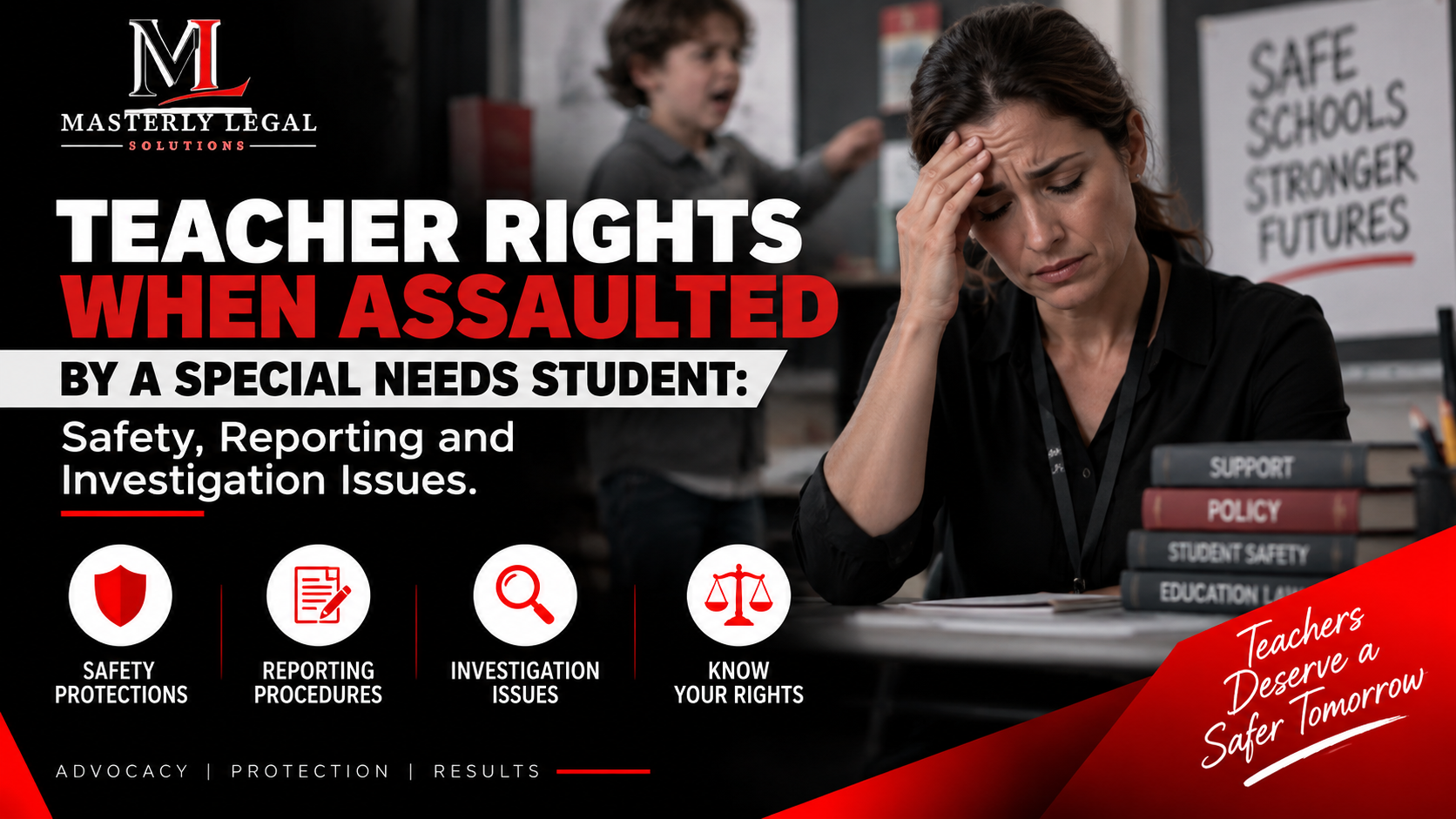
Teacher Rights When Assaulted by a Special Needs Student: Safety, Reporting and Investigation Issues

Looking for Legal & Business Solutions? Contact Us Now
Fill in the form or call us to set up a meeting