

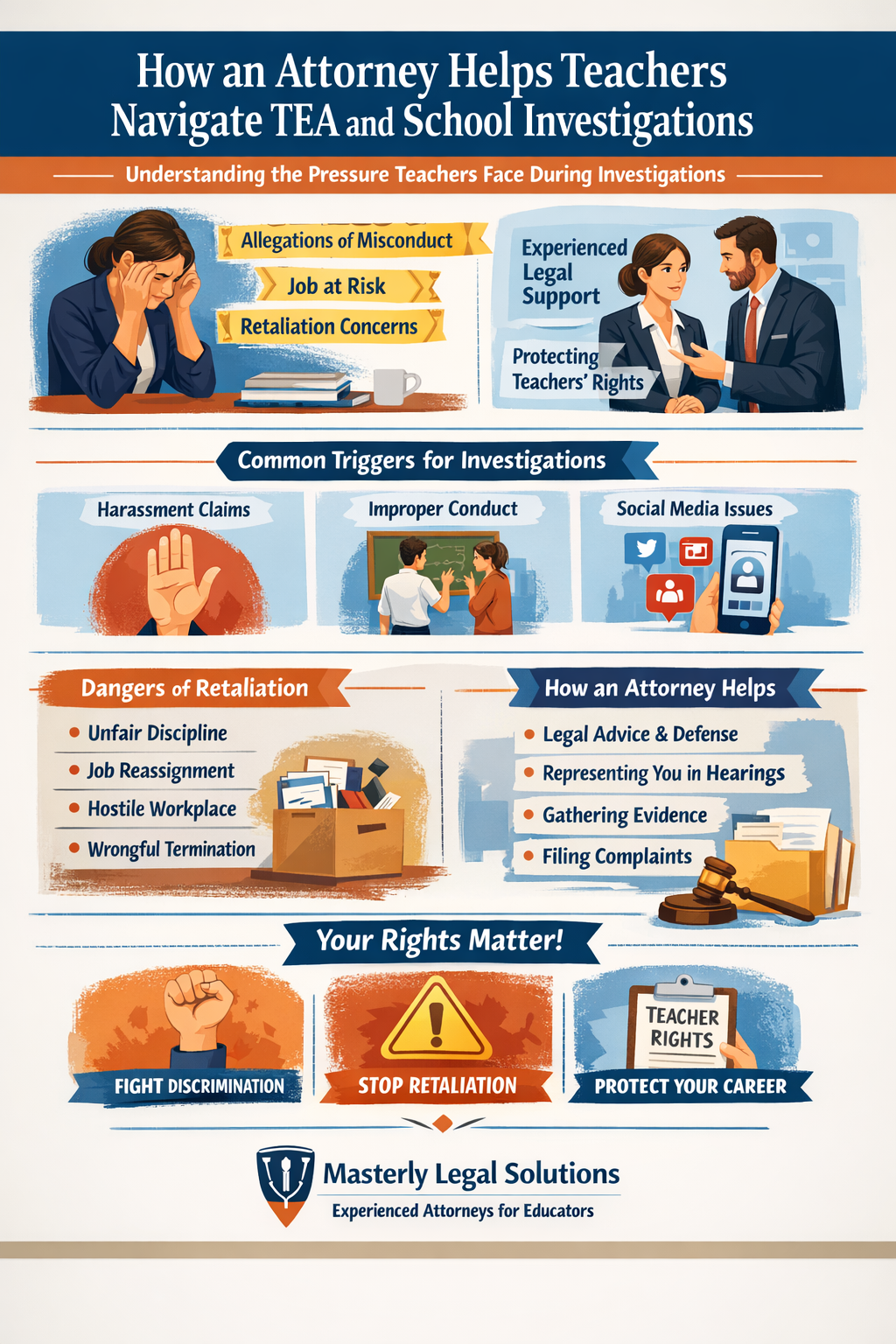
How an Attorney Helps Teachers Navigate TEA and School Investigations
Understanding the Pressure Teachers Face During Investigations
For many educators, a sudden investigation by a school district or the Texas Education Agency can feel overwhelming. A teacher who has spent years building a career may suddenly find their reputation questioned, their employment at risk, and their future uncertain. These situations often involve allegations tied to harassment, discrimination, or policy violation, and even when claims are unfounded, the process itself can be stressful.
What makes these cases even more complex is that retaliation can sometimes follow when a teacher participates in a protected activity, such as reporting discrimination or raising concerns about a hostile workplace. When an employer treats an employee unfairly after they speak up, the situation may shift from a simple investigation into a serious legal matter involving both state laws and federal law.
This is where experienced lawyers become essential. At Masterly Legal Solutions, we understand how these cases unfold and how to protect teachers every step of the way.
What Triggers a TEA or School Investigation
As soon as a concern is raised that could affect your license or position, understanding Texas TEA investigations and teacher certification help can be critical to protecting your future in education.
Common Allegations in School Settings
School investigations can arise from a wide range of complaints. These may include accusations of sexual harassment, improper conduct with students, or disputes involving colleagues. Many TEA inquiries also stem from issues like social media use, classroom boundaries, and other concerns described in TEA investigations: common causes and teacher protections. In some cases, a teacher may be accused after a misunderstanding or even false reporting.
Other situations involve reporting harassment or reporting discrimination, where a teacher raises concerns about unfair treatment tied to a person’s race, national origin, or genetic information. When these concerns are ignored or dismissed, the matter may escalate.
Teachers may also face scrutiny over classroom management, grading practices, or interactions with parents and administrators. Even routine disagreements can evolve into formal complaints.
The Role of School Districts and State Agencies
When a complaint is filed, the school district or a state agency often initiates a formal investigation. This process may involve interviews with potential witnesses, reviews of documents, and evaluations of workplace conduct. During this process, many educators benefit from guidance offered by Texas education lawyers providing expert legal help for schools and teachers.
At the same time, federal standards may apply. Laws like Title VII, the Civil Rights Act, and the disabilities act provide legal protections for individual employees and job applicants. These laws prohibit discrimination and harassment in employment, making it critical that investigations are handled properly.
The Risk of Retaliation in School Environments
What Retaliation Looks Like
Retaliation can take many forms, and it often occurs after a teacher engages in a protected activity. This could include reporting discrimination, participating in an inquiry, or assisting another employee with a claim.
When retaliation occurs, the employer might:
- Reassign the teacher to a less desirable position
- Deny access to a previously desirable position
- Issue unfair performance reviews
- Reduce work hours or responsibilities
- Create a hostile work environment
In some cases, teachers may even be unfairly fired, leading to claims of wrongful termination.
Retaliation at Work and Legal Consequences
Retaliation at work is prohibited under both federal and state laws. If an employer treats a teacher negatively for engaging in a protected activity, that action may be considered unlawful.
Teachers who face retaliation may have the right to file a complaint with the equal employment opportunity commission or pursue a lawsuit. These claims can result in compensation, including lost wages and even punitive damages in serious cases.
How an Attorney Protects Teachers During Investigations
Early Legal Guidance Matters
One of the most important steps a teacher can take is contacting experienced employment lawyers early in the process. For Texas educators, working with counsel who focus on surviving a TEA investigation and protecting your license can make a significant difference in results. Waiting too long can make it harder to build a strong defense.
An attorney can:
- Review the details of the complaint
- Help the teacher understand their rights under federal law and state laws
- Advise on how to respond during interviews
- Prevent misstatements that could harm the case
This early involvement helps protect the teacher’s position and ensures that their rights are respected.
Managing Communication with the Employer
During an investigation, every interaction with the employer matters. Teachers may be asked to provide written statements, attend meetings, or respond to allegations.
A lawyer ensures that communication is handled carefully. They can step in when the employer treats the teacher unfairly or attempts to pressure them into admissions. This is especially important in cases involving sexual advances, sexual favors, or sensitive allegations.
Defending Against Discrimination and Harassment Claims
Understanding Discrimination Laws
Claims involving discrimination often fall under Title VII, the Civil Rights Act, and other federal statutes. These laws protect teachers from unfair treatment based on factors like national origin, age discrimination, or disability. Many educators also benefit from broader education law and legal protection for teachers when disputes involve contracts, nonrenewal, or complex institutional policies.
They also extend to federal employees and those working in public school systems under local governments.
Addressing Sexual Harassment Allegations
Allegations of sexual harassment can have serious consequences, even before they are proven. These cases may involve claims of sexual advances, inappropriate comments, or requests for sexual favors.
An attorney helps ensure that:
- The investigation is fair and unbiased
- Evidence is properly reviewed
- The teacher’s rights are fully protected
They also help identify whether the claims themselves may involve retaliation or false reporting.
Navigating Reporting Obligations
Reporting Harassment and Discrimination Safely
Teachers are often required to report misconduct. However, reporting harassment or reporting discrimination can sometimes lead to backlash.
An attorney can guide teachers through:
- Proper documentation of incidents
- Filing procedures with the equal employment opportunity commission
- Internal reporting requirements
This ensures compliance while minimizing risk.
Filing a Complaint Without Fear
When teachers need to file a complaint, they may worry about how their employer will respond. Legal counsel helps ensure that the filing process is handled correctly and that the teacher is protected from adverse actions.
Employment Contracts and Teacher Rights
Reviewing Employment Agreements
Many teachers are unaware of how their employment contracts impact their rights. These agreements may include clauses related to discipline, termination, and dispute resolution.
An attorney reviews these contracts to ensure:
- Fair treatment during investigations
- Protection against wrongful termination
- Compliance with laws governing education employment
Protecting Benefits and Leave Rights
Teachers may also have rights under the medical leave act, including job protected leave and fmla leave. These protections are critical for eligible employees dealing with health issues or family needs.
Legal guidance ensures that these rights are not violated during an investigation.
Handling Workplace Safety and Concerns
Occupational Safety and Teacher Protection
In some cases, investigations involve concerns about occupational safety or physical harm. Teachers who report unsafe conditions are engaging in a protected activity.
Under whistleblower laws, these teachers are protected from retaliation. An attorney ensures that their rights are upheld.
Protecting Against Unlawful Employer Actions
Recognizing Unlawful Conduct
Not all employer actions are legal. When an employer treats a teacher unfairly based on discrimination, harassment, or retaliation, those actions may be unlawful.
Examples include:
- Ignoring complaints of harassment
- Penalizing teachers for reporting discrimination
- Denying reasonable accommodations for a disability
Pursuing Legal Action When Necessary
If internal processes fail, teachers may need to pursue a lawsuit. This step often involves:
- Filing claims with the equal employment opportunity commission
- Gathering evidence from potential witnesses
- Demonstrating how the employer violated laws
Experienced labor and employment lawyers play a key role in building these cases.
Supporting Teachers Through Complex Cases
Immigration Status and Employee Rights
Teachers with concerns about immigration status may feel especially vulnerable during an investigation. However, federal law still provides protections against
discrimination and harassment.
Attorneys ensure that these teachers are treated fairly and that their rights are respected.
Protecting Job Applicants and Current Employees
Both job applicants and current employees are protected under various employment act provisions. Whether someone is applying for a role or defending their current position, legal support is critical.
Building a Strong Defense Strategy
Gathering Evidence and Documentation
A strong defense often depends on evidence. This includes emails, reports, and witness statements.
Lawyers help teachers:
- Organize documentation
- Identify inconsistencies in claims
- Strengthen their position during the investigation
Preparing for Interviews and Hearings
Teachers may be required to participate in formal interviews. Preparation is key to avoiding missteps.
Attorneys coach clients on:
- Answering questions clearly
- Avoiding statements that could be misinterpreted
- Maintaining professionalism under pressure
The Long-Term Impact on Careers
Protecting Professional Reputation
Even unproven allegations can affect a teacher’s reputation. Legal support helps minimize damage and restore credibility.
Preventing Future Discrimination
Addressing issues early can help prevent future discrimination and create a healthier work environment for all workers.
Employee Morale and Workplace Stability
When investigations are handled properly, they can improve employee morale and reinforce trust within the school system.
How Masterly Legal Solutions Supports Teachers
Personalized Legal Strategies
At Masterly Legal Solutions, our team of experienced lawyers provides personalized guidance for every case. We understand that no two situations are alike, and our broader legal services for education, labor, and internal investigations allow us to tailor strategies to each client’s needs.
Dedicated Advocacy for Educators
We focus on:
- Defending against harassment and discrimination claims
- Addressing retaliation complaint issues
- Protecting against wrongful termination
- Ensuring compliance with federal and state laws
Our goal is to protect your career, your reputation, and your future.
Take Action to Protect Your Career
If you are facing a school or TEA investigation, do not wait to seek legal guidance. These situations can escalate quickly, especially when retaliation, harassment, or discrimination is involved. Understanding why teachers need an experienced education law attorney and having experienced lawyers on your side can make a significant difference in the outcome of your case.
At Masterly Legal Solutions, we take the time to understand your situation and provide clear, strategic advice. Whether you are dealing with a complaint, preparing for a hearing, or considering a lawsuit, our insights on TEA investigations, common causes, and teacher protections reflect the same commitment to helping you move forward with confidence.
When Discrimination Involves Resisting Sexual Advances
In some cases, teachers may face discrimination resisting sexual advances, especially when they refuse inappropriate behavior from a supervisor or colleague. When an employee or job applicant is treated unfairly after rejecting such conduct, it may violate both federal law and state laws designed to protect individuals in the workplace. This type of situation often overlaps with claims of sexual harassment, where power dynamics are misused to pressure individuals into uncomfortable or unlawful situations. An experienced attorney can help gather evidence, document the conduct, and ensure the teacher’s rights are protected throughout the process. Legal guidance is especially important when the employer treats the situation improperly or fails to take corrective action.
Protecting Rights Related to Accommodations, Pay, and Family Concerns
Teachers also have important rights when it comes to requesting support in the workplace. For example, they may need to request reasonable accommodations for a medical condition, or address issues involving overtime pay when work responsibilities extend beyond normal expectations. In some situations, concerns may also involve a family member, such as when leave is needed or workplace decisions affect caregiving responsibilities. If a supervisor ignores these requests or responds negatively, it could lead to claims involving discrimination or even retaliation. Having knowledgeable lawyers involved ensures that these rights are enforced and that teachers are not placed at a disadvantage for asserting legally protected needs.
How Employment Lawyers Enforce Legal Protections for Teachers
Experienced employment lawyers play a critical role in ensuring that teachers understand and exercise their rights during disputes and investigations. Many cases require interaction with agencies like the equal employment opportunity commission, which oversees complaints involving discrimination, harassment, and workplace misconduct. These legal processes are designed to provide legal protections not only for private-sector workers but also for federal employees and those working in public education systems. When handled correctly, these protections help create accountability and fairness in the workplace. Having legal representation ensures that every step—from filing to resolution—is handled strategically and effectively.
Addressing Leave Rights, Safety Concerns, and Employer Misconduct
Teachers may also face issues involving the medical leave act, especially when they need time off due to personal health conditions or to care for a loved one. In these situations, the law provides safeguards, including the right to leave without fear of losing one’s job. Concerns can also arise when a teacher experiences physical harm or unsafe conditions, which may involve additional workplace protections. If an employer responds with adverse actions, such as demotion or discipline, it may raise serious legal concerns. Teachers are also entitled to reasonable accommodations when dealing with a disability or medical need, and failure to provide them can lead to claims. In more severe cases, if a teacher is unfairly fired, they may pursue a claim that could result in compensation, including punitive damages, depending on the circumstances.
Contact Us for Guidance and Support
If you are dealing with challenges related to retaliation at work, reporting discrimination, or a school investigation, we invite you to reach out to our team. We offer a free consultation to discuss your situation, answer your questions, and help you understand your legal options.
Call us today at (972) 236-5051 to speak with a member of our team, or explore our broader Texas-based legal services at Masterly Legal Solutions. Taking that first step can help you protect your career and regain peace of mind.
This article is for educational purposes only and does not constitute legal advice. For guidance specific to your situation, please contact a qualified attorney.







Looking for Legal & Business Solutions? Contact Us Now
Fill in the form or call us to set up a meeting