

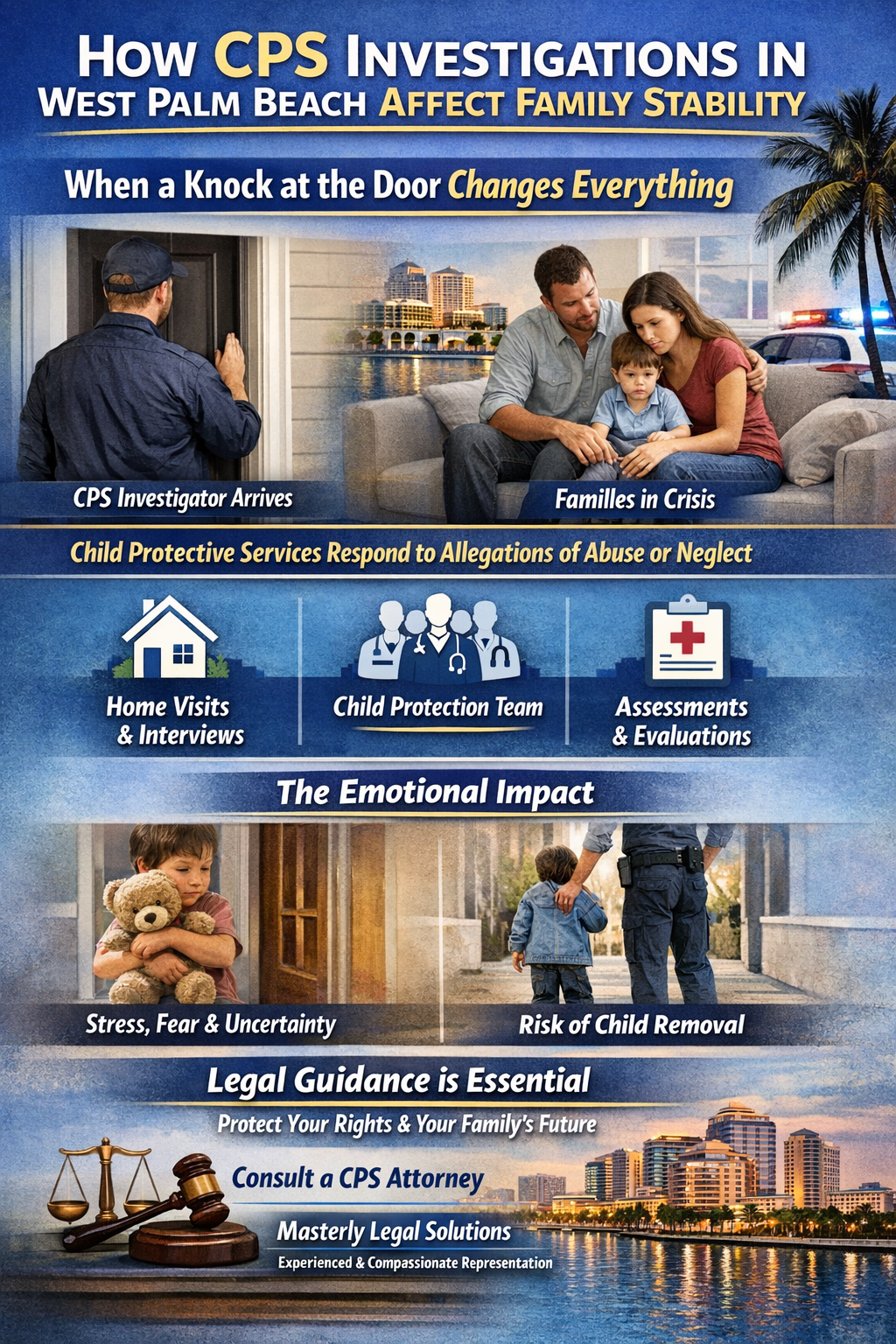
How CPS Investigations in West Palm Beach Affect Family Stability
When a Knock at the Door Changes Everything
For many families, life can shift in an instant when a CPS investigation begins. What may start as a report of suspected child abuse or neglect can quickly turn into a stressful and confusing experience. Parents often feel overwhelmed, unsure of what to expect, and worried about their child and their family’s future.
In West Palm Beach, child protective services play a significant role in responding to these situations. While the goal is to protect children, the process can place a heavy emotional and financial strain on families. Understanding how these investigations unfold is essential for protecting both your rights and your child’s well being.
Understanding the Role of Child Protective Services
Child protective services are responsible for investigating allegations of child abuse and neglect. When CPS receives a report, they must determine whether the child is in danger and what steps are necessary to ensure safety.
The agency works with a child protection team, which may include social workers, medical professionals, and other specialists. This team evaluates the situation and provides assessments provided to determine whether intervention is needed. While the intention is to protect, the impact on a family can be immediate and lasting.
How CPS Investigations Begin in Palm Beach
CPS investigations in Palm Beach often begin with a report from a teacher, neighbor, medical provider, or even a family member. These reports can involve suspected child abuse, neglect cases, or concerns about a child’s safety.
Once CPS receives the report, an investigation is opened. The agency may visit the home, speak with the child, and gather information from other sources such as the child’s school or healthcare providers. At this stage, families are often unsure how serious the situation is or what steps will follow.
The Emotional Impact on Families
Being investigated by CPS can be one of the most difficult times a family will face. Parents may feel judged, anxious, and uncertain about the outcome. Children may also experience confusion and fear, especially if they are questioned by unfamiliar individuals.
The stress of an investigation can affect relationships within the family. Even when allegations are not substantiated, the emotional toll can linger long after the case is closed.
The Initial Home Visit and Assessment
During the initial phase, CPS may conduct a home visit to assess the child’s living conditions. This includes evaluating whether the environment is safe and whether the child’s needs are being met.
The child protection team may perform assessments to determine if there are signs of abuse or neglect. These assessments provided can include interviews, medical evaluations, and psychological reviews. The goal is to gather enough information to determine the next steps.
Interviews With Parents and Children
CPS investigators will often interview both the parent and the child. These interviews are a critical part of the investigation process. What is said during these conversations can influence the direction of the case.
Parents should understand that statements made during interviews may be used as evidence. This is why seeking guidance from a CPS attorney early in the process is essential. An experienced attorney can advise you on how to respond and protect your rights.
The Role of the Child Protection Team
The child protection team plays a central role in CPS investigations. This team works together to evaluate the child’s condition and determine whether intervention is necessary.
Their responsibilities may include:
- Conducting medical and psychological assessments
- Reviewing reports of suspected child abuse
- Coordinating with law enforcement or police when necessary
- Providing recommendations for treatment or services
These professionals are committed to child protection, but their findings can have significant consequences for families.
When Allegations Lead to Serious Consequences
Allegations of child abuse or neglect can lead to serious outcomes, including court involvement or even criminal charges. In some cases, CPS may determine that the child has been abused or is at risk.
When this happens, the agency may take steps to remove the child from the home. This decision is often based on what CPS believes is in the best interests of the child, but it can be devastating for parents.
The Possibility of Child Removal
One of the most concerning aspects of CPS investigations is the possibility of removal. If CPS believes a child is in danger, they may remove the child from the home.
This can result in placement with relatives, grandparents, or even foster care. The removal process is often fast and can happen with little warning. Parents may feel powerless during this stage, especially if they do not have legal representation.
Placement With Relatives or Foster Care
When a child is removed, CPS will look for safe placement options. This may include relatives, stepparents, or close family members who can provide care.
If no suitable placement is available, the child may be placed in foster care. While the goal is to ensure safety, this separation can be emotionally challenging for both the child and the parent.
The Legal Process and Court Involvement
In many CPS cases, the legal system becomes involved. A judge may review the case and determine whether the child should remain in protective care.
Court proceedings can be complex and stressful. Parents may need to present evidence, respond to allegations, and comply with court orders. Having an experienced attorney is critical during this stage.
The Importance of Early Legal Guidance
Seeking legal guidance early in a CPS investigation can make a significant difference. A CPS attorney can help you understand your rights and navigate the process.
Legal professionals can:
- Review the details of your case
- Advise you on how to respond to CPS
- Help you prepare for court proceedings
- Work to defend your parental rights
Early consultation can help prevent mistakes that could affect the outcome of your case.
How CPS Evaluates Child Safety
CPS focuses on child safety when making decisions. This includes assessing whether the child is safe in their current environment and whether any risks are present.
Factors considered may include:
- The child’s physical and emotional condition
- The parent’s ability to provide care
- Any history of abuse or neglect
- The overall home environment
These evaluations play a key role in determining the direction of the case.
The Role of Assessments and Diagnosis
Assessments and diagnosis are often used to evaluate the child’s condition. These may include medical exams, psychological evaluations, and other forms of testing.
The results of these assessments provided can influence CPS decisions. They may also determine what type of treatment or services are recommended for the child or family.
Services and Treatment Plans for Families
In some cases, CPS may offer services and treatment plans designed to support families. These services may include counseling, parenting classes, or substance abuse treatment.
The goal is to address any issues that may affect the child’s well being. While these services can be helpful, they are often required as part of the case and must be completed to achieve a favorable outcome.
The Impact on Employment and Daily Life
CPS investigations can affect more than just family relationships. Parents may need to take time off work, attend meetings, or comply with service requirements.
This can create financial strain and disrupt daily routines. The added stress can make it difficult to maintain stability during an already challenging time.
Confidentiality and Privacy Concerns
CPS cases are generally confidential, but that does not always prevent information from spreading. Parents may worry about how the investigation will affect their reputation in the community or at their child’s school.
Maintaining confidentiality is important, but the reality is that these situations can still become known to others, adding to the stress.
How Evidence Is Collected and Reviewed
During the investigation, CPS collects evidence to support their findings. This may include interviews, documents, medical records, and other forms of information.
The agency will review this evidence to determine whether the allegations are substantiated. Parents should be aware that everything they say and do may be considered during this review.
Defending Against Allegations
Defending against allegations of child abuse or neglect requires a proactive approach. Parents must be prepared to respond to claims and present their side of the story.
An experienced attorney can help you:
- Review the evidence
- Identify inconsistencies in reports
- Present a strong defense
- Advocate for your parental rights
Taking action early can help protect your family and your future.
The Role of Compassionate Legal Support
Navigating a CPS investigation requires both legal knowledge and emotional support. Families need guidance from professionals who understand what they are going through.
At Masterly Legal Solutions, we are committed to providing compassionate and effective representation. We understand the challenges families face and work to support our clients every step of the way.
Long-Term Effects on Family Stability
Even after a CPS case is resolved, the effects can linger. Families may continue to experience stress, changes in relationships, and challenges in rebuilding trust.
The experience can also affect the child’s emotional well being. This is why it is important to address issues early and seek support throughout the process, including considering essential legal documents for families before age 40 to provide additional long-term protection and stability.
Protecting Your Family’s Future
Protecting your family during a CPS investigation requires knowledge, preparation, and strong legal support from a full-service law firm that can also assist with related legal and business matters. Understanding your rights and taking proactive steps can help you navigate this difficult situation.
Every case is unique, and the outcome depends on many factors. Having the right guidance can make a meaningful difference in protecting your family’s stability.
Understanding the Role of the Texas Department in Multi-State Cases
In some situations, cases may involve coordination with agencies beyond Florida, including the Texas Department when families have ties across state lines. While each state operates under its own laws, agencies often share information to ensure child protection efforts remain consistent. This can add another layer of complexity, especially when determining which agency has authority over certain aspects of the case. Families should be aware that multi-state involvement may affect how the investigation is handled and what steps are required moving forward, and may benefit from guidance by a firm experienced with multi-jurisdictional investigations and institutional clients.
How Child Protective Services CPS Coordinates Its Efforts
Child protective services CPS operates within a structured system designed to respond quickly to reports of abuse or neglect. The agency follows established procedures to assess risk, gather evidence, and determine appropriate action. This process often involves multiple professionals working together to ensure that the child’s safety remains the top priority, similar to how a law firm with expertise in education law, internal investigations, and compliance matters coordinates complex legal responses. Understanding how child protective services CPS functions can help families better prepare for each stage of the investigation, much like students and educators must understand the Title IX investigation process and their rights as respondents in school-based proceedings.
Accessing Resources During a CPS Investigation
Families going through a CPS investigation may feel overwhelmed, but there are resources available to provide support. These may include counseling services, parenting programs, and legal assistance, including help from an education lawyer experienced in protecting teachers and schools during investigations when school-related allegations are involved. Accessing the right resources can help families navigate the situation more effectively and demonstrate a commitment to resolving concerns. Taking advantage of available support can also positively influence the outcome of the case.
Managing Your Schedule While Navigating CPS Requirements
One of the challenges families face during a CPS investigation is adjusting their schedule to meet various obligations. This may include attending meetings, completing assessments, or participating in required programs. Balancing these responsibilities with work and daily life can be difficult, especially when also trying to manage estate planning and long-term decision-making through wills and trusts. Staying organized and keeping track of appointments is essential to avoid delays or misunderstandings in the process.
The Role of the CPS Office in Handling Investigations
The CPS office serves as the central point for managing investigations and coordinating services. This is where reports are reviewed, caseworkers are assigned, and decisions are made regarding the next steps. Families may be required to attend meetings at the office or communicate regularly with assigned caseworkers, while also working with professionals to create trust-based estate plans that protect their children’s futures. Understanding how the CPS office operates can help families navigate the process with greater clarity.
Facilitating Communication Between Families and Caseworkers
Effective communication is critical during a CPS investigation, and facilitating open dialogue between families and caseworkers can make a significant difference. Clear communication helps ensure that expectations are understood and that concerns are addressed promptly. When communication breaks down, it can lead to confusion and unnecessary complications. Taking a proactive approach can help maintain a more constructive relationship throughout the process.
Understanding the Authority of CPS in Child Protection Cases
CPS has the legal authority to investigate reports, assess risk, and take action when necessary to protect a child. This authority allows the agency to make decisions regarding removal, placement, and required services. While these powers are intended to ensure safety, they can feel overwhelming for families. Knowing the extent of CPS authority can help parents better understand their rights and responsibilities.
Why It Is Important to Act Quickly When a Case Begins
When a CPS investigation starts, it is important to act quickly to protect your rights and your family. Early action can help prevent misunderstandings and ensure that your perspective is properly considered. Delays can make it more difficult to address concerns and may affect the overall outcome. Seeking guidance early in the process can provide clarity and direction, including setting up powers of attorney and related protections for your children as part of your broader legal strategy.
What Happens When a CPS Case Is Filed
Once a CPS case is filed, the process becomes more structured and formal. The agency begins gathering evidence, conducting interviews, and making decisions based on the information collected. This stage may involve additional oversight, including potential court involvement. Understanding what happens after a case is filed can help families prepare for the next steps and respond appropriately.
Speak With Masterly Legal Solutions About Your CPS Case
If you are facing a CPS investigation in West Palm Beach, you do not have to go through this alone. We understand how overwhelming and stressful these situations can be, especially when your child and family are involved.
At Masterly Legal Solutions, we are committed to helping you understand your rights, respond to allegations, and protect your family’s future. Our team provides personalized guidance and support tailored to your specific circumstances.
Contact us today at (972) 236-5051 for a free consultation. We are here to answer your questions, review your situation, and help you take the next steps with confidence.
Disclaimer: This article is for educational purposes only and does not constitute legal advice. Every situation is unique, and you should consult with a qualified attorney for advice specific to your case.
Teacher Rights When Assaulted by a Special Needs Student: Safety, Reporting and Investigation Issues





Looking for Legal & Business Solutions? Contact Us Now
Fill in the form or call us to set up a meeting