

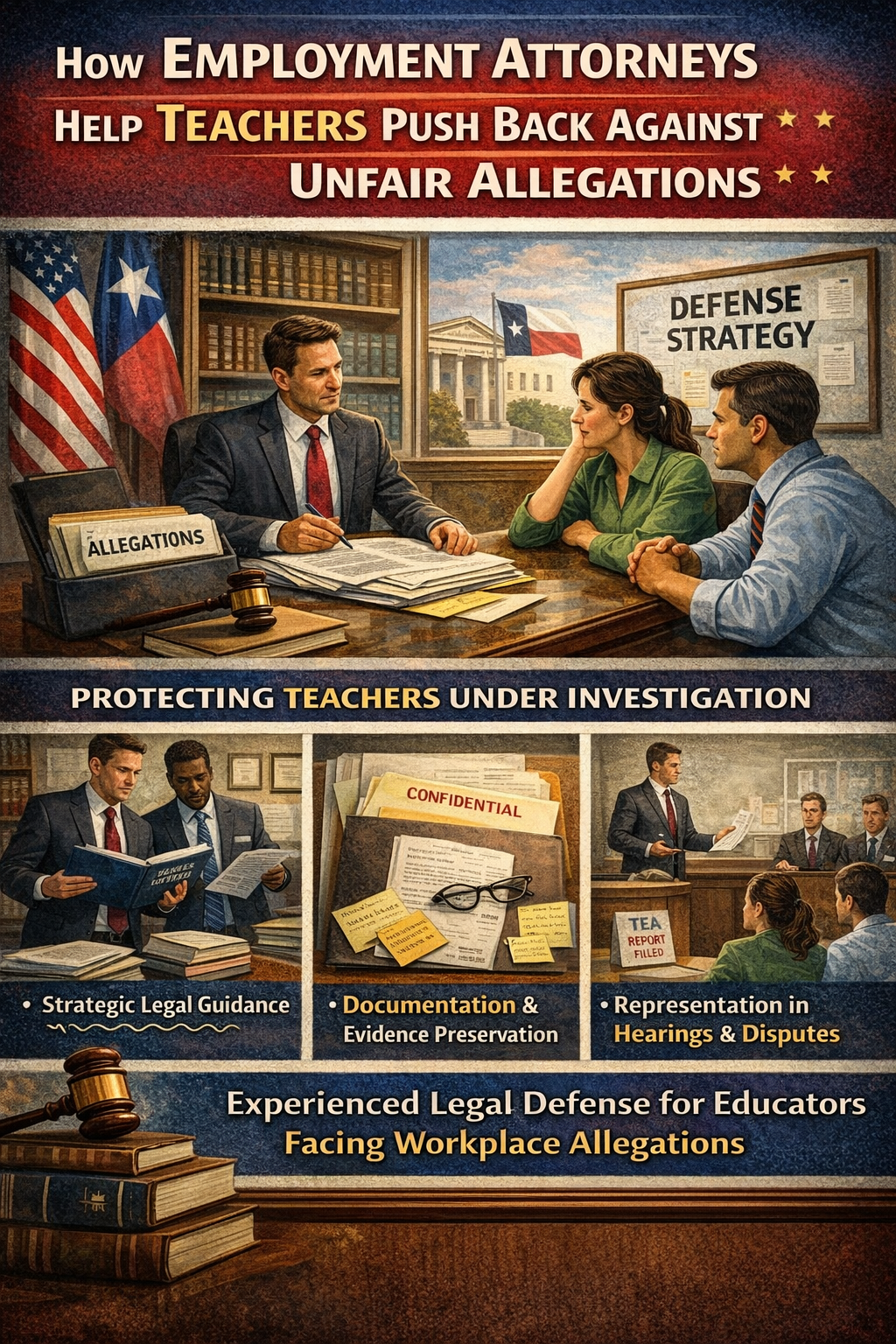
How Employment Attorneys Help Teachers Push Back Against Unfair Allegations
Few experiences are as unsettling for a teacher as being accused of misconduct they never expected. Allegations can arrive suddenly, disrupt daily routines, and place a career built over years into immediate jeopardy. Many employees feel pressure to explain themselves quickly, not realizing how easily words can be misunderstood or misused. At Masterly Legal Solutions, we help teachers slow the process down, understand their rights, and respond strategically. This article explains how employment attorneys support educators facing unfair allegations, without promising outcomes, but with clear, practical defense strategies rooted in law.
When Allegations First Surface in Education Settings
Unfair allegations often begin quietly, sometimes with a complaint filed internally or with a state agency. Teachers may learn about the issue only after administrators have already formed opinions. Employers may change job duties, reassign job assignments, or limit access to resources. These early actions can shape the entire process. Employment lawyers help teachers recognize what is happening before it escalates.
Why Teachers Are Especially Vulnerable to Accusations
Teachers work in environments with heightened scrutiny and public accountability. Interactions with students, parents, and staff can be misinterpreted. School districts must respond quickly to complaints, sometimes at the expense of fairness. Many employees assume the system will protect them automatically. Legal guidance helps balance the scales.
The Role of Employment Attorneys in Teacher Defense
protecting employees when their rights are threatened. They analyze allegations through the lens of employment law, not emotion or rumor. Their role is to guide teachers through investigations, interviews, and administrative processes. Attorneys help teachers respond without escalating conflict. This strategic approach protects both careers and personal life.
Defense Strategies Without Promising Outcomes
Ethical lawyers never guarantee results. Instead, they focus on preparation, documentation, and risk reduction. Defense strategies aim to protect legal protections, preserve evidence, and challenge unfair procedures. Each case depends on unique circumstances. Attorneys explain options clearly so teachers can make informed decisions.
Understanding the Legal Framework That Applies to Teachers
Teacher allegations intersect with multiple laws. Federal and state laws regulate discrimination, retaliation, and due process. State and local laws may impose additional obligations on school districts. Employment attorneys identify which laws apply to each situation. Understanding the legal framework prevents costly mistakes.
Employment Law as the Foundation of Defense
Employment law governs how employers investigate and discipline employees. It sets limits on employment decisions and adverse actions. Teachers accused unfairly may still be protected by employment law. Attorneys use these rules to hold employers accountable. This area of law forms the backbone of most defense strategies.
The Employment Act and Fair Treatment Standards
The employment act establishes baseline standards for workplace fairness. It limits how allegations may be handled and how discipline is imposed. Employers must follow consistent employment practices. Selective enforcement can signal discrimination. Attorneys look for these inconsistencies early.
Civil Rights Act Protections for Educators
The Civil Rights Act plays a central role in teacher defense. Title VII of the Civil Rights Act prohibits discrimination and retaliation. Allegations tied to protected characteristics raise serious legal concerns. Employment lawyers use the Civil Rights Act to challenge biased actions. These protections apply even during investigations.
Title VII and Its Practical Impact
Title VII addresses discrimination based on race, sex, national origin, and more. It also protects teachers who engage in reporting discrimination. Retaliation after a complaint is unlawful. Attorneys evaluate timing and motive to determine violations. Title VII remains a powerful defense tool.
Americans With Disabilities Act and Reasonable Accommodations
The Americans with Disabilities Act protects teachers with qualifying disabilities. Employers must provide reasonable accommodations unless doing so creates undue hardship. Allegations sometimes arise from misunderstandings related to accommodations. Attorneys assess whether the employer denies accommodations improperly. The Disabilities Act often intersects with disciplinary disputes.
Provide Reasonable Accommodations in Practice
Employers are required to provide reasonable accommodations when requested. Failure to do so can lead to discrimination claims. Teachers may be accused of performance issues tied to unmet needs. Employment lawyers document requests and responses carefully. This record can be critical later.
Pregnancy Discrimination Act and Family-Related Issues
The Pregnancy Discrimination Act protects teachers during pregnancy and related conditions. Allegations sometimes arise during leave or schedule changes. Employment decisions tied to pregnancy are closely scrutinized. Attorneys ensure employers comply with this law. Family considerations should never trigger unfair treatment.
Age Discrimination in Employment Concerns
Age discrimination in employment can surface subtly. Older teachers may face allegations tied to outdated stereotypes. Employment lawyers analyze whether age discrimination played a role. The discrimination in employment act provides protections. These cases require careful factual analysis.
Sex Discrimination and Gender Discrimination Issues
Sex discrimination and gender discrimination remain common in education workplaces. Allegations may be used to justify unequal treatment. Employment attorneys assess whether discipline aligns with how others are treated. Patterns often reveal bias. These claims fall squarely under federal laws.
Sexual Orientation and National Origin Protections
Teachers are protected from discrimination based on sexual orientation and national origin. Allegations may mask underlying bias. Attorneys look beyond stated reasons to identify direct discrimination. Local laws may provide additional protections. These issues must be addressed carefully.
Workplace Discrimination and Hostile Work Environment Claims
Workplace discrimination can take many forms. Severe or pervasive harassment may create a hostile work environment. Teachers facing allegations may already be working under hostility. Employment lawyers document harassment patterns. These facts can shift the narrative.
Direct Discrimination Versus Subtle Bias
Direct discrimination is often easier to identify. Subtle bias requires deeper analysis. Employment attorneys compare how many employees are treated in similar situations. Differences may reveal unlawful motives. Defense strategies often rely on these comparisons.
Employment Contracts and Allegation Responses
Employment contracts outline rights and obligations. After allegations arise, employers may suddenly enforce overlooked terms. This selective enforcement can be challenged. Attorneys review employment contracts for fairness. Contracts should not be used as weapons.
Job Duties and Shifting Expectations
Allegations sometimes involve claims about job duties. Expectations may change without notice. Employment lawyers evaluate whether changes are reasonable. Sudden shifts may indicate retaliation. Clear documentation is essential.
Reporting Discrimination and Retaliation Risks
Reporting discrimination is a protected activity. Teachers should not be punished for speaking up. Unfortunately, retaliation cases remain common. Employment attorneys help manage retaliation complaint risks. Legal protections exist, but strategy matters.
Retaliation Cases and Adverse Actions
Retaliation cases focus on adverse actions taken after protected activity. These actions may include pay cuts, schedule changes, or discipline. Attorneys analyze timing and impact. Even subtle retaliation matters under the law.
Equal Employment Opportunity Commission Involvement
The Equal Employment Opportunity Commission oversees many discrimination claims. Filing requirements and deadlines apply. Employment lawyers guide teachers through EEOC processes. Proper filing preserves rights. Mistakes can limit options.
Federal Agencies, State Agency, and Texas Board Matters
Allegations may involve federal agencies, a state agency, or the Texas Board. Each entity has its own procedures. Attorneys coordinate responses across forums. Consistency is critical. Missteps can be costly.
Federal Employees and Unique Considerations
Some educators qualify as federal employees. Different federal laws and processes may apply. Employment attorneys determine applicable rules. Federal court jurisdiction may become relevant. Specialized knowledge is required.
State and Local Laws in Teacher Defense
State and local laws often provide additional protections. Texas-specific rules can affect outcomes. Employment lawyers well versed in local laws add value. Defense strategies must account for jurisdiction. One-size approaches rarely work.
State and Federal Courts as Potential Forums
Some disputes proceed to state courts or federal and state courts. Litigation is not always the goal, but preparation matters. Attorneys consider forum strategy early. Settlement negotiations may occur before court involvement.
Settlement Negotiations Without Overpromising
Settlement negotiations can resolve disputes efficiently. Attorneys approach negotiations carefully. They advocate without guaranteeing results. Fair outcomes depend on evidence and leverage. Transparency with clients is essential.
Legal Dispute Resolution Options
Not every legal dispute ends in court. Mediation or administrative resolution may be appropriate. Employment attorneys explain options clearly. Each path has risks and benefits. Teachers remain in control of decisions.
Potential Witnesses and Evidence Preservation
Potential witnesses may include colleagues or administrators. Attorneys help identify and protect witnesses. Evidence preservation prevents record loss. Emails and documents matter. Early action strengthens defense.
Pay, Pay Cuts, and Employment Decisions
Allegations often affect pay or lead to pay cuts. Employment decisions tied to allegations must be lawful. Attorneys review wage impacts carefully. Financial harm strengthens claims.
Reasonable Accommodations and Undue Hardship Claims
Employers sometimes claim undue hardship to deny accommodations. Attorneys challenge unsupported assertions. The law requires evidence, not assumptions. These disputes often overlap with discrimination claims.
Punitive Damages and Attorney’s Fees
In serious cases, punitive damages may be available. Attorney’s fees may also be recoverable. These remedies promote accountability. Attorneys evaluate eligibility carefully. Not all cases qualify.
How Employment Lawyers at Masterly Legal Solutions Help
Masterly Legal Solutions is a law firm focused on protecting employees. Our employment lawyers are well versed in education-related disputes. We provide individualized strategies grounded in law. Our clients receive clear guidance at every stage. We defend without making promises we cannot ethically keep.
Legal Specialization and Board Certified Experience
Our attorneys bring legal specialization to each case. Board certified knowledge adds depth to defense strategies. We stay current with evolving laws. This experience benefits individual employees. Precision matters in employment cases.
Super Lawyers Recognition and Client Focus
Recognition such as Super Lawyers reflects peer respect, not guarantees. Our focus remains on represented clients and their goals. We fight for fairness and justice. Each case is handled with care. Client trust is our priority.
Initial Consultation and What Teachers Can Expect
The initial consultation sets the tone for defense. Teachers share concerns without pressure. Attorneys explain processes and risks. This meeting helps determine next steps. Knowledge reduces fear.
Serving Teachers in Frisco and Beyond
We assist educators connected to the Frisco school district and surrounding areas. Local insight informs our approach. Understanding district practices matters. Proximity enhances responsiveness. Teachers deserve accessible legal support.
When to Seek Legal Help Early
Waiting can limit options. Early legal advice protects rights. Employment lawyers help teachers avoid common pitfalls. Proactive defense is often more effective. Timing matters.
Contact Masterly Legal Solutions for a Free Consultation
If you are a teacher facing unfair allegations or employment discrimination, we invite you to contact our law firm. A free consultation allows us to answer questions and explain how employment attorneys can help push back strategically. We focus on defense, clarity, and protecting your professional future without making unrealistic promises.
Call Masterly Legal Solutions at (972) 236-5051 to speak with a Frisco-area attorney who understands education employment law and is ready to help you navigate the process with confidence.
Disclaimer: This article is for informational purposes only and does not constitute legal guidance or create an attorney-client relationship. Laws vary by situation, and you should consult a qualified attorney regarding your specific circumstances.

Teacher Rights When Assaulted by a Special Needs Student: Safety, Reporting and Investigation Issues






Looking for Legal & Business Solutions? Contact Us Now
Fill in the form or call us to set up a meeting