

How CPS Home Visits in San Antonio Influence Case Outcomes
A CPS home visit often feels like a single moment in time, but in reality, it can shape the entire direction of a case. Many parents in San Antonio are surprised to learn how much weight child protective services places on what happens during that visit. Decisions about safety plans, custody, and even court intervention may begin forming before parents fully understand the process. At Masterly Legal Solutions, we help families recognize how these visits influence outcomes and why early legal guidance matters.
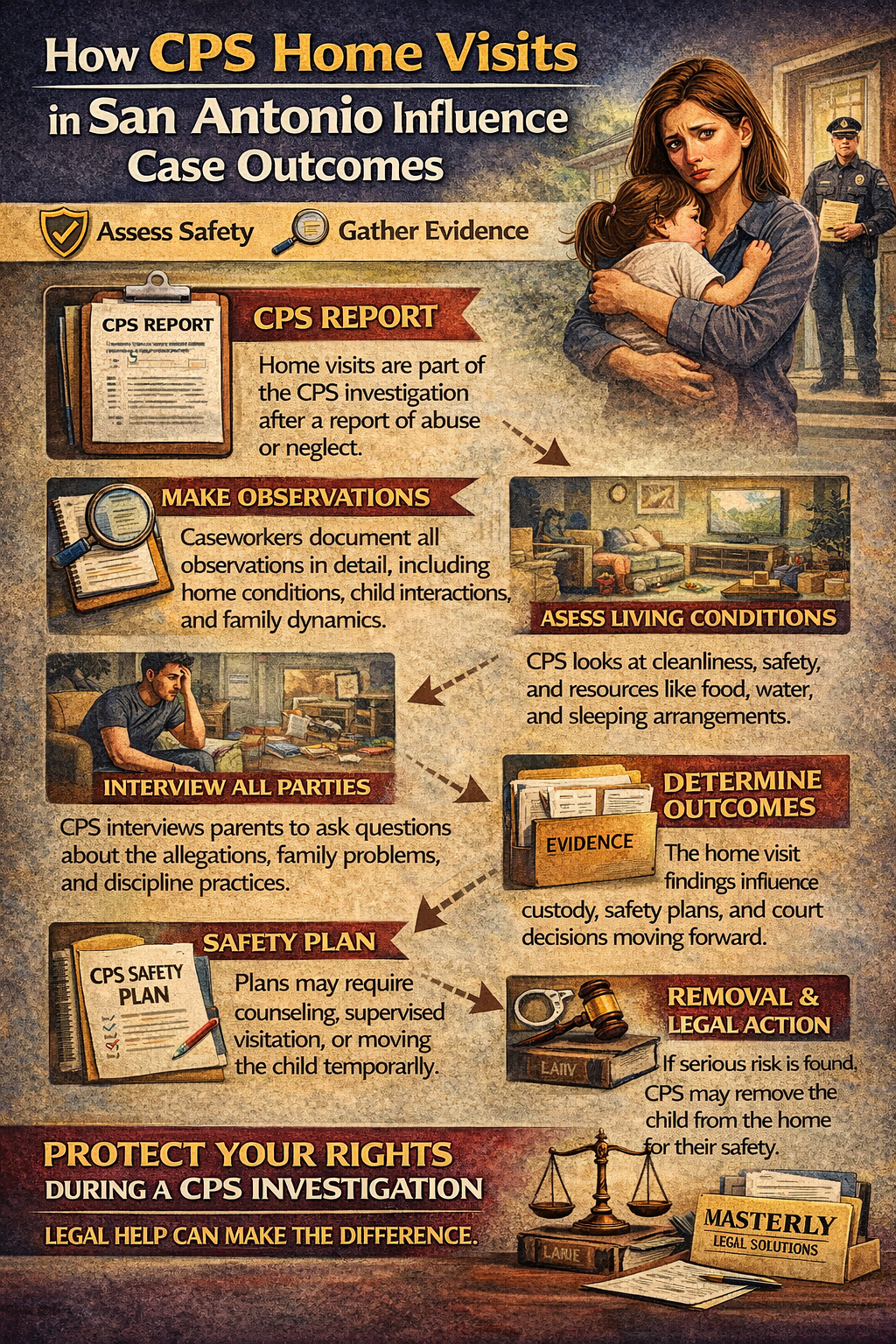
CPS home visits are not casual check-ins. They are part of a structured investigation process designed to evaluate risk, assess parenting conditions, and document observations that may follow a family for months or years. What CPS workers see, hear, and record during this time can directly affect parental rights and the future of a child.
Why CPS Home Visits Matter So Much
Home visits are one of the most influential tools used by child protective services during a CPS investigation. These visits allow CPS workers to observe the child’s living environment, family interactions, and overall safety conditions. Even minor details can be interpreted as indicators of abuse or neglect.
Because CPS is a government agency tasked with protecting children, its observations often carry significant authority. Parents frequently underestimate how much these first impressions impact CPS cases. Once documented, these observations can be difficult to challenge without proper legal representation.
How CPS Initiates Home Visits
CPS home visits usually begin after investigating reports of abuse or neglect. Reports may involve child abuse, neglect, domestic violence, or child endangerment. Once the report meets the threshold, a CPS caseworker is assigned.
During this stage, CPS is not looking to prove guilt beyond a reasonable doubt. Instead, the agency focuses on safety concerns and whether further action is needed. This lower standard allows CPS to move quickly and broadly during investigations.
What CPS Workers Look for During Home Visits
CPS workers are trained to assess physical conditions, emotional dynamics, and access to basic needs. They evaluate whether the child appears safe, supervised, and supported. These observations help determine whether the situation involves abuse or neglect.
Even conditions unrelated to the original allegations may be noted. This is why families are often surprised when issues outside the report appear in CPS records. Understanding this scope is essential for parents.
The Role of Child Safety in CPS Decisions
Child safety is the central focus of every CPS home visit. CPS evaluates whether the child faces immediate or ongoing risk. If safety concerns are identified, protective services may intervene quickly.
Ensuring child safety can involve safety plans, supervised visitation, or temporary placement. Parents often believe they will have time to correct concerns, but CPS timelines move fast.
How CPS Documents Home Visits
Everything observed during a home visit is documented. CPS records include descriptions of the home, statements made by parents, and interactions with the child. These records later become evidence in court proceedings.
Once written, CPS documentation is difficult to undo. This is why experienced CPS lawyers emphasize preparation before any home visit whenever possible.
The Impact on CPS Investigation Outcomes
Home visits significantly influence the direction of a CPS investigation. Favorable observations may lead to case closure, while negative findings may escalate the matter. Many CPS cases involve removal decisions shortly after an initial visit.
The investigation process often relies heavily on what happens inside the home. Parents who misunderstand this risk may unintentionally harm their case.
Safety Plans and Immediate Consequences
If CPS identifies concerns, safety plans may be implemented. These plans often require changes in supervision, living arrangements, or services such as counseling. While presented as voluntary, refusal may lead to court intervention.
Safety plans can feel intrusive and overwhelming. However, agreeing without understanding the consequences can affect custody and parental rights long-term.
When CPS Home Visits Lead to Removal
In more serious situations, CPS home visits can result in immediate removal. This typically occurs when CPS believes the child is at risk of abuse or neglect. Removal may involve foster care or placement with relatives.
Once removal occurs, the legal process becomes more complex. Court hearings and juvenile dependency proceedings often follow quickly.
Juvenile Dependency and Court Proceedings
Juvenile dependency cases arise when CPS seeks court oversight. These cases involve court hearings, judges, and formal case plans. Parents must comply with services to regain custody.
Court proceedings rely heavily on evidence gathered during home visits. This makes early defense critical.
Evidence Gathered During Home Visits
CPS uses home visit observations as evidence. This may include photographs, written notes, and statements. Medical records and school records may also be reviewed to support findings.
Evidence gathered early often shapes later court arguments. Challenging this evidence requires legal skill and preparation.
CPS Caseworkers and Their Authority
A CPS caseworker has significant discretion during investigations. Their assessment influences whether cases involve removal, safety plans, or closure. While they must follow policy, interpretations vary.
Parents often assume caseworkers are neutral. In reality, their role is to protect the child, not defend the family.
How Allegations Expand During Home Visits
Initial allegations may involve one concern, but CPS investigations often expand. During home visits, new allegations of abuse or neglect may arise. This can dramatically change the case.
Expansion often catches families off guard. Legal counsel helps limit unnecessary escalation.
Domestic Violence and CPS Home Visits
Domestic violence allegations receive heightened attention during CPS investigations. Even if the child is not the direct victim, CPS may view exposure as a safety risk.
Home visits often focus on family dynamics and past incidents. These findings can influence custody and visitation decisions.
Neglect Cases and Living Conditions
Neglect cases frequently center on home conditions. CPS may assess cleanliness, food availability, and supervision. These evaluations are often subjective.
Parents may feel judged unfairly. An experienced attorney can challenge unsupported conclusions.
The Risk of Terminating Parental Rights
In severe CPS cases, the agency may seek to terminate parental rights. While this is a last resort, early missteps increase the risk. Home visit findings often lay the foundation.
Termination proceedings are life-altering. Legal defense is essential to protect family bonds.
Court Orders and Compliance Expectations
Court orders may follow CPS home visits. These orders outline services, visitation, and compliance requirements. Failure to follow orders can lead to further action.
Understanding expectations is critical. Attorneys help parents navigate these obligations.
Supervised Visitation and Family Impact
Supervised visitation is common after CPS home visits raise concerns. This limits parent-child contact and affects family life. These arrangements can persist for months.
Challenging unnecessary supervision requires evidence and advocacy.
CPS Defense and Legal Strategy
CPS defense focuses on protecting parental rights while addressing safety concerns. A CPS defense attorney evaluates evidence, challenges findings, and advocates for families.
Effective defense requires understanding CPS procedures and court processes. Strategy matters from day one.
The Role of a CPS Defense Attorney
A CPS defense attorney provides guidance before, during, and after home visits. They help parents prepare, respond appropriately, and protect their rights.
Having an attorney early often prevents escalation. It also strengthens the family’s position in court.
Why Experience Matters in CPS Cases
Experienced CPS lawyers understand how CPS operates. They know how to gather evidence, build compelling arguments, and defend families effectively.
A proven track record matters when facing CPS. Experience can change outcomes.
CPS Cases and Criminal Charges
Some CPS cases overlap with criminal charges. Allegations of child abuse or neglect may trigger law enforcement involvement. Statements made during home visits can be used in criminal cases.
Legal representation protects against unintended consequences.
Defending Families Through Every Stage
Defending families requires diligence, strategy, and compassion. CPS defense is not about ignoring safety, but ensuring fairness and due process.
Attorneys work diligently to protect families and minimize disruption.
How Case Plans Shape the Future
Case plans outline steps parents must take. These plans are influenced by home visit findings. Failure to comply may delay reunification.
Understanding and negotiating case plans is critical.
Status Reviews and Ongoing Oversight
CPS cases involve ongoing status reviews. Judges evaluate progress based on reports and compliance. Home visit documentation continues to play a role.
Strong legal advocacy helps ensure accurate reporting.
The Best Interest Standard
CPS and the court apply a best interest standard for the child. This standard guides custody decisions. Parents must demonstrate safety and stability.
Legal guidance helps align actions with this standard.
How Masterly Legal Solutions Helps Clients
At Masterly Legal Solutions, we focus on CPS defense and defending families. Our law firm understands how CPS home visits influence outcomes. We work diligently to protect parental rights and guide families through investigations.
Our clients benefit from experienced attorneys who know how to navigate CPS cases effectively.
Taking Action Early Protects Your Family
Waiting to seek help often limits options. CPS home visits set cases in motion quickly. Early action preserves rights and strengthens defense.
Families deserve informed advocacy during this process.
How Child Protective Services CPS Handles Local Investigations
Child protective services CPS operates under structured procedures designed to assess child safety and family stability. While the mission is protection, the process can feel overwhelming for parents unfamiliar with CPS authority. Child protective services CPS relies heavily on documentation gathered early in the case. These records often shape how child protective services cases move forward. Understanding this structure helps families respond more effectively.
Why Child Protective Services Cases Escalate Quickly
Child protective services cases often escalate faster than parents expect. Once CPS identifies potential risk, the agency may move toward safety plans or court involvement. Decisions are frequently based on early impressions rather than complete information. This is why early legal guidance is critical. Families should not assume there will be time to correct misunderstandings later.
Understanding the CPS Investigation Process
The CPS investigation process begins with a report and quickly expands into interviews, home visits, and record reviews. During this process, CPS evaluates whether allegations are supported by sufficient evidence. The agency does not need proof beyond a reasonable doubt to act. This lower threshold allows CPS to intervene early. Parents often underestimate how much discretion CPS has at this stage.
How CPS Practices Compare Across Regions
Although CPS operates statewide, practices can vary by region. Families sometimes compare experiences in Orange County or Southern California to local cases. While procedures are similar, enforcement priorities and resources differ. Understanding these differences can clarify expectations. Local knowledge matters when navigating CPS involvement.
The Role of Family Law in CPS Matters
Family law plays a central role in CPS cases involving custody and parental rights. Judges rely on family law principles when reviewing CPS actions. These cases often overlap with divorce, custody disputes, or protective orders. Legal strategy must account for both CPS and family law considerations. Coordination is essential to protect the family as a whole.
When CPS Claims Sufficient Evidence Exists
CPS may proceed with further action once it believes sufficient evidence supports the allegations. This determination often relies on observations rather than conclusive proof. Parents may disagree with CPS conclusions, but challenging them requires preparation. Legal counsel helps identify weaknesses in the evidence. Early challenge can prevent escalation.
The Texas Department’s Oversight Role
In Texas, CPS operates under the Texas Department responsible for protective services. This department sets policies that guide investigations and case handling. While oversight exists, individual caseworkers retain discretion. Understanding the Texas Department’s role helps parents see how decisions are made. Policy knowledge strengthens legal arguments.
Regional Comparisons Beyond Texas
Some families hear about CPS practices in Southern California or San Bernardino and wonder if outcomes differ. While laws vary, the core investigation framework remains similar. Regional differences often relate to court culture and agency resources. These comparisons highlight the importance of local legal representation. One-size-fits-all advice rarely applies.
The Importance of an Initial Consultation
An initial consultation with an attorney can clarify what CPS actions mean and what to expect next. Many parents wait too long, assuming the situation will resolve itself. Early consultation allows families to prepare for interviews and home visits. It also helps protect parental rights from the beginning. Timing matters greatly in CPS cases.
Facing Allegations Without Understanding the Process
Parents facing allegations of abuse or neglect often feel blindsided. CPS involvement can feel accusatory even before facts are verified. Without understanding the investigation process, families may make harmful assumptions. Legal guidance provides clarity during this stressful period. Knowledge reduces fear and improves outcomes.
How Local Jurisdictions Affect CPS Cases
Jurisdiction matters in CPS cases. Courts in San Bernardino or Orange County may apply similar laws differently. Local judges, agencies, and practices influence timelines and expectations. Families benefit from attorneys familiar with their jurisdiction. Local insight can change the trajectory of a case.
Contact Masterly Legal Solutions for a Free Consultation
If CPS has conducted a home visit or initiated an investigation, now is the time to act. At Masterly Legal Solutions, we offer free consultations to help parents understand their rights, prepare for CPS interactions, and build a strong defense strategy. Our attorneys work diligently to protect families and defend parental rights at every stage. Call (972) 236-5051 today to speak with a CPS attorney who understands how home visits influence case outcomes.
Legal Disclaimer:This article is for informational purposes only and does not constitute legal advice. Reading this content does not create an attorney-client relationship. CPS laws and procedures vary by jurisdiction, and individual circumstances differ. For legal advice specific to your situation, consult a qualified attorney.


Teacher Rights When Assaulted by a Special Needs Student: Safety, Reporting and Investigation Issues


Looking for Legal & Business Solutions? Contact Us Now
Fill in the form or call us to set up a meeting





