

Retaliation at Work and Teacher Rights During School Investigations
Facing retaliation at work can feel isolating, confusing, and overwhelming—especially for teachers who already work under intense scrutiny. When an employee speaks up about misconduct, discrimination, or unsafe conditions, the law is supposed to protect them. Unfortunately, retaliation remains one of the most common issues in the workplace, particularly during school investigations. At Masterly Legal Solutions, we regularly help educators and other workers understand their rights and take action when retaliation occurs.
Teachers play a vital role in protecting students, maintaining ethical standards, and upholding public policy. When an employer responds to those efforts with punishment instead of accountability, serious legal protections come into play. Understanding how retaliation intersects with discrimination, harassment, and employment laws is essential for safeguarding your career and well being.
Understanding Retaliation in the Workplace
Retaliation happens when an employer takes adverse action against an employee for engaging in protected activity. This can include reporting discrimination, participating in an investigation, or requesting reasonable accommodations. Retaliation at work is prohibited under federal and state laws, yet it continues to occur in many forms across workplaces, including schools.
In education settings, retaliation may be subtle or overt. Teachers may suddenly face negative performance reviews, unfavorable job assignments, or exclusion from meetings. These actions can damage employee morale and create a culture of fear that discourages reporting discrimination or harassment.
Why Teachers Are Especially Vulnerable During Investigations
School investigations often involve sensitive issues such as harassment, workplace discrimination, or violations of employment practices. Teachers who file a complaint or cooperate as potential witnesses may face retaliation from administrators or even a co worker. This retaliation can impact their personal life, professional reputation, and future employment opportunities.
Because schools are governed by layered federal, state, and labor laws, educators must navigate a complex legal landscape. Without guidance from experienced employment lawyers, teachers may not realize that certain actions taken against them violate the law.
What Counts as Protected Activity for Teachers
Protected activity includes any lawful action an employee takes to assert their rights. This may involve reporting discrimination, filing a formal complaint, requesting job protected leave, or participating in an investigation conducted by a state agency or the equal employment opportunity commission.
Teachers are protected when they speak out about workplace discrimination based on sex discrimination, age discrimination, national origin, disability, sexual orientation, or gender discrimination. Even informal reporting discrimination to human resources can qualify as protected activity under federal law.
How Retaliation Manifests in School Environments
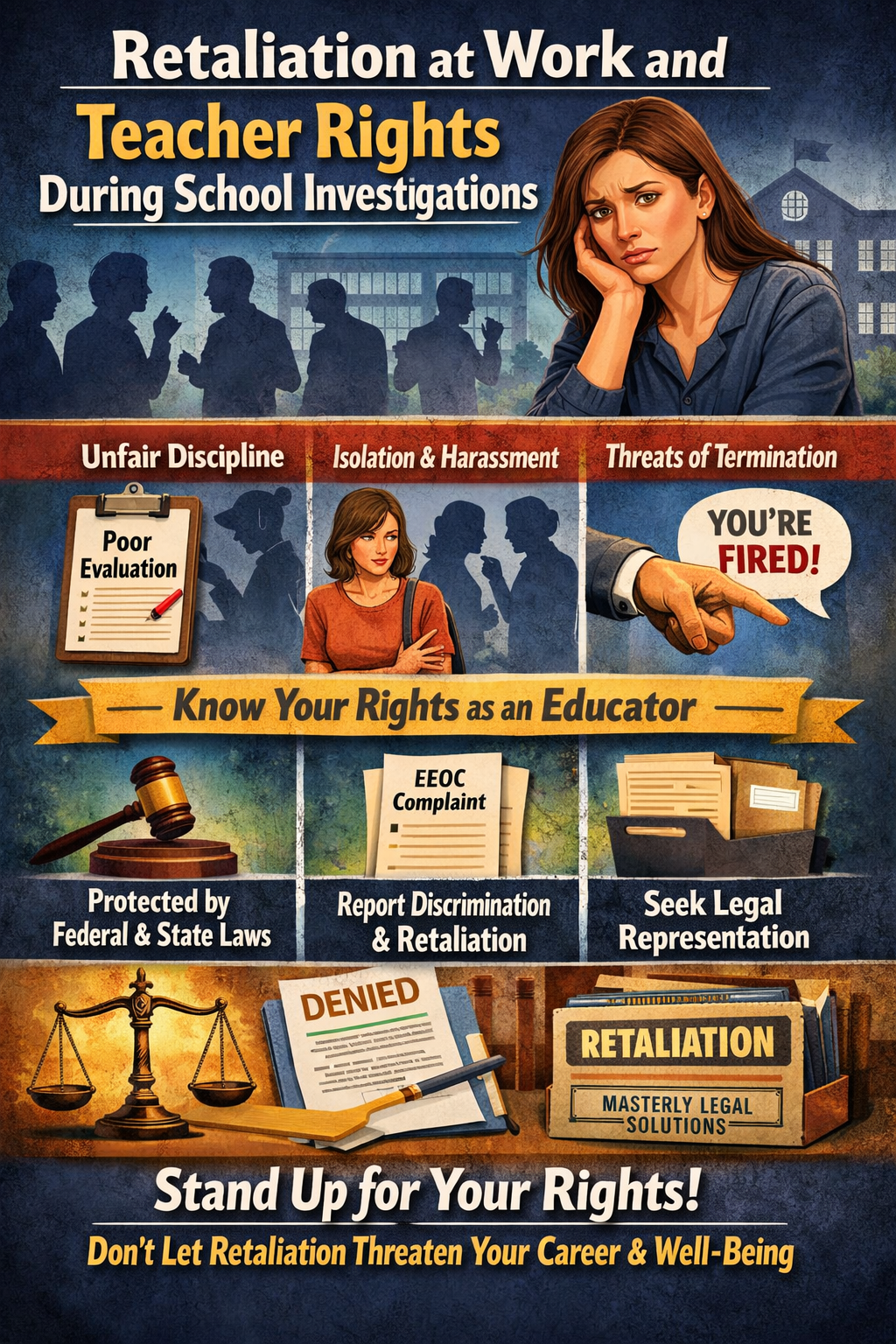
Retaliation can take many forms, and not all of them are obvious. In schools, retaliation may appear as reassignment to a less desirable position, reduced work hours, or denial of overtime pay. Some employees are removed from a desirable position without explanation or placed under excessive scrutiny.
Other examples include:
- Sudden negative performance reviews
- Unfair job assignments
- Isolation from colleagues
- Increased harassment
- Threats of wrongful termination
These actions may seem minor individually, but together they can constitute unlawful retaliation.
The Link Between Retaliation and Workplace Discrimination
Retaliation is closely tied to discrimination because it often follows an employee’s attempt to challenge unfair treatment. Workplace discrimination can involve direct discrimination or more subtle forms of bias tied to disability, immigration status, family responsibilities, or national origin.
When an employer denies opportunities or disciplines an employee after they raise concerns, it may signal both discrimination and retaliation. Employment discrimination cases frequently involve overlapping violations of multiple laws.
Federal Laws That Protect Teachers from Retaliation
Several federal laws protect employees from retaliation, including Title VII of the Civil Rights Act. Title VII prohibits discrimination and retaliation related to race, sex discrimination, national origin, and religion. The Civil Rights Act remains one of the most powerful tools for protecting workers in education.
Other federal protections come from the employment act, the disabilities act, and whistleblower laws. These laws prohibit retaliation and require employers to provide reasonable accommodations unless doing so would cause undue hardship.
State Laws and Additional Legal Protections
In addition to federal law, state laws often provide expanded protections for eligible employees. Some state laws allow employees to pursue compensation beyond what federal statutes permit. Teachers should never assume that only federal rules apply to their situation.
State agency investigations can also trigger protections against future discrimination. When retaliation cases arise, both federal and state laws may apply simultaneously, strengthening the employee’s position.
Retaliation and Harassment in Educational Workplaces
Harassment often escalates after an employee reports misconduct. Teachers may face verbal abuse, intimidation, or social isolation from a co worker or supervisor. This harassment can cause emotional distress and negatively affect an employee’s well being.
In severe cases, retaliation can involve threats of physical harm or actions that put a teacher’s safety at risk. These situations require immediate legal attention to protect the employee and preserve evidence.
How Employment Decisions Can Become Retaliatory
Employment decisions such as demotions, termination, or denial of promotions must be based on legitimate reasons. When these decisions occur shortly after protected activity, they may be considered retaliatory. Wrongful termination is one of the most damaging outcomes of retaliation.
Even changes to job assignments or employment contracts can be unlawful if they are motivated by retaliation. An employer cannot lawfully punish an employee for asserting their rights.
Family Responsibilities and Retaliation Risks
Teachers with family responsibilities may face retaliation after requesting accommodations related to a family member or taking fmla leave. Family responsibilities discrimination is increasingly recognized under employment laws.
Retaliation can include subtle pressure to resign, denial of leave, or negative treatment tied to caregiving duties. These actions violate laws designed to protect workers balancing professional and personal life obligations.
Disability and Reasonable Accommodations
Teachers with a disability are entitled to reasonable accommodations under the disabilities act. When an employer denies accommodations or retaliates against an employee for requesting them, it may constitute a violation of federal and state laws.
Retaliation may involve reassignment, reduced responsibilities, or exclusion from opportunities. Employers must engage in good faith efforts to provide reasonable accommodations unless undue hardship can be proven.
Immigration Status and Retaliation Concerns
Retaliation based on immigration status is unlawful. Teachers and school employees should never be threatened or disciplined because of their status or that of a family member.
Federal law protects workers from retaliation regardless of immigration status when they engage in protected activity. Employers who exploit this vulnerability may face serious legal consequences.
Reporting Discrimination Without Fear
Reporting discrimination is a right, not a risk. Teachers should be able to file a complaint or participate in an investigation without fearing retaliation. Unfortunately, many employees face retaliation precisely because they speak up.
Understanding how to document incidents, preserve communications, and identify potential witnesses can make a significant difference in retaliation cases.
The Role of Human Resources in Retaliation Cases
Human resources departments are often the first point of contact for workplace complaints. However, HR does not always act in the employee’s best interest. While some HR teams provide genuine support, others may prioritize protecting the employer.
Teachers should be cautious and informed when interacting with human resources during an investigation. Legal guidance can help ensure that employee rights are protected throughout the process.
Retaliation Against Federal Employees and Public School Staff
Federal employees and public school teachers may have additional protections under federal statutes. These protections often include specific procedures for reporting discrimination and retaliation.
Understanding which rules apply to your role is critical. Retaliation against federal employees can carry severe penalties for employers who violate the law.
How Retaliation Impacts Career Advancement
Retaliation can derail a teacher’s career by limiting advancement opportunities and damaging professional credibility. Being placed in a less desirable position or denied leadership roles can have long-term consequences.
Future discrimination may also occur when retaliation goes unchallenged. Taking timely legal action can help prevent ongoing harm and protect your professional future.
Compensation and Remedies for Retaliation
Employees who prove retaliation may be entitled to compensation, including lost wages, emotional distress damages, and reinstatement. Settlement negotiations may resolve claims without litigation, depending on the circumstances.
In some cases, policy changes and corrective actions are also required. These remedies serve not only to compensate the employee but also to prevent future violations.
Why Legal Representation Matters in Retaliation Cases
Retaliation cases are complex and evidence-driven. Employment lawyers help identify violations, build strong claims, and navigate investigations conducted by a state agency or federal body.
Without representation, individual employees may struggle to challenge an employer with significant resources. Legal advocacy levels the playing field and protects employee rights.
Common Examples of Retaliation in Schools
An example of retaliation may include a teacher being removed from preferred classes after filing a complaint. Another example involves increased monitoring or disciplinary actions without justification.
These examples highlight how retaliation can appear routine while masking unlawful motives. Recognizing patterns is key to building a strong case.
Protecting Yourself During a School Investigation
Teachers should document all interactions related to an investigation. Keeping records of emails, meetings, and changes in treatment can help establish retaliation.
Avoid retaliation traps such as informal agreements or pressure to resign. Legal advice can help you respond strategically and protect your rights.
How Masterly Legal Solutions Supports Teachers
At Masterly Legal Solutions, we focus on protecting workers facing retaliation, discrimination, and harassment. We understand the unique pressures educators face and provide guidance tailored to school environments.
Our approach emphasizes clarity, strategy, and advocacy. We help teachers protect their careers while holding employers accountable under the law.
When to Seek Legal Help
If you face retaliation, do not wait until the situation escalates. Early intervention can preserve evidence, protect your position, and reduce long-term harm.
Even if you are unsure whether retaliation occurred, a consultation can provide clarity and peace of mind.
Taking Control of Your Rights
Teachers deserve safe, respectful workplaces free from discrimination and retaliation. Understanding your rights empowers you to act with confidence during investigations.
With the right support, retaliation does not have to define your career. Legal protections exist to protect those who speak up.
Contact Masterly Legal Solutions for Guidance
If you are a teacher or employee facing retaliation at work, you do not have to navigate this alone. At Masterly Legal Solutions, we offer free consultations to help you understand your rights, evaluate your situation, and explore your legal options. Whether you are dealing with workplace discrimination, harassment, or retaliation during a school investigation, our team is here to support you every step of the way. Call (972) 236-5051 today to speak with someone who understands the challenges you are facing and is ready to help protect your future.
Legal Disclaimer: This article is provided for informational purposes only and does not constitute legal advice. Reading this content does not create an attorney-client relationship. Employment and retaliation laws vary by jurisdiction, and individual circumstances differ. For legal advice specific to your situation, consult a qualified attorney.


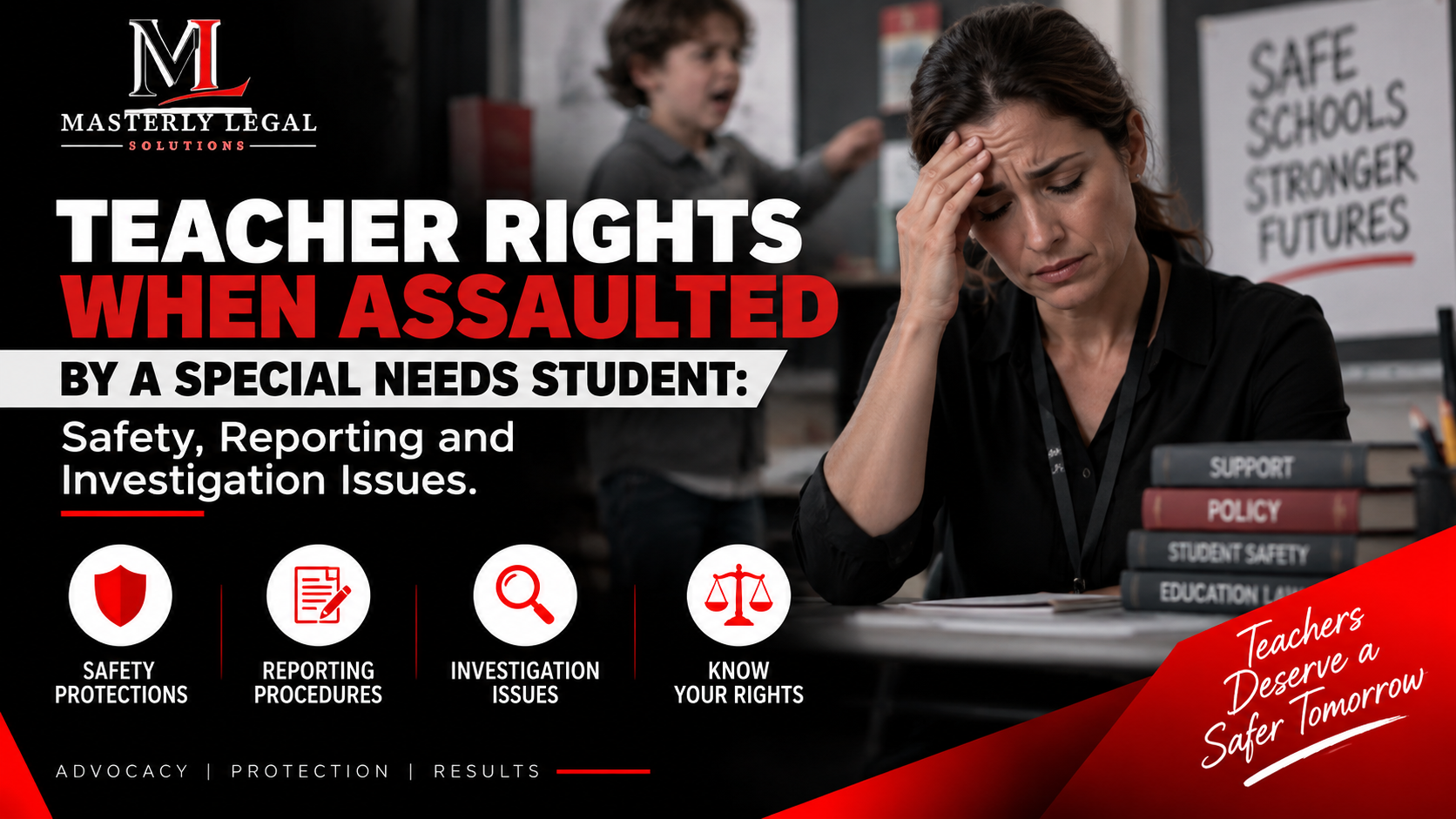
Teacher Rights When Assaulted by a Special Needs Student: Safety, Reporting and Investigation Issues


Looking for Legal & Business Solutions? Contact Us Now
Fill in the form or call us to set up a meeting