

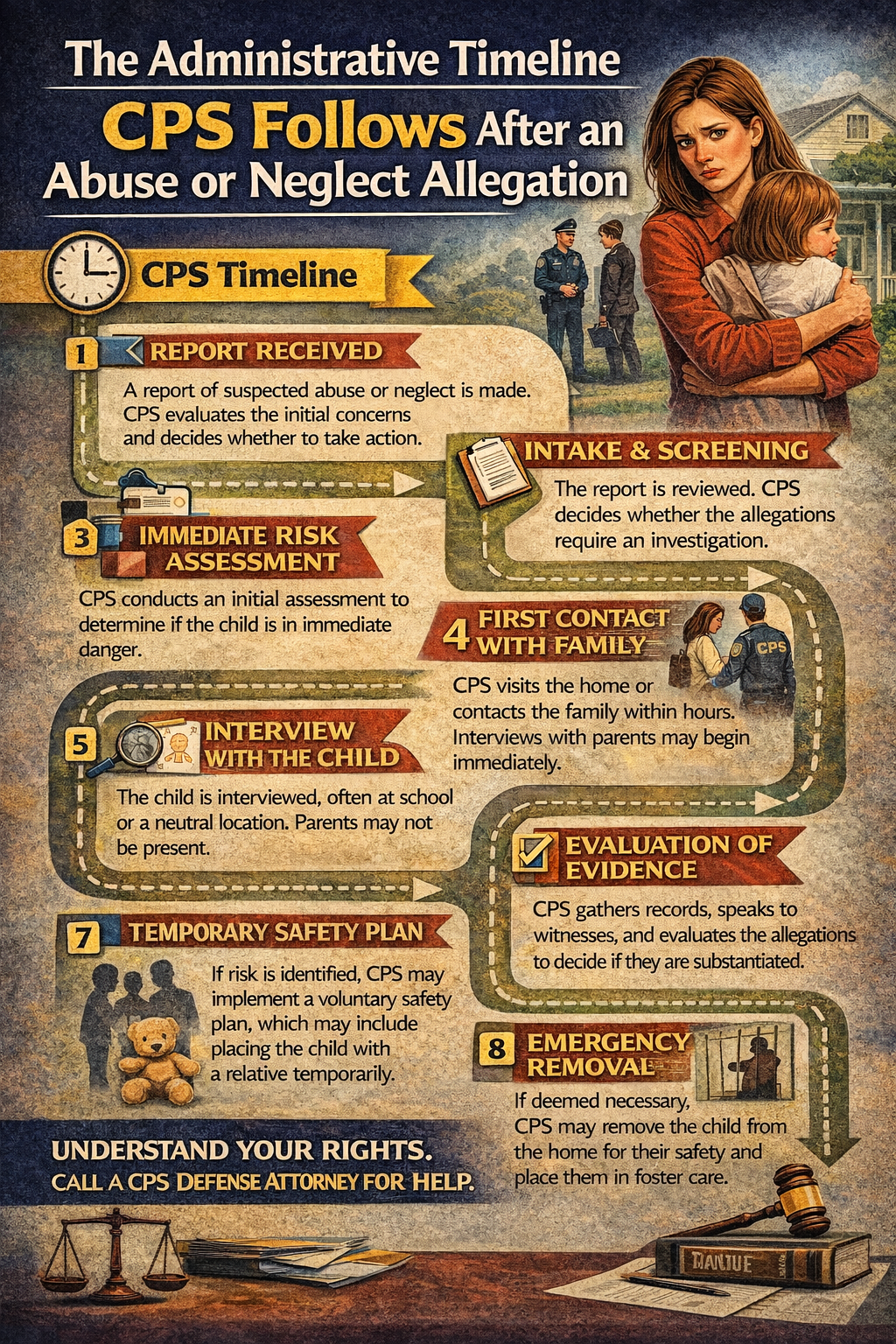
The Administrative Timeline CPS Follows After an Abuse or Neglect Allegation
When a report of abuse or neglect is made, most parents assume they will have time to explain, respond, and protect their family. In reality, child protective services often move faster than parents expect. Decisions that affect a child’s safety, custody, and future can begin within hours, long before parents understand what is happening. At Masterly Legal Solutions, we see families every day who did not realize how quickly control shifted out of their hands.
Understanding the administrative timeline used by CPS is critical. This process is guided by child protection laws, federal legislation, and internal agency rules that prioritize safety above all else. Knowing what happens at each stage allows parents to respond strategically rather than react too late.
How Child Protective Services Becomes Involved
Child protective services typically becomes involved after a report is made alleging child abuse or neglect. Reports may come from schools, medical professionals, neighbors, relatives, or other mandated reporters. Once the report is received, CPS evaluates whether the allegations meet the threshold for a formal CPS investigation.
At this stage, parents are often unaware that child protective services CPS has already begun documenting concerns. The initial report alone can trigger immediate action, even before facts are verified. This early moment is when many families lose critical opportunities to protect their rights.
The Intake and Screening Phase
The intake process is the first administrative step. CPS reviews the report to determine whether it involves child abuse, neglect, or child abuse or neglect as defined by law. If the allegations fall within CPS jurisdiction, the case is referred for investigation.
This screening decision happens quickly. Parents are rarely notified during intake, yet the agency may already be planning next steps. Once accepted, the CPS investigation officially begins.
Immediate Risk Assessment
After intake, child protective services conducts an initial risk assessment. The goal is to determine whether the child faces immediate danger. Factors such as age, physical condition, prior reports, and household environment are considered.
If CPS believes there is a safety risk, protective services may act the same day. Parents often underestimate how much authority CPS has during this phase. Decisions are made solely to protect the child, sometimes without parental input.
The First Contact With the Family
CPS usually contacts the family shortly after the risk assessment. This contact may involve a home visit, school interview, or phone call. Parents often assume this is an informal conversation, but everything said can be documented and used later.
During this stage, families may unknowingly provide information that shapes the entire investigation. This is often the first moment when speaking with an attorney can make a meaningful difference.
Interviews With the Child
One of the most critical steps is interviewing the child. CPS may interview the child at school, daycare, or another location without parental presence. These interviews are intended to assess safety and verify allegations.
Parents are often shocked to learn that CPS can do this without advance notice. Statements made by a child can significantly influence custody, services, and future court involvement.
Evaluation of Allegations and Evidence
As the investigation progresses, CPS evaluates allegations, interviews witnesses, and reviews records. This may include medical reports, school records, and prior CPS history. The agency determines whether the abuse or neglect allegations are supported.
This evaluation phase is guided by internal policies and federal acts designed to protect children. Parents may still believe no decisions have been made, even though conclusions are already forming.
Temporary Safety Plans
If CPS identifies concerns but does not remove the child immediately, a safety plan may be implemented. These plans often require supervision, restrictions, or temporary placement with relatives. Parents may feel pressured to agree.
Safety plans can significantly impact parental rights. Although presented as voluntary, refusing a plan may escalate the situation. Legal guidance is crucial before agreeing to any plan.
Emergency Removal Decisions
In cases where CPS believes the child is in danger, emergency removal may occur. This decision can happen rapidly, sometimes the same day as first contact. Children may be placed in foster care or with relatives.
Emergency removal is one of the most traumatic moments for families. It is guided by protective services authority and federal law, not parental consent.
Placement in Foster Care
When removal occurs, children may enter foster care. Foster care placements are intended to be temporary, but timelines can extend quickly. Foster children are placed based on availability and safety considerations.
Once a child enters foster care, parents face a complex legal process to regain custody. Early missteps can delay reunification.
The Role of Protective Services After Removal
Protective services continues monitoring the family after removal. The agency develops a service plan outlining requirements parents must meet. These services may include treatment, education, or counseling.
Parents often feel overwhelmed by the number of services imposed. Compliance becomes critical, as failure can affect custody outcomes.
Federal Acts That Shape CPS Timelines
CPS procedures are heavily influenced by federal legislation. The child welfare act establishes standards for protecting children. The safe families act emphasizes timely permanency decisions.
Other legislation, such as the prevention services act, promotes early intervention. These acts prioritize child safety over parental convenience.
Adoption and Permanency Planning
If reunification does not progress, CPS begins permanency planning. This may include adoption, guardianship, or long-term foster care. Adoption timelines are influenced by acts such as the adoption promotion act and increasing adoptions act.
Parents often do not realize how quickly adoption discussions begin. Delays in compliance can accelerate permanency decisions.
Adoption Assistance and Foster Youth Considerations
For children who cannot return home, adoption assistance may be considered. The foster care independence act supports youth transitioning out of care. These policies focus on stability and long-term well being.
While designed to help youth, these programs also signal that CPS is planning beyond reunification. Parents must act early to avoid permanent outcomes.
Preventing Abuse and Promoting Safe Families
Many CPS actions are rooted in preventing abuse and promoting safe environments. Child abuse prevention initiatives aim to reduce future harm. Programs like fostering connections emphasize family stability.
However, prevention efforts can still feel punitive to parents. Understanding the agency’s mission helps families navigate expectations.
Neglect Allegations and Their Impact
Neglect allegations are among the most common CPS cases. Neglect may involve supervision, education, medical care, or basic needs. These cases often rely on subjective assessments.
Because neglect standards vary, parents may feel unfairly judged. Legal advocacy helps challenge unsupported findings.
The Importance of Documentation
Throughout the CPS investigation, documentation matters. Reports, interviews, and service plans all become part of the record. Parents should keep their own records of every interaction.
Accurate documentation can protect parents from misinterpretation. It also supports future legal arguments.
The Role of Social Services and Other Agencies
CPS often works with social services, schools, and healthcare institutions. Multiple agencies may be involved in a single case. Information is shared across systems.
This coordination can accelerate decisions. Parents may feel overwhelmed by the number of professionals involved.
Court Involvement and Legal Oversight
If removal occurs or disputes arise, court involvement may follow. Judges review CPS actions and determine custody arrangements. Court timelines are influenced by legislation and agency reports.
Parents should never assume the court will hear their side automatically. Representation matters greatly at this stage.
Parental Rights and Due Process
Parental rights are fundamental but not absolute. CPS actions can temporarily limit these rights in the name of safety. Due process exists, but it must be asserted.
Parents who wait too long may lose opportunities to challenge decisions. Early legal intervention is key.
The Role of a CPS Defense Attorney
A CPS defense attorney helps parents understand the timeline and respond strategically. Attorneys challenge unsupported allegations and protect parental rights. They also communicate with CPS on the family’s behalf.
Working with a lawyer early often changes outcomes. It can prevent escalation and clarify expectations.
Why CPS Aims to Educate Families
CPS often states that part of its mission is to educate families about safety and care standards. Education is intended to prevent future issues. However, education requirements can feel punitive without proper explanation. Families benefit when expectations are clearly defined. Legal support helps ensure education efforts are constructive, not coercive.
How Parents Lose Control Without Realizing It
Parents often lose control incrementally. Each agreement, missed deadline, or misunderstanding compounds. By the time they realize the impact, decisions may already be made.
Understanding the administrative timeline helps parents regain agency. Knowledge is a powerful tool.
Why Timing Matters in CPS Cases
CPS timelines move quickly by design. Federal and state acts emphasize swift decision-making. Delays by parents are often interpreted negatively.
Acting early preserves options. Waiting limits them.
How Masterly Legal Solutions Helps Families
At Masterly Legal Solutions, we guide families through every stage of the CPS process. We explain timelines, protect rights, and advocate for fair treatment. Our focus is on keeping families together whenever possible.
We understand how overwhelming this process feels. Our role is to provide clarity and support.
Taking the Next Step for Your Family
If CPS has contacted you or begun an investigation, time matters. Understanding what happens next can change the outcome. Families deserve informed guidance during these critical moments.
Contact Masterly Legal Solutions for a Free Consultation
If you are facing a CPS investigation involving abuse or neglect allegations, you do not have to navigate this process alone. At Masterly Legal Solutions, we offer free consultations to help parents understand child protection laws, CPS timelines, and their legal options. For educators or school staff needing support with misconduct investigations, we also defend North Carolina teachers and administrators against school district and DOE accusations. Early guidance can protect your family, your rights, and your future. Call (972) 236-5051 today to speak with a team that understands CPS procedures and is ready to assist.
Legal Disclaimer: This article is for informational purposes only and does not constitute legal advice. Reading this content does not create an attorney-client relationship. Child protection and CPS laws vary by jurisdiction and individual circumstances. For legal advice specific to your situation, consult a qualified attorney.


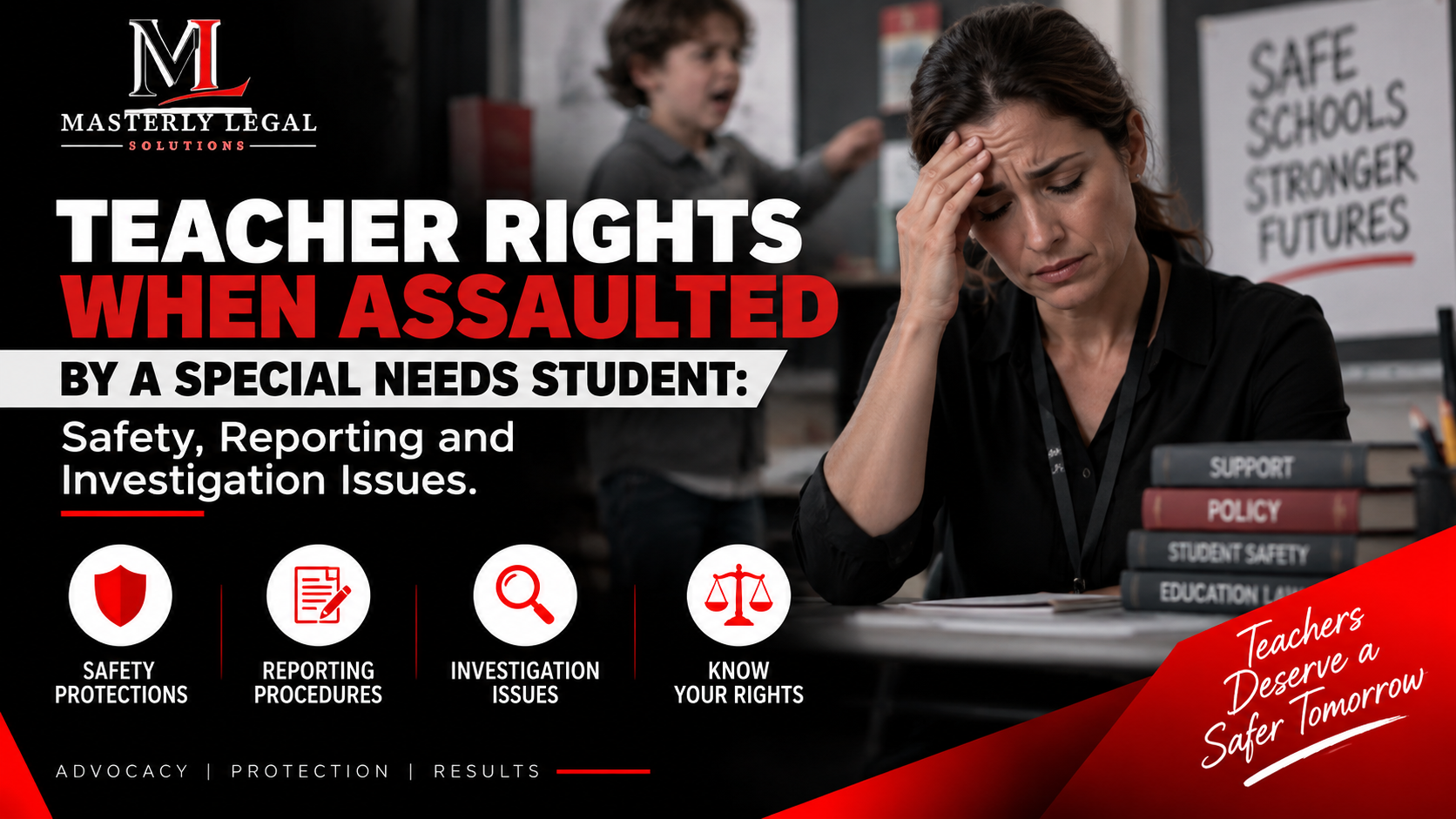
Teacher Rights When Assaulted by a Special Needs Student: Safety, Reporting and Investigation Issues



Looking for Legal & Business Solutions? Contact Us Now
Fill in the form or call us to set up a meeting