

Signs You Are Facing Workplace Retaliation During a School Investigation
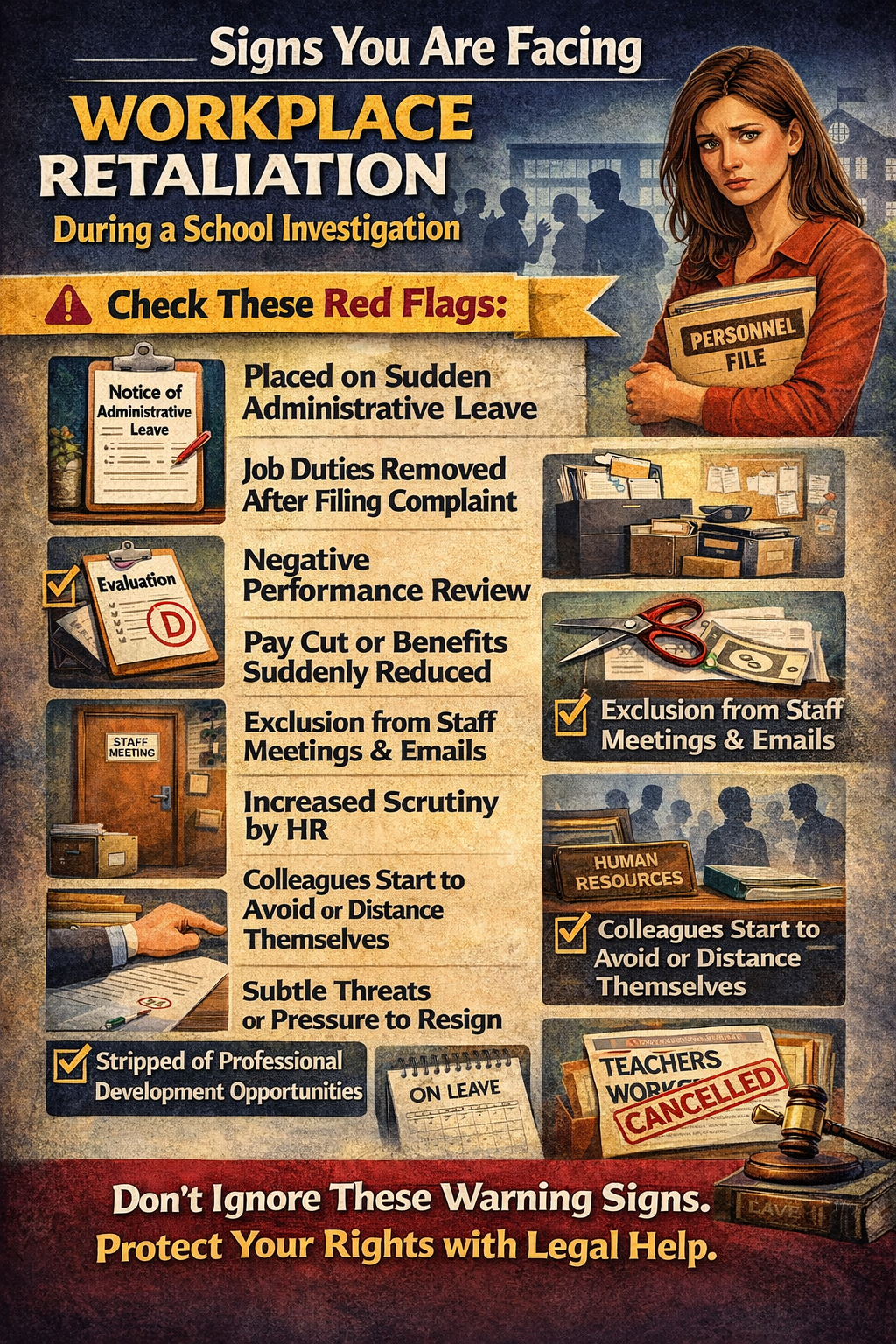
School investigations can feel unsettling even when you have done nothing wrong. For many teachers, the real fear begins not with the investigation itself, but with how the employer responds afterward. Workplace retaliation often starts quietly, disguised as routine administrative decisions, yet its impact on a teacher’s career, finances, and personal life can be severe. At Masterly Legal Solutions, we help educators recognize these warning signs early so they can protect themselves before lasting damage occurs.
This article is designed as a practical, checklist-style guide. If several of these signs sound familiar, you may already be facing retaliation during a school investigation. Recognizing these red flags early is often the difference between protecting your career and being pushed out unfairly.
Why Retaliation Often Follows School Investigations
When alleged misconduct is reported, school administrators frequently act quickly to protect the institution. While investigations are sometimes necessary, retaliation occurs when the employer’s actions go beyond legitimate inquiry and begin to punish the employee. Laws protect employees who participate in investigations, report concerns, or cooperate with authorized agency officials.
Retaliation can appear under the cover of policy enforcement, personnel management decisions, or administrative leave. Teachers often feel pressured to remain silent, unaware that work retaliation laws and federal law prohibit retaliation tied to protected activity.
Administrative Leave as an Early Warning Sign
One of the most common retaliation indicators is sudden placement on administrative leave. Administrative leave may be paid or unpaid, but either form can signal trouble depending on how it is handled. While administrative leave can be appropriate for brief or short periods, extended or unexplained administrative leave raises serious concerns.
Employers often justify administrative leave as neutral, yet repeated or prolonged administrative leave can isolate the employee and damage employee morale. When administrative leave is imposed without clear written communications or consistent agency policies, retaliation may already be underway.
Paid Administrative Leave That Feels Punitive
Paid administrative leave sounds harmless, but context matters. Paid administrative leave that removes you from your employee's current position, classroom, or professional development opportunities can be retaliatory. Even when pay and benefits remain intact, paid administrative leave can harm reputation and future employment.
If paid administrative leave is imposed while other employees accused of similar alleged misconduct remain working, this inconsistency is a red flag. Administrative leave should never be used as a disciplinary action disguised as protection.
Repeated Extensions of Administrative Leave
Another warning sign is when administrative leave keeps getting extended without explanation. Administrative leave should be limited to brief periods while facts are gathered. When administrative leave drags on for weeks or months, it can indicate that retaliation occurs rather than legitimate investigation.
Repeated notice leave updates without meaningful progress can suggest the employer is attempting to push the employee out quietly. This tactic often appears in employment discrimination cases involving educators.
Being Removed From Job Duties Without Justification
Loss of job duties is a subtle but powerful form of retaliation. Teachers placed on administrative leave may lose access to lesson plans, student communications, or curriculum responsibilities. Even after returning, job duties may be reassigned permanently.
If job assignments change after reporting discrimination or cooperating with agency officials, retaliation may be occurring. Employment decisions must be based on legitimate reasons, not protected activity.
Administrative Leave Used Differently for Other Employees
Comparing how other employees are treated is critical. If similarly situated staff accused of alleged misconduct are not placed on administrative leave, that inconsistency matters. Unequal treatment may support claims of workplace discrimination or retaliation.
Employers are required to issue internal policies consistent with employment laws. Deviations from agency policies often expose retaliatory motives.
Human Resources Suddenly Becomes Involved
Increased involvement from human resources after protected activity can be a sign of retaliation. While HR plays an important role, their actions sometimes focus on protecting the employer rather than the employee.
If human resources begins documenting minor issues, monitoring attendance excessively, or limiting communication, retaliation may be developing. Written communications from HR should always be reviewed carefully.
Disciplinary Action Appearing Without Prior History
Disciplinary action that follows an investigation is a serious red flag, especially when there is no prior performance history. Sudden write-ups, reprimands, or warnings often appear after reporting workplace discrimination or harassment.
When disciplinary action coincides with administrative leave, the risk of retaliation increases significantly. Laws protect employees from punishment tied to protected activity.
Changes to Pay and Benefits
Retaliation may involve subtle changes to pay and benefits. Reduction in overtime pay, denial of stipends, or changes to health insurance coverage can all qualify as adverse action.
Even during administrative leave, pay and benefits should remain consistent unless agency judgments justify changes. Any unexplained reduction should be reviewed by an employment lawyer.
Pressure to Accept Paid Leave or Resign
Some teachers are pressured to accept paid leave indefinitely or encouraged to resign “for their own good.” This tactic often accompanies administrative leave and can be deeply coercive.
When an employer denies the opportunity to return to work without justification, retaliation may be occurring. Accepting resignation under pressure can affect future discrimination claims.
Notice Leave Without Clear Allegations
Notice leave or investigative leave should include specific reasons tied to alleged misconduct. Vague notice leave letters that lack detail may indicate retaliation rather than legitimate investigation.
Administrative leave without clarity undermines workplace safety and transparency. Employees have a right to understand the basis of employment decisions.
Retaliation Disguised as Workplace Safety
Employers sometimes justify administrative leave by citing workplace safety. While safety leave can be appropriate, misuse of safety concerns to remove an employee after protected activity is unlawful.
If no credible threat of physical harm exists, safety leave may be a pretext. Federal agencies and courts scrutinize these justifications carefully.
Discrimination Indicators Tied to Protected Classes
Retaliation often overlaps with workplace discrimination. Teachers may face retaliation linked to sex discrimination, gender discrimination, sexual orientation, age discrimination, disability, or national origin.
Disparate treatment during administrative leave or investigation may support claims under the civil rights act and federal law. Direct discrimination and retaliation frequently appear together.
Family Responsibilities Suddenly Become an Issue
Teachers with family responsibilities may face retaliation after requesting excused absence, job protected leave, or schedule flexibility. References to a family member or caregiving obligations may appear in evaluations.
Family responsibilities discrimination is increasingly recognized under employment laws. Retaliation tied to personal life circumstances is unlawful.
Union Representative Excluded or Discouraged
If you are discouraged from involving a union representative, that is a serious warning sign. Employers may attempt to isolate employees during administrative leave to reduce resistance.
Union involvement is a protected right. Retaliation for seeking representation may violate state laws and federal law.
Agency Officials Making Inconsistent Statements
Conflicting explanations from agency officials or the agency head often signal retaliation. When agency judgments change without new evidence, motives should be questioned.
Authorized agency officials must follow agency policies and the agency's mission. Deviations from established procedures are meaningful evidence.
Investigative Leave That Becomes Punitive
Investigative leave should be temporary and neutral. When investigative leave feels punitive, prolonged, or stigmatizing, retaliation may be occurring.
Repeated investigative leave placements can damage professional reputation and future employment opportunities. This is a common tactic in education settings.
Lack of Access to Professional Development
Being denied professional development opportunities during or after administrative leave is another red flag. These opportunities directly affect career growth and compensation.
Selective denial may support retaliation claims, especially when other employees continue to receive training.
Written Communications Become Cold or Threatening
Tone matters. Written communications that suddenly become formal, accusatory, or threatening may signal retaliation. Emails and letters often reveal intent.
Preserving written communications is essential for any future employment discrimination cases.
Administrative Leave and Mental Health Impact
Extended administrative leave can significantly affect well-being. Isolation, uncertainty, and reputational harm often accompany retaliation.
Employers are required to provide reasonable accommodations when needed, unless undue hardship applies. Ignoring mental health impacts may violate employment laws.
Immigration Status Used as Leverage
Any reference to immigration status during an investigation is inappropriate. Retaliation tied to immigration status violates federal law and the united states code.
Teachers should never be threatened based on status or background.
Agency Policies Applied Selectively
Selective enforcement of agency policies is a hallmark of retaliation. When rules suddenly apply only to you, the employer’s decision may be unlawful.
Consistency is required under employment practices and federal law.
When Retaliation Becomes Clear
Retaliation occurs when adverse actions follow protected activity without legitimate justification. Administrative leave, disciplinary action, and altered employment decisions often form a pattern.
Recognizing this pattern early allows employees to protect their rights before future discrimination escalates.
Why You Need an Employment Lawyer Immediately
Timing matters in retaliation cases. An employment lawyer can assess whether administrative leave, investigative leave, or disciplinary action violates work retaliation laws.
Early legal intervention protects evidence, limits damage, and positions employees for resolution or litigation if necessary.
How Masterly Legal Solutions Helps Teachers
At Masterly Legal Solutions, we focus on protecting teachers during investigations involving administrative leave, retaliation, and workplace discrimination. We understand how schools operate and how retaliation is often hidden within personnel management decisions.
Our role is to protect your rights, your career, and your future.
Take the Next Step Before It’s Too Late
If several of these signs apply to you, do not wait. Retaliation often escalates quietly until options become limited.
Speaking with legal counsel early can prevent irreversible harm.
When Other Authorized Agency Officials Become Involved
During a school investigation, other authorized agency officials may participate alongside administrators. These officials often review allegations, assess risk, and help decide whether to grant administrative leave. While their involvement can be legitimate, their actions must still follow federal law and established agency policies. When decisions appear rushed or inconsistent, retaliation concerns may arise. Teachers should remember that involvement by other authorized agency officials does not remove their legal protections.
Filing a Complaint With the Equal Employment Opportunity Commission
The equal employment opportunity commission plays a critical role in addressing workplace discrimination and retaliation. Teachers may file complaints with the equal employment opportunity commission when internal reporting fails or retaliation escalates. This federal agency investigates claims under the civil rights act and other employment laws. In many cases, documentation gathered during administrative leave becomes key evidence. Early legal guidance can help protect an employee’s position during this process.
How and Why Schools Grant Administrative Leave
Schools often grant administrative leave while investigating alleged misconduct. Administrative leave is intended to be temporary and non-punitive, allowing the agency to review facts without interference. However, when schools repeatedly grant administrative leave without explanation, concerns arise. Administrative leave must be applied consistently and fairly to avoid claims of retaliation. Misuse of administrative leave can violate employment laws and internal policies.
The Role of the Employment Act in Retaliation Cases
The employment act provides foundational rules governing workplace conduct and employee rights. It works alongside federal law to prohibit retaliation tied to protected activity. Teachers covered by the employment act are entitled to fair treatment during investigations. Violations may occur when administrative leave or disciplinary action is used improperly. Understanding how the employment act applies is essential in retaliation cases.
Legal Protections That Apply During School Investigations
Teachers are entitled to legal protections when participating in investigations or reporting misconduct. These legal protections apply regardless of whether allegations are substantiated. Retaliation for protected activity is prohibited under federal and state laws. Administrative leave does not eliminate these legal protections. Recognizing these rights early can prevent long-term career harm.
Disability Rights and the Disabilities Act
The disabilities act protects teachers with qualifying disabilities from discrimination and retaliation. When an employee requests reasonable accommodations, retaliation is unlawful unless undue hardship can be proven. Administrative leave imposed after accommodation requests raises serious legal concerns. Schools must ensure compliance with the disabilities act throughout the investigation process. Failure to do so may result in liability.
Understanding Who Qualifies as Eligible Employees
Not all protections apply equally, but many teachers qualify as eligible employees under federal and state laws. Eligible employees are entitled to safeguards during administrative leave and disciplinary processes. Schools must identify eligible employees correctly when making employment decisions. Misclassification may lead to violations. Teachers should not assume protections do not apply to them.
When the Agency Determines Next Steps
Often, the agency determines whether an employee remains on administrative leave or returns to duty. The agency determines outcomes based on evidence, policy, and legal standards. However, when the agency determines actions inconsistently, retaliation may be present. Repeated decisions to extend administrative leave without justification are red flags. Documentation is critical during this phase.
Why the Employee Handbook Matters
An employee handbook outlines procedures for investigations, discipline, and administrative leave. Schools are expected to follow their employee handbook consistently. Deviations from handbook policies can indicate retaliation or discrimination. Teachers should review the employee handbook carefully when placed on administrative leave. Inconsistencies may support legal claims.
Whistleblower Laws and Teacher Protections
Whistleblower laws protect teachers who report misconduct, safety concerns, or policy violations. Retaliation after whistleblowing is prohibited, even when investigations are ongoing. Administrative leave following protected disclosures must be justified and limited. Whistleblower laws strengthen employee rights during school investigations. Legal counsel can help enforce these protections.
Actions That Must Be Specifically Authorized
Certain investigative actions must be specifically authorized under policy or law. Administrative leave decisions should be specifically authorized by appropriate officials. Unauthorized actions may violate employment laws. Teachers should question decisions that lack clear authorization. This is especially important during extended administrative leave.
How Retaliation Affects Individual Employees
Retaliation impacts individual employees differently, depending on their role and circumstances. Administrative leave can isolate individual employees and damage professional reputation. Even paid administrative leave may cause long-term harm. Recognizing these effects helps identify retaliation early. Individual employees should not face punishment for protected activity.
When Schools Place Employees on Leave
Schools may place employees on administrative leave during investigations, but this authority is not unlimited. When schools place employees on leave inconsistently, retaliation concerns arise. Administrative leave must be justified by legitimate investigative needs. Repeated decisions to place employees on leave require scrutiny. Patterns matter in retaliation cases.
Presidential Guidance and Administrative Leave Authority
In some cases, a presidential directive influences how agencies handle administrative leave and investigations. A presidential directive may establish standards for federal or federally funded institutions. These directives often emphasize fairness and due process. Schools must align policies with applicable guidance. Misuse of administrative leave may conflict with higher authority.
Presidential Memorandum and Policy Alignment
A presidential memorandum may further clarify agency responsibilities during investigations. Such guidance can affect how administrative leave is applied. Schools must ensure internal policies align with any applicable presidential memorandum. Failure to do so may expose the agency to legal risk. Teachers should be aware of these broader policy influences.
Employee Based Decisions and Retaliation Risk
Employee based decisions must rely on objective facts, not protected activity. Administrative leave imposed as part of employee based retaliation is unlawful. Decisions affecting pay, duties, or placement require justification. When employee based actions follow complaints, scrutiny is warranted. Legal review helps identify improper motives.
Contact Masterly Legal Solutions for a Free Consultation
If you are facing administrative leave, investigative leave, or disciplinary action during a school investigation, now is the time to act. At Masterly Legal Solutions, we offer free consultations to help teachers understand their rights under federal law and state laws, evaluate whether retaliation is occurring, and determine the best path forward. Every situation is different, and early guidance can make all the difference. Call (972) 236-5051 today to speak with a team that understands educator retaliation cases and is ready to protect your career.
Legal Disclaimer: This article is for informational purposes only and does not constitute legal advice. Reading this content does not create an attorney-client relationship. Employment laws vary by jurisdiction and individual circumstances. For legal advice specific to your situation, consult a qualified employment attorney.





Teacher Rights When Assaulted by a Special Needs Student: Safety, Reporting and Investigation Issues



Looking for Legal & Business Solutions? Contact Us Now
Fill in the form or call us to set up a meeting