

How Retaliation at Work Often Follows Internal School Complaints
Speaking up inside a school workplace should feel safe, but for many employees, it becomes the beginning of serious problems. Teachers, staff, and administrators often report concerns believing the system will protect them, only to experience subtle or direct retaliation afterward. When an employee raises issues about harassment, discrimination, or unsafe practices, the employer’s response can quietly shift. At Masterly Legal Solutions, our law firm offers HR consulting services and represents workers who discover that retaliation often follows internal school complaints, even when the original concern was valid and legally protected.
Why School Employees Hesitate to Report Problems
Many workers in schools worry about how complaints will affect their careers. Schools are close-knit workplaces, and employees often rely on references, renewals, and professional reputation. Fear of retaliation causes many employees to stay silent despite ongoing misconduct. Unfortunately, silence allows harmful behavior to continue.
What Retaliation Looks Like in School Workplaces
Retaliation rarely starts with termination. Instead, retaliation occurs through gradual changes that make the employee’s job harder or less secure. These actions can be subtle, making them difficult to identify at first. Over time, however, patterns emerge that point to unlawful conduct.
Understanding Retaliation Under Employment Law
Retaliation is prohibited under both federal and state laws. Employment law protects workers who engage in protected activity, such as reporting discrimination or harassment. When retaliation occurs, it violates these legal protections regardless of whether the original complaint was ultimately proven. The law focuses on the employer’s response, not the outcome of the complaint.
What Counts as Protected Activity
Protected activity includes reporting discrimination, participating in investigations, or opposing illegal practices. Filing an internal complaint, speaking to human resources, or supporting another employee’s claim may all qualify. Even informal complaints can be legally protected. Employees do not need to use legal language for protection to apply.
Common Triggers for Retaliation in Schools
Retaliation often follows complaints involving sexual harassment, workplace discrimination, or civil rights concerns. Reports about unsafe workplace conditions, overtime pay violations, or misuse of public funds may also trigger retaliation. Whistleblower laws protect employees who raise concerns about wrongdoing. However, protection does not always prevent retaliation from happening.
How Retaliation Manifests After Complaints
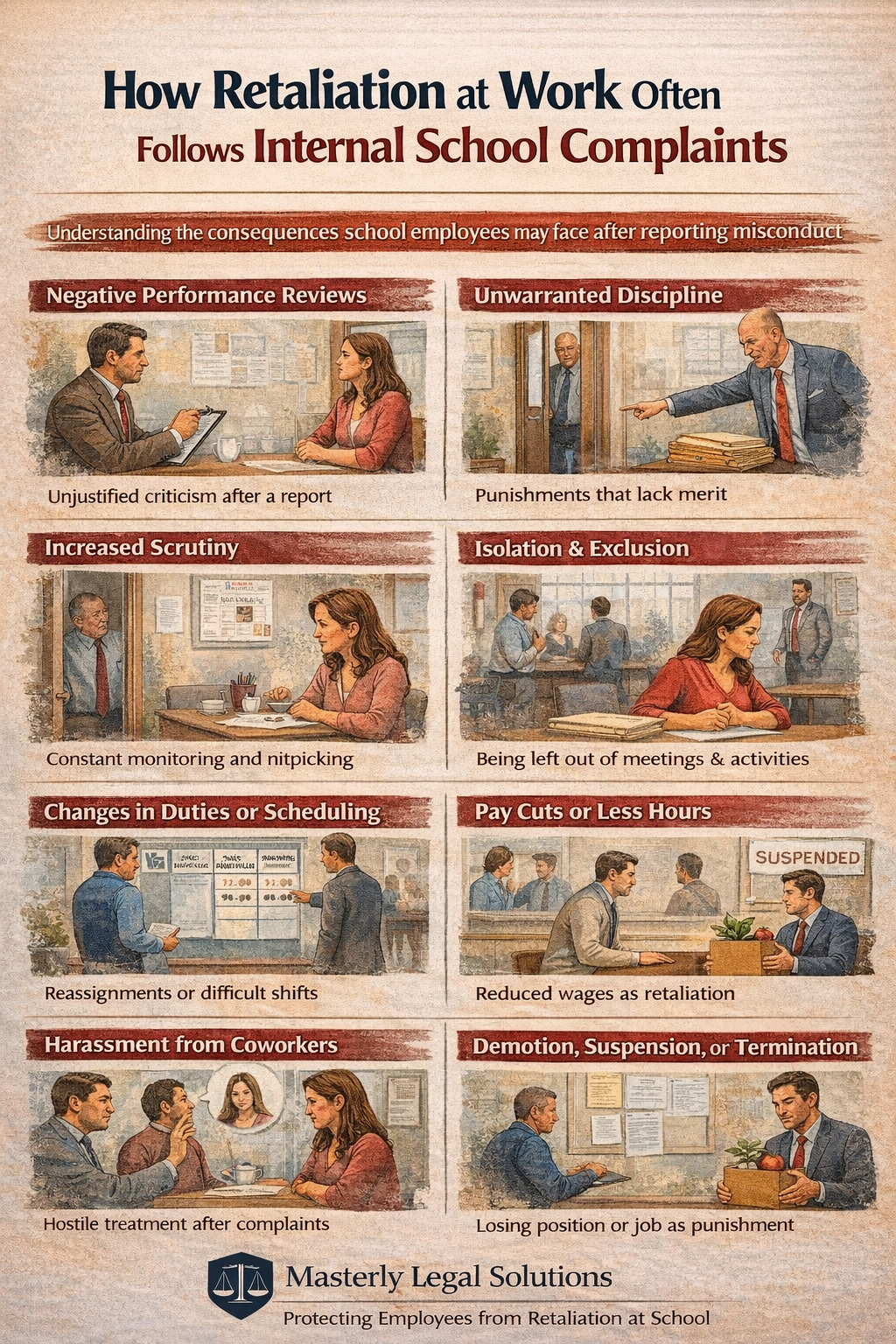
Retaliation can take many forms that impact daily work life. Employers may alter schedules, change duties, or isolate the employee socially. These actions are often designed to pressure the worker into resigning or staying quiet.
Examples of retaliatory conduct may include:
- Negative performance reviews without justification
- Assignment to a less desirable position
- Reduction in work hours or paid time
- Increased scrutiny compared to other employees
When Discipline Becomes Retaliation
Discipline following a complaint is not automatically illegal, but timing matters. If discipline begins soon after protected activity, it may be considered retaliatory. Courts evaluate whether a reasonable employee would be discouraged from reporting misconduct. Context and consistency are critical.
Retaliation and Performance Reviews
Performance reviews are frequently used as a tool for retaliation. An employee with a positive history may suddenly receive poor evaluations. These reviews often lack specific examples or contradict prior feedback. Documentation becomes essential in these situations.
Changes in Working Conditions
Retaliation may involve changes to working conditions that create stress or humiliation. Employees may lose classroom resources, support staff, or preferred schedules. Others may be transferred to undesirable locations. These changes can significantly impact employee morale.
Employer Actions That Cross Legal Lines
Retaliation occurs when an employer punishes an employee for engaging in legally protected behavior. This includes termination, demotion, or threats. When an employer refuses accommodations or opportunities previously granted, the pattern may indicate retaliation. The law examines motive and timing closely.
Harassment as a Form of Retaliation
Harassment can escalate after a complaint is filed. Supervisors or co workers may make hostile comments, exclude the employee, or encourage others to do the same. This behavior compounds the original harm and creates a hostile workplace. Retaliatory harassment is unlawful.
Sexual Harassment Complaints and Retaliation
Employees who report sexual harassment or sexual advances are especially vulnerable to retaliation. Retaliation may include gossip, reassignment, or questioning credibility. Title VII of the Civil Rights Act specifically prohibits this conduct. Protection applies even if the harassment complaint is unresolved.
Discrimination Complaints and Retaliation Risks
Employees who report discrimination based on race, national origin, sexual orientation, age discrimination, or disability often experience backlash. Retaliation may involve denial of promotions or exclusion from opportunities. Discrimination based retaliation is addressed under federal and state frameworks. Protection extends to job applicants as well.
Federal and State Laws That Protect Workers
Both federal and state laws prohibit retaliation in the workplace. Federal law includes Title VII, the Disabilities Act, and the Medical Leave Act. State laws may provide additional protections. These laws apply to schools as employers, including public and private institutions.
The Role of Title VII in School Retaliation Cases
Title VII protects employees who report discrimination or harassment. It applies to public school systems and many private schools. Retaliation claims under Title VII focus on whether adverse actions followed protected activity. Courts look at patterns, not isolated incidents.
Retaliation and Family-Related Protections
Employees who request job protected leave for childcare responsibilities or family member care may face retaliation. FMLA leave and medical leave act protections apply to eligible employees. Retaliation for using these benefits is illegal. Schools must comply with these requirements.
Workplace Accommodations and Retaliation
Requests for workplace accommodations related to disabilities or medical needs can also trigger retaliation. When an employer claims undue hardship without evidence, it may signal discrimination. Retaliation for requesting accommodations violates the law. Proper documentation helps protect employees.
Immigration Status and Retaliation
Some employers attempt to intimidate workers by referencing immigration status. Retaliation based on immigration threats is illegal. Federal and state protections apply regardless of citizenship. Schools engaging in this conduct may face serious penalties.
Retaliation Through Scheduling and Pay
Changes to overtime pay, paid time, or schedules after a complaint can be retaliatory. Employers may manipulate work hours to pressure employees. These changes often appear minor but can have financial consequences. Lost wages may be recoverable through legal action.
When Retaliation Leads to Wrongful Termination
Wrongful termination may occur when an employee is fired after engaging in protected activity. Termination does not have to be immediate to be unlawful. Delayed termination can still be retaliatory. Timing and employer justification are closely examined.
Documenting Retaliation Is Critical
Employees should document every adverse action following a complaint. Emails, performance reviews, schedule changes, and witness statements matter. Potential witnesses may include co workers or supervisors who observed changes. Documentation strengthens retaliation claims.
Internal Complaints and the Employee Handbook
Many schools require internal reporting under the employee handbook. Following internal procedures does not waive legal rights. In fact, it often strengthens a retaliation complaint. Employers cannot punish employees for using required channels.
The Role of Human Resources
Human resources departments are often involved after complaints. While HR may claim neutrality, they represent the employer. Statements made to HR should be thoughtful and documented. Legal guidance helps protect employees during these interactions.
Retaliation Complaints and External Agencies
Employees may file a retaliation complaint with a state agency or the Equal Employment Opportunity Commission. These agencies investigate discrimination and retaliation claims. Filing deadlines are strict. An attorney helps ensure compliance with procedural requirements.
How the EEOC Evaluates Retaliation
The Equal Employment Opportunity Commission evaluates whether retaliation would deter a reasonable employee from reporting misconduct. The focus is on impact, not intent. Even subtle actions can qualify as adverse actions. Agency findings influence future legal options.
Legal Action and Remedies for Retaliation
Legal action may allow recovery of lost wages, reinstatement, or punitive damages. Remedies depend on the severity of retaliation and applicable laws. Some cases also involve compensation for emotional distress. Skilled lawyers evaluate which claims apply.
The Importance of Legal Representation Early
Early legal representation helps employees avoid missteps. Retaliation attorneys understand how employers defend these claims. Legal strategy from the start preserves evidence and protects rights. Delays can weaken otherwise strong cases.
How Retaliation Affects Future Discrimination
Unchecked retaliation often leads to future discrimination. Employers may feel emboldened when retaliation goes unchallenged. Addressing retaliation protects not only the individual employee but other workers as well. Accountability changes workplace culture.
Individual Employees Versus Institutional Power
Schools often have significant resources and legal teams. Individual employees may feel overwhelmed. Employment lawyers level the playing field. Representation ensures workers are not silenced.
How Retaliation Attorneys Help School Employees
Retaliation attorneys analyze timelines, evidence, and employer motives. They build cases that show patterns rather than isolated events. Experienced labor and employment lawyers understand school environments. Their role is to protect workers’ rights.
Choosing the Right Legal Team
Not all employment lawyers focus on retaliation cases. Schools present unique challenges involving policies and public funding. Skilled lawyers with education-related experience provide stronger advocacy. The right law firm makes a meaningful difference.
Taking the First Step Toward Protection
Employees should trust their instincts when something feels wrong after a complaint. Retaliation often starts quietly before escalating. Taking early action preserves options. Legal guidance provides clarity and direction.
Contact Masterly Legal Solutions for Support
If you believe retaliation followed an internal school complaint, you do not have to face it alone. At Masterly Legal Solutions, our retaliation attorneys help employees protect their rights and pursue accountability. We provide a free consultation to assess your circumstances and outline your options in accordance with state and federal regulations.
Contact us today at (972) 236-5051 to speak with our team and take the first step toward protecting your career and future.
Disclaimer: This material does not provide legal advice; it is merely meant to be informative. An attorney-client relationship is not established by reading this content. See a knowledgeable lawyer for guidance on your particular circumstance.


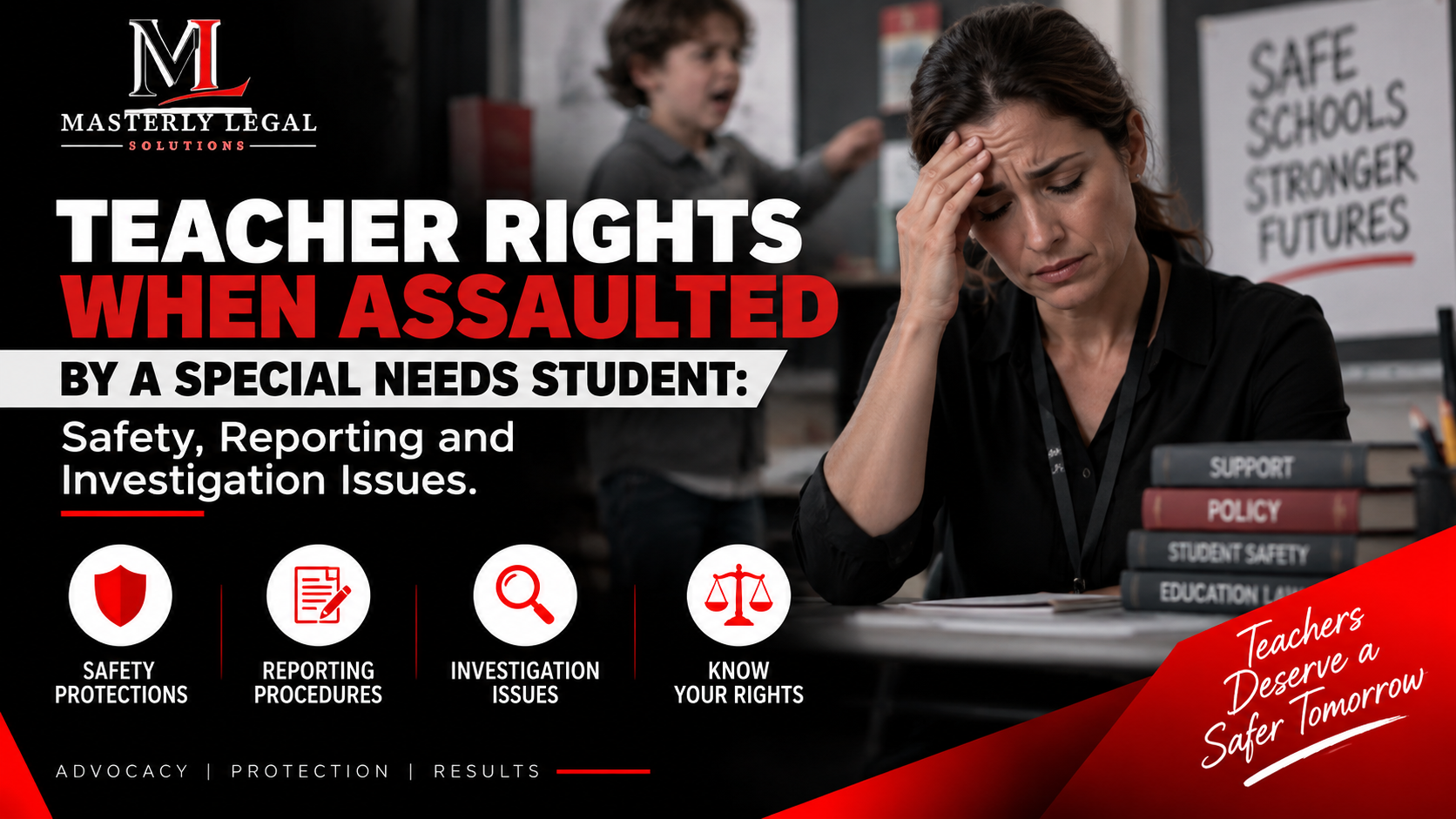
Teacher Rights When Assaulted by a Special Needs Student: Safety, Reporting and Investigation Issues


Looking for Legal & Business Solutions? Contact Us Now
Fill in the form or call us to set up a meeting





