

How Retaliation Can Begin the Moment a Teacher Is Reported to TEA
Being a teacher often means trusting that doing the right thing will be met with fairness and professionalism. Unfortunately, when a report is made to the Texas Education Agency, that trust can be tested almost immediately. Many educators are shocked to learn how quickly retaliation can begin, sometimes before any formal investigation even starts. At Masterly Legal Solutions, we regularly speak with teachers who sensed something was wrong the moment their employer learned of a TEA report. This article explores how retaliation can unfold early, why timing matters, and how subtle actions can quietly place an employee’s career at risk.
Understanding the Fragile Window After a TEA Report
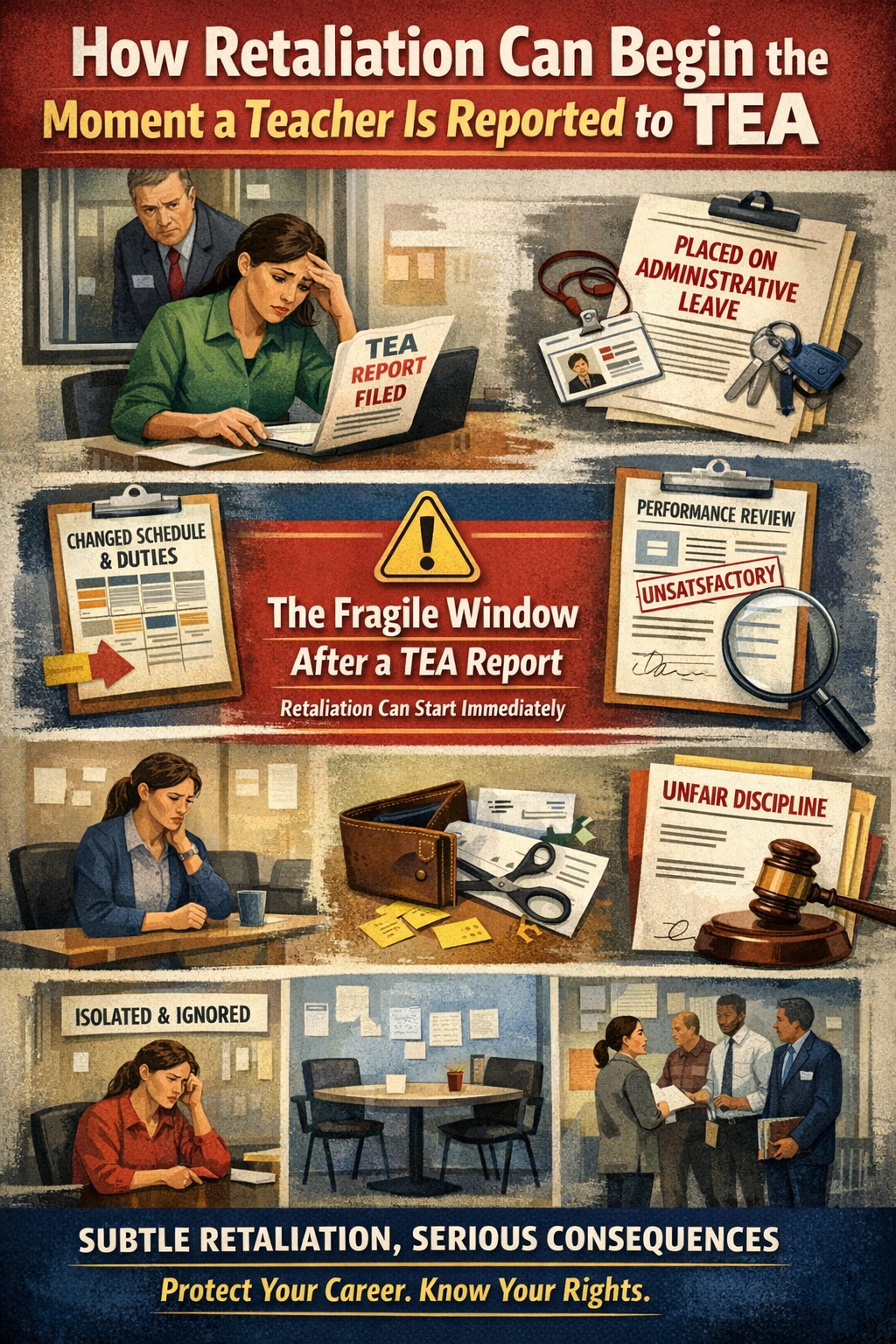
The period immediately following a report to TEA is one of the most vulnerable times for a teacher. Administrators, supervisors, and even coworkers may react emotionally or defensively before fully understanding the facts. Retaliation does not always arrive as an obvious firing or demotion. More often, retaliation occurs through small, calculated changes that slowly alter the employee’s standing in the workplace.
Why Timing Matters More Than Most Teachers Realize
Timing plays a critical role in retaliation cases. Actions taken shortly after a protected activity, such as reporting misconduct, can suggest improper motives. Even when an employer claims decisions are unrelated, the close timing can tell a very different story. Federal and state laws recognize that retaliation at work often begins quietly, making early documentation essential.
What Counts as a Protected Activity
Teachers are protected when they engage in certain actions recognized under federal laws and state laws. Reporting discrimination, harassment, safety concerns, or regulatory violations to TEA can qualify as protected activity. Filing internal complaints, cooperating in an investigation, or acting as a witness may also trigger legal protections. Once a teacher engages in protected activity, the employer must tread carefully.
Internal Reporting and the First Signs of Trouble
Many teachers report issues internally before or alongside contacting TEA. While internal reporting is often encouraged, it can also alert decision-makers who may later retaliate. Human resources departments are supposed to act as neutral intermediaries, but that does not always happen. Subtle shifts in tone, access, and communication can begin almost immediately.
Subtle Retaliation Is Often the Most Dangerous
Retaliation is not always loud or dramatic. It often takes the form of administrative leave, changes in work hours, or sudden scrutiny of performance. Paid administrative leave may sound harmless, but when used strategically, it can isolate an employee and damage their professional reputation. Administrative leave is one of the most commonly misused tools in early retaliation scenarios.
The Strategic Use of Administrative Leave
Administrative leave is frequently presented as a neutral step while an investigation is pending. In reality, it can function as a disciplinary action without due process. Teachers placed on administrative leave may lose classroom access, professional credibility, and contact with potential witnesses. Even paid time away from work can feel punitive when it disrupts routines and signals suspicion.
Paid Administrative Leave and Its Hidden Consequences
Paid administrative leave is often justified as protective for all parties. However, repeated or prolonged administrative leave can undermine an employee’s career trajectory. Colleagues may assume guilt, and future opportunities can quietly disappear. When administrative leave follows closely after a complaint or TEA report, it raises serious legal concerns.
How Performance Reviews Suddenly Change
One common example of subtle retaliation involves performance reviews. A teacher with years of positive evaluations may suddenly receive critical feedback after filing a complaint. These reviews are later used to justify adverse actions such as demotion, termination, or denial of benefits. Timing is critical when determining whether these reviews are legitimate or retaliatory.
Increased Scrutiny and Selective Enforcement
After a report, some teachers notice they are watched more closely than others. Minor policy issues become major problems overnight. Work hours, lesson plans, and classroom management are scrutinized in ways that were never applied before. This selective enforcement can be a clear sign of retaliation.
Isolation From Colleagues and Resources
Isolation is another early warning sign. Teachers may be excluded from meetings, removed from committees, or denied access to resources they previously had. Human resources may limit communication, making it harder for the employee to respond or defend themselves. These actions can erode employee morale and create a hostile workplace environment.
Retaliation Through Reassignment or Schedule Changes
Changes in assignments or schedules are often framed as operational needs. However, sudden reassignments following a TEA report can be retaliatory. Altered work hours, undesirable duties, or loss of preferred classes can significantly affect pay and job satisfaction. These changes may also interfere with family obligations.
Impact on Pay, Benefits, and Overtime Opportunities
Retaliation can directly affect pay and wages. Teachers may lose overtime pay opportunities, stipends, or supplemental roles. Benefits tied to performance or availability can quietly disappear. Even small reductions in pay can have long-term financial consequences for workers and their families.
Harassment as a Retaliatory Tool
Harassment often escalates after a report is made. Supervisors or coworkers may engage in hostile behavior, inappropriate comments, or unfair criticism. Harassment does not need to be extreme to be unlawful. Persistent conduct that creates a hostile workplace can support a retaliation claim.
When Disciplinary Action Becomes Retaliatory
Disciplinary action taken shortly after protected activity deserves close examination. Employers often claim the discipline is unrelated, but patterns matter. A sudden write-up or suspension following a complaint may indicate retaliation rather than legitimate enforcement. Each disciplinary action should be carefully documented.
The Role of Supervisors in Early Retaliation
Supervisors play a central role in how retaliation unfolds. They control daily interactions, assignments, and evaluations. A supervisor who feels threatened by a report may act defensively. These actions can later become key evidence in a retaliation complaint.
Human Resources and Conflicts of Interest
Human resources departments are supposed to protect both the employer and the employee. However, HR often prioritizes limiting liability for the employer. Teachers should be cautious about assuming HR is neutral. Statements made to human resources can later be used to justify adverse actions.
Retaliation and the Investigation Process
An investigation does not pause retaliation risks. In fact, retaliation often intensifies during investigations. Administrative leave, restricted access, and communication limits are frequently imposed. Teachers should understand that investigations must be conducted fairly and without bias.
The Legal Framework Protecting Teachers
Retaliation is prohibited under multiple laws. Federal laws such as Title VII of the Civil Rights Act, the Disabilities Act, and the Medical Leave Act provide legal protections. State laws and whistleblower laws also apply. These laws exist to protect individual employees who speak up.
Title VII and Retaliation Protections
Title VII prohibits retaliation related to reporting discrimination, harassment, or unequal treatment. It applies to many public and private employers. Retaliation under Title VII can include termination, demotion, or other adverse actions. The Equal Employment Opportunity Commission enforces these protections.
Whistleblower Laws and State Agency Reports
Teachers who report misconduct to a state agency like TEA may be protected under whistleblower laws. These laws recognize that reporting wrongdoing is essential to public accountability. Retaliation for whistleblowing can result in significant penalties for the employer.
The Importance of Documentation From Day One
Documentation is critical when retaliation begins early. Teachers should keep records of emails, performance reviews, schedule changes, and communications. Witness statements from potential witnesses can also be valuable. These records help lawyers determine whether retaliation occurred.
How Retaliation Affects Long-Term Employment
Even when a teacher is not immediately terminated, retaliation can damage future employment prospects. Negative records, altered evaluations, and internal narratives can follow an employee. This can lead to wrongful termination months or even years later.
Wrongful Termination and Escalating Retaliation
Wrongful termination often represents the final stage of retaliation. Employers may build a paper trail to justify firing an employee. Understanding the early signs of retaliation can help prevent escalation. Legal assistance early on can make a significant difference.
Federal Employees and Additional Considerations
Federal employees face unique rules and procedures. While many teachers are not federal employees, similar principles apply. Federal laws still shape how retaliation claims are evaluated. Understanding which laws apply is essential.
Discrimination as a Retaliatory Overlay
Retaliation often overlaps with discrimination. Teachers may face age discrimination, disability-related bias, or unequal treatment based on protected characteristics. These overlapping violations strengthen legal claims. The circumstances matter when determining liability.
Physical Harm and Safety Concerns
In rare but serious cases, retaliation may involve threats or physical harm. Occupational safety concerns should never be ignored. Teachers facing unsafe conditions should document and report them immediately. Police involvement may be appropriate in extreme situations.
The Emotional Toll on Teachers and Families
Retaliation affects more than just the employee. Stress, anxiety, and uncertainty impact family members as well. Paid time away from work does not eliminate emotional harm. Recognizing the personal cost is important when deciding how to respond.
Determining Whether Retaliation Occurred
Determining retaliation requires analyzing timing, actions, and intent. Lawyers examine patterns, employer explanations, and evidence. Even subtle actions can support a claim when viewed together. A single example may seem minor, but patterns reveal intent.
Filing a Retaliation Complaint
Filing a retaliation complaint may involve internal processes, state agencies, or federal filings. The Equal Employment Opportunity Commission often plays a role. Deadlines apply, making prompt action essential. Missing filing deadlines can limit legal options.
Potential Remedies and Punitive Damages
Successful retaliation claims may result in reinstatement, back pay, and punitive damages. Courts may also order changes to employer practices. These remedies are designed to protect workers and deter future discrimination. Each case is evaluated individually.
Why Early Legal Guidance Matters
Early legal assistance can help teachers protect themselves. Employment lawyers understand how retaliation unfolds and how to respond strategically. Waiting too long can weaken a claim. Consulting attorneys early helps preserve evidence and options.
How Masterly Legal Solutions Supports Teachers
At Masterly Legal Solutions, we focus on protecting teachers facing retaliation. Our attorneys understand education employment, investigations, and retaliation laws. We work to protect careers, reputations, and livelihoods. Each client’s situation is treated with care and urgency.
Taking the First Step Toward Protection
If something feels wrong after a TEA report, trust your instincts. Retaliation often begins quietly and escalates over time. Speaking with experienced employment lawyers can help you recognize and respond to early warning signs. You do not have to navigate this alone.
The Role of Labor and Employment Lawyers in Retaliation Cases
Labor and employment lawyers play a critical role when retaliation begins early in a teacher’s career dispute. These lawyers understand how school districts operate and how internal decisions are often documented. When retaliation is subtle, legal professionals know how to identify patterns that administrators claim are coincidental. Early involvement allows labor and employment lawyers to protect evidence before it disappears. Their guidance can help an employee avoid missteps that weaken a future claim.
How the Employment Act Influences Retaliation Claims
The employment act establishes basic rules governing how employers must treat workers after complaints are made. When an employee engages in protected activity, the employment act limits how disciplinary measures can be applied. Employers are prohibited from using administrative procedures as punishment. Violations of the employment act often surface through timing, documentation, and unequal treatment. Understanding this law helps employees recognize when conduct crosses legal boundaries.
Employment Contracts and Hidden Retaliation Risks
Employment contracts often contain provisions that employers later rely on to justify adverse decisions. After a complaint is filed, administrators may suddenly enforce contract terms that were previously ignored. These selective interpretations can be used to mask retaliation. Reviewing employment contracts with legal counsel helps determine whether enforcement is legitimate or targeted. Contracts should never be weaponized against an employee for speaking up.
Who Qualifies as Eligible Employees Under the Law
Not all protections apply equally, which is why identifying eligible employees is essential. Eligibility may depend on job classification, length of service, or employment status. Teachers who qualify often receive stronger protections against retaliation. Misclassifying an employee can improperly strip them of legal rights. Determining eligibility early helps protect long-term employment security.
Understanding Job Protected Leave in Retaliation Situations
Job protected leave exists to ensure employees are not punished for taking legally approved time away from work. When retaliation begins, employers may interfere with or discourage this leave. Teachers should never be penalized for exercising protected leave rights. Any negative action tied to approved leave may indicate unlawful retaliation. Job protected leave must remain protected in practice, not just on paper.
FMLA Leave and Retaliation Red Flags
FMLA leave is designed to allow eligible employees to address serious health or family needs without fear. Retaliation can occur when an employer treats FMLA leave as an inconvenience or liability. Teachers returning from leave may face sudden scrutiny or isolation. These actions can violate both employment and retaliation laws. Legal review is often necessary when FMLA leave precedes disciplinary action.
How Labor Standards Shape Workplace Retaliation
Labor standards influence how employees must be treated after reporting concerns. These standards help regulate fairness, discipline, and accountability in the workplace. When retaliation occurs, labor violations often appear alongside discrimination issues. Employers who ignore labor obligations risk serious consequences. Understanding labor protections helps employees recognize when rights are being ignored.
Why Additional Information Can Strengthen a Retaliation Claim
Additional information often determines whether retaliation can be proven. Emails, meeting notes, schedules, and witness statements add context to employer decisions. Even small details can reveal patterns over time. Gathering information early protects against shifting narratives. Legal professionals rely heavily on thorough documentation.
When Retaliation Escalates Into a Lawsuit
A lawsuit may become necessary when internal remedies fail or retaliation continues. Lawsuits are not filed lightly and require substantial evidence. Early retaliation often forms the foundation of later legal action. Teachers should understand that legal claims develop over time. Consulting attorneys early strengthens litigation options.
When It Is Time to Hire Legal Representation
Many teachers wait too long to hire legal help. Retaliation cases benefit from early intervention rather than reaction. Hiring counsel allows employees to respond strategically instead of emotionally. Lawyers help protect careers, records, and reputations. Delaying representation can limit available remedies.
Identifying the True Subject of Retaliation
The subject of retaliation is not always the original complaint. Sometimes the issue becomes control, authority, or fear of accountability. Employers may retaliate to discourage others from reporting. Recognizing the real motive helps clarify the legal strategy. Understanding intent is key in retaliation cases.
Recognizing the Employee as the Victim of Retaliation
Teachers often struggle to see themselves as a victim, especially when retaliation is subtle. Victims may blame themselves or minimize unfair treatment. Retaliation does not require extreme conduct to be unlawful. Gradual pressure and professional harm still count. Acknowledging victim status is the first step toward protection.
How Retaliation Is Viewed Generally Under the Law
Retaliation is generally evaluated by looking at timing, motive, and impact. Courts do not require employers to admit intent. Instead, patterns and circumstantial evidence matter most. Actions that seem minor alone can be powerful when combined. Understanding how retaliation is viewed generally helps employees protect themselves early.
Contact Masterly Legal Solutions for Guidance
If you believe retaliation has begun or you are concerned about administrative leave, discrimination, or adverse actions, we invite you to reach out. A free consultation can help you understand your rights and options. Speaking with attorneys early can make a meaningful difference in protecting your career and future. Contact Masterly Legal Solutions at (972) 236-5051 to discuss your situation and get answers tailored to your circumstances.
Disclaimer: This article is for informational purposes only and does not constitute legal guidance or create an attorney-client relationship. Laws and circumstances vary, and you should consult a qualified attorney regarding your specific situation.

Teacher Rights When Assaulted by a Special Needs Student: Safety, Reporting and Investigation Issues







Looking for Legal & Business Solutions? Contact Us Now
Fill in the form or call us to set up a meeting