

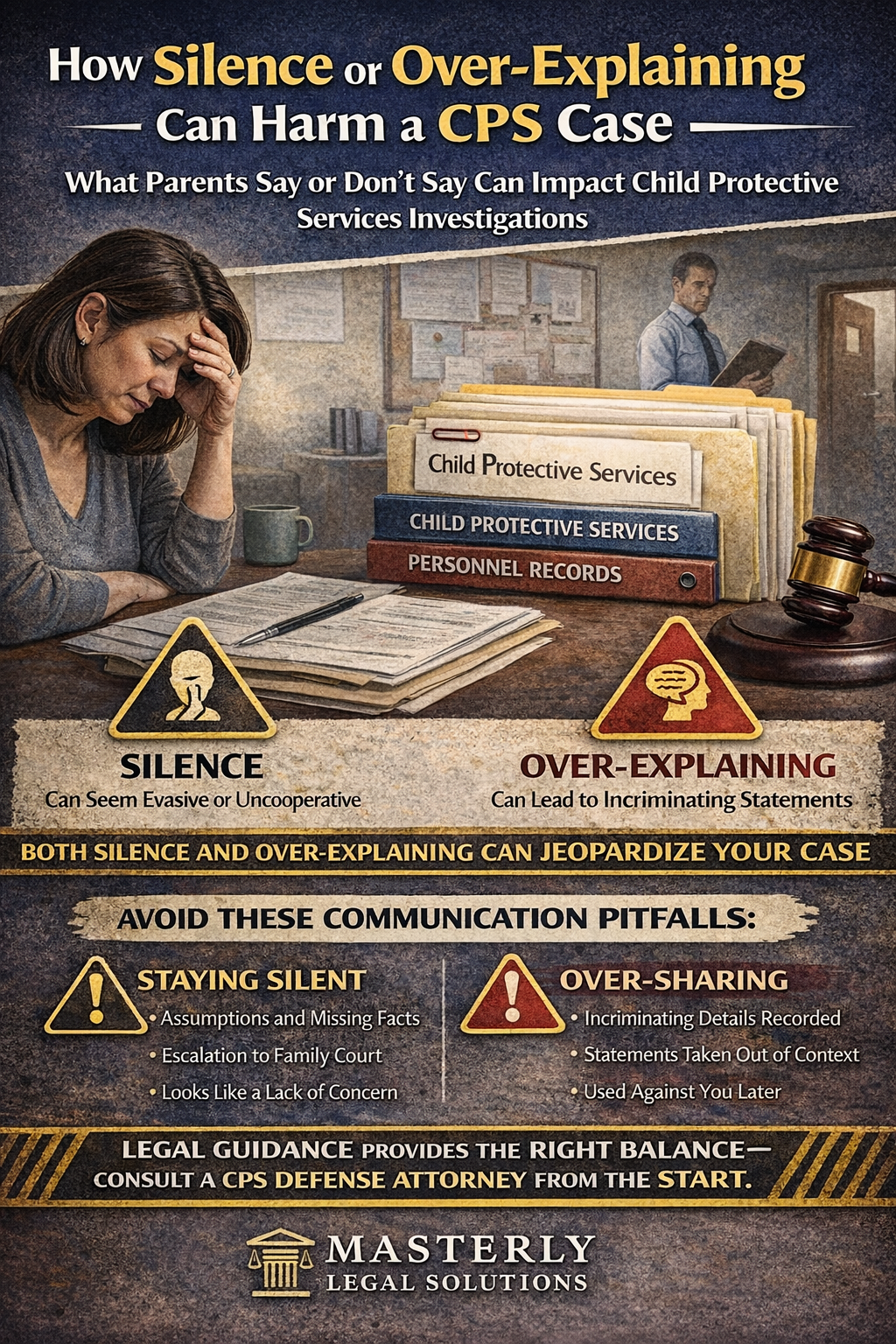
How Silence or Over-Explaining Can Harm a CPS Case
When parents first learn that Child Protective Services has opened a case involving their family, fear and confusion often take over. Many parents instinctively believe that staying silent will protect them, while others feel compelled to explain every detail in hopes of clearing things up quickly. Unfortunately, both extremes can seriously damage a CPS case. What parents say—or do not say—during the earliest stages of a CPS investigation can shape the outcome for months or even years.
At Masterly Legal Solutions, we regularly help parents who did not realize how their words or silence were being interpreted by a government agency with broad authority. CPS cases move quickly, and early missteps can affect custody, parental rights, and family life. Understanding how communication is viewed during child protective services investigations is critical to protecting your child and your future.
Understanding the Role of Child Protective Services
Child Protective Services exists to investigate reports involving child abuse, child neglect, and other safety concerns. While the stated goal is ensuring child safety, CPS is also a powerful government agency with the authority to remove a child from the home under certain circumstances. These investigations are not informal conversations; they are structured processes with legal consequences.
Once a report is made, child protective services CPS begins evaluating whether allegations of abuse or neglect have sufficient evidence. CPS workers document every interaction, statement, and observation. Parents should assume that anything said may later be reviewed by attorneys, a judge, or family court proceedings.
Why CPS Investigations Feel So Overwhelming
CPS investigations often begin unexpectedly, leaving parents feeling blindsided. A knock on the door or a phone call can instantly turn daily family life upside down. Parents may feel accused before understanding what the allegations even are.
This emotional pressure is one reason parents either shut down completely or over-explain. Both reactions are understandable, but neither is strategic. A CPS investigation process requires careful navigation, not emotional reactions driven by fear.
The Danger of Complete Silence in CPS Cases
Many parents believe that refusing to speak with CPS is the safest option. While parents do have rights, complete silence can sometimes raise red flags during an investigation. CPS caseworkers may interpret silence as avoidance or lack of cooperation, especially when child safety is the stated concern.
Silence can also limit your ability to correct inaccurate information early. When CPS is investigating reports, unanswered questions may be filled with assumptions. In some cases, silence leads CPS to escalate matters toward court intervention faster than necessary.
How Over-Explaining Can Create Serious Problems
On the other end of the spectrum, some parents over-explain every detail of their family situation. They may talk at length about past struggles, discipline methods, or personal challenges. While honesty is important, excessive information can unintentionally create new issues.
Over-explaining often leads to statements being taken out of context. CPS workers document details without emotional nuance, which can later be framed as evidence of abuse or neglect. Even innocent explanations can be misunderstood during CPS cases.
Statements Can Be Used Beyond CPS
Parents are often surprised to learn that statements made during a CPS investigation may be shared with other services or authorities. Information can be referenced during juvenile dependency proceedings or reviewed by a court. In severe cases, statements may even contribute to criminal charges.
What feels like a private conversation can quickly become part of a permanent record. This is why experienced attorneys strongly advise controlled communication rather than silence or over-sharing.
Understanding the CPS Investigation Process
The CPS investigation process typically includes interviews, home visits, and document review. CPS caseworkers may speak with parents, the child, school staff, or other family members. They are tasked with investigating allegations of child abuse and neglect thoroughly.
Parents should understand that CPS is building a case file from the first interaction. Each response becomes part of that file, whether helpful or harmful. Knowing how this process works helps parents make informed decisions.
Why Early Communication Matters
Early communication sets the tone for the entire investigation. CPS evaluates whether parents appear cooperative, defensive, or evasive. A balanced approach—guided by a CPS defense attorney—allows parents to protect themselves while addressing legitimate concerns.
This balance helps avoid unnecessary escalation. It also ensures that parents do not unknowingly provide information that could be used against them later in court.
The Role of CPS Caseworkers
CPS caseworkers are tasked with investigating reports and assessing child safety. While many act in good faith, they are trained to document risk factors. Their notes and conclusions often carry significant weight in CPS cases.
Parents should remember that CPS workers are not neutral advocates for the family. Their responsibility is to protective services and the agency’s mandate. This makes legal representation especially important.
How Allegations Expand During Investigations
CPS investigations often grow beyond the original allegation. A report about neglect may lead to questions about supervision, housing, or discipline. An allegation of child abuse may expand into broader concerns about family dynamics.
Over-explaining can unintentionally introduce new areas of concern. Silence can prevent clarification when allegations are inaccurate. Both extremes can make CPS cases more complex and harder to resolve.
The Impact on Family Life and Custody
CPS involvement directly affects family life. Parents may face temporary custody changes, supervised visitation, or court-ordered services. These outcomes can disrupt routines, employment, and emotional stability.
Once custody is altered, regaining normal family structure becomes more difficult. Courts prioritize the best interest of the child, and early impressions often influence later decisions.
Juvenile Dependency and Court Proceedings
If CPS determines that intervention is necessary, the case may move into juvenile dependency court. At this stage, judges rely heavily on CPS reports and evidence gathered during the investigation. Statements made early can resurface months later.
Court proceedings are formal and adversarial. Parents who spoke freely without legal guidance often regret not having a defense attorney earlier. Preparation from the beginning matters.
How Silence Can Be Misinterpreted in Court
Judges may view complete silence during a CPS investigation as a lack of engagement with services designed to protect the child. This perception can affect decisions related to custody or supervised visitation.
While parents have rights, courts also expect reasonable cooperation. Silence without strategy can unintentionally weaken a parent’s position during proceedings.
How Over-Explaining Becomes Evidence
Over-explaining creates extensive documentation that may later be labeled as admissions. Statements about discipline, stress, or parenting challenges may be framed as child maltreatment or neglect.
CPS does not interpret explanations emotionally. They assess risk factors. What a parent views as context may be viewed as evidence.
Child Abuse and Neglect Allegations Require Strategy
Allegations of child abuse or neglect are serious and emotionally charged. Whether the concern involves physical abuse, sexual abuse, or child neglect, every response must be carefully considered.
Parents facing allegations need guidance on how to respond without worsening the situation. This is where CPS defense becomes critical.
Why Parents Need a CPS Defense Attorney Early
A CPS defense attorney helps parents navigate communication safely. An experienced attorney can explain what to say, what not to say, and when silence is appropriate. This guidance protects parental rights while addressing CPS concerns.
Early legal representation often prevents escalation. It can also help resolve CPS cases more efficiently.
The Role of Evidence in CPS Cases
Evidence plays a central role in CPS cases. CPS looks for sufficient evidence to justify continued involvement or court filing. Statements from parents often become a key part of that evidence.
Controlled communication ensures that evidence reflects reality, not misunderstandings. A defense attorney helps manage this process carefully.
Supervised Visitation and Temporary Orders
When CPS believes a child may be at risk, they may recommend supervised visitation or temporary court orders. These decisions are often based on early impressions formed during the investigation.
Once supervision is imposed, reversing it can take significant time. Preventing unnecessary restrictions begins with proper handling of the investigation.
The Emotional Toll on Parents and Children
CPS investigations are emotionally exhausting for parents and children alike. Children may feel confused or frightened, while parents experience anxiety and fear of losing custody. Stress can lead to poor communication decisions.
Legal support helps families stay grounded. It allows parents to focus on protecting their child while managing the process effectively.
CPS Defense Requires Experience and Expertise
CPS defense is a specialized area of law. Attorneys must understand how CPS operates, how cases are filed, and how courts evaluate evidence. This expertise helps build compelling arguments on behalf of parents.
A law firm with a proven track record in CPS cases brings valuable insight to each situation. Experience matters when outcomes affect a child’s future.
Geographic Factors in CPS Investigations
CPS practices vary by county and region. Procedures in Orange County may differ from those in Southern California or Texas Department jurisdictions. Local knowledge can influence strategy.
Understanding how county systems operate helps attorneys tailor defense approaches. This local insight benefits families navigating CPS cases.
The Risk of Criminal Charges
In some CPS cases, allegations may overlap with criminal investigations. Statements made to CPS can sometimes be shared with law enforcement. This creates serious legal risks for parents.
A defense attorney helps protect against self-incrimination while addressing child protective services concerns. Coordination matters when criminal charges are possible.
Counseling and Court-Ordered Services
CPS may recommend counseling or services as part of a neglect case or abuse investigation. While these services can be helpful, agreeing to them without guidance may imply fault.
An attorney helps parents understand the implications of service plans. Accepting services should be a strategic decision, not a reflexive one.
Why the Best Interest Standard Matters
Courts base decisions on the best interest of the child. This standard influences custody, visitation, and reunification plans. Early communication affects how the court views parental fitness.
Parents must demonstrate their ability to protect and care for their child. Strategic communication supports this goal.
Filing and Deadlines in CPS Cases
CPS cases involve strict filing deadlines and procedural requirements. Missing deadlines or misunderstanding expectations can harm a case. Silence or over-explaining does not substitute for legal strategy.
Attorneys help manage filings and ensure compliance with court orders. This support reduces risk.
How Attorneys Protect Parental Rights
Attorneys play a critical role in protecting parental rights throughout CPS investigations. They ensure parents are treated fairly and that the law is followed. This protection extends from the initial consultation through court proceedings.
Strong legal advocacy helps balance the power held by CPS.
Choosing the Right Law Firm for CPS Defense
Selecting the right law firm matters. Parents should seek attorneys with CPS defense experience, expertise in juvenile dependency, and a history of defending families. A proven track record provides confidence during uncertain times.
Clients benefit from personalized strategies rather than one-size-fits-all advice.
Why Early Legal Guidance Changes Outcomes
The earlier parents seek legal guidance, the more options they have. Early intervention often prevents unnecessary escalation, court intervention, or foster care placement. Waiting too long limits available strategies.
Protecting your family starts with informed decisions.
Moving Forward With Confidence and Support
CPS cases are not something parents should face alone. With proper guidance, families can navigate investigations while protecting their rights and children. Understanding the risks of silence and over-explaining empowers parents to act wisely.
Every case is unique, but preparation makes a difference.
The Role of Child Protection Services in Family Investigations
Child protection services are part of a broader network of agencies responsible for responding to reports involving the safety and well-being of a child. While the mission is to protect children, these agencies also have significant authority that can directly affect parents and families. Their involvement often leads to interviews, home assessments, and referrals to other services that become part of the official record. Understanding how child protection services operate helps parents recognize why careful communication and legal guidance are so important from the start.
How Child Protective Services Cases Can Escalate Quickly
Child protective services cases often move faster than parents expect, especially when allegations involve abuse or neglect. What begins as an inquiry can quickly lead to formal findings, court filings, or changes in custody if concerns are not addressed properly. Early impressions formed by investigators frequently shape later decisions made by attorneys, judges, and social workers. Taking these cases seriously from the beginning can prevent unnecessary escalation.
The Influence of Social Services on CPS Outcomes
Social services frequently work alongside CPS during investigations and court proceedings. These agencies may provide assessments, counseling recommendations, or supervision reports that influence how a case is resolved. While social services aim to support families, their reports can also affect custody and visitation decisions. Parents should be aware that interactions with social services are often documented and shared.
When Families Need to Fight to Protect Their Rights
There are situations where parents must fight to protect their parental rights and maintain their family structure. Fighting a CPS case does not mean opposing child safety; it means ensuring that decisions are fair, evidence-based, and lawful. With the right legal support, families can challenge incorrect assumptions, present evidence, and advocate for outcomes that truly serve the best interest of the child.
Contact Masterly Legal Solutions for CPS Defense Support
If you are under investigation by CPS or fear that something you said—or did not say—may harm your case, speaking with lawyers for CPS cases can provide clarity and direction. At Masterly Legal Solutions, our law firm offers a free consultation to help parents understand their options and protect their family during CPS investigations. Our attorneys bring experience, expertise, and a commitment to defending parental rights. We also support North Carolina educators facing misconduct investigations to protect their teaching licenses and reputations. Call (972) 236-5051 today to schedule your initial consultation and get the support you need.
Disclaimer: This article is provided for educational purposes only and does not constitute legal guidance or legal advice. Reading this article does not create an attorney-client relationship. For advice specific to your situation, consult a qualified lawyer.

Teacher Rights When Assaulted by a Special Needs Student: Safety, Reporting and Investigation Issues


Looking for Legal & Business Solutions? Contact Us Now
Fill in the form or call us to set up a meeting