

Retaliation at Work and the Risks Teachers Face During Administrative Investigations
Teachers enter the profession to educate, support, and protect students, not to navigate hostile workplace dynamics. Yet many educators find themselves facing retaliation after raising concerns, reporting misconduct, or simply participating in required administrative investigations. At Masterly Legal Solutions, we routinely see how quickly a school workplace can shift when a teacher becomes viewed as a “problem” rather than a professional. Retaliation can be subtle, aggressive, or even rise to the level of massive retaliation that puts a career at risk.
This article explains how retaliation occurs in school settings, the unique risks teachers face during administrative investigations, and how legal advocacy can help protect educators from unlawful employer conduct.
Understanding Retaliation in Educational Workplaces
When an employer treats a worker unfairly for participating in protected behavior, this is known as retaliation. In school environments, this often follows a report, complaint, or participation in an investigation. Teachers may not immediately recognize retaliation because it can appear as routine administrative decisions.
However, retaliation is prohibited under federal and state laws, including employment law protections designed to safeguard workers. When adverse action follows protected activity, legal protections may apply.
Why Teachers Are Especially Vulnerable
Teachers operate within layered systems involving administrators, supervisors, school boards, and government departments. This structure creates multiple opportunities for retaliation to occur quietly. A teacher who cooperates with an investigation may suddenly find their workload increased or their classroom assignments changed.
Unlike many private-sector workers, teachers are often subject to licensing boards, internal policies, and public scrutiny. These factors amplify the negative impact of retaliatory actions.
Administrative Investigations and Power Imbalances
Administrative investigations place teachers under intense review. While investigations are intended to uncover facts, they can also expose educators to retaliation by managers or administrators. Teachers may be labeled as uncooperative simply for asking questions or asserting rights.
The imbalance of power between an individual employee and a school employer makes retaliation particularly damaging. Even subtle actions can derail a career.
What Counts as Protected Activity for Teachers
Protected activity includes actions that the law specifically shields from retaliation. For teachers, this often involves reporting discrimination, harassment, or safety concerns. Participation in an investigation, even as a witness, also qualifies.
Examples of protected activity include:
- Filing a discrimination complaint
- Reporting harassment or unsafe conditions
- Participating in an internal or external investigation
- Requesting reasonable accommodations
- Engaging in other related protected activity
When retaliation follows these actions, legal protections may apply.
How Retaliation Manifests in Schools
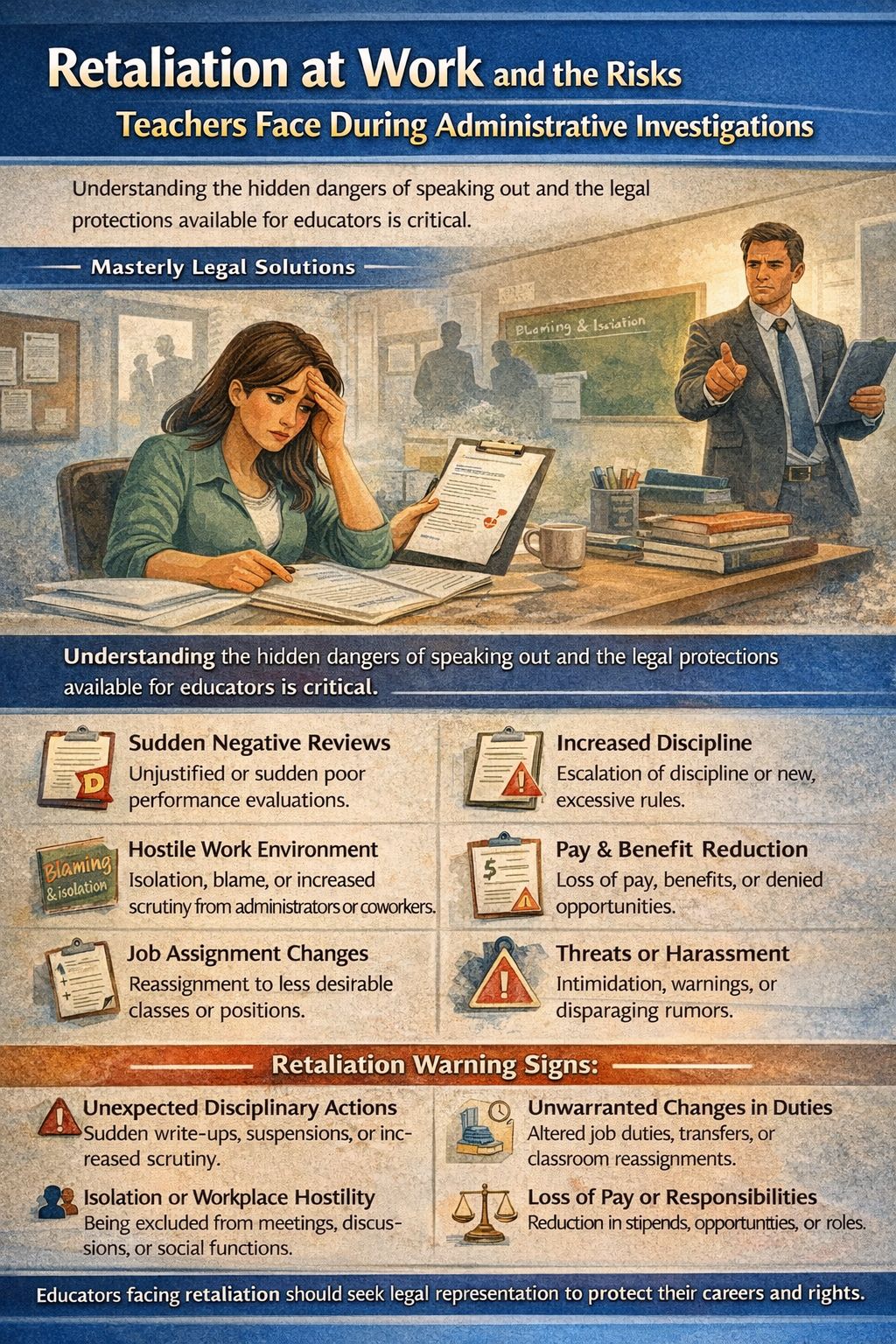
Retaliation takes many forms in educational workplaces. It is not limited to termination. Teachers often experience gradual changes that collectively create a hostile environment.
Common examples of adverse action include:
- Negative or sudden performance reviews
- Reassignment to a less desirable position
- Removal from a desirable position or program
- Increased scrutiny or monitoring
- Reduction in pay, benefits, or opportunities
Each of these actions can have a lasting negative impact.
Adverse Action and the Reasonable Employee Standard
Courts often evaluate retaliation using the “reasonable employee” standard. This asks whether the employer’s action would discourage a reasonable employee from engaging in protected activity. Teachers do not need to prove termination to show retaliation.
Actions that alter job duties, reputation, or career advancement may meet this standard. Even subtle changes can qualify as adverse action.
Retaliation During Investigations
Retaliation frequently occurs during or immediately after an investigation. Teachers may notice shifts in tone, increased discipline, or exclusion from meetings. These changes often follow cooperation with investigators or filing a report.
Retaliation during investigations is particularly concerning because it undermines the integrity of the process. Federal laws are designed to protect participants from these consequences.
Employment Discrimination and Retaliation Overlap
Employment discrimination and retaliation often overlap in school cases. A teacher may report discrimination based on race, sex, age discrimination, or disabilities, only to face retaliation afterward. This creates layered legal claims.
The Civil Rights Act and Title VII specifically prohibit retaliation connected to discrimination complaints. These protections apply regardless of whether the original complaint is ultimately substantiated.
Retaliation and Disability Accommodations
Teachers with disabilities are protected under the Disabilities Act. Requesting accommodations is a protected activity. Retaliation for these requests is illegal.
Unfortunately, some employers respond by questioning competence or adjusting duties unfairly. These actions may constitute a possible violation of federal law.
Harassment as a Form of Retaliation
Harassment can itself be retaliatory. After a teacher files a complaint, supervisors or coworkers may engage in hostile behavior. This can include isolation, intimidation, or spreading damaging narratives.
Harassment following protected activity is actionable under employment law. Schools have a duty to prevent and address it.
Wrongful Termination and Constructive Firing
In severe cases, retaliation leads to wrongful termination. Teachers may be fired outright or pressured into resigning. Constructive termination occurs when conditions become so intolerable that resignation feels unavoidable.
Being fired after engaging in protected activity is a red flag for retaliation. Timing often plays a critical role in proving these claims.
The Role of Federal and State Laws
Federal and state laws provide overlapping protections for teachers. These include the Employment Act, whistleblower laws, and labor regulations. State laws may expand protections beyond federal minimums.
Understanding which laws apply is essential to building a strong case. Legal expertise helps navigate this complex framework.
Whistleblower Protections for Educators
Teachers who report wrongdoing may be protected under whistleblower laws. These laws apply when educators report safety violations, misconduct, or illegal activity. Retaliation against whistleblowers is strictly prohibited.
Despite these protections, retaliation still occurs, making legal advocacy crucial.
Immigration Status and Retaliation Risks
Some teachers worry that immigration status may be used against them. Employers may attempt intimidation or threats related to status. Such actions are illegal.
Federal law protects workers regardless of immigration status when it comes to retaliation and discrimination.
Occupational Safety and Reporting Hazards
Teachers who report occupational safety concerns are engaging in protected activity. This includes unsafe facilities, violence risks, or health hazards. Retaliation for these reports is unlawful.
Schools must address safety concerns without punishing those who raise them.
Filing Complaints and Internal Reports
Filing a complaint triggers legal protections, but it can also increase scrutiny. Employers may begin documenting incidents or changing expectations. While documentation itself is not illegal, it can become retaliatory if misused.
Understanding how and when to file is part of a sound legal process.
Investigations Involving Police or External Agencies
Some investigations involve police or external authorities. Teachers participating in these processes may face retaliation internally. Cooperation with law enforcement is protected activity.
Employers cannot legally punish employees for lawful participation in investigations.
How Retaliation Affects Employee Morale
Retaliation harms not only the targeted teacher but overall employee morale. Other workers may fear speaking up after witnessing retaliation. This creates a culture of silence.
Overall employee morale declines when retaliation is tolerated, affecting school environments and student outcomes.
Performance Reviews Used as Retaliation
Performance reviews are sometimes weaponized after protected activity. Sudden negative evaluations following years of positive reviews raise red flags. These reviews may later be used to justify discipline or termination.
Challenging retaliatory reviews is often a key part of legal strategy.
Compensation, Pay, and Benefits at Risk
Retaliation can affect wages, pay increases, or benefits. Teachers may lose stipends, extracurricular compensation, or advancement opportunities. These financial harms are often overlooked but legally significant.
Loss of compensation strengthens retaliation claims.
The Legal Process for Retaliation Claims
The legal process for retaliation claims involves gathering evidence, filing with appropriate agencies, and potentially pursuing a lawsuit. This may include filing with the Equal Employment Opportunity Commission or state departments.
Timing and documentation are critical factors in determining outcome.
Evidence That Supports Retaliation Claims
Evidence may include emails, performance records, witness statements, and timelines. Showing a connection between protected activity and adverse action is essential. Even circumstantial evidence can be persuasive.
Strong evidence supports compelling arguments in negotiations or litigation.
Factors Courts Consider in Retaliation Cases
Courts examine several factors, including timing, consistency, and employer explanations. A sudden change in treatment after protected activity often carries weight. The employer’s stated reasons are closely scrutinized.
These factors help determine whether retaliation occurred.
The Importance of Legal Representation
Teachers facing retaliation should not navigate the process alone. Legal representation provides strategy, advocacy, and protection. Employment lawyers understand how school systems operate and how to challenge unlawful conduct.
Early legal guidance often leads to better outcomes.
How Lawyers Advocate for Teachers
Lawyers advocate by investigating incidents, communicating with employers, and pursuing claims when necessary. Attorneys help clients understand options, risks, and potential outcomes. Advocacy focuses on justice and accountability.
Having an advocate levels the playing field.
Massive Retaliation and Systemic Issues
In some cases, retaliation escalates into massive retaliation involving coordinated actions by administrators or departments. These cases may reflect deeper systemic problems within a school or district.
Addressing these issues can protect not just one teacher, but many employees.
How Masterly Legal Solutions Supports Educators
At Masterly Legal Solutions, our lawyers focus on protecting teachers facing retaliation during administrative investigations. Our law firm combines employment law expertise with a deep understanding of educational systems. We advocate aggressively while guiding clients through every step.
Our attorneys are committed to fairness, accountability, and protecting careers.
What Teachers Can Expect When Seeking Help
Teachers can expect confidentiality, clear communication, and strategic guidance. We assess circumstances, identify violations, and outline next steps to protect your teaching license. Clients are empowered with knowledge and options.
Support makes a difference during stressful times.
Contact Masterly Legal Solutions for a Free Consultation
If you believe you are experiencing retaliation at work or fear consequences after an investigation, we encourage you to contact our team. At Masterly Legal Solutions, we offer a free consultation to discuss your situation and explain how the law may protect you. We also provide sexual harassment prevention training to help employers ensure a safe and respectful workplace.
Call (972) 236-5051 today to speak with attorneys who advocate for educators and fight workplace retaliation.
Disclaimer: This article is for informational purposes only and does not constitute legal advice. Reading this content does not create an attorney-client relationship. For legal guidance specific to your circumstances, consult a qualified attorney.




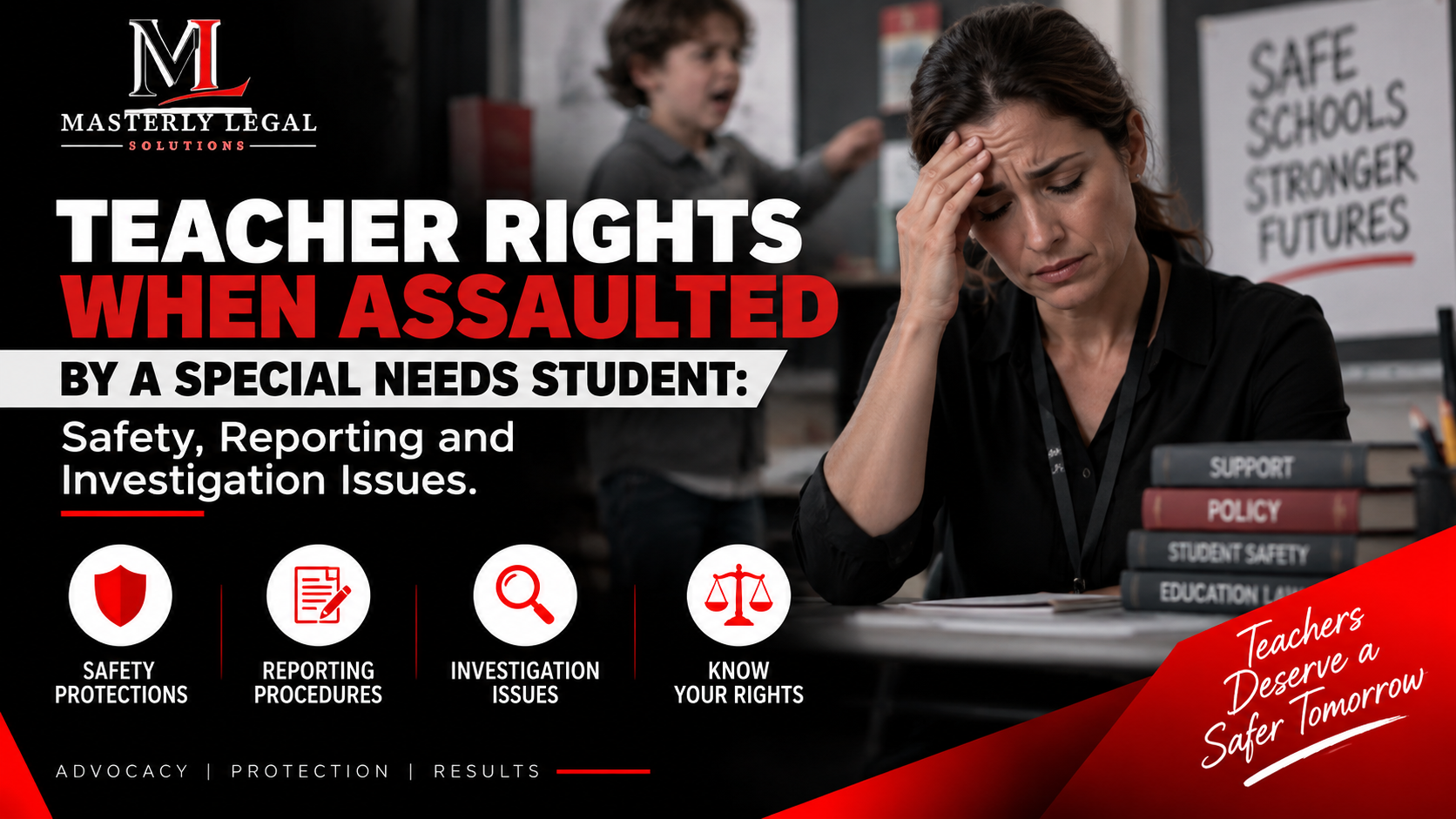
Teacher Rights When Assaulted by a Special Needs Student: Safety, Reporting and Investigation Issues


Looking for Legal & Business Solutions? Contact Us Now
Fill in the form or call us to set up a meeting





