

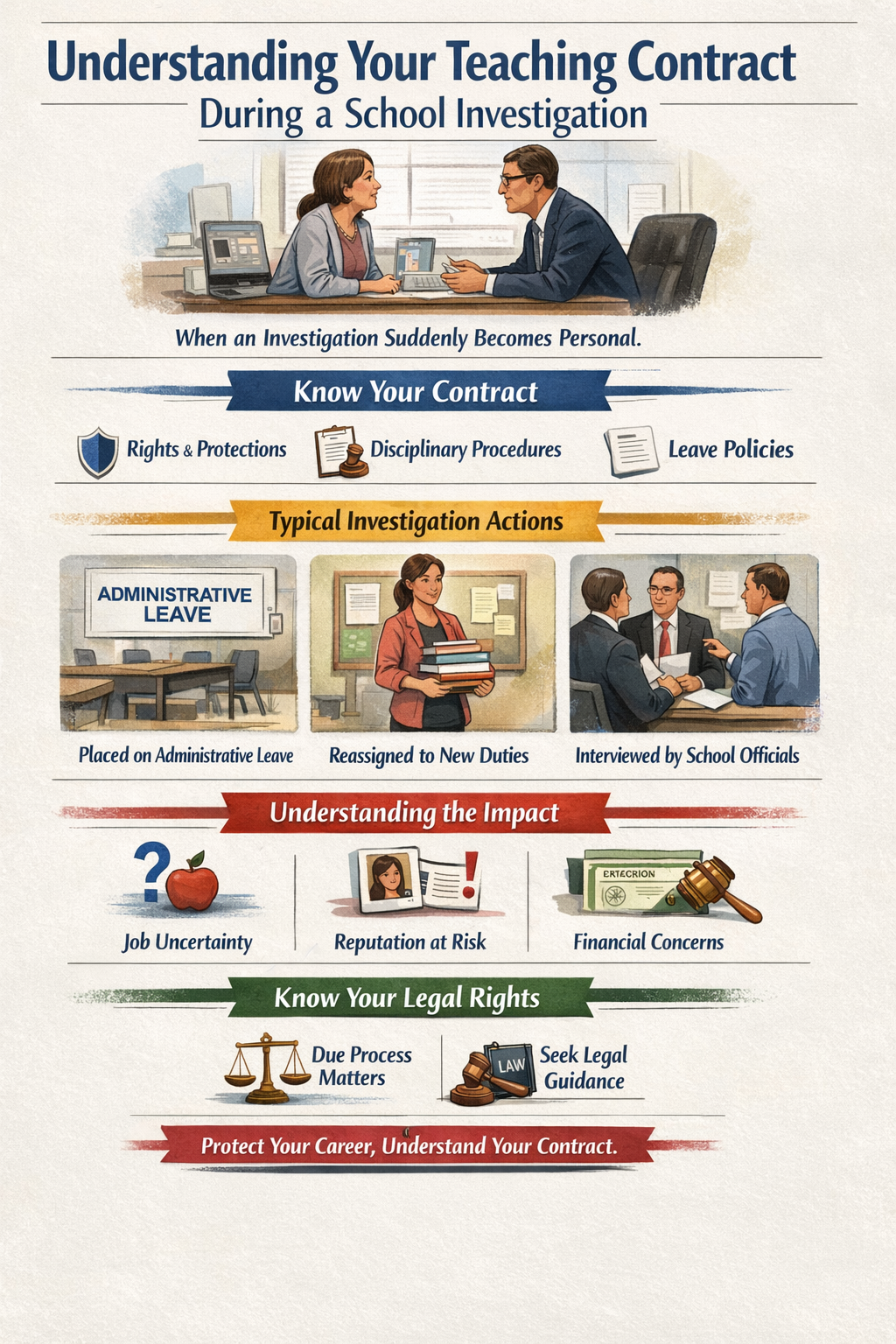
Understanding Your Teaching Contract During a School Investigation
When an Investigation Suddenly Becomes Personal
Most teachers never expect to find themselves at the center of a school investigation. One day you are focused on your students, your lesson plans, and your responsibilities, and the next you are being called into the office to answer questions. These moments can feel overwhelming, especially when your career, reputation, and pay are on the line.
At Masterly Legal Solutions, we have worked with many educators who were caught off guard by how quickly an investigation can change their professional life. Whether the issue involves alleged misconduct, harassment, or a possible violation of school policies, understanding your teaching contract is critical. It is not just a document you signed at hiring—it becomes your roadmap when things take an unexpected turn.
Why Your Teaching Contract Matters More Than You Think
Your teaching contract outlines your rights, duties, and protections as an employee. During an investigation, it becomes one of the most important documents that can help protect your career. Many employees do not realize how much authority their employer has until those terms are tested.
Contracts often include provisions related to administrative leave, disciplinary action, and due process. They may also reference internal policies, state laws, and federal laws such as Title VII. When you understand these details, you are better equipped to respond appropriately and avoid making decisions that could harm your case.
The Reality of School Investigations
What Triggers an Investigation
An investigation may begin for many reasons, including complaints from co workers, parents, or students. Allegations of harassment, inappropriate conduct, or policy violations can quickly escalate into formal internal reviews. In some cases, even minor misunderstandings are treated as serious concerns.
School administrators, agency officials, and sometimes police may become involved depending on the circumstances. The presence of law enforcement can make the situation feel more serious, even if the issue is administrative in nature.
How Investigations Affect Employees
Once an investigation begins, employees often experience immediate changes. These may include removal from the classroom, reassignment, or placement on administrative leave. These actions can feel like punishment, even before any findings are made.
The uncertainty can also affect overall employee morale and create stress among other employees. Teachers may feel isolated from co workers and unsure about what will happen next.
Administrative Leave in School Settings
What Administrative Leave Means for Teachers
Administrative leave is commonly used during a school investigation. It allows the employer to temporarily remove the employee from their duties while the investigation continues. This can be done to protect students, maintain workplace safety, or preserve the integrity of the investigation.
In some cases, the employer may grant administrative leave for brief or short periods. However, the duration can vary depending on the agency determines and the complexity of the situation.
Paid Administrative Leave vs Other Types of Leave
Teachers may be placed on paid administrative leave or unpaid leave depending on the situation. Paid administrative leave allows employees to continue receiving pay and benefits while not performing work duties, but Texas educators should also understand the steps to take when placed on administrative leave.
Other forms of leave may include investigative leave, safety leave, or notice leave. Each type of leave has specific rules and is often governed by agency policies, opm regulations, and internal policies.
When Administrative Leave Raises Concerns
Understanding Extended Leave Periods
Administrative leave is typically intended for brief periods or short periods. However, when it extends beyond a reasonable time limited basis, it can raise concerns. Prolonged absence from the classroom can negatively impact an employee’s current position and future opportunities.
Employees should be aware that extended administrative leave may have a negative impact on their career. It can also affect employee morale and create uncertainty about job security.
The Risk of Adverse Actions
Adverse actions during an investigation may include reassignment to a less desirable position, changes in pay, or restrictions on job duties. Even if the employee remains employed, these changes can significantly affect their professional standing.
For example, a teacher may be moved from a desirable position to a less desirable position without clear justification. This type of action may be directly related to the investigation and could raise legal concerns.
The Role of Human Resources and School Leadership
How Human Resources Handles Complaints
Human resources plays a key role in managing investigations and ensuring compliance with laws and internal policies. They are responsible for reviewing complaints, coordinating internal reviews, and communicating with employees throughout the process, and many educators also turn to Texas education lawyers for school investigations and TEA license defense for additional support.
HR must also ensure that agency policies are applied consistently and that employees are treated fairly. When HR fails to follow proper procedures, it can lead to additional complications.
The Authority of the Agency Head and Administrators
The agency head or school leadership often has final authority over decisions such as administrative leave and disciplinary action. Their decisions should be based on agency judgments and consistent with laws and guidance.
In some cases, decisions are influenced by executive order, presidential directive, or presidential memorandum, particularly in public school systems connected to the federal government.
Protected Activity and Your Legal Rights
What Counts as Protected Activity
Protected activity includes actions such as reporting harassment, discrimination, or unsafe working conditions. It also includes participating in an investigation or cooperating with authorized agency officials or other authorized agency officials.
Employees who engage in protected activity are legally protected from retaliation. This includes protection under whistleblower laws and Title VII.
When Retaliation Occurs
When an employer treats a worker unfairly for participating in protected behavior, this is known as retaliation. This may include placing the employee on administrative leave, reducing pay, or assigning them to a less desirable position.
Even subtle changes, such as altering the employee’s work schedule or excluding them from meetings, can be considered retaliation under certain circumstances.
Workplace Safety and Occupational Standards
The Importance of Occupational Safety
Schools are responsible for maintaining occupational safety for employees and students. When concerns arise, employers may take action to protect the workplace environment.
This may include placing employees on administrative leave or reassigning duties during an investigation. However, these actions must be justified and consistent with laws and policies.
Balancing Safety and Employee Rights
Employers must balance workplace safety with the rights of employees. Actions taken during an investigation should not unfairly harm the employee or create unnecessary hardship.
A reasonable employee standard is often used to evaluate whether actions are appropriate. If a reasonable employee would view the action as punitive, it may raise concerns.
Understanding Internal Reviews and Investigations
How Internal Reviews Are Conducted
Internal reviews are a key part of any investigation. They involve gathering information, interviewing witnesses, and reviewing evidence related to the alleged misconduct.
These reviews may be conducted by human resources, agency officials, or external investigators. In some cases, they may be handled on an ad hoc basis depending on the situation.
The Impact of Investigations on Your Career
Investigations can have a lasting impact on an employee’s career, even if no wrongdoing is found. Being associated with an investigation can affect reputation, relationships with co workers, and future opportunities.
Employees should take these situations seriously and seek guidance from an education law firm that helps protect teacher rights to protect their interests.
Common Examples of Workplace Situations
Example of Administrative Leave Use
A teacher is accused of inappropriate behavior and placed on administrative leave while the investigation is conducted. Although the leave is described as neutral, it removes the teacher from their classroom and disrupts their routine.
This example shows how administrative leave can have a significant impact, even when it is temporary.
Example of Retaliation After Reporting
An employee reports harassment involving sexual advances from a supervisor. Shortly after, they are reassigned to a less desirable position and experience changes in pay.
This example highlights how retaliation can occur after engaging in protected activity.
Example of Policy Misapplication
A teacher participates in officially sponsored activities such as blood donations and is granted an excused absence. However, when another employee requests similar time off, the request is denied.
This inconsistency may indicate that agency policies are not being applied fairly.
The Importance of Documentation
Keeping Accurate Records
Employees should document all interactions related to an investigation. This includes emails, meeting notes, and any changes to work duties or pay.
Documentation can be critical if legal action becomes necessary. It provides evidence of what occurred and helps establish a timeline.
Reporting Concerns Appropriately
Employees should report concerns through proper channels, such as human resources or a supervisor. In some cases, a manager or union representative may also be involved, and consulting an education law attorney for expert legal guidance for teachers can help you navigate this process.
Reporting concerns is a protected activity, and employees should not fear retaliation for doing so.
Legal Framework and Protections
Federal and State Laws
Employees are protected under various federal laws, including Title VII and provisions within the united states code. These laws prohibit discrimination, harassment, and retaliation, and an experienced education law attorney and lawyer can explain how they apply to your situation.
State laws may also provide additional protections depending on the location of the school.
Guidance from OPM and Government Agencies
Opm regulations and opm guidance provide direction on how administrative leave and other actions should be handled, particularly for federal employees. These guidelines help ensure consistency and fairness.
Employers must follow these rules and issue internal policies consistent with legal requirements.
The Broader Impact on Employees and Workplace Culture
Effects on Employee Morale
Investigations and administrative leave can affect overall employee morale. Other employees may feel uncertain or concerned about their own job security.
This can create tension within the workplace and impact productivity.
The Employer’s Responsibility
Employers have a responsibility to maintain a fair and supportive work environment. This includes protecting employees from harassment, discrimination, and retaliation.
They must also ensure that their actions during investigations are appropriate and justified, respecting legal protections for teachers and their rights and options.
When to Seek Legal Guidance
Recognizing When You Need Help
If you are facing an investigation or have been placed on administrative leave, it may be time to seek legal guidance from an education law attorney for teachers and administrators. Understanding your rights can help you make informed decisions.
Signs that you may need assistance include changes in pay, reassignment, or actions that seem unfair or inconsistent.
Working with Experienced Legal Professionals
Legal professionals can help you navigate complex situations and protect your career. An expert education lawyer providing legal support for schools and teachers can review your contract, assess your case, and provide guidance on next steps.
Having experienced support can make a significant difference in the outcome of your situation.
Protecting Your Career During Uncertain Times
Taking Proactive Steps
Taking proactive steps can help protect your career during an investigation. This includes staying informed, documenting events, and seeking guidance when needed.
Employees should also remain professional and avoid actions that could be misinterpreted.
Understanding the Bigger Picture
An investigation is not just about the immediate situation. It can have long-term implications for your career and future opportunities, which is why every educator should understand why teachers need a lawyer for legal protection.
By understanding your rights and responsibilities, you can better protect yourself and your professional future.
Employment Discrimination, Workplace Policies, and Your Rights During an Investigation
Employment discrimination can arise in many forms during a school investigation, especially when decisions are not handled fairly or consistently. Employers are expected to follow proper personnel management practices that align with laws and support the agency's mission of maintaining a safe and professional environment. Any action taken against individual employees must be specifically authorized and based on legitimate concerns, not bias or retaliation. This includes decisions related to paid leave, reassignment, or other provision outlined in employment agreements or policies. Over the course of a calendar year, patterns of inconsistent treatment may become more apparent, particularly when employees engage in related protected activity or other related protected activity such as reporting concerns or participating in investigations. Schools, like any business, must ensure that their actions are lawful and fair, and employees should be aware that protections exist to guard against discrimination and improper treatment.
Speak with a Legal Team That Understands Administrative Leave Cases
Facing a school investigation can feel overwhelming, especially when your role, pay, and reputation are at risk. You may be dealing with administrative leave, internal reviews, or sudden changes in your position that leave you uncertain about what comes next. These situations are rarely straightforward, and the decisions you make early on can have a lasting impact.
At Masterly Legal Solutions, we work closely with teachers and school employees who need clarity during difficult moments. Our education lawyers provide expert legal support for teachers and schools. Whether you have been placed on administrative leave, are navigating an investigation, or believe your rights have been violated, our team is here to help you understand your options and protect your future.
Contact us at (972) 236-5051 for a free consultation so we can answer your questions and help you move forward with confidence. You do not have to handle this situation alone, and having the right guidance can make all the difference.
This article is for informational purposes only and does not constitute legal advice. Every situation is unique, and you should consult with a qualified attorney regarding your specific circumstances.

Teacher Rights When Assaulted by a Special Needs Student: Safety, Reporting and Investigation Issues







Looking for Legal & Business Solutions? Contact Us Now
Fill in the form or call us to set up a meeting





