

Physician Employment Termination: Contract, Reporting, and Credentialing Issues to Review
When Your Employment Ends, Your Career Should Not Be Left Unprotected
A physician employment termination attorney helps physicians understand what happens after an employment relationship ends. The end of a position is rarely just about leaving a hospital, clinic, or medical group. It can affect your compensation, future employment, professional reputation, credentialing, and reporting obligations.
Whether you are considering a negotiated separation, have received a termination notice, or expect your employment agreement to end soon, every decision you make can affect what comes next. Masterly Legal Solutions represents physicians who need experienced legal guidance before signing separation documents, responding to employer demands, or accepting employment termination terms that could create future problems, drawing on the firm’s comprehensive legal and business services.
Why Physician Employment Termination Requires Careful Legal Review
Many physicians spend years building their careers. One employment dispute can create issues that continue long after the final day of work.
Employers often move quickly once a decision has been made. Physicians may receive separation agreements, confidentiality provisions, restrictive covenant language, repayment demands, or requests to sign documents immediately. At the same time, hospitals and medical groups may begin credentialing reviews, peer review discussions, or reporting evaluations that deserve careful legal attention.
A physician employment termination attorney reviews these issues together rather than treating them as separate problems. That approach helps physicians protect both their immediate interests and their long-term professional opportunities.
What a Physician Employment Termination Attorney Reviews
Every physician's situation is different. Our legal review focuses on the specific facts surrounding your employment and future career goals.
Physician Employment Agreement Terms
An employment contract often contains provisions that become important only after termination, including without-cause and for-cause clauses:
- Notice requirements, including advance written notice that is often 90 days for without-cause termination
- Termination provisions, where for-cause termination may allow immediate termination under specific conditions, including loss of licensure or death
- Restrictive covenants, including non-compete clauses
- Non-solicitation obligations
- Patient transition requirements
- Compensation calculations, since physician compensation packages are often more complex than a flat salary
- Bonus eligibility
- Tail coverage under a claims made policy, including who pays for tail insurance and whether an extended reporting period applies
- Repayment obligations
Those obligations may depend on how the employment relationship ended, and coverage can last two to five years or longer, with some policies offering unlimited options.
Understanding these provisions before signing anything can help avoid unnecessary disputes.
Separation Agreements
Many employers offer separation agreements that include important legal rights.
These agreements may address:
- Release of claims
- Confidentiality provisions
- Future employment references
- Payment schedules
- Insurance continuation
- Professional cooperation
- Return of employer property
- Restrictive covenant enforcement
An experienced physician employment termination attorney helps determine whether these terms protect your future interests.
Credentialing and Tail Coverage Concerns
Employment termination sometimes creates credentialing questions that extend beyond your current employer.
Hospitals, surgery centers, and future employers may ask why your employment ended. Certain situations may also involve medical staff bylaws, committee reviews, or credentialing investigations.
Understanding these issues before responding can help reduce unnecessary complications during future credentialing applications.
Reporting Issues May Continue After Employment Ends
One of the biggest concerns physicians face involves possible reporting obligations.
Depending on the circumstances, physicians may have questions involving:
- National Practitioner Data Bank reporting
- Hospital reporting procedures
- Licensing concerns
- Medical board investigations
- Professional references
- Credentialing disclosures
Not every employment separation creates reporting obligations. However, understanding what may happen allows physicians to prepare appropriate responses instead of reacting after reports have already been submitted.
Protecting Your Professional Reputation
Your professional reputation follows you throughout your career.
Future employers often review:
- Employment history
- Credentialing files
- Peer review records
- Professional references
- Licensing history
- Public disciplinary information
A physician employment termination attorney works to identify issues that may affect future opportunities while helping physicians make informed decisions during the separation process.
Negotiating Before Problems Become Larger
Many physicians believe negotiations end once termination has been announced.
In reality, important issues may still be negotiable, including:
Financial Terms
Compensation questions may include:
- Final salary
- Productivity compensation
- Incentive bonuses
- Vacation balances
- Expense reimbursement
- Benefits continuation
Physicians should also understand the attorney’s fee structure and related cost when evaluating their legal options, similar to how businesses benefit from ongoing general counsel services to manage legal challenges.
Future Employment Restrictions
Restrictive covenant language may affect where physicians can practice after leaving an employer, just as employers rely on HR consulting services and employment law guidance to draft and enforce workplace policies.
Depending on the agreement, legal review may focus on:
- Geographic restrictions
- Time limitations
- Patient communication
- Referral relationships
- Future employment opportunities
Professional References
Employers sometimes agree to reference language that helps reduce misunderstandings during future employment searches.
Carefully negotiated terms may help protect your professional reputation while maintaining compliance with applicable agreements.
Why Early Legal Guidance Matters
Waiting until after documents have been signed often limits available options.
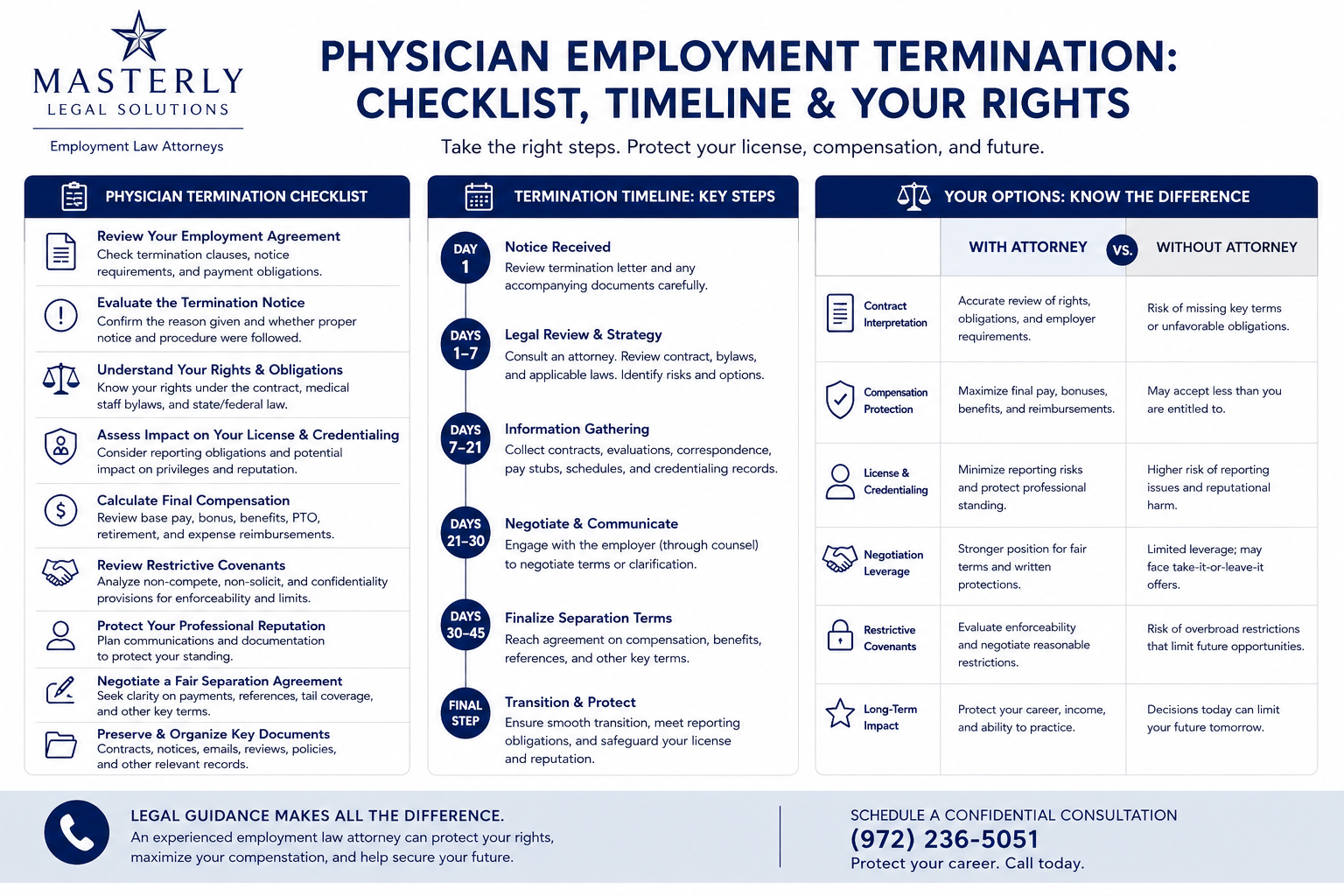
Before consulting an attorney, physicians should gather relevant documents, including the employment agreement, proposed separation paperwork, compensation records, and related correspondence. Early legal guidance allows physicians to evaluate:
- Contract obligations
- Separation proposals
- Reporting concerns
- Credentialing consequences
- Future employment opportunities
- Negotiation strategy
- Healthcare regulatory issues, including Stark Law, the Anti-Kickback Statute, and other applicable laws
Even when employment is ending quickly, reviewing the situation before making important decisions can help protect long-term career interests.
Why Physicians Choose Masterly Legal Solutions
Masterly Legal Solutions represents physicians facing complex employment and professional licensing issues, supported by a wide range of legal services for corporations, nonprofits, and individuals.
Our firm understands that employment termination may involve much more than a contract dispute. Employment decisions often affect credentialing, licensing, reporting, future employment, and professional reputation at the same time.
We work closely with physicians to understand their goals, evaluate potential risks, and develop practical legal strategies that fit their individual circumstances, consistent with our diverse range of legal services.
Our representation is tailored to each physician because no two employment separations are exactly alike, just as our client‑centric legal strategies for individuals, families, and businesses are designed to meet unique needs.
Physician Employment Termination Can Affect More Than Your Current Medical Practice
Every medical doctor invests years in medical schools, earning a medical degree, completing residency, and developing the expertise needed to provide quality medical care. Whether you practice internal medicine, work as one of many surgeons, or serve another specialty, the end of an employment relationship can affect far more than your current medical practice or group practice. Important issues may include purchasing tail coverage, understanding the tail period, reviewing the retroactive date of malpractice insurance after the policy ends, and determining how professional obligations continue after employment may terminate.
Every situation can vary, and legal questions may occur depending on your contract, applicable public policy, and the circumstances of your departure. For example, physicians who provide ongoing treatment for patients with chronic diseases, those referred by other providers, or those who counsel families and other clients may have continuing responsibilities that deserve careful legal review. A physician's education, professional program experience, and years spent practicing medicine have significant value, making it important to protect both your career and your professional health when employment comes to an end. The appropriate legal strategy and duration of representation will depend on the facts of your case and the available methods for resolving employment, contract, and credentialing concerns, informed by our broader experience in estate planning, education law, and business consulting.
Continuing Patient Responsibilities After Employment Ends
A physician's responsibilities do not always end on the last day of employment. Typically, patients receiving ongoing counseling, treatment for complex symptoms, or specialized care from medical specialists may need a smooth transition to another provider. Physicians who care for patients during pregnancy or other time-sensitive medical situations should also understand any contractual and professional obligations that may continue after leaving a practice. Reviewing these issues with legal counsel can help protect both patient continuity and the physician's professional interests, much like our work in higher education law and institutional compliance focuses on long‑term stability and risk mitigation.
Frequently Asked Questions
When should I contact a physician employment termination attorney?
You should seek legal guidance as soon as you receive a termination notice, separation agreement, or believe your employment may be ending. Before speaking with an attorney, gather relevant documents such as your employment agreement, notices, correspondence, and compensation records. Ask about the lawyer’s state-specific experience with physician employment issues, make sure you understand the fee structure, and request a confidential consultation, especially if you also need legal support for educators and TEA license defense.
Can employment termination affect my medical license?
Sometimes. Certain situations may create licensing or reporting questions that deserve legal review before important decisions are made.
Should I sign my separation agreement immediately?
Not without understanding its legal consequences. An attorney can carefully review the agreement before you decide whether to sign, including termination notice requirements and related obligations, just as doctors and lawyers both need profession-specific legal guidance before signing.
Can a physician employment termination attorney review restrictive covenant language?
Yes. Restrictive covenants are often one of the most important parts of an employment separation.
Will future employers learn why I left my previous position?
Future employers frequently ask about prior employment during credentialing and hiring. Preparing accurate responses is important, particularly if you previously faced pressure to resign or have questions about
whether an employer can force you to quit your job.
Does every employment termination result in National Practitioner Data Bank reporting?
No. Reporting depends on the facts of each situation and applicable reporting requirements.
Request a Physician Employment Separation Review
If your employment is ending, do not wait until important decisions have already been made. A physician employment termination attorney at Masterly Legal Solutions can review your employment agreement, evaluate separation documents, identify reporting and credentialing concerns, and help protect your professional future.
Call Masterly Legal Solutions today at (972) 236-5051 or contact us online to request your physician employment separation review.








Looking for Legal & Business Solutions? Contact Us Now
Fill in the form or call us to set up a meeting





