
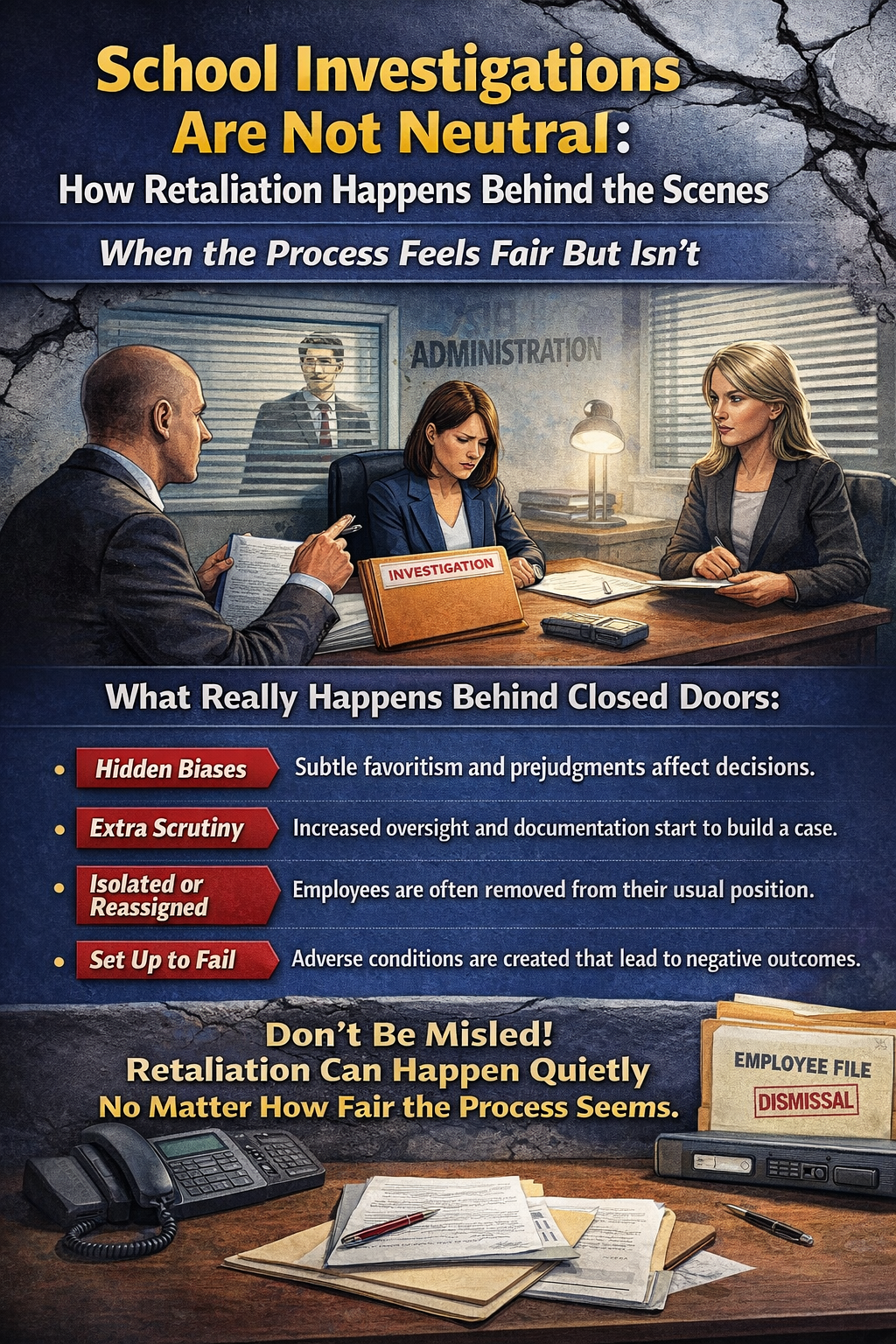
School Investigations Are Not Neutral: How Retaliation Happens Behind the Scenes
When the Process Feels Fair But Isn’t
Most teachers believe that if they are ever involved in a school investigation, the process will be neutral, structured, and fair. On the surface, it often appears that way. Meetings are scheduled, policies are referenced, and administrators speak in calm, professional tones. But behind that appearance, many workers quickly realize that the process may already be working against them.
The truth is that investigations are not always designed to protect the employee. In many situations, the employer is focused on limiting risk to the institution, not protecting the individual. This shift in focus is where retaliation can begin, often quietly and without clear warning signs.
The Illusion of Neutrality in School Investigations
Schools often present investigations as objective processes guided by policies and laws. However, these processes are usually controlled internally, which means the same employer conducting the investigation also controls how the facts are interpreted. This creates a system where decisions can be influenced by internal priorities rather than fairness.
To a reasonable employee, the process may seem balanced at first. But over time, subtle changes begin to occur. Increased scrutiny, limited communication, and sudden changes in expectations can signal that the situation is shifting.
How Retaliation Begins Behind the Scenes
Retaliation rarely starts with a dramatic event. Instead, it often develops through small actions that build over time. An employee who files a complaint, participates in an investigation, or engages in a protected activity may suddenly notice changes in how they are treated.
This can include changes to the employee's work schedule, reduced responsibilities, or being excluded from meetings. These actions may not seem severe at first, but they can have a lasting negative impact on the employee’s career.
What Counts as Protected Activity
Under federal laws, a protected activity includes actions such as reporting harassment, raising concerns about employment discrimination, or participating in an internal or external investigation. Teachers who speak up about misconduct are legally protected from retaliation, and many choose to work with an experienced education lawyer for teachers and schools to safeguard their careers.
This also includes other related protected activity, such as supporting a co worker who has filed a complaint or providing information as a witness. Even simply asking questions about workplace conditions can qualify as a related protected activity.
Why Employers Respond With Retaliation
Employers often view complaints as potential threats to their operations or reputation. When an employee engages in protected conduct, the employer may begin acting in ways that are intended to reduce perceived risk.
In some cases, retaliation is subtle and strategic. The manager or supervisor may begin documenting performance issues, increasing oversight, or limiting opportunities. These actions can be framed as routine management decisions, even when they are directly related to the employee’s complaint.
Administrative Leave as a Strategic Tool
One of the most common tools used during school investigations is administrative leave. While it is often presented as a neutral step, it can have serious consequences. Being placed on paid administrative leave removes the employee from the workplace and isolates them from colleagues.
This separation can create a narrative that the employee is under investigation for serious issues. Even when the leave is temporary, the perception can damage the employee’s reputation and standing within the organization.
What Paid Administrative Leave Really Means
Although paid administrative leave allows the employee to continue receiving pay, it is not without consequences. The employee may lose access to resources, communication channels, and professional opportunities.
In some cases, the leave may extend beyond the initial period, creating uncertainty about the employee’s future. The longer the employee remains on leave, the more difficult it becomes to return to their original role.
The Role of Supervisors and Managers
A supervisor or manager often plays a key role in how an investigation unfolds. These individuals may be responsible for reporting concerns, documenting performance, and communicating with higher-level administrators, and in some cases responding to retaliation and labor complaints.
While some supervisors act fairly, others may engage in retaliation by increasing pressure on the employee. This can include assigning unrealistic tasks, monitoring hours closely, or creating a hostile workplace environment.
Subtle Forms of Adverse Action
Not all retaliation is obvious. In many cases, it takes the form of subtle adverse action that can be difficult to prove. These actions may include:
- Reassignment to a less desirable position
- Removal from a desirable position
- Denial of a promotion
- Reduction in responsibilities
- Changes to pay or benefits
Each of these actions can create a claim of retaliation, especially when they occur after a protected activity.
When Retaliation Becomes Obvious
There are situations where retaliation becomes more direct. An employee may face discipline, threats, or even firing after raising concerns. In extreme cases, the employer may attempt to justify these actions by citing performance issues or policy violations.
However, timing matters. If the action occurs shortly after a complaint or investigation, it may indicate that retaliation is the true motive.
The Impact on Employee Morale
Retaliation does not just affect one person. It can lower employee morale and create fear among other workers. When employees see a colleague facing negative consequences for speaking up, they may become hesitant to report issues themselves.
This can lead to a culture where problems go unaddressed, ultimately affecting the overall employee morale and the integrity of the workplace.
How Harassment and Retaliation Intersect
In many cases, retaliation is closely tied to harassment. An employee who reports inappropriate behavior, including sexual advances, may face backlash from supervisors or colleagues and may need guidance from an education law attorney for teachers.
This retaliation can take many forms, including isolation, increased workload, or negative evaluations. These actions are often prohibited under workplace laws, but they still occur.
The Role of Federal Agencies and the EEOC
Employees who experience retaliation may choose to file a complaint with the EEOC or other federal agencies or seek help from a dedicated retaliation and employment law attorney. These organizations are responsible for enforcing workplace laws and ensuring that employees are protected.
The EEOC can investigate claims, gather additional information, and determine whether a violation has occurred. This process can be complex, but it provides an important avenue for seeking justice.
What Evidence Matters Most
Building a strong retaliation claim requires evidence. Employees should document all relevant events, including emails, messages, and notes from meetings.
For example, if an employee receives negative feedback shortly after filing a complaint, that timing can be significant. Keeping detailed records can help support the employee’s case.
The Importance of Timing
Timing is one of the most critical factors in a retaliation case. Courts and agencies often look at how soon an adverse action occurs after a protected activity.
If the action happens within a short period, it may suggest a connection between the two events. This can strengthen the employee’s claim.
How Employers Justify Their Actions
Employers rarely admit to retaliation. Instead, they often provide alternative explanations for their actions. These may include performance concerns, policy violations, or business needs.
However, these explanations must be consistent and supported by evidence. If they are not, they may be viewed as pretext for retaliation.
When Retaliation Leads to Termination
One of the most serious outcomes is firing. Employees who are terminated after engaging in protected conduct may have grounds for a lawsuit.
Termination can have a lasting impact on the employee’s career, making it difficult to secure future employment. This is why it is essential to take action early.
The Role of Workplace Policies
Workplace policies are often used to justify decisions during investigations. These policies may outline procedures for discipline, leave, and performance management.
However, policies must be applied consistently. If they are used selectively, it may indicate retaliation.
How Retaliation Affects Wages and Benefits
Retaliation can also impact an employee’s wages, pay, and benefits. Changes to compensation or job duties can create financial stress and uncertainty.
In some cases, employees may lose opportunities for overtime or additional compensation, further affecting their income.
Recognizing the Warning Signs
Employees must learn to recognize the early signs of retaliation. These may include sudden changes in treatment, increased monitoring, or exclusion from key activities.
Being aware of these signs can help employees take action before the situation escalates.
The Importance of Acting Quickly
Delays can weaken a retaliation claim. Employees should act quickly to document events, seek guidance, and protect their rights.
Waiting too long can make it more difficult to gather evidence and build a strong case.
Why Legal Representation Matters
Navigating a school investigation without legal support can be overwhelming. An experienced education law firm for educators can help determine the best course of action and ensure that the employee’s rights are protected.
Legal guidance can also help prevent mistakes that could harm the employee’s case.
How Retaliation Lawyers Can Help
Retaliation lawyers understand the complexities of workplace investigations and can provide valuable support. They can help employees file claims, gather evidence, and represent them in legal proceedings.
Having an attorney on your side can make a significant difference in the outcome of your case.
Protecting Yourself During an Investigation
Employees should take proactive steps to protect themselves during an investigation. This includes documenting events, avoiding unnecessary discussions, and seeking legal advice.
These actions can help reduce the risk of further retaliation.
Taking Back Control of Your Career
Facing retaliation can feel overwhelming, but employees have options. By understanding their rights and taking action, they can protect their careers and reputations.
The key is to remain informed and proactive throughout the process.
When Policies Say They Prohibit Retaliation but Reality Looks Different
Most school systems and workplace guidelines clearly prohibit retaliation, and on paper, these protections are meant to shield employees from harm. However, what looks compliant in writing can become a possible violation in practice when subtle actions begin to take place behind the scenes. Retaliation often develops in specific circumstances where an employee has raised concerns, reported misconduct, or participated in an investigation. Even though policies exist, retaliation still happens when leadership chooses to interpret events in a way that protects the institution rather than the individual. Understanding when retaliation occurs requires looking beyond formal policies and examining patterns of behavior that impact the employee’s role and standing.
When Retaliation Crosses Into Unlawful Conduct
There are situations where retaliation moves beyond internal issues and becomes unlawful under workplace labor laws. In more serious cases, matters may escalate to involve the police or other authorities if allegations involve criminal conduct or significant misconduct. For example, if an employee reports discrimination tied to a disability or another protected characteristic, any negative response from the employer could trigger legal concerns. These cases may fall under oversight from a government department or be reviewed under specific workplace regulations, or even trigger parallel TEA educator license investigations when school employees are involved. Even something as simple as a forced absence or sudden removal from duties can be legally significant if it is connected to a protected activity.
How Definitions and Internal Rules Are Applied
Employers often rely on how terms are defined within their internal policies to justify decisions. An employee may become the subject of an investigation, and actions taken against them are often framed as standard procedure. Generally, these policies are broad enough to allow flexibility, which can lead to inconsistent application. For example, a reassignment or change in duties may be labeled as an other type of administrative adjustment rather than retaliation. These interpretations are often documented in internal records or a personnel page, creating a paper trail that may not fully reflect what actually occurred.
When Retaliation Leads to Serious Employment Consequences
Retaliation can escalate quickly into more serious outcomes, including dismissal or long-term damage to an employee’s career, especially for educators who may need focused North Carolina educator misconduct defense. In some cases, decisions may be presented as approved by higher leadership, even referencing authority from a superintendent or, in broader policy contexts, a president-level directive. Employees who have exercised their rights may suddenly find themselves facing disciplinary actions that appear justified but are actually retaliatory. These actions are often framed as being covered under internal procedures, making it harder for employees to challenge them without legal support.
The Role of Intimidation and Pressure in Investigations
One of the most overlooked aspects of retaliation is the use of intimidation. Employees may feel pressure from supervisors or administrators to remain silent, withdraw complaints, or accept unfavorable outcomes. This pressure can be subtle, such as changes in tone or expectations, or more direct through warnings and implied consequences. Over time, this environment can discourage employees from continuing to assert their rights. Recognizing these tactics is critical, as they often signal that retaliation is actively shaping the outcome of the situation.
Speak With Masterly Legal Solutions Today
If you believe you are experiencing retaliation during a school investigation, do not wait until the situation escalates. These cases can move quickly, and early decisions often shape the outcome.
At Masterly Legal Solutions, we work with educators and professionals who are facing difficult workplace challenges. We understand how retaliation unfolds and how to protect your rights.
Call (972) 236-5051 for a free consultation. We will listen to your concerns, evaluate your situation, and help you understand your options moving forward. Taking action today can make all the difference in protecting your future.
Disclaimer: This article is for educational purposes only and does not constitute legal advice. You should contact a qualified attorney to discuss your specific situation.
Teacher Rights When Assaulted by a Special Needs Student: Safety, Reporting and Investigation Issues





Looking for Legal & Business Solutions? Contact Us Now
Fill in the form or call us to set up a meeting